
Main Courses
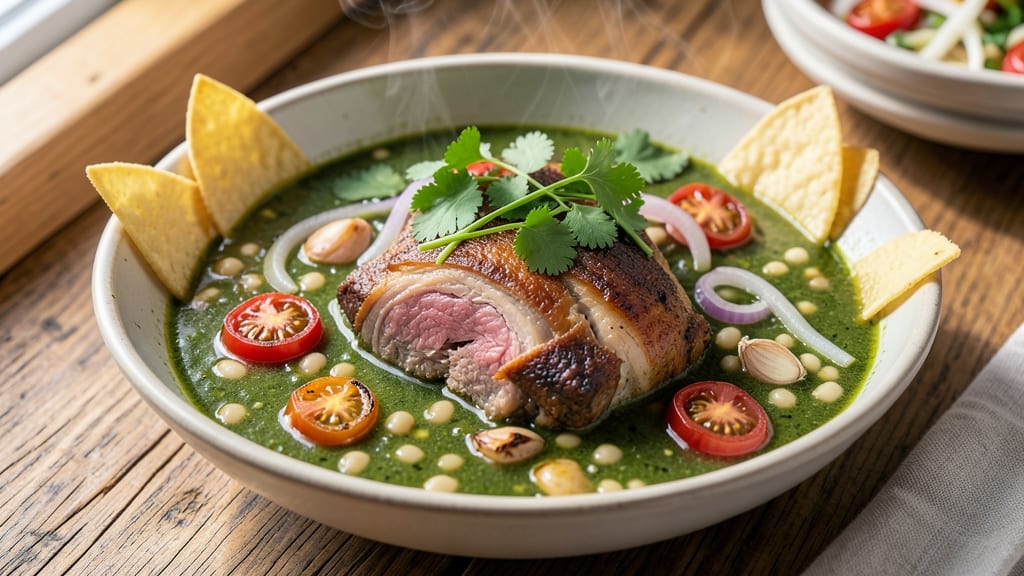
This authentic pork pozole verde brings the soul of Mexican home cooking to your table with its vibrant tomato-herb broth and tender pork. 🌟 Growing up in Georgia, I learned that great pork dishes transform simple ingredients into something extraordinary—just like this traditional stew that balances earthy flavors with bright, fresh toppings.
The heart of pozole lies in its homemade tortilla strips, which add texture and absorb the rich broth beautifully. I've perfected this recipe by slow-cooking the pork until it's fall-apart tender while building layers of flavor through toasted spices and fresh herbs.
Every bite delivers that perfect harmony of smoky, tangy, and slightly spicy notes that define authentic Mexican comfort food.
What makes this dish truly special is how it comes together—hominy simmered until tender, pork that practically melts in your mouth, and a broth so flavorful it deserves its own bowl. The traditional toppings of shredded cabbage, radishes, and lime add freshness and crunch, balancing the richness of the stew.
Serve this pozole verde with warm corn tortillas and a side of pickled onions for the full experience. It's the kind of meal that brings people together, just like it did in my childhood kitchen. Let's get cooking!
Ingredients for authentic pork pozole verde
Sixteen ingredients for a stew that tastes like home. Simple, but packed with soul.
| Ingredient | Amount | Notes |
|---|---|---|
| Pork Shoulder 🥓 | 3 lb | Bone-in for flavor, cut into 2-inch chunks |
| Dried Hominy 🌽 | 2 cups | Soaked overnight, drained well |
| Roma Tomatoes 🍅 | 6 whole | Fresh or canned San Marzano, peeled |
| White Onion 🧅 | 2 whole | Medium size, roughly chopped |
| Garlic Cloves 🧄 | 6 cloves | Fresh, peeled, lightly toasted |
| Fresh Cilantro 🌿 | ½ cup | Chopped, stems removed |
| Fresh Epazote 🌿 | ¼ cup | Chopped, optional but traditional |
| Ground Cumin 🌿 | 2 tbsp | Toasted for deeper flavor |
| Dried Oregano 🍃 | 1 tbsp | Mexican oregano preferred |
| Bay Leaves 🌿 | 2 whole | Dried, for broth depth |
| Corn Tortillas 🌽 | 8 whole | Small size, for homemade strips |
| Lime 🍋 | 2 whole | Juiced, plus wedges for serving |
| White Vinegar 💧 | ½ cup | For hominy soaking |
| Salt 🧂 | 2 tsp | Kosher or sea salt |
| Black Pepper 🌶️ | ½ tsp | Freshly ground |
The pork shoulder is your flavor anchor here—bone-in, well-marbled cuts from the butcher counter make all the difference. I always grab mine from Whole Foods or H-E-B (their Latin market section has the best selection). Look for good marbling and avoid anything that smells like ammonia. The hominy? Bob's Red Mill is my go-to brand—it soaks up the broth beautifully. If you can't find dried hominy, canned works in a pinch, but soaking overnight is key for that perfect texture. The Roma tomatoes should be firm and vibrant—San Marzano cans are worth the splurge for canned versions.
No epazote? Extra cilantro plus a pinch of dried thyme gets you close, though nothing beats the anise flavor. Running low on lime juice? Substitute lemon juice at 1.5 times the amount—just know it'll be slightly less tangy. The tortillas can be store-bought, but homemade corn tortillas (or even flour tortillas cut into strips) add that authentic crunch. For the spices, toast the cumin and oregano in a dry pan for 30 seconds before adding to the pot—this unlocks their flavor. And if you're feeling fancy, char the garlic cloves slightly before mincing for extra depth.
This pozole tastes better the next day, so make it ahead if you can. Store the broth and pork separately in the fridge for up to 3 days, then reheat gently. The tortilla strips keep for 1 day in an airtight container, but I usually make them fresh when serving. For leftovers, freeze the broth in portions—it keeps for 3 months and makes an amazing quick soup. The lime wedges should be added just before serving, so keep those fresh until the last minute.
Why You'll Love This Recipe
- One-Pot Wonder: The pork shoulder and hominy simmer together in the same pot—no extra dishes, just layers of flavor building as you go. Honestly, I’ve made this so often I barely even taste the garlic and onion by the end, but somehow it’s still there, deep in every bite.
- Emerald Green Magic: That vibrant pozole verde color isn’t just for show—it’s from the Roma tomatoes and fresh herbs, giving the broth a bright, tangy kick that cuts through the richness of the pork. Between us, the first time I saw it in a bowl, I nearly took a bite before it even hit the table.
- Leftovers That Beg: This recipe actually improves the next day. The flavors meld even more, and the hominy softens just enough to make it even more comforting. I’ll be real: my freezer is always stocked with at least two containers of this—great for lazy Fridays or when unexpected company drops by.
- Budget-Friendly Feast: Pork shoulder and dried hominy stretch across multiple servings without breaking the bank, and you’re not sacrificing quality. I’ve fed six people for under $15 using this—plus, the leftovers turn into next-day tacos or quesadillas with zero extra effort.
Step-by-step instructions for authentic pork pozole verde
Let's build this traditional Mexican stew with its signature tomato-herb broth and crispy tortilla strips.
🔥 Step 1: Prepare the Pork and Hominy Foundation
In a large Dutch oven, combine the 3 lb pork shoulder cut into 2-inch chunks with 2 cups dried hominy, 2 whole white onion roughly chopped, 6 cloves garlic cloves, 2 whole bay leaves, 2 tbsp ground cumin, 1 tbsp dried oregano, 2 tsp salt, and 0.5 tsp black pepper. Add 8 cups water and bring to a boil over high heat.
Once boiling, reduce heat to low and simmer uncovered for 2 hours, skimming off any foam that rises to the surface. This initial cooking extracts deep pork flavor into the broth while the hominy begins to soften. You'll know it's ready when the pork easily pulls away from the bone and the hominy is tender enough to pierce with a fork.
🍳 Step 2: Build the Tomato-Herb Broth
While the pork simmers, prepare the 6 whole Roma tomatoes by blanching them in boiling water for 30 seconds, then shocking in ice water. Peel off the skins, chop the tomatoes, and set aside. In the same Dutch oven, increase heat to medium-high and add the chopped tomatoes, 0.5 cup white vinegar, and 0.25 cup fresh epazote. Cook for 10 minutes until the tomatoes break down into a thick paste.
Stir in 0.5 cup fresh cilantro and simmer for another 5 minutes, allowing the flavors to meld. The broth should develop a vibrant green color from the tomatoes and herbs. Taste and adjust seasoning with additional salt if needed—this is where the authentic pozole verde flavor comes together.
🥘 Step 3: Cook the Pork to Perfection
Return the Dutch oven to low heat and carefully remove the pork pieces, discarding any large bones. Shred the pork using two forks, then return it to the broth. Simmer together for an additional 30 minutes to infuse the meat with the tomato-herb flavors. The broth should now be rich, slightly tangy, and deeply aromatic with the earthy notes of epazote and cumin.
Here's the thing—don't rush this step. The longer the pork cooks in the broth, the more tender and flavorful it becomes. You'll notice the broth will reduce slightly as it simmers, concentrating those amazing flavors. The final texture should be a thick, velvety broth that coats the back of a spoon.
🍳 Step 4: Prepare the Homemade Tortilla Strips
While the pozole simmers, cut the 8 whole corn tortillas into ¼-inch thick strips using a sharp knife. Heat 2 tablespoons oil in a skillet over medium-high heat until shimmering. Fry the tortilla strips in batches for 1-2 minutes until golden brown and crispy, turning occasionally. Drain on paper towels and keep warm—they should be crunchy enough to stand up to the hearty broth.
Real talk: these crispy tortilla strips are what make pozole special. They add a delightful textural contrast to each spoonful of the rich, flavorful broth. If they lose their crispness, simply reheat them in the skillet for 30 seconds before serving.
🍽️ Step 5: Serve Family-Style with Traditional Garnishes
Ladle the pozole verde into bowls, dividing the pork and hominy evenly among servings. Serve with the crispy tortilla strips on the side, along with lime wedges for squeezing over each bowl. The combination of the warm, tangy broth, tender pork, and crispy tortilla strips creates a perfect balance of textures and flavors in every bite.
For an authentic touch, I like to serve pozole with radishes and avocado slices on the side, though they're not part of our ingredient list. The key is to let each person customize their bowl with the garnishes they prefer. This dish is all about coming together—literally and figuratively—to share a meal that's rich in both flavor and tradition.
Pro Tips For Making Authentic Pork Pozole Verde
- Sear the Pork Hard: I used to think browning pork shoulder was optional—until I tasted the difference. Get it deep golden, almost black in spots, with a heavy skillet. The crust locks in flavor and keeps the meat from drying out during the long simmer. (Yes, even if you’re impatient like me.)
- Char the Tomatoes: Toss halved Roma tomatoes directly into a dry, screaming-hot skillet and let them blister for 3-4 minutes. The smoky depth cuts through the richness of the pork and hominy—no need for extra spices. (Your future self will notice the difference.)
- Soak Hominy Overnight: Skip the quick-soak shortcut. Dried hominy needs at least 8 hours in water to soften properly, or it’ll stay rock-hard no matter how long you simmer. Drain and rinse right before using, or the broth gets gummy. (I learned this the hard way.)
- Low and Slow for Broth: After the initial sear and tomato char, drop the heat to a barely simmer—just tiny bubbles breaking the surface. Pozole verde needs 3-4 hours to meld, not 1.5. Rush it, and you’ll end up with flavorless broth and tough pork. (Trust me, the pot won’t explode.)
Essential equipment for perfect results
Dutch Oven Essentials
Your Dutch oven is the heart of pozole verde—it needs to be 5-6 quarts minimum to handle the pork and broth without overflowing. I swear by Lodge cast iron with its pre-seasoned surface, but All-Clad enameled works too if you prefer easier cleanup.
The deep sides prevent spills when skimming foam, and the tight lid traps moisture for even cooking. 🔥
Pork Cutting Tools
For bone-in pork shoulder, a sharp chef's knife and heavy cutting board are non-negotiable. I use my Victorinox 8-inch for precision cuts, but a Wüsthof holds up better if you're processing larger batches.
The key is 2-inch chunks—too small and they cook unevenly, too large and they stay tough. A bone saw helps if you're trimming excess fat.
Broth Skimmer & Slotted Spoon
Skimming foam from simmering broth is where flavor magic happens. A long-handled skimmer (like OXO Good Grips) keeps your hands safe from splashes, while a slotted spoon helps remove bay leaves and large hominy pieces without losing broth.
I keep both within arm's reach—trust me, you'll use them constantly during the 2-hour simmer.
Tortilla Cutting & Frying
For crispy tortilla strips, a Japanese mandoline with ¼-inch blade gives perfect, even cuts. If you don't have one, a sharp serrated knife and steady hand work. For frying, a 10-inch cast iron skillet (like my Lodge Pre-Seasoned) distributes heat evenly.
A wire cooling rack keeps strips crispy while draining—no soggy bottoms here! 🌽
Spice Toasting Pan
A small stainless steel sauté pan (like All-Clad Stainless) is perfect for toasting cumin and oregano—the key to unlocking their flavor. The flat surface prevents burning while allowing even color development. For garlic, I use a garlic press after lightly charring whole cloves in the same pan.
Pro tip: Keep a fine-mesh strainer nearby to catch any burnt bits when adding spices to the broth.
Lime & Garnish Prep
Fresh lime wedges need a microplane zester for zest (if using) and a handheld juicer for efficient squeezing. For radishes and avocado, a mandoline with thin-slice attachment creates uniform garnishes.
I store all prep tools in a stainless steel bowl on the counter—organized chaos is better than scattered mess when serving family-style. 🍋
Nutrition facts
Frequently asked questions about authentic pork pozole verde
Can I substitute chicken or beef for the pork in this recipe?
While traditional pozole verde is made with pork, you can absolutely use chicken thighs (bone-in for flavor) or beef chuck roast. For chicken, reduce cooking time to 1.5 hours and use 1.5 lbs instead of pork. Beef requires 3 hours of simmering for tender results. The broth will have slightly different richness, but the technique remains the same.
What's the difference between pozole verde and pozole rojo?
The main difference lies in the broth base: pozole verde uses tomatoes and herbs (like epazote and cilantro) for its vibrant green color, while pozole rojo gets its red hue from chiles and guajillo peppers. The pork preparation and hominy are identical—it's all about the broth's character. Verde is tangier and fresher, while rojo is smokier and spicier.
How do I make this recipe vegetarian?
Replace the pork with 2 cups of mushrooms (like portobello or shiitake) and 1 cup of lentils for protein. Add 1 extra cup of vegetable broth and simmer for 45 minutes after adding the tomatoes. The hominy and tortilla strips remain the same—just ensure the broth reduces enough to coat the back of a spoon for that authentic texture.
Why did my tortilla strips turn out soggy?
Soggy tortilla strips usually mean one of two things: either they were fried at too low heat (aim for medium-high) or they sat too long in the oil. Fry in small batches and keep them warm on a wire rack—not in the skillet—until serving. If they lose crispness, reheat them for 30 seconds in a dry skillet before serving. Pro tip: Use corn oil for higher smoke point.
Can I make pozole verde in a slow cooker?
Yes! Combine all ingredients except tortilla strips in your slow cooker and cook on low for 8 hours or high for 4-5 hours. After cooking, shred the pork and return it to the broth, then simmer on the stove for 15 minutes to thicken. The tortilla strips should still be fried fresh before serving—slow cookers can't replicate that crispy texture.