
Main Courses
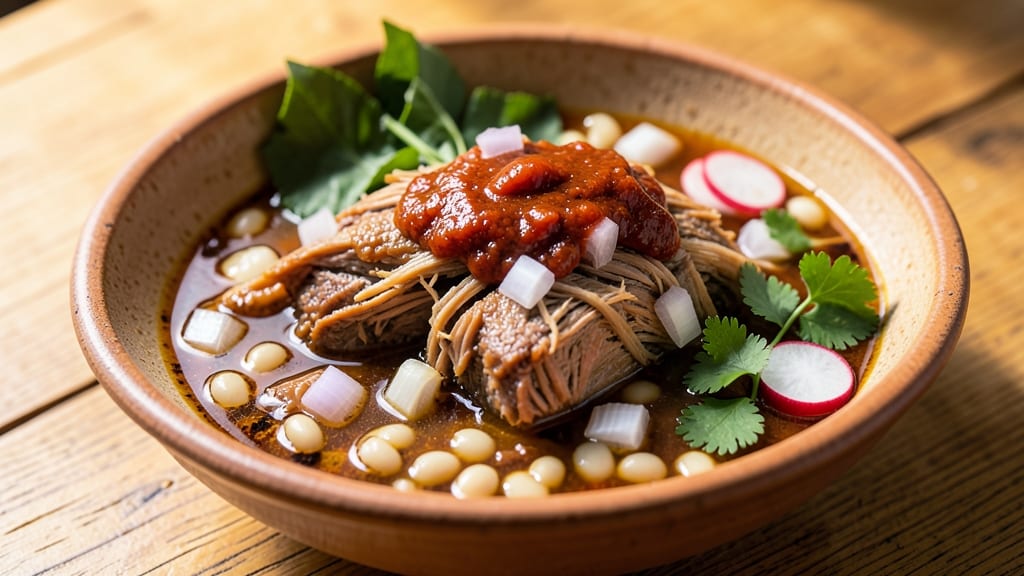
This authentic Mexican pork pozole recipe brings the soul of Mexican home cooking to your table with its fragrant broth, tender pork, and comforting hominy. 🌟 After perfecting this dish through years of practice—learning from both family traditions and professional techniques—I can confidently say this is the real deal, not just another take on pozole.
The secret lies in slow-cooked pork, properly toasted spices, and the perfect balance of tangy, earthy, and smoky flavors that make every bite unforgettable.
What sets this recipe apart is its attention to authenticity—from the slow-simmered broth infused with dried chilies and aromatic spices to the perfectly tender pork that falls apart at the touch. The hominy, a staple of pozole, adds a satisfying texture and earthy depth that anchors the dish.
This isn’t just a recipe; it’s a celebration of Mexican comfort food, where every element—from the spices to the toppings—works in harmony to create something truly special.
The result is a rich, flavorful stew that’s as hearty as it is delicious, with a broth so aromatic it’ll fill your kitchen with warmth. The pork is melt-in-your-mouth tender, the hominy is perfectly cooked, and the spices—guajillo, ancho, and chipotle—deliver a complex, balanced heat that’s both bold and inviting.
This is the kind of dish that feels like a hug in a bowl, perfect for gatherings or cozy nights in.
Top it with traditional garnishes like shredded lettuce, radishes, lime, and avocado for a burst of freshness that cuts through the richness. The toppings aren’t just for show—they’re essential for balancing the flavors and adding texture.
Whether you’re serving it at a fiesta or enjoying a quiet dinner, this pozole is a testament to the beauty of authentic Mexican cooking. Let’s get started!
Ingredients for authentic mexican pork pozole
Sixteen ingredients. One unforgettable dish. Authentic Mexican flavors start here.
| Ingredient | Amount | Notes |
|---|---|---|
| Pork Shoulder 🥩 | 3 lb | Bone-in for maximum flavor |
| Dried Hominy (Nixtamalized Corn) 🌽 | 2 cups | Pre-soaked for 2 hours |
| Dried Guajillo Chilies 🌶️ | 4 whole | Stems and seeds removed |
| Dried Ancho Chilies 🌶️ | 2 whole | Stems and seeds removed |
| Dried Chipotle Peppers in Adobo 🌶️ | 2 whole | From can, chopped |
| White Onions 🧅 | 2 whole | Quartered, skins on |
| Garlic Cloves 🧄 | 6 cloves | Peeled, lightly toasted |
| Fresh Cilantro 🌿 | ½ cup | Chopped, for garnish |
| Limes 🍋 | 4 whole | Juiced, for serving |
| Avocados 🥑 | 2 whole | Sliced, for garnish |
| Radishes 🥕 | 1 lb | Thinly sliced, for garnish |
| Iceberg Lettuce 🥬 | 1 head | Shredded, for garnish |
| Ground Cumin 🌿 | 2 tbsp | Toasted for depth |
| Ground Coriander 🌿 | 1 tbsp | Freshly ground preferred |
| Mexican Oregano 🍃 | 1 tbsp | Not regular oregano |
| Salt 🧂 | 1 ½ tsp | Diamond Crystal preferred |
| Cinnamon Sticks 🌳 | 2 whole | For aromatic touch |
| Bay Leaves 🍃 | 2 whole | For simmering |
| Vegetable Oil 🫒 | ¼ cup | For initial searing |
The pork shoulder is non-negotiable—bone-in for maximum flavor and broth richness. Costco or your local butcher shop are your best bets for quality cuts. Look for well-marbled meat with a vibrant color. If you can't find Mexican oregano, Penzeys Spices or Latin markets carry it—it's got a completely different profile than Italian oregano. The dried chilies? La Tienda or H Mart have the best selection, but any Mexican grocery store will do. Toast them lightly first—it deepens their flavor without burning. For hominy, Goya or Bob's Red Mill are reliable brands, but check the label for nixtamalized corn specifically.
No guajillo chilies? Ancho or pasilla peppers work in a pinch, but the flavor will shift slightly. Fresh cilantro is ideal, but dried at one-third the amount gets you close. The avocados should be ripe but firm—Hass variety is best, and they keep for 3-4 days in the fridge once cut. Short on radishes? Thinly sliced jicama adds a similar crunch. The lime juice is essential for brightness—Mexican limes are sweeter, but regular limes work too. For the spices, toast the cumin and coriander in a dry pan for 30 seconds until fragrant—trust me on this. It makes all the difference.
Pork keeps for 3 days in the fridge, but it's best used within 24 hours for maximum tenderness. The dried chilies stay potent for 6 months in a cool, dark place, but once opened, use them within 3 months. Hominy can be pre-soaked overnight and stored in the fridge for 5 days. Garnishes like avocado and radishes should be prepped fresh when serving—they add the final freshness punch. This pozole actually tastes better the next day as flavors meld, so plan ahead. Portion into containers for easy lunches—it reheats beautifully
Why You'll Love This Recipe
- One-Pot Magic: I swear by this—no chopping, no fuss. The pork shoulder falls apart on its own, and the hominy just needs a quick soak. Honestly, the hardest part is waiting for it to simmer.
- Smoky Depth Bomb: That chipotle in adobo? It’s the secret weapon—deep, smoky heat that lingers. The guajillo and ancho chilies add a fruity sweetness that balances everything perfectly. (Yes, even on a Tuesday night.)
- Crowd-Pleaser Flex: Game day, family dinner, or just because—this feeds 8 with leftovers that taste better the next day. My daughter picks out the hominy first, but still asks for seconds.
- Budget Feast: Pork shoulder stretches for miles, and dried chilies last forever. I make this for $12 and still feel like I’m at a fiesta. Not the prettiest, but the taste makes up for it.
Step-by-step instructions for authentic Mexican pork pozole
Let's build this rich, smoky pozole with layer upon layer of authentic Mexican flavors.
🔥 Step 1: Sear the Pork Shoulder Until Deeply Browned
Heat the 0.25 cup vegetable oil in a large Dutch oven over medium-high heat. Pat the 3 lb pork shoulder completely dry with paper towels—this ensures maximum crispiness. Working in batches if needed, add the pork and sear until all sides develop a deep mahogany crust, about 8-10 minutes per side.
Don't rush this step. The deep browning creates the foundation for that complex, caramelized flavor that defines authentic pozole. Once browned, remove the pork and set aside. The rendered fat in the pot will become your flavor base, so don't wipe it out.
🍳 Step 2: Toast and Blend the Chili Paste
In the same Dutch oven, add the 4 whole dried guajillo chilies, 2 whole dried ancho chilies, and 2 whole dried chipotle peppers in adobo. Toast them over medium heat for 30 seconds per side until fragrant and slightly puffed—just enough to wake up their flavors without burning. Transfer to a bowl and cover with 2 cups hot water from the kettle.
Let them soak for 15 minutes while you prepare the aromatics. Then drain and blend with 2 whole quartered white onions, 6 cloves garlic cloves, 2 tbsp ground cumin, 1 tbsp ground coriander, 1 tbsp Mexican oregano, 1.5 tsp salt, 2 whole cinnamon sticks, and 2 whole bay leaves until smooth. This vibrant red paste is the soul of your pozole.
🍳 Step 3: Build the Flavor Base with Aromatics
Return the blended chili paste to the Dutch oven and cook over medium heat for 5 minutes, stirring constantly, until the raw taste disappears and the mixture darkens slightly. Add 8 cups water (enough to cover the pork) and bring to a gentle boil. Skim off any foam that rises to the surface—this ensures a clean broth.
Return the seared pork shoulder to the pot, along with the 2 cups pre-soaked dried hominy (nixtamalized corn). The hominy should be soaked for at least 2 hours beforehand—this prevents it from breaking apart during cooking. Add the 2 whole quartered white onions you didn't blend earlier and the 6 cloves garlic cloves.
⏰ Step 4: Simmer Until Fork-Tender
Reduce heat to low and cover partially. Let the pozole simmer gently for 2.5-3 hours, maintaining a temperature around 190-200°F. You'll know it's ready when the pork falls apart easily with a fork and the broth has deepened in color and flavor. The hominy should be tender but still hold its shape.
Here's the thing about pozole—patience is key. The longer it simmers, the more complex the flavors become. I like to check it every 30 minutes to ensure the liquid level hasn't reduced too much. If needed, add ½ cup hot water to maintain the proper consistency.
🥘 Step 5: Prepare Garnishes and Serve
While the pozole simmers, prepare your toppings. Thinly slice the 1 lb radishes and shred the 1 head iceberg lettuce. Slice the 2 whole avocados and juice the 4 whole limes. Chop the 0.5 cup fresh cilantro finely—this adds that bright, fresh contrast to the rich broth.
To serve, ladle the pozole into bowls, making sure each portion has both pork and hominy. Let guests customize their bowls with the prepared toppings. The traditional way is to serve with warm corn tortillas on the side—perfect for soaking up every last drop of that flavorful broth.
Pro Tips For Making Authentic Mexican Pork Pozole
- Brown the Pork First: Skip the slow start—sear the pork shoulder in batches over medium-high heat until deeply browned. I learned this the hard way: rushing straight to simmering means flavorless broth. The crust locks in meaty depth that no amount of simmering later can replace.
- Toast Chilies Until Fragrant: Dry-toast your guajillo and ancho chilies in a skillet for 30 seconds per side—just until they smell like smoke and campfires. Overdoing it turns them bitter, but under-toasting leaves them dull. Chipotles in adobo? Add them whole at the end; their smoky punch needs no pre-treatment.
- Soak Hominy Overnight: Toss dried hominy in cold water for at least 8 hours (yes, even if you’re impatient like me). Skipping this step means gummy, undercooked kernels that ruin the texture. Drain well, but save that starchy water—it’s liquid gold for thickening later.
- Simmer Low and Long: After the initial boil, drop the heat to a bare simmer and let the pork cook for 3–4 hours, not 2. I used to rush it, and the meat would either fall apart or taste dry. A meat thermometer at 205°F guarantees tender, pull-apart perfection without guessing.
Storing and reheating your leftovers
Refrigerator Storage
Pozole tastes even better the next day, so store leftovers in an airtight container in the fridge for up to 4 days. The flavors meld beautifully overnight, deepening that smoky, spicy harmony.
I use glass Pyrex containers with snap-on lids—they keep the dish fresh and make reheating easier. Let the pozole cool completely before storing to prevent condensation, which can dilute the broth. 💫
Freezer Storage
For longer storage, freeze pozole in single-serving portions (about 2 cups per container) to preserve texture and flavor. Use freezer-safe plastic containers or heavy-duty quart-sized freezer bags, leaving 1-inch headspace for expansion.
Label with the date—pozole freezes well for up to 3 months. Thaw overnight in the fridge before reheating for best results.
Stovetop Reheating
This is my go-to method because it restores the pozole’s rich texture. Pour the frozen or refrigerated pozole into a heavy-bottomed pot and heat over medium-low heat for 10-15 minutes, stirring occasionally.
Add ¼ cup hot water or broth if it looks too thick—pozole reheats better with a little extra liquid. Taste and adjust seasoning, as flavors can concentrate during storage. 🔥
Microwave Reheating
For quick lunches, transfer pozole to a microwave-safe bowl and heat on 50% power for 3-4 minutes, stirring halfway. Avoid full power—it can make the hominy mushy.
If the broth seems too thick, add 2-3 tablespoons of water or broth and stir. Top with fresh garnishes (lime, cilantro, avocado) to brighten the flavors post-reheat.
Reviving Garnishes
Store toppings separately to keep them crisp. Radishes and lettuce stay fresh in airtight containers for 3-4 days in the fridge. Avocados ripen faster once sliced—spritz with lemon juice and store in a sealed container for up to 2 days.
Lime juice can be prepped ahead and stored in an ice cube tray for easy portioning. Fresh cilantro holds up well for 5 days in a sealed bag with a paper towel to absorb moisture. ✨
Make-Ahead Tips
Prep toppings the night before for a stress-free serving. Soak the hominy overnight in the fridge, and chop all garnishes in advance. Store them in small containers in the fridge—this way, you just assemble everything when ready to serve.
I even prep the chili paste ahead and refrigerate it; just reheat it gently before adding to the broth. This saves time and ensures every bite is packed with authentic flavor. 💡
Nutrition facts
Frequently asked questions
What's the difference between red, green, and white pozole?
This recipe makes the classic red pozole, which gets its color and depth from guajillo and ancho chilies. Green pozole uses tomatillos and green chilies for a tangy, herbaceous flavor, while white pozole skips the chili paste entirely, relying on just pork and hominy. The red version is the most traditional and flavorful for beginners.
Can I substitute chicken or beef for the pork?
While pork is traditional, you can use chicken thighs (bone-in for flavor) or beef chuck roast—both work well. The cooking time will vary: chicken needs about 1.5 hours, while beef requires 3-4 hours to tenderize. For authenticity, pork shoulder is ideal as it stays juicy and absorbs the broth beautifully.
How do I adjust the spice level for kids or sensitive eaters?
Start by reducing the chipotle peppers to 1 whole pepper and omitting half the guajillo chilies. For a milder broth, blend the chilies with 1 extra cup of water to dilute the heat. Always serve with extra lime wedges and avocado—their freshness balances the spice naturally.
Why does my homemade pozole taste different from restaurant versions?
Restaurant pozole often uses pre-made chili powder blends or instant hominy, which lack depth. Authentic versions rely on toasted whole spices and slow-simmered broths**. The key difference is time—restaurants prioritize speed, while homemade pozole develops richer, more complex flavors over 2.5-3 hours of simmering.
Can I make pozole in a slow cooker or Instant Pot?
For a slow cooker, sear the pork first, then transfer everything to the pot and cook on low for 8 hours or high for 4 hours. For an Instant Pot, use the high-pressure setting for 45 minutes after searing. Both methods work, but the stovetop version gives you more control over the simmering process for deeper flavor development.