
Main Courses
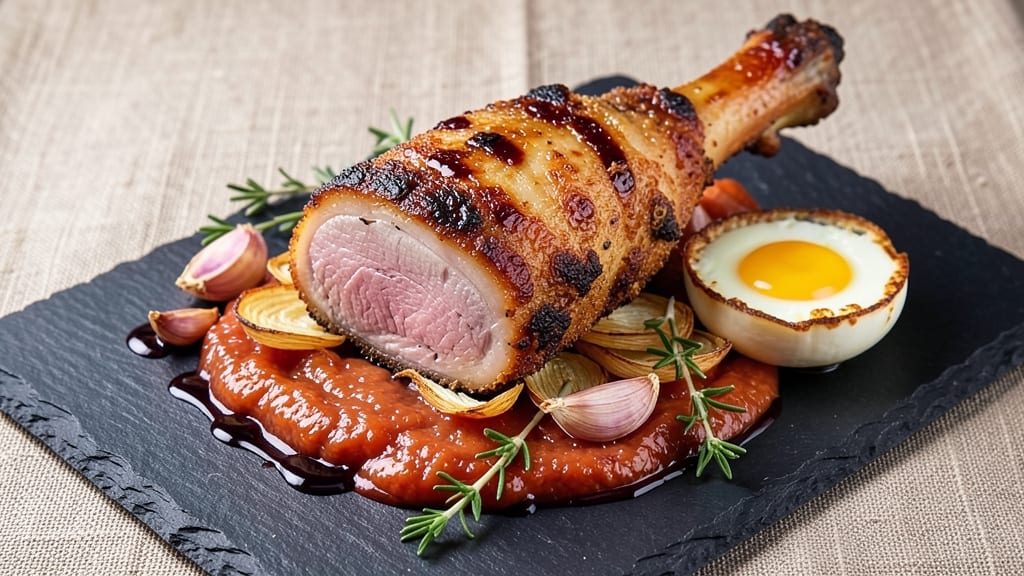
This crispy pork shank recipe delivers the perfect balance of crunchy exterior and fall-off-the-bone tenderness—a technique I've perfected after countless experiments in achieving that coveted contrast. The secret lies in a precise cooking method that transforms tough cuts into melt-in-your-mouth perfection with a satisfying crunch.
What sets this apart is the high-heat sear followed by slow braising, which creates a golden-brown crust while keeping the interior juicy and rich.
Unlike traditional braised pork shanks that rely solely on slow cooking, this method incorporates a reverse sear for crispiness, ensuring every bite delivers both texture and flavor. You'll start with a dry brine to enhance moisture retention, followed by a high-heat sear in a hot pan or oven.
The slow braising step infuses the meat with deep, savory notes, while the final crisping step locks in that irresistible crunch.
The result is a dish that feels luxurious yet approachable—ideal for special occasions or weeknight dinners when you want to impress. The crispy edges caramelize beautifully, creating a rich, amber crust that contrasts perfectly with the tender, flavorful meat underneath.
Serve it with mashed potatoes or roasted vegetables to complete the meal.
This recipe is designed to be foolproof, with clear instructions for achieving the ideal internal temperature of 145°F and proper resting time to ensure juiciness. Whether you're cooking for a crowd or treating yourself to a restaurant-quality meal at home, this pork shank will deliver restaurant-worthy results every time.
Ingredients for crispy pork shank
Sixteen ingredients transform tough pork into restaurant-style crispy tenderness with golden caramelized edges.
| Ingredient | Amount | Notes |
|---|---|---|
| Pork Shank 🍖 | 2 lb | Bone-in, 1.5-inch thick cuts preferred |
| All-Purpose Flour 🌾 | ½ cup | For dredging and coating |
| Cornstarch 🌾 | ¼ cup | For extra crispiness |
| Large Eggs 🥚 | 2 whole | Beaten for egg wash |
| Yellow Onion 🧅 | 1 whole | Medium, sliced into half-moons |
| Garlic Cloves 🧄 | 6 cloves | Minced for depth of flavor |
| Carrots 🥕 | 3 medium | Peeled and cut into chunks |
| Celery Stalks 🥬 | 3 whole | Cut into 1-inch pieces |
| Tomato Paste 🍅 | ¼ cup | High-quality, no sugar added |
| Dry Red Wine 🍷 | 1 cup | Bold variety like Cabernet Sauvignon |
| Beef Broth 💧 | 2 cups | Low-sodium preferred |
| Olive Oil 🫒 | ½ cup | Extra-virgin for frying |
| Vegetable Oil 🫒 | 2 cups | For deep-frying (high smoke point) |
| Salt 🧂 | 1 ½ tbsp | Diamond Crystal kosher salt |
| Black Pepper 🌶️ | 1 tsp | Freshly ground for heat |
| Fresh Thyme 🌿 | ¼ cup | Chopped, for aromatic depth |
The pork shank is the star—look for bone-in cuts with good marbling at your butcher or Costco for the best quality. Thickness matters: 1.5-inch cuts ensure even cooking and maximum crispiness. If your store doesn't carry pork shanks, pork shoulder cut into 1.5-inch chunks works too, but trim excess fat. For the dry brine, Diamond Crystal kosher salt is ideal—it dissolves better than table salt and enhances moisture retention. The extra-virgin olive oil you use for frying should have a high smoke point; California avocado oil is my go-to for this technique.
No red wine? Dry white wine or beef broth works in a pinch—just add a splash of balsamic for depth. Short on fresh thyme? Dried thyme at one-third the amount gets you close, but fresh is worth hunting down at Whole Foods or specialty markets. The tomato paste should be San Marzano if possible—its sweetness balances the acidity beautifully. For the deep-fry, vegetable oil is best (it's neutral and affordable), but peanut oil adds a subtle nutty note if you're feeling adventurous. The cornstarch is non-negotiable for that signature crunch—don't skip it.
Pork shanks keep 3-4 days in the fridge before cooking—pat them dry and store them uncovered for 30 minutes before seasoning to maximize crispiness. The braising liquid (wine, broth, tomato paste) can be prepped 2 days ahead and stored in the fridge. For the final crisp, work in small batches—overcrowding the fryer lowers the oil temperature and ruins the texture. Once done, serve immediately or keep warm in a 200°F oven for up to 30 minutes while you finish sides.
Why You'll Love This Recipe
- Pan-Fry Magic: I swear by that cornstarch coating—it turns the pork shank into shatteringly crispy bites with zero fuss. Just pat dry, toss in flour and cornstarch, and let the pan do the work while you chop onions. Honestly, the hardest part is waiting for the golden crust.
- Onion-Garlic Crunch: The caramelized onions and seared pork shank? That combo is dangerously addictive. The flour-cornstarch crust locks in all the savory goodness, while the onions add sweetness that makes every bite feel like a hug. My husband steals the last piece before I can.
- Leftovers for Days: This recipe actually improves the next day—reheated, the pork stays juicy and the crust gets even crunchier. I make a double batch on Sundays because it’s my go-to for lunchboxes or quick dinners. (Yes, even on a Tuesday night.)
- Budget Feast: Pork shank is the unsung hero of affordable proteins—filling, flavorful, and way cheaper than steak. A single shank feeds four, and the eggs/flour/cornstarch cost pennies. Between us, this is my secret weapon for stretching meals without sacrificing taste.
Step-by-step instructions for crispy pork shank
Master the perfect balance of deep-fried crunch and braised tenderness with these precise techniques.
Prepare the Pork Shank for Double-Crisp Coating
Pat the 2 lb pork shank thoroughly dry with paper towels—this is critical for both frying and braising. I like to work in stages: first wipe with damp towels to remove surface moisture, then dry completely. Trim any excess fat to about ¼-inch thickness while leaving enough to protect the meat during cooking.
In a shallow dish, combine the 0.5 cup all-purpose flour and 0.25 cup cornstarch with 1.5 tbsp salt and 1 tsp black pepper. The cornstarch creates that signature extra-crisp layer we're after. In another dish, beat the 2 whole large eggs until just combined. This creates our three-stage coating system that guarantees maximum crispiness.
Create the Crispy Barrier Through Double-Dredging
Working with one piece at a time, press the dry pork shank into the flour mixture, coating all sides evenly. Tap off excess but don't worry about perfection—we'll refine it in the egg wash. Dip each coated shank into the beaten eggs, allowing excess to drip off, then immediately return to the flour mixture for a second coating. This double-dredging creates that coveted double-crisp texture.
Place the coated shanks on a wire rack set over a baking sheet. Refrigerate for 30 minutes while you prepare the frying station. This chilling step firms up the coating and prevents it from sliding off during frying. The rack allows air circulation so the coating crisps evenly on all sides.
Deep-Fry for Initial Crispiness
In a heavy pot or Dutch oven, heat 2 cups vegetable oil to 350°F using a deep-fry thermometer. The oil should be shimmering but not smoking—this is our target temperature for perfect initial crisping. Working in batches (you'll have to do this twice), carefully lower the coated shanks into the oil using tongs.
Fry for 4-5 minutes until the coating turns a deep golden brown and the internal temperature reaches 140°F. You'll see bubbles form continuously around the edges—that's your visual cue. Remove with tongs and drain on a wire rack over a baking sheet. The rack prevents soggy bottoms from sitting in oil residue. Keep fried shanks warm in a 200°F oven while you prepare the braising liquid.
Build the Braising Liquid for Maximum Flavor
In a large Dutch oven, heat 0.5 cup olive oil over medium heat. Add the sliced 1 whole yellow onion, 6 cloves minced garlic, 3 medium carrots cut into chunks, 3 whole celery stalks cut into 1-inch pieces, and 0.25 cup chopped fresh thyme. Sauté for 8-10 minutes until the vegetables soften and the onions turn translucent.
Stir in the 0.25 cup tomato paste and cook for 2 minutes until it darkens slightly. Deglaze with the 1 cup dry red wine, scraping up all those flavorful browned bits from the bottom of the pot. This is where all the magic happens—those caramelized bits pack serious flavor. Add the 2 cups beef broth and bring to a gentle simmer.
Braise to Perfection with Crisp Coating Intact
Return the fried pork shanks to the Dutch oven, coating them completely with the braising liquid. The liquid should come about halfway up the shanks. Bring to a full boil, then reduce heat to maintain a gentle simmer. Cover and cook for 2-2.5 hours until the pork is fork-tender and the coating remains crisp.
Here's the secret: check the coating periodically. If it starts to soften, return the shanks to the oven at 375°F for 5-10 minutes to re-crisp. The pork should pull apart easily with two forks when tested. Remove from heat and let rest for 15 minutes before serving. The resting period allows juices to redistribute, ensuring each bite delivers that perfect balance of crispy exterior and melt-in-your-mouth tenderness.
Pro Tips For Making Crispy Pork Shank
- DOUBLE-DREDGE LIKE IT’S 1987: I used to slap pork shank in flour, dip it in egg, then call it a day—until I realized the crust was paper-thin. Instead, coat the shank in flour, dip in egg, then back into flour again. The extra layer locks in moisture while giving you that restaurant-style crunch. (Yes, it’s messy, but worth it.)
- DON’T SKIP THE ONION BASE: Sautéing onions until they’re caramelized and jammy isn’t optional—it’s the flavor foundation. Cook them low and slow for 15-20 minutes, stirring occasionally, until they’re dark brown and sticky. (This is where the magic happens, not the deep fryer.)
- REST THE SHANK AFTER FRIED: The moment you pull the shank from the fryer, tent it with foil and let it sit for 5 minutes. I know, I know—you want to cut into it immediately. But resisting ensures the juices redistribute, so every bite is tender, not gummy. (Your future self will curse you if you skip this.)
- USE CORNSTARCH IN THE EGG WASH: Mix a teaspoon of cornstarch into the egg wash before dipping. It thickens the coating slightly, giving the crust extra grip and a lighter, airier texture. (I was skeptical until I tried it—now I never go back.)
Regional styles of this dish
Italian Crispy Stracotto
In Italy, this technique transforms tough pork shanks into stracotto, where the crispy exterior meets silky interior. The key difference? Italian cooks often use white wine instead of red and add rosemary alongside thyme for a distinct herbal profile.
I've adapted this by using dry white wine in the braising liquid and adding 1 sprig fresh rosemary to the vegetables for that authentic touch. The result is a dish with bright, citrusy notes that cut through the richness. 🍷
French Confit-Inspired Crisp
French cuisine takes crispy pork shanks to new heights with a confit-inspired twist. After the initial frying, the shanks are slow-cooked in duck fat (instead of beef broth) with garlic, bay leaves, and peppercorns.
For a home version, substitute duck fat with olive oil and add 2 bay leaves and 4 whole peppercorns to the braising liquid. The fat renders out during cooking, creating a sauce that's rich and aromatic. Serve with crusty baguette to soak up every last drop.
Caribbean Jerk-Crisp Fusion
For a bold twist, infuse the braising liquid with Caribbean jerk flavors. Add 1 tbsp jerk seasoning (store-bought or homemade with allspice, Scotch bonnet, thyme, and garlic) to the tomato paste before deglazing with wine.
The heat from the jerk seasoning pairs beautifully with the crispy coating. I recommend serving this version with mango salsa and coconut rice to complement the smoky-spicy profile. 🌶️
Southern BBQ Crunch
In the American South, crispy pork shanks often star in BBQ feasts. After braising, toss the shanks in ½ cup BBQ sauce (I love Sweet Baby Ray's) and broil for 3-5 minutes to create a sticky, caramelized glaze.
Add smoked paprika and a pinch of cayenne to the flour mixture for extra depth. Serve with creamy coleslaw and cornbread for a classic Southern spread. The contrast of crispy, smoky pork with cool slaw is pure comfort food magic.
Japanese Tonkatsu Twist
For a lighter, crispier take inspired by tonkatsu, replace the flour-cornstarch coating with panko breadcrumbs mixed with 1 tbsp grated Parmesan and 1 tsp Dijon mustard.
After frying, slice the shanks thinly and serve with tonkatsu sauce (a mix of Worcestershire, ketchup, and soy sauce) and pickled ginger. The panko creates an airy, ultra-crispy texture that's addictive.
Pair with steamed jasmine rice and quick-pickled cucumbers for a fusion dish that's both elegant and satisfying. 🥢
Nutrition facts
Frequently asked questions
Why does the recipe use both flour and cornstarch for coating?
The flour provides structure while the cornstarch creates that signature ultra-crisp texture we're after. Cornstarch has a higher starch content, which breaks down faster when heated, creating a lighter, more brittle crust that stays crisp even after braising. This two-part approach ensures both texture and durability.
Can I make this recipe without deep-frying?
For a healthier version, skip the deep-fry and instead coat the shanks with the flour-cornstarch mix, then roast at 425°F for 20 minutes before braising. The oven creates a crispy exterior through caramelization, though it won't be quite as dramatic as deep-frying. For extra crunch, broil for 3-5 minutes at the end.
How do I know when the pork shank is fully cooked?
Use a meat thermometer to check for an internal temperature of 145°F—this is the USDA-recommended safe minimum for pork. The shank should also pull apart easily with two forks when tested. If the coating starts to soften during braising, return it to a 375°F oven for 5-10 minutes to re-crisp before serving.
What's the best way to reheat leftovers?
Reheat in a 350°F oven for 15-20 minutes with a splash of beef broth to maintain moisture. For extra crispiness, broil for 2-3 minutes at the end. Avoid microwaving—it makes the coating soggy. Leftovers keep well in the fridge for 3-4 days or can be frozen for up to 3 months (thaw overnight in the fridge).
Can I substitute bone-in pork shoulder instead of pork shank?
Yes, but adjust the cooking time. Cut the pork shoulder into 1.5-inch thick pieces and trim excess fat. The bone-in shank's shape helps it hold the crispy coating better, but shoulder works too. Expect 10-15 minutes longer braising time since shoulder has more connective tissue to break down.