
Soups & Stews
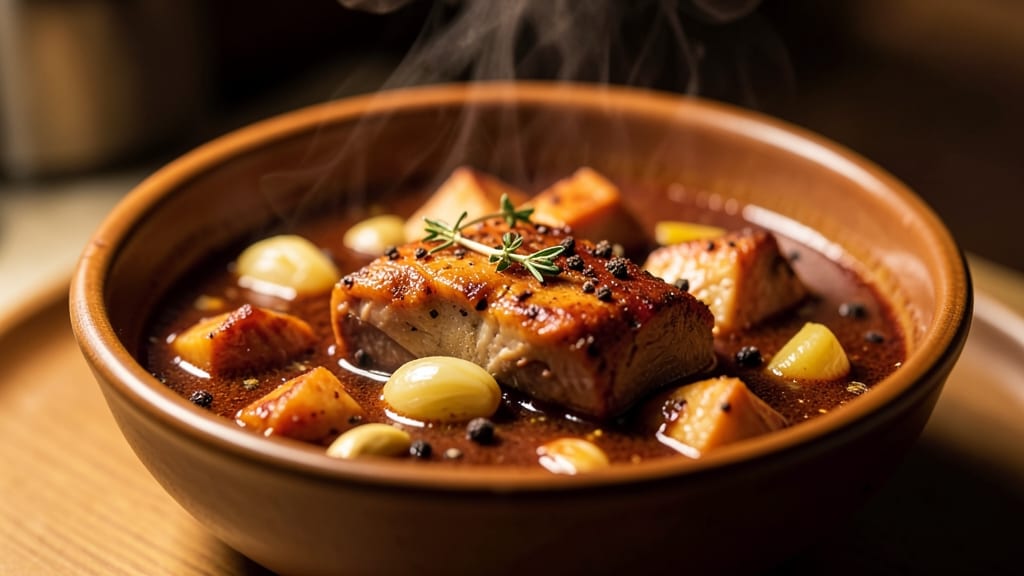
This Caribbean pork stew recipe brings the bold flavors of island kitchens to your pot, where spiced rum and citrus transform tough pork into melt-in-your-mouth perfection. 🌟 I first discovered this technique while working in Charleston, where Caribbean and Southern traditions collide beautifully. The secret lies in slow simmering—letting the spices and aromatics meld into the meat over hours, creating depth that can't be rushed.
The recipe starts with a marinade of dark rum, lime juice, and a blend of Caribbean spices—allspice, thyme, and scotch bonnet—that infuse the pork with layers of heat and sweetness.
Unlike quick-cooking methods, this stew rewards patience with rich, tender meat that practically falls apart at the touch of a spoon. The citrus keeps the flavors bright, while the rum adds a warm, caramelized note that develops as it simmers.
What you'll end up with is a stew that's hearty enough for a family dinner but elegant enough for a gathering—golden-brown pork chunks swimming in a sauce thick with spices and citrus, served with warm bread or rice.
The aroma alone will have everyone gathering around the table. This is comfort food at its finest, with the kind of complexity that makes it special.
Perfect for meal prep or a weekend project, this recipe scales beautifully and tastes even better the next day. The flavors deepen with time, making it ideal for feeding a crowd or storing leftovers. Let's get cooking—your taste buds will thank you.
Ingredients for caribbean pork stew
Spiced rum, citrus, and slow-simmered pork—this Caribbean-inspired stew is all about bold flavors and tender meat.
| Ingredient | Amount | Notes |
|---|---|---|
| Pork Shoulder 🍖 | 3 lb | Cut into 2-inch chunks |
| Dark Rum 🍹 | ½ cup | Spiced rum preferred |
| Fresh Lime Juice 🍋 | ½ cup | Freshly squeezed |
| Allspice Berries 🌶️ | 1 tbsp | Crushed lightly |
| Fresh Thyme Leaves 🌿 | 2 tbsp | Or 2 tsp dried thyme |
| Scotch Bonnet Pepper 🌶️ | 1 whole | Seeds removed for mild heat |
| Garlic Cloves 🧄 | 6 cloves | Minced |
| Yellow Onion 🧅 | 1 whole | Chopped |
| Carrots 🥕 | 3 whole | Cut into chunks |
| Tomato Paste 🍅 | 2 tbsp | Squeeze tube preferred |
| Chicken Broth 💧 | 2 cups | Low-sodium preferred |
| Olive Oil 🫒 | 2 tbsp | For searing |
| Salt 🧂 | 1 ½ tsp | Kosher or sea salt |
| Black Pepper 🌶️ | ½ tsp | Freshly ground |
| Bay Leaves 🌿 | 2 whole | For depth of flavor |
The pork shoulder is non-negotiable here—it's the star of the show. Butcher shops often have pre-cut chunks, which saves time, but if you're buying a whole shoulder, ask for it to be cut into 2-inch pieces. For the rum, Captain Morgan or Gosling's work perfectly, but any spiced rum will do. The scotch bonnet pepper is key for that Caribbean heat—if you can't find it, jalapeno or habanero in a pinch (but reduce seeds for less heat). Fresh thyme and allspice are worth seeking out at Whole Foods or Latin markets—they make all the difference.
No dark rum? Substitute with apple cider or extra lime juice—it won't be the same, but it'll work. Running low on scotch bonnet? Red pepper flakes at half the amount add heat without the fruity notes. The tomato paste can be skipped if you're not a fan, but it adds a nice depth. For the broth, low-sodium is a must—you don't want to over-salt the stew. The carrots can be baby carrots if that's what you've got, and the onions? Yellow or red—whatever's on sale. The bay leaves are easy to find at any grocery store, but if you're out, a sprig of rosemary works too.
This stew tastes even better the next day—honestly, it's worth making a big batch. Keeps for 4-5 days in the fridge, and freezes beautifully for up to 3 months. I like to portion it into containers so I can grab a serving for lunch without reheating the whole pot. The flavors deepen as it sits, so don't rush it. If you're serving a crowd, double the recipe—it's that good.
Why You'll Love This Recipe
- Here’s what sold me: the stew gets better the next day. The lime brightens up the richness, and the pork falls apart like it was slow-cooked for hours. Pack it for lunches or freeze it—either way, you win.
- One-Pot Magic: I swear by this—just toss pork shoulder, rum, and a handful of spices into one pot, then let it slow-cook. No chopping, no fussing, and honestly, the cleanup is just rinsing a spoon.
- Rum’s Secret Weapon: That splash of dark rum isn’t just for flavor—it tenderizes the meat and adds this deep, caramelized sweetness. The allspice and thyme? They turn it into something you’ll reach for instead of takeout.
- Weeknight Crowd-Pleaser: Between us, this feeds six but costs less than half the price of restaurant ribs. My kids ask for it after soccer games, and my partner makes me take leftovers to work—no complaints.
Step-by-Step instructions for Caribbean pork stew
Here's how to build bold Caribbean flavors in your slow-cooked pork stew.
🔥 Step 1: Sear the Pork Shoulder for Deep Flavor
Heat the 2 tablespoons olive oil in a large Dutch oven over medium-high heat until shimmering. Pat the 3 lb pork shoulder dry with paper towels—this ensures a proper sear. Working in batches if needed, add the pork chunks and sear for 3-4 minutes per side until deep golden brown forms on all sides.
Don't crowd the pan—this prevents the temperature from dropping too much. You'll know it's ready when the pork releases easily from the pan. Remove the seared pork and set it aside on a plate. Here's the thing—those browned bits are pure flavor, so we'll scrape them up later when we deglaze the pot.
🍳 Step 2: Build the Aromatic Base
In the same Dutch oven, reduce heat to medium and add the chopped yellow onion and cut carrots. Cook for 5 minutes until softened and slightly caramelized. Add the minced garlic cloves and cook for 30 seconds until fragrant—this prevents the garlic from burning.
Stir in the crushed allspice berries, fresh thyme leaves, and seeds-removed Scotch bonnet pepper. Cook for 1 minute to toast the spices until you can smell their warm, earthy aroma. Add the 2 tablespoons tomato paste and stir for 1 minute more, letting it darken slightly—this deepens the sauce's richness.
🍳 Step 3: Deglaze and Simmer the Stew
Pour in the 0.5 cup dark rum and scrape up all those browned bits from the bottom of the pot with a wooden spoon. Let it simmer for 3 minutes until the alcohol smell dissipates. Add the 2 cups chicken broth, 1.5 teaspoons salt, and 0.5 teaspoon black pepper, then return the pork to the pot.
Bring everything to a gentle boil, then reduce heat to low and cover. Let it simmer for 2 hours, stirring occasionally, until the pork is fork-tender. Here's the trick—add the 2 whole bay leaves and 0.5 cup fresh lime juice during the last 30 minutes of cooking to brighten the flavors.
⏰ Step 4: Finish and Adjust the Stew
Once the pork is tender, uncover the pot and increase heat to medium-high to reduce the sauce slightly for 5-7 minutes. You want it thick enough to coat the back of a spoon but still saucy. Taste and adjust seasoning—you might need a pinch more salt or lime juice to balance the flavors.
Let the stew rest for 10 minutes before serving. This allows the juices to redistribute, ensuring each bite is rich and flavorful. Serve with warm rice or crusty bread to soak up all that delicious Caribbean-inspired sauce.
Pro Tips For Making Caribbean Pork Stew
- CRANK THE HEAT FIRST: The pork shoulder needs a good sear—get your pot screaming hot before adding oil. I used to rush this, and the meat would just steam instead of developing that deep, caramelized crust that makes the stew taste like it simmered all day.
- TOAST THE ALLSPICE: Crush those whole allspice berries between your palm and a knife blade, then dry-toast them in the pot for 30 seconds before adding oil. Sounds weird, but it works—it wakes up the flavor so the rum and lime don’t have to carry all the spice notes.
- DON’T SKIP THE RUM REDUCTION: Let that dark rum bubble down to a syrupy glaze before adding liquid—about 5 minutes of hard simmering. I learned this the hard way: skipping it means a boozy but thin sauce instead of a rich, sticky one that clings to every bite.
- SAVE THE THYME FOR LAST: Add fresh thyme leaves in the final 15 minutes, not at the start. They’ll turn bitter if they stew too long—like overcooked cabbage, but worse. A quick splash of lime juice at the same time brightens them up perfectly.
Regional styles of these flavors
Jamaican Jerk-Inspired Twist
For a Jamaican-inspired version, swap the allspice for 2 tablespoons jerk seasoning (I love Epices de la Martinique brand) and add 1 tablespoon soy sauce to the marinade.
Use 1 habanero pepper instead of scotch bonnet for extra heat, and finish with 1 tablespoon brown sugar during the last 15 minutes of cooking. This creates a sticky, caramelized glaze that's pure comfort food. 🔥
Trinidadian Green Seasoning
Trinidadian cooks use green seasoning—a blend of fresh herbs like cilantro, culantro, and shado beni (epazote)—for a bright, herbal profile. Add 2 tbsp chopped cilantro and 1 tbsp chopped culantro (or extra thyme if unavailable) to the stew during the last 20 minutes of simmering.
For extra depth, stir in 1 tsp ground cumin when building the aromatic base. This version sings with fresh, vibrant flavors.
Cuban Mojo de Ajo Adaptation
Cuban mojo de ajo brings a citrusy, garlicky punch to pork dishes. Replace the rum with ½ cup fresh orange juice and add 4 extra minced garlic cloves to the marinade.
Use 1 tsp ground coriander instead of allspice, and finish with ½ cup chopped bell peppers during the last 30 minutes. This creates a sweeter, more aromatic stew with a touch of smokiness. 💫
Bahamian Conch-Inspired Depth
For a Bahamian twist, add ½ cup crushed conch shells (or 1 tbsp seafood base powder) to the broth while simmering. This mimics the briny, oceanic notes of Bahamian seafood stews. Include 1 tsp smoked paprika in the spice blend and finish with 2 tbsp chopped scallions.
The result is a stew with a subtle smoky, coastal character that pairs beautifully with coconut rice.
Puerto Rican Sofrito Base
Puerto Rican cooks often start with sofrito—a blend of roasted peppers, onions, and garlic. Sauté 1 red bell pepper (chopped) with the onions and carrots in Step 2. Add 1 tsp ground oregano and ½ tsp turmeric to the spice blend for warmth.
This version has a deeper, earthier flavor profile that's perfect for serving with mofongo (mashed plantains) on the side.
Nutrition facts
Frequently asked questions
Can I use a slow cooker instead of a Dutch oven?
Transfer all ingredients to your slow cooker after searing the pork in a separate pan. Cook on low for 6-7 hours or high for 3-4 hours, adding the lime juice and bay leaves during the last 30 minutes. The slow cooker makes this even more hands-off—just stir occasionally to prevent sticking.
What if I don't have scotch bonnet pepper?
No problem! Use 1 habanero or jalapeño (remove seeds for less heat) or ½ teaspoon cayenne pepper instead. For a milder kick, try 1 teaspoon smoked paprika—it adds depth without the fruity heat. The stew will still be flavorful, just with a different spice profile.
How do I make this stew spicier?
Boost the heat by adding ½ teaspoon extra cayenne when building the aromatic base, or stir in 1 tablespoon hot sauce during the last 10 minutes of cooking. For a smoky kick, include ½ teaspoon liquid smoke when deglazing with rum. Remember—taste as you go!
Can I make this stew in an Instant Pot?
Yes! Sear the pork first, then add all ingredients except lime juice and bay leaves. Cook on high pressure for 30 minutes, then quick-release. Stir in lime juice and bay leaves, and simmer on sauté mode for 10 minutes to reduce the sauce. The Instant Pot cuts cooking time by about half!
What's the best way to reheat leftovers?
Gently reheat on the stovetop over low heat with a splash of water or broth to prevent drying. Microwave in 30-second bursts, stirring between each, until heated through. Leftovers taste even better the next day—just add a squeeze of lime juice to refresh the flavors.