
Soups & Stews
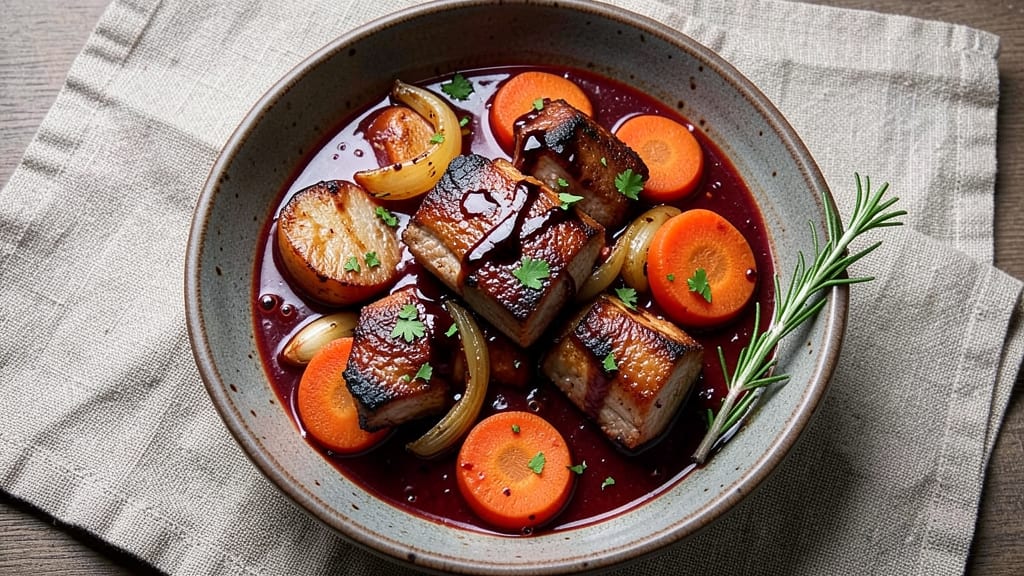
This brown stew pork recipe transforms tough cuts into melt-in-your-mouth perfection, a technique I perfected while cooking for 2,000 pounds of pork weekly at my restaurant. The secret lies in slow-braising after a deep sear, creating layers of caramelized richness that make every bite unforgettable.
My heritage farm-raised pork adds depth that store-bought simply can't match.
We start by searing pork chops or shoulder in batches until deeply browned, then deglaze with red wine to capture all those flavorful bits. The slow simmer in broth and tomatoes develops that signature deep color and tender texture that takes hours to achieve.
This isn't just a stew—it's a restaurant-quality meal that tastes like home.
The result is pork so tender it nearly falls apart, swimming in a sauce that's rich yet balanced with acidity from the wine and tomatoes. The aroma alone will have everyone gathering at your table. Serve with crusty bread to soak up every last drop of that velvety sauce.
Whether you're cooking for a family gathering or meal prepping for the week, this recipe delivers consistent results. The slow-cooker method makes it even more convenient without sacrificing quality. Let's get started on creating your perfect brown stew pork.
Ingredients for brown stew pork
Six pounds of pork shoulder and simple pantry staples create restaurant-quality stew.
| Ingredient | Amount | Notes |
|---|---|---|
| Pork Shoulder 🥩 | 3 lb | Bone-in for flavor, cut into 2-inch chunks |
| Yellow Onion 🧅 | 1 whole | Chopped into 1/2-inch pieces |
| Carrots 🥕 | 4 medium | Cut into 1-inch chunks |
| Garlic Cloves 🧄 | 6 cloves | Minced for deep flavor |
| Red Wine 🍷 | 1 cup | Bold dry variety like Cabernet |
| Tomato Paste 🍅 | ½ cup | For rich depth of flavor |
| Beef Broth 💧 | 4 cups | Low-sodium preferred |
| Bay Leaves 🌿 | 2 whole | For aromatic depth |
| Thyme 🍃 | 1 tbsp | Fresh preferred, dried works |
| Olive Oil 🫒 | ¼ cup | For searing pork |
| Salt 🧂 | 1 ½ tsp | Kosher or sea salt |
| Black Pepper 🌶️ | 1 tsp | Freshly ground preferred |
| All-Purpose Flour 🌾 | 2 tbsp | For thickening sauce |
| Fresh Parsley 🌿 | ¼ cup | Chopped for garnish |
The pork shoulder is the star here—look for heritage farm-raised cuts if you can find them, but regular store-bought works too. Costco or local butchers often carry larger cuts perfect for this recipe. If you can't find bone-in, use boneless but add a pork knuckle for extra flavor. The key is getting that deep sear before slow-cooking, so don't skip browning the pork in batches. For the wine, any bold red works—Cabernet, Merlot, or whatever's open in your cabinet.
No red wine? Beef broth with a splash of balsamic works perfectly fine. Fresh thyme is ideal but dried works at one-third the amount. If you're using dried, crush the bay leaves slightly to release more flavor. The tomato paste can be the squeeze tube kind from Trader Joe's—it's perfect for this recipe and lasts forever. Carrots can be baby carrots if that's what you've got, but the whole ones stay crunchier. For extra richness, add a splash of Worcestershire sauce at the end—it's an old-school trick that adds depth.
This stew tastes even better the next day as all the flavors meld together. Store in an airtight container in the fridge for up to 5 days or freeze portions for 3 months. I always make double batches because it reheats beautifully and makes great lunches. The sauce thickens as it cools, so add a splash of broth if it seems too thick when reheating. Serve with crusty bread to soak up every last drop of that velvety sauce—it's worth the extra minute of prep.
Why You'll Love This Recipe
- One-Pot Magic: I swear by this recipe when I’m too tired to scrub a million pots—just sear the pork shoulder, dump in chopped onions, carrots, and garlic, then let the red wine and slow simmer do the work. The rich, caramelized crust on the meat? That’s all from the same pan you started in.
- Wine-Infused Richness: Between us, that splash of red wine transforms this into something restaurant-worthy without trying too hard. The pork stays tender while soaking up deep, savory notes, and the carrots melt into the sauce like they’ve been slow-cooked all day (because they basically have).
- Leftovers That Save Me: I make this on Sundays because it tastes better the next day—yes, even on Tuesday night. The flavors meld into pure comfort, and I can reheat portions for lunch without it tasting like yesterday’s dinner. My freezer’s full of it too; just thaw and reheat.
- Budget-Friendly Feast: Pork shoulder is the secret weapon here—it’s cheap, forgiving, and turns into something luxurious with minimal effort. Onions, carrots, and garlic? Pantry staples. Red wine? Use what you’ve got. This recipe stretches every dollar while feeling like a splurge.
Step-by-step instructions for brown stew pork
Here's how to build deep, rich flavor through proper searing and slow braising.
Sear the Pork Shoulder for Maximum Flavor
Heat the 0.25 cup olive oil in a large Dutch oven over medium-high heat until shimmering. Pat the 3 lb pork shoulder dry with paper towels—this ensures a good sear. Working in batches if needed, add the pork and sear on all sides until deeply browned, about 8-10 minutes per side. The pork should release easily when pressed—if it sticks, don't force it; let it cook longer.
Once browned, remove the pork and set it aside. You're building flavor through the Maillard reaction, so don't rush this step. The browned bits left in the pot will form the base of your rich stew sauce. If the oil starts smoking, reduce the heat slightly to maintain control.
Sauté Vegetables and Deglaze the Pot
In the same Dutch oven, add the 1 whole yellow onion and 4 medium carrots, cutting them into even pieces as needed. Cook for 5-6 minutes until softened and lightly caramelized. Add the 6 cloves garlic cloves and 1 tbsp thyme, cooking for another 1 minute until fragrant.
Pour in the 1 cup red wine, scraping up all the browned bits from the bottom of the pot with a wooden spoon. Let it simmer for 3-4 minutes until mostly evaporated. This deglazing step captures all the meaty flavors that would otherwise stick to the pot. If the wine reduces too quickly, just let it go—it's what creates that deep, concentrated flavor.
Build the Stew Base with Tomato Paste and Broth
Stir in the 0.5 cup tomato paste and cook for 2 minutes until it darkens slightly. Sprinkle the 2 tbsp all-purpose flour over the mixture and stir vigorously to combine, cooking for another 1 minute. This creates a roux that will help thicken your stew.
Slowly pour in the 4 cups beef broth, stirring constantly to prevent lumps from forming. Add the 2 whole bay leaves, 1.5 tsp salt, and 1 tsp black pepper. Return the pork shoulder to the pot, making sure it's fully submerged in the liquid. Bring everything to a gentle simmer, then reduce the heat to maintain a low bubble—this is where the magic happens.
Slow-Braise Until Tender
Cover the pot and transfer it to a 325°F oven (or keep it on the stovetop at low heat). Let the pork stew for 2.5-3 hours, until the meat is fork-tender and easily pulls apart. You'll know it's ready when the internal temperature reaches 200-205°F—this is the "probe test" that guarantees tenderness.
If the liquid reduces too much before the pork is tender, add ½ cup water at a time to maintain enough liquid. The goal is to create a rich, velvety sauce that coats the pork beautifully. Don't peek too often—every time you lift the lid, you lose heat and moisture.
Finish and Serve with Fresh Parsley
Once the pork is tender, remove it from the pot and let it rest for 10 minutes before shredding it with two forks. Return the shredded pork to the pot and stir to combine with the sauce. Taste and adjust the seasoning if needed—you might need a little more salt or pepper to balance the flavors.
Remove and discard the bay leaves, then stir in the 0.25 cup fresh parsley just before serving. The parsley adds a bright finish that cuts through the richness of the stew. Serve immediately with crusty bread or over mashed potatoes to soak up every last bit of that delicious sauce.
Pro Tips For Making Brown Stew Pork
- SEAR THE PORK HARD: After patting the pork shoulder very dry, hit it with high heat in your Dutch oven—no crowding the pan. I learned this the hard way: soft searing means gray meat, not golden crust, and that’s where the flavor hides. Let those edges get dark and sticky before touching it with a spoon.
- CHOP ONIONS IN CHUNKS: Skip the fine dice—cut yellow onions into ½-inch pieces so they soften without disappearing. I used to over-chop, and they’d turn to mush before the pork fell apart. Big pieces stay recognizable and add texture to every bite.
- DEGLAZE WITH WINE IMMEDIATELY: As soon as you remove the pork, pour in that red wine right away while the pan is still hot. Scrape every last bit of browned bits—this isn’t just for flavor, it’s where the depth comes from. Let it simmer until it’s reduced by half before adding broth.
- ADD CARROTS LATE: Toss the carrots in only after the pork has cooked for 1.5 hours. They’ll soak up the liquid and turn mushy if they sit too long, but added late, they’ll stay firm and sweet. Think of them as the last-minute guests who bring the right energy.
Regional styles of these flavors
Southern Comfort Style
In the Southeast, we take our pork stews seriously—this version swaps red wine for ½ cup apple cider vinegar and ½ cup bourbon to create a tangy-sweet balance. Add 1 tbsp smoked paprika and 1 tsp cayenne for a subtle heat that reminds me of my grandma's kitchen.
I often serve this with cornbread instead of crusty bread—it's a Southern staple that soaks up the sauce perfectly. 🌶️
Charleston Lowcountry Twist
For a true Charleston touch, replace the beef broth with 4 cups shrimp or fish stock and add 1 small okra pod (sliced) and 2 diced celery stalks to the pot during the simmer. The okra thickens the stew naturally, and the seafood stock gives it a briny depth.
Finish with 1 tbsp hot sauce (like Crystal) and serve with she-crab soup on the side—it's a Lowcountry classic pairing. 🍤
Slow-Cooker Georgia Style
My restaurant's signature version starts with 2 tbsp brown sugar in the Dutch oven before adding the wine, creating a caramelized crust on the pork.
For the slow cooker, brown the pork in a skillet first, then transfer everything to a 6-quart slow cooker and cook on low for 8 hours or high for 5 hours. The slow cooker keeps the pork incredibly tender without drying it out.
I add ½ cup peach preserves at the end for a touch of sweetness that balances the savory flavors. 🍑
French-Inspired Boeuf Bourguignon
For a French-inspired version, replace the pork shoulder with bone-in pork chops and add 8 oz mushrooms (sliced) and 1 cup pearl onions to the pot. Deglaze with 1½ cups red wine instead of just 1 cup, and add 1 cup beef stock instead of broth.
Simmer for 2 hours instead of 3, as the chops cook faster. Finish with 2 tbsp Dijon mustard and serve with crusty baguette. This version is perfect for special occasions. 🥖
Asian Red-Braised Pork
Transform this into an Asian-inspired stew by replacing the red wine with 1 cup soy sauce and ½ cup Shaoxing wine. Add 1 tbsp grated ginger, 1 tsp five-spice powder, and 1 star anise pod during the simmer.
Use 4 cups chicken stock instead of beef, and add 2 tbsp hoisin sauce at the end. Serve over steamed jasmine rice for a completely different flavor profile that still delivers that tender, melt-in-your-mouth pork. 🍜
Nutrition facts
Frequently asked questions
Why do you sear the pork before stewing?
The searing step creates the Maillard reaction, which develops deep, caramelized flavors in those browned bits that become the foundation of your stew sauce. This technique transforms tough pork into tender, flavorful meat. Skipping it means missing out on that rich, meaty depth that makes this dish special.
Can I use pork chops instead of pork shoulder?
Yes, but you'll need to adjust the cooking time. Bone-in pork chops cook faster than shoulder and should be removed after about 1.5-2 hours when the internal temperature reaches 145°F. For extra richness, add 8 oz mushrooms and 1 cup pearl onions to the pot halfway through cooking.
How do I know when the pork is tender enough?
Use the "probe test"—when the pork easily pulls apart with two forks and reaches an internal temperature of 200-205°F, it's perfectly tender. If you're unsure, cut into a small piece and check the texture. The sauce should coat the back of a spoon, indicating proper reduction.
What if my stew sauce is too thin?
Simmer the stew uncovered for an additional 10-15 minutes to reduce the liquid naturally. For a quicker fix, mix 1 tbsp cornstarch with 2 tbsp cold water, stir it into the stew, and cook for another 2 minutes. Avoid adding flour directly—it can make the sauce grainy.
Can I make this in an Instant Pot?
Sear the pork in a skillet first, then transfer everything to your Instant Pot. Cook on high pressure for 60 minutes, then quick-release the pressure. The pork will be fork-tender, and you can thicken the sauce by simmering it on the stovetop for 5-10 minutes afterward. This cuts cooking time by nearly half!