
Soups & Stews
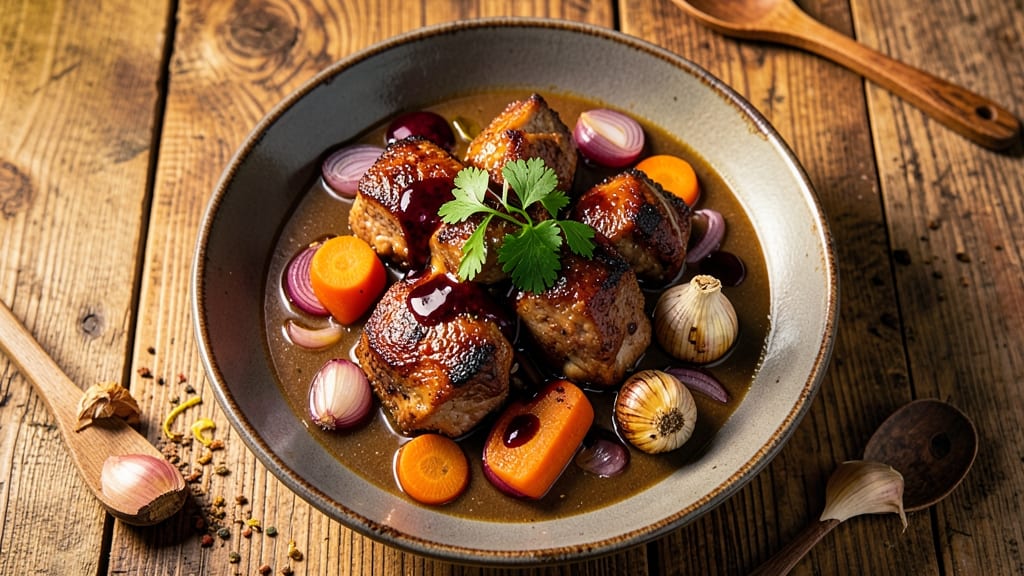
This braised pork stew recipe transforms tough cuts into melt-in-your-mouth perfection through slow-cooked magic. 🔥 As someone who's spent years perfecting pork at The Smoky Pig, I know the secret lies in patience—letting flavors develop while the meat tenderizes over hours.
The rich aroma alone will have your kitchen smelling like a Southern family dinner, and the first bite delivers that deep, caramelized flavor you can't get anywhere else.
What sets this recipe apart is the balance of technique and simplicity. You'll start with a proper sear to build flavor, then deglaze with wine and broth to create a foundation that's both aromatic and complex.
The slow cook transforms tough pork shoulder into shreds so tender they fall apart at the touch, while vegetables absorb all that savory goodness. It's the kind of dish that gets better as it sits, with flavors melding into something truly special.
The result is a stew that's hearty enough for a cold evening but elegant enough for company. Each spoonful delivers layers of flavor—smoky from the pork, bright from the vegetables, and rich from the slow-cooked broth.
The texture is what makes it unforgettable: crisp edges on the vegetables, tender meat that practically dissolves, and a sauce that coats everything perfectly. This is comfort food at its finest, the kind that makes people ask for seconds before they've even finished their first bowl.
Perfect for feeding a crowd or meal prepping for the week, this braised pork stew scales beautifully. Serve it with crusty bread to soak up every last drop of that flavorful sauce, or pair it with mashed potatoes for a classic Southern meal.
The beauty of this recipe is that it gets better the next day, making it ideal for making ahead when you know you'll be busy. Let's get started on creating this restaurant-quality dish at home.
Ingredients for braised pork stew
Pantry staples meet smoky magic for this unforgettable braised pork stew.
| Ingredient | Amount | Notes |
|---|---|---|
| Pork Shoulder 🥓 | 3 lb | Bone-in, cut into 2-inch chunks |
| Yellow Onion 🧅 | 1 whole | Chopped into 1/2-inch pieces |
| Carrots 🥕 | 4 medium | Peeled, cut into 1-inch chunks |
| Garlic Cloves 🧄 | 6 cloves | Smashed with side of knife |
| Red Wine 🍷 | 1 cup | Bold, dry variety like Cabernet |
| Beef Broth 💧 | 3 cups | Low-sodium preferred |
| Tomato Paste 🍅 | 2 tbsp | Squeeze tube works perfectly |
| Fresh Thyme 🌿 | 2 tbsp | Leaves only, finely chopped |
| Bay Leaves 🍃 | 2 whole | Dried, standard size |
| Olive Oil 🫒 | 2 tbsp | Extra-virgin for richness |
| Salt 🧂 | 1 ½ tsp | Kosher or sea salt |
| Black Pepper 🌶️ | 1 tsp | Freshly ground preferred |
| Balsamic Vinegar 🍶 | 1 tbsp | For deglazing |
| All-Purpose Flour 🌾 | 1 tbsp | For dredging pork |
The pork shoulder is non-negotiable—bone-in cuts add depth, and Costco or local butchers usually have the best prices. Look for good marbling, not too lean. For the wine, Cabernet Sauvignon or Merlot work best—whatever's open in your fridge. The beef broth? Low-sodium is key here, so you can control the seasoning. I always grab mine from Trader Joe's—their organic version has great flavor. Fresh thyme is ideal, but if you're using dried, reduce to 1 teaspoon and crush the leaves between your fingers to release the oils.
No red wine? Beef broth with a splash of balsamic gets you close. Short on carrots? Baby carrots or parsnips work just as well. The tomato paste can be skipped if you're sensitive to acidity, but it adds that deep umami base. For the flour, King Arthur or Gold Medal are my go-tos—they don't get lumpy. If you're making this ahead, double the broth so it reheats beautifully. The balsamic vinegar? Any good quality will do—no need to splurge.
This stew tastes even better the next day—make a double batch if you can. Keeps for 5 days in the fridge, and freezes for 3 months if you portion it properly. I like to freeze it in quart-sized containers so I can pull out exactly what I need. The pork gets more tender with each reheat, so don't be afraid to save leftovers. For serving, crusty bread or buttery mashed potatoes are perfect—just make sure to save some of that sauce!
Why You'll Love This Recipe
- One-Pot Magic: I swear by this recipe—just dump everything in one pot, walk away, and come back to perfect tender pork. No flipping, no fussing, no stress. That pork shoulder practically melts itself with the slow simmer, while the onions and carrots soften into sweet, caramelized bits. (Yes, even on a Tuesday night.)
- Wine-Infused Richness: Honestly, the red wine transforms this from "stew" to "restaurant-quality." It deepens the sauce into something velvety and complex—like a hug in a bowl. The garlic cloves? They don’t just flavor; they sing, especially when they crisp just a little at the edges.
- Leftovers That Beg for More: Between us, this stew improves overnight. The flavors marry into something even deeper, and reheating it? A five-minute microwave or stovetop job. My freezer’s always stocked because I can’t resist packing it for lunches—my coworkers still ask for seconds.
- Budget-Friendly Crowd-Pleaser: Pork shoulder is the secret weapon here—cheap, hearty, and impossible to mess up. A few onions, carrots, and a bottle of wine (use what you’ve got) stretch into six servings without breaking the bank. It’s the dish I make when friends drop by unexpectedly, and somehow, it always disappears.
Step-by-step instructions for braised pork stew
Here's how to transform humble ingredients into a restaurant-worthy braised pork stew with deep, complex flavors.
🔥 Step 1: Sear the Pork Shoulder for Maximum Flavor
Heat a large Dutch oven over medium-high heat until hot. Add the 2 tablespoons olive oil and let it shimmer for 30 seconds. Working in batches (don't overcrowd), add the 3 lb pork shoulder cut into 2-inch chunks, sprinkled with 1 teaspoon salt and ½ teaspoon black pepper.
Sear the pork for 3-4 minutes per side until deeply browned with a crust forming. I press down gently on the chunks during the first minute—this prevents them from curling and ensures even contact with the pan. Transfer the seared pork to a plate and set aside. Here's the thing—those browned bits are pure flavor, so don't wipe your pan clean.
👨🍳 Step 2: Build the Flavor Base with Aromatics
In the same Dutch oven, add the 1 whole yellow onion chopped into ½-inch pieces and the 4 medium carrots cut into 1-inch chunks. Cook for 5-6 minutes until the onions soften and the carrots begin to color. Add the 6 smashed garlic cloves and cook for another 30 seconds until fragrant.
Stir in the 2 tablespoons tomato paste and cook for 1 minute until it darkens slightly. This creates a rich foundation for the stew. Sprinkle in the 2 tablespoons fresh thyme and 2 whole bay leaves, stirring to combine. The thyme should release its aromatic oils—you'll smell that earthy goodness filling your kitchen.
🍳 Step 3: Deglaze and Develop the Sauce
Pour in the 1 cup red wine and scrape up all those browned bits from the bottom of the pan with a wooden spoon. This deglazing step captures all that concentrated flavor. Let the wine simmer for 3-4 minutes until reduced by half, then add the 3 cups beef broth and 1 tablespoon balsamic vinegar.
Bring to a gentle boil, then reduce heat to low and return the pork to the pot. The liquid should come about halfway up the pork chunks. Here's where the magic begins—this is where you'll let the stew work its slow-cooked alchemy. Partially cover the pot and let it simmer gently.
⏰ Step 4: Slow Braise Until Fork-Tender
Simmer the stew uncovered for 1 hour to allow the liquid to reduce slightly and the flavors to meld. Then cover and continue cooking at a gentle simmer for 2-2.5 hours until the pork is fork-tender. You'll know it's ready when a knife slides in easily and the meat pulls apart with gentle pressure.
About 30 minutes before the pork is done, sprinkle the remaining ½ teaspoon salt and ½ teaspoon black pepper over the stew. This final seasoning ensures perfect balance. The vegetables should be tender but still hold their shape—carrots should be fork-tender but not mushy.
🥘 Step 5: Finish with Flour for Thickening (Optional)
For a thicker stew, mix the 1 tablespoon all-purpose flour with 2 tablespoons cold water to make a slurry. Stir this into the stew and simmer for 5-7 minutes until thickened to your desired consistency. If you prefer a looser sauce, skip this step entirely—the stew will still be delicious.
Taste and adjust seasoning if needed. The stew should be rich and flavorful with a perfect balance of sweetness from the carrots, acidity from the wine and vinegar, and deep umami from the pork and tomato paste. Serve immediately with crusty bread to soak up every last drop of that glorious braising liquid.
Pro Tips For Making Braised Pork Stew
- SEAR THE PORK FIRST: Walk away from that pot until the pork shoulder turns deep brown—no pale gray patches. I used to rush this, and the stew always tasted flat. A hot cast-iron or heavy Dutch oven with 1 tablespoon of oil (yes, even if it’s fatty) guarantees that crust, which melts into the wine and onions later.
- CUT ONIONS IN EVEN SLICES: Skip the chopping—slice those yellow onions paper-thin, like you’re peeling an apple. They’ll soften faster and blend into the sauce instead of sitting as chunks. I learned this the hard way when my stew looked like a salad after hours of braising.
- DEGLAZE WITH WINE, THEN WATER: After searing, pour in the red wine and let it bubble for 2 minutes—don’t rush this. Then add 2 cups of water (or broth) to keep the sauce rich without turning it into soup. The wine’s acidity needs time to work its magic, not get drowned out.
- REST THE PORK BEFORE SLICING: Pull the pork out 10 minutes early, tent it with foil, and let it sit. Cutting it hot makes it turn to mush—trust me, I’ve served that disaster. The fibers relax, and the meat holds together when you slice it against the grain. (Your future self will thank you.)
Storing and reheating your leftovers
Refrigerator Storage
Let your braised pork stew cool completely before transferring to airtight containers—I swear by quart-sized glass containers with snap-on lids. Store at 40°F or below for up to 5 days, but honestly, the flavors deepen overnight like a fine wine.
I always leave ½ inch headspace to prevent condensation from diluting that precious sauce. 💪
Freezer Magic
This stew freezes beautifully for up to 3 months—perfect for busy weeknights. Portion into quart-sized freezer bags (squeeze out all air!) or glass containers. When ready to eat, thaw overnight in the fridge, then reheat gently.
I've found that freezer-safe plastic containers from Rubbermaid work best—they're stackable and won't crack.
Stovetop Reheating
My preferred method is stovetop—it preserves texture better than microwave. Transfer stew to a pot and heat over medium-low for 10-15 minutes, stirring occasionally. Add ¼ cup water or broth if it looks too thick.
The key is patience—rushing makes the sauce separate. Taste and adjust seasoning after reheating; you might need a pinch more salt. 🔥
Microwave Shortcut
For quick meals, microwave individual portions in a microwave-safe bowl on 50% power for 3-4 minutes, stirring halfway. Cover loosely with a damp paper towel to prevent drying.
If the sauce seems too thick after reheating, add a splash of beef broth or water and stir. This method works best for 1-2 servings at a time.
Make-Ahead Pro Tip
Double the recipe and freeze half immediately—you'll thank me later. The secret is to cool the stew quickly in an ice bath before freezing. When reheating, start with the frozen portion and add fresh ingredients (like carrots) after warming.
This keeps everything vibrant and prevents soggy vegetables. Trust me, your future self will appreciate this shortcut. ✨
Serving Warm
If serving directly from the fridge, reheat gently until steaming hot (165°F internal temp). I like to finish with a sprinkle of fresh thyme and a drizzle of extra-virgin olive oil right before serving.
The aroma alone will have everyone gathering around your table. Pair with crusty sourdough or buttery mashed potatoes for the full experience. 🍽️
Nutrition facts
Frequently asked questions about braised pork stew
Can I use a different cut of pork for this recipe?
While pork shoulder is ideal, you can substitute with pork butt or pork picnic roast—they're essentially the same cut. For leaner options, try pork loin, but reduce cooking time to 1.5 hours since it's more tender. Never use tenderloin—it'll turn mushy. The key is choosing a cut with enough fat and connective tissue for that melt-in-your-mouth texture.
What if I don't have red wine?
No problem! Use 1 cup beef broth plus 1 tablespoon balsamic vinegar for depth, or substitute with apple cider vinegar for brightness. For extra richness, add 1 teaspoon soy sauce or Worcestershire sauce. The wine adds acidity that tenderizes the meat—just replicate that balance with what you have.
How do I know when the pork is fully tender?
Insert a knife or fork into the thickest piece—it should slide in easily with no resistance. The meat should pull apart with gentle pressure, not require force. For extra assurance, check the internal temperature: 203°F is perfect for fall-apart tenderness. If it's not quite there, add ¼ cup water and cook another 30 minutes.
Can I make this stew in a slow cooker?
Sear the pork first in a skillet, then transfer everything to your slow cooker. Cook on low for 8-10 hours or high for 5-6 hours. The liquid will reduce more slowly, so you may need to add ½ cup broth if it gets too thick. The texture will be slightly different but still delicious. Just skip the final flour thickening step—it's not needed.
Why does my stew taste bland after reheating?
This usually happens when the sauce reduces too much or loses acidity. Fix it by adding 1 tablespoon balsamic vinegar or lemon juice when reheating, then adjust with salt and pepper. For future batches, reduce the broth by ½ cup or add 1 extra bay leaf during cooking. The stew should have layers of flavor—sweet, savory, and slightly tangy.