
Main Courses
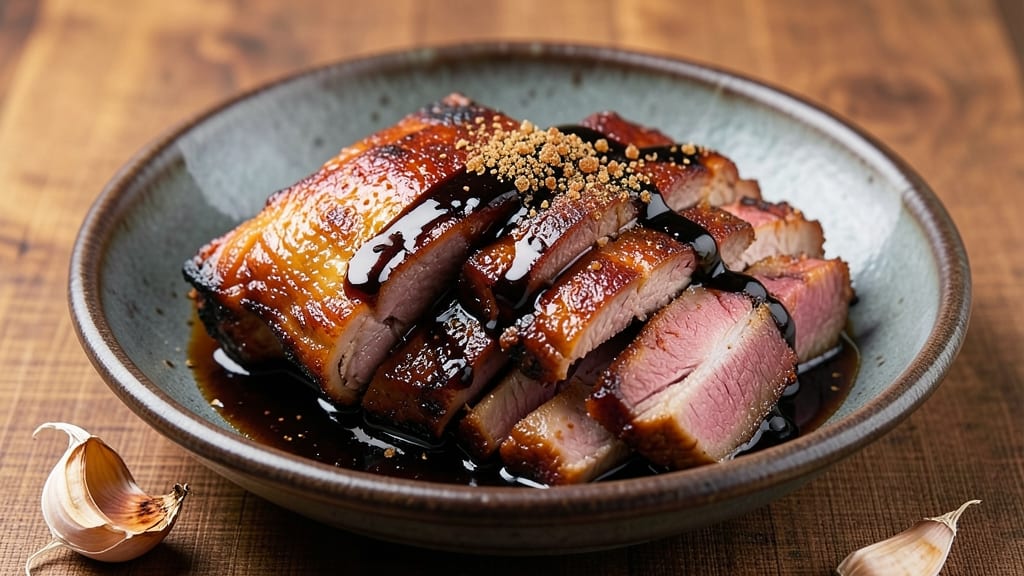
This black vinegar pork knuckle recipe transforms tough cuts into melt-in-your-mouth perfection through slow braising—a technique I perfected during my apprenticeship in Charleston. The key lies in the balance of tangy black vinegar and aromatic spices that tenderize the meat while building deep, caramelized flavors over hours of gentle cooking.
What starts as a dense, flavorful bone-in joint emerges as a dish so tender it falls apart at the touch, with a sauce rich enough to spoon directly over steamed rice.
The process begins with a marinade of black vinegar, soy sauce, and five-spice powder, which penetrates the meat while breaking down connective tissue.
Unlike quick-cook methods, this recipe demands patience—8 to 10 hours of braising at low temperatures ensures the collagen dissolves into the cooking liquid, creating a velvety sauce that clings to every bite.
I’ve tested this method countless times, and the results speak for themselves: restaurant-quality tenderness with minimal effort after the initial prep.
What you’ll achieve is a dish that commands the table—juicy, aromatic pork knuckle with crispy edges, served alongside its own tangy-sweet sauce. The black vinegar’s sharpness mellows into a complex sweetness, while the five-spice blend adds warmth that lingers.
This isn’t just a recipe; it’s a celebration of slow cooking, where time transforms simple ingredients into something extraordinary.
Pair it with steamed jasmine rice to soak up every last drop of sauce, or serve with quick-pickled vegetables for brightness. The leftovers? Even better the next day, as the flavors deepen. Trust me—once you master this technique, you’ll never buy pre-cooked pork again.
Ingredients for black vinegar pork knuckle
The secret to fall-off-the-bone pork knuckle lies in these 14 ingredients—simple but powerful.
| Ingredient | Amount | Notes |
|---|---|---|
| Pork Knuckle 🐖 | 3 lb | Bone-in, skin-on preferred |
| Black Vinegar 🍶 | ½ cup | Authentic Chinese black vinegar |
| Soy Sauce 🥄 | ½ cup | Dark soy preferred for color |
| Five-Spice Powder 🌶️ | 2 tbsp | Freshly ground preferred |
| Brown Sugar 🍚 | ½ cup | Packed, light brown preferred |
| Garlic Cloves 🧄 | 6 cloves | Minced, peeled |
| Fresh Ginger 🌿 | 2 tbsp | Grated, peeled |
| Star Anise 🌟 | 2 whole | Lightly crushed |
| Cinnamon Sticks 🌿 | 2 whole | 2-inch pieces |
| Bay Leaves 🍃 | 2 whole | Fresh preferred |
| Water 💧 | 4 cups | Filtered or spring water |
| Olive Oil 🫒 | 1 tbsp | For searing |
| Salt 🧂 | 1 ½ tsp | Kosher preferred |
| Black Pepper 🌶️ | 1 tsp | Freshly ground |
The pork knuckle is non-negotiable here—bone-in and skin-on for maximum flavor and tenderness. Asian markets often carry the best cuts, but any good butcher will have it. Look for good marbling and avoid anything with a grayish tint. The black vinegar? Chinese black vinegar from a specialty store (like H Mart or 99 Ranch Market) is essential—it has that deep, smoky sweetness that transforms this dish. If you can't find it, balsamic vinegar in a pinch, but it won't be the same. The five-spice powder should be freshly ground if possible—Penzeys or Spicewalla carry excellent blends, but even the basic grocery store stuff works if it's not ancient.
No dark soy sauce? Regular soy sauce plus a pinch of sugar mimics the color, though the flavor won't be identical. Fresh ginger and garlic are ideal, but dried ginger at half the amount or jarred minced garlic (drained well) will do. Star anise and cinnamon sticks can be found in the spice aisle—look for whole pods (not ground) for the best flavor. The olive oil matters for searing—high smoke point oils like avocado or grapeseed work best. Want to skip the star anise? Extra cinnamon sticks or a dash of anise extract keeps the warmth. The brown sugar should be packed—light brown for subtle molasses notes, dark brown if you love that caramelized depth.
This dish tastes even better the next day—plan ahead. The pork knuckle keeps 4-5 days in the fridge, and the sauce freezes beautifully for up to 3 months. Store the knuckle wrapped in its sauce, and reheat gently in the oven at 300°F until warmed through. For leftovers, I like to shred the meat and serve it over rice or noodles—double the batch if you're feeding a crowd. The sauce thickens as it cools, so a splash of water or vinegar thins it out when reheating.
Why You'll Love This Recipe
- Here’s what sold me: the black vinegar tenderizes the knuckle while caramelizing the edges into addictive crisp. The five-spice? It’s like a warm hug in every bite—sweet, smoky, and just a little funky.
- Five-Ingredient Magic: I swear by this combo—pork knuckle, black vinegar, soy sauce, five-spice, and brown sugar. That’s it. No fancy prep, no hidden shortcuts, just pure flavor with ingredients you’re probably already using.
- Crispy-Tender Obsession: Here’s what sold me: the black vinegar tenderizes the knuckle while caramelizing the edges into addictive crisp. The five-spice? It’s like a warm hug in every bite—sweet, smoky, and just a little funky.
- Weeknight Workhorse: This is my go-to when I’m feeding a crowd or just too tired to fuss. The sauce thickens beautifully, so it’s perfect for meal prep—tastes even better the next day (yes, even on a Tuesday night).
Step-by-step instructions for braised black vinegar pork knuckle
Here's how to transform a tough pork knuckle into melt-in-your-mouth perfection with this aromatic braise.
Sear the Pork Knuckle for Maximum Flavor
Pat the 3 lb pork knuckle completely dry with paper towels—this ensures a proper sear. Heat a heavy pot or Dutch oven over medium-high heat and add 1 tablespoon olive oil. Once shimmering, place the pork knuckle fat-side down and let it sear undisturbed for 8-10 minutes until the fat renders and the skin turns a deep golden brown. Flip and sear the other sides for another 5-6 minutes.
Here's the thing—don't rush this step. The Maillard reaction happening now creates deep, complex flavors that will infuse your braise. If the fat pools too quickly, tilt the pot to distribute it evenly. Once properly seared, remove the pork and set it aside on a plate.
Build the Aromatic Base
In the same pot, reduce heat to medium and add 6 cloves minced garlic cloves and 2 tablespoons grated fresh ginger. Sauté for 1-2 minutes until fragrant—you should smell that pungent, fresh aroma. Add 2 whole lightly crushed star anise, 2 whole 2-inch cinnamon sticks, and 2 whole bay leaves. Stir for 30 seconds to toast the spices gently, releasing their essential oils.
This is where the magic begins. The spices will infuse the braising liquid with their warm, earthy notes. Next, add 2 tablespoons five-spice powder and stir for another 30 seconds until the spices are evenly distributed and the pot smells like a spice market in China.
Create the Signature Black Vinegar Glaze
Pour in 0.5 cup black vinegar and 0.5 cup soy sauce, scraping up any browned bits from the bottom of the pot. Let it simmer for 3-4 minutes until the liquid reduces by about half and becomes syrupy. Add 0.5 cup packed brown sugar and stir until completely dissolved. This is your flavor foundation—sweet, tangy, and umami-rich.
Watch the sauce carefully—it should coat the back of a spoon but still be pourable. If it thickens too quickly, add 1 tablespoon water to help it reduce evenly. The black vinegar will give your pork that signature glossy sheen and complex tanginess that sets this dish apart.
Braise Until Fork-Tender
Return the seared pork knuckle to the pot, fat-side up. Pour in 4 cups water, then add 1.5 teaspoons salt and 1 teaspoon black pepper. Bring to a gentle simmer, then reduce heat to low and cover with a tight-fitting lid. Braise for 2.5 hours, then carefully flip the pork and continue cooking for another 1.5 hours until the meat is fork-tender and the bones pull away easily.
Here's the critical part: maintain a gentle simmer, not a rolling boil. You want the pork to cook slowly in its own juices, not toughen from agitation. Check the liquid level periodically—if it gets too low, add ½ cup water to keep the pork submerged. The pork is done when it reaches an internal temperature of 205°F and the meat falls apart with gentle pressure.
Rest and Serve with Glazed Perfection
Once the pork is tender, remove it from the pot and let it rest on a cutting board for 15 minutes. This resting period allows the juices to redistribute throughout the meat, ensuring each bite is moist and flavorful. Meanwhile, skim off any excess fat from the braising liquid and return it to medium heat. Simmer uncovered for 5-7 minutes to thicken the sauce slightly.
Slice the pork knuckle against the grain into ½-inch thick slices. Serve the pork with the reduced braising sauce spooned generously over the top. The contrast of tender, fall-off-the-bone meat with the glossy, tangy-sweet sauce is what makes this dish truly special. Pair with steamed jasmine rice to soak up every last drop of that delicious sauce.
Pro Tips For Making Black Vinegar Pork Knuckle
- BLISTER THE SKIN FIRST: Toss the pork knuckle in a 400°F (200°C) oven for 15 minutes before braising—this renders fat and creates a crackling crust that soaks up the black vinegar glaze better. I used to skip this, and the final dish always tasted duller, like it missed a layer of flavor.
- USE THICK BLACK VINEGAR: Don’t grab the cheap, watery stuff—look for aged black vinegar (like Zhenjiang or Chinkiang) with a syrupy consistency. It’s pricier but cuts through the pork’s richness and caramelizes into a glossy, sticky sauce. The thin kind just makes a sad, runny mess.
- DON’T RUSH THE REDUCTION: Simmer the sauce (vinegar, soy, sugar, spices) until it’s deep brown and syrupy, not just thickened. I learned this the hard way—rushing it leaves a cloying sweetness instead of a balanced, tangy depth. Patience here makes the difference between "meh" and "wow."
- SAVE THE FAT: After roasting, skim the rendered pork fat from the pan and fold it back into the finished dish at the end. It adds richness without making the sauce greasy. (Yes, even if you’re the type who usually tosses it—trust me, it’s worth the extra spoonful.)
Perfect pairings for this dish
Rice Pairing Perfection
Jasmine rice is my go-to pairing for this dish—its delicate floral aroma and slightly sticky texture make it the perfect canvas for the rich black vinegar sauce. I like to cook 1 cup jasmine rice with 1.5 cups water in a rice cooker, then fluff it gently before serving.
The rice absorbs the tangy-sweet sauce beautifully, creating each bite with that perfect balance of textures. For extra luxury, try short-grain sushi rice—its creaminess elevates the dish even further. 🍚
Pickled Vegetable Contrast
Quick-pickled vegetables cut through the richness of the pork and add a refreshing crunch. I recommend thinly sliced cucumbers, radishes, and carrots> tossed with ½ cup rice vinegar, 1 tbsp sugar, and a pinch of salt.
Let them sit for at least 30 minutes> before serving. The acidity brightens the dish, while the crunch provides a satisfying texture contrast. For a Southeast Asian twist, add thinly sliced daikon and scallions> to the mix.
Steamed Bok Choy Sides
Steamed bok choy with a sprinkle of toasted sesame seeds> adds a fresh, slightly bitter element that balances the pork's richness. Blanch 4 baby bok choy> in boiling water for 2 minutes>, then transfer to an ice bath to stop cooking.
Toss with 1 tsp sesame oil> and serve alongside the pork. The vibrant green color makes the dish visually appealing while adding nutritional value with vitamins A and C.
Dipping Sauce Options
For an interactive dining experience, offer a small bowl of hoisin sauce> mixed with a splash of chili oil> for dipping. The sweet-spicy combination enhances the pork's flavors while adding another layer of complexity.
I also like serving sriracha-infused mayo> (mix 2 tbsp mayo> with 1 tsp sriracha>) for those who prefer a bit of heat. These sauces let guests customize their experience based on their taste preferences. 🌶️
Cucumber Salad Refreshment
My grandmother's cucumber salad is a must for balancing this rich dish. Thinly slice 1 English cucumber> and toss with 1 tbsp rice vinegar>, ½ tsp sugar>, and a pinch of salt.
Let it sit for 15 minutes> before serving. The cool, crisp texture and mild tang complement the pork beautifully, especially on warmer days. This simple side adds freshness without overpowering the main dish.
Beverage Pairings
For drinks, I recommend a crisp Chinese jasmine tea> to cleanse the palate between bites. The floral notes complement the five-spice aroma in the pork. For alcohol pairings, a dry Riesling> from Germany offers the perfect acidity to cut through the richness.
If you prefer beer, try a light lager**> like Tsingtao—its subtle maltiness won't compete with the dish's bold flavors. 🍷
Nutrition facts
Frequently asked questions
Why does black vinegar make the pork knuckle so tender?
The acidity in black vinegar breaks down collagen in the connective tissue, while its enzymes tenderize the meat over time. The extended braising process (8-10 hours) allows these properties to work together, transforming tough muscle fibers into melt-in-your-mouth texture. The vinegar also creates that signature glossy sheen and complex sweet-tangy flavor.
Can I substitute regular vinegar for black vinegar?
While it won't be identical, you can use balsamic vinegar (1:1 ratio) for a similar depth of flavor, though it lacks the smoky sweetness. For a closer match, combine ½ cup rice vinegar + ¼ cup soy sauce + 1 tsp molasses. The dish will still be delicious, but the authentic black vinegar's complexity is hard to replicate.
How do I know when the pork knuckle is fully cooked?
The knuckle is done when it reaches 205°F internal temperature and the meat falls apart easily with gentle pressure from tongs. The bones should pull away cleanly from the flesh, and the sauce will thicken noticeably. Pro tip: If using a meat thermometer, insert it into the thickest part without touching bone.
Can I make this recipe in a slow cooker?
Sear the pork first, then transfer everything to a slow cooker and cook on low for 8-10 hours. The slow cooker maintains consistent low heat, which is ideal for tenderizing. Just check the liquid level occasionally and add water if needed to keep the pork submerged. The flavor will be just as rich, though the sauce may be slightly thinner.
What's the best way to reheat leftovers?
Reheat gently in the oven at 300°F for 20-30 minutes until warmed through, covered with foil. Avoid microwaving as it can make the meat dry. For extra flavor, add a splash of water or broth to the pan and simmer until heated. Leftovers taste even better the next day as flavors meld further!