
Main Courses
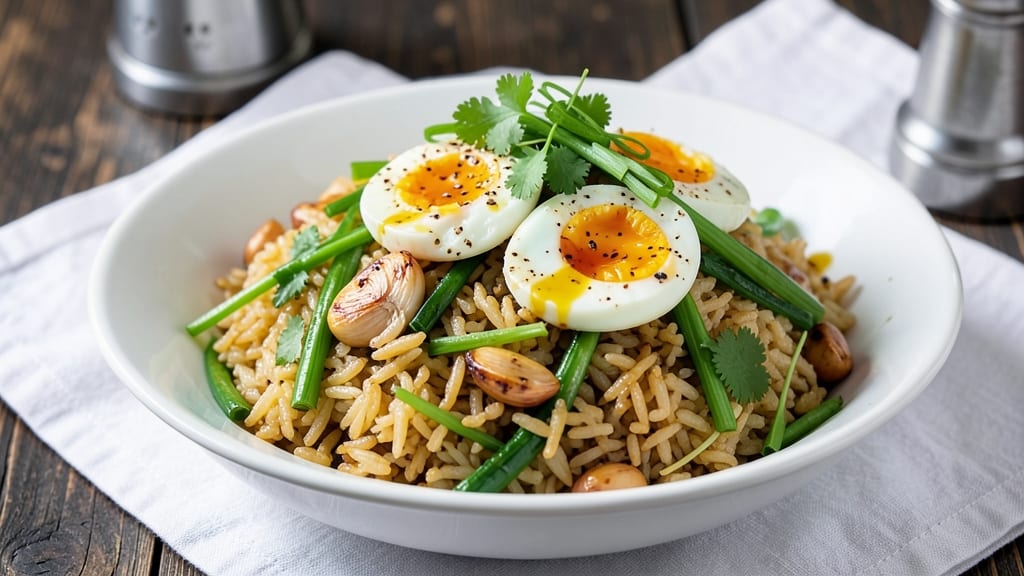
This bok choy fried rice recipe delivers restaurant-quality wok hei—crispy greens and tender eggs in every bite, all cooked in one pan. The secret lies in high-heat stir-frying, where bok choy wilts just enough to stay vibrant yet crisp, while eggs scramble into fluffy, savory strands.
I’ve perfected this method to balance texture and flavor without overpowering the delicate greens, making it a foolproof dish for weeknight dinners or meal prep.
The magic happens with a few key techniques: pre-cooking day-old rice for better texture, stir-frying bok choy in batches to maintain crispness, and finishing with a splash of sesame oil for that signature wok aroma.
Whether you add shrimp, tofu, or keep it vegetarian, this recipe adapts effortlessly while delivering crispy edges and a harmonious blend of savory, umami, and freshness. Ready in under 30 minutes, it’s the ultimate one-pan meal that wows without the fuss.
Ingredients for bok choy fried rice
Four cups of crispy rice, vibrant greens, and fluffy eggs—this is your wok-hei fried rice foundation.
| Ingredient | Amount | Notes |
|---|---|---|
| Day-Old Jasmine Rice 🍚 | 4 cups | Cooked and cooled completely |
| Bok Choy 🥬 | 8 whole | Baby or regular, stems separated |
| Large Eggs 🥚 | 4 whole | Freshly beaten for scramble |
| Garlic Cloves 🧄 | 4 cloves | Minced for aromatic base |
| Green Onions 🧅 | 2 whole | Thinly sliced, white and green parts |
| Sesame Oil 🫒 | 1 tbsp | Toasted for wok aroma |
| Vegetable Oil 🫒 | 2 tbsp | High smoke point preferred |
| Low-Sodium Soy Sauce 🥢 | 2 tbsp | For umami depth |
| Oyster Sauce 🍶 | 1 tbsp | Vegetarian version if needed |
| Ginger 🌿 | 1 tsp | Freshly grated, aromatic |
| Salt 🧂 | ½ tsp | Diamond Crystal preferred |
| Black Pepper 🌶️ | ¼ tsp | Freshly ground for heat |
| Tofu 🍢 | ½ lb | Firm, pressed and cubed |
| White Pepper 🌶️ | ¼ tsp | For subtle earthiness |
The bok choy is non-negotiable for that signature crisp-tender texture. Look for bright green leaves with crisp stems—avoid any with yellowing or wilted spots. Whole Foods or Asian markets carry the best quality, but the standard grocery store variety works fine if it's fresh. Separate the stems early; they cook faster than the leaves and need separate handling. For tofu, grab firm or extra-firm from the refrigerated section—press it for 20 minutes before cubing to remove excess water. Sesame oil should be toasted (not flavored)—Kadoya or La Choy are reliable brands for that authentic wok aroma.
No soy sauce? Tamari or coconut aminos work in a pinch, though the flavor profile shifts slightly. Oyster sauce can be tricky to find vegetarian—Annie Chun's vegetarian version or vegetarian oyster sauce from Asian markets solves this. Garlic can be pre-minced to save time, but fresh always tastes better. Ginger should be peeled and grated just before using to preserve its zing. For vegetable oil, avocado or grapeseed oil have higher smoke points than olive oil, which is key for that crispy wok hei. Tofu substitutes? Swap in shredded cabbage or mushrooms for extra texture.
Rice reheats beautifully—microwave for 2 minutes with a splash of water to revive texture. Bok choy wilts fast, so prep it last. Store leftovers in airtight containers for up to 4 days in the fridge or freeze for 3 months. Sesame oil should be kept in a cool, dark place to prevent rancidity. For meal prep, cook the rice and tofu ahead, then stir-fry fresh bok choy and eggs when ready—keeps everything crisp. Double the batch and freeze portions for quick lunches.
Why You'll Love This Recipe
- No-Chop Night: I swear by this when I’m too tired to slice anything—just tear the bok choy into big chunks, scramble the eggs in the same pan, and toss everything together. The garlic and onions do all the work for you.
- Crispy-Creamy Magic: That first bite? The wok-fried rice has a satisfying crunch, while the eggs stay gloriously runny in the center. Honestly, the bok choy adds this fresh, almost citrusy kick that makes it feel way fancier than it is.
- Lunchbox Hero: Between us, this is my go-to for meal prep. Toss it in a container with a sprinkle of sesame seeds, and it stays fresh for days. My kids grab it for school—no complaints, just empty containers.
- Pantry Staple Savior: Day-old rice? Check. Eggs? Check. A head of bok choy lasts forever. I’ve made this with whatever veggies I had—carrots, peas, even leftover chicken—and it never feels like a chore. Budget-friendly and foolproof.
Step-by-step instructions for bok choy fried rice
Here's the professional technique to achieve wok-hei perfection with crispy bok choy and tender eggs.
Prep and Press the Tofu
Begin by pressing the 0.5 lb firm tofu to remove excess moisture. Place it between two layers of paper towels or a clean kitchen towel, then top with a heavy object like a cast-iron skillet or book for 15 minutes. This ensures the tofu will sear properly instead of steaming in the wok.
While the tofu presses, separate the 8 whole bok choy into stems and leaves. Thinly slice the stems into matchsticks and cut the leaves into bite-sized pieces. Thinly slice the 2 whole green onions, reserving the white and green parts separately. Mince the 4 cloves garlic cloves and finely grate the 1 tsp ginger. Beat the 4 whole large eggs in a bowl until just combined—no need to overmix.
Sear the Tofu and Aromatics
Heat a wok or large skillet over medium-high heat until a drop of water sizzles and evaporates instantly. Add 2 tablespoons vegetable oil and swirl to coat. Add the pressed tofu cubes and cook undisturbed for 2-3 minutes until golden brown on one side. Flip and repeat on the other side, then transfer to a plate.
In the same wok, add 1 tablespoon vegetable oil and swirl to coat. Add the minced garlic and grated ginger, cooking for 30 seconds until fragrant. Add the sliced bok choy stems and cook for 1 minute until they begin to soften. Stir in the sliced bok choy leaves and cook for another 1 minute until just wilted but still vibrant green.
Scramble the Eggs and Combine
Push the bok choy to one side of the wok, add 1 tablespoon vegetable oil, and pour in the beaten eggs. Scramble quickly over high heat for 30-45 seconds until just set but still slightly runny—this ensures a silky texture. Remove the eggs from the wok and set aside.
Add the 4 cups day-old jasmine rice to the wok, breaking up any clumps with a spatula. Stir-fry for 1 minute to heat through. Pour in the 2 tablespoons low-sodium soy sauce, 1 tablespoon oyster sauce, 0.5 teaspoon salt, 0.25 teaspoon black pepper, and 0.25 teaspoon white pepper. Toss everything together for 30 seconds until the rice is evenly coated and heated through.
Finish with Wok-Hei Crispiness
Return the scrambled eggs and tofu to the wok, tossing everything together for 1 minute to combine. Drizzle in the 1 tablespoon sesame oil and the reserved white and green parts of the green onions. Toss once more to distribute the oil and aromatics evenly.
Taste and adjust seasoning if needed—you may want to add a splash of water or a pinch more soy sauce for the perfect balance. Serve immediately while the rice is still hot and the bok choy retains its crisp-tender texture. The dish should be vibrant, flavorful, and packed with wok-hei—those signature smoky, crispy notes that make fried rice truly special.
Pro Tips For Making Bok Choy Fried Rice
- CHOP BOK CHOY SMALL: Cut the stems into ½-inch pieces and slice the leaves thin—this ensures even cooking and prevents soggy centers. I used to leave bigger chunks in there, and they’d stay crunchy while the rest turned mushy.
- SCRAMBLE EGGS FIRST: Push the eggs to one side of the pan and scramble them separately before folding into the rice. This keeps them tender instead of rubbery, and you won’t end up with a scrambled mess when you try to mix everything later.
- USE COLD RICE: Spread day-old rice on a tray and refrigerate for at least 30 minutes before cooking—this dries it out slightly and prevents a gummy texture. I learned this the hard way after making fried rice with warm, sticky rice that clumped into a sad paste.
- STIR-FRY GARLIC FAST: Mince the garlic finely and cook it over high heat for no more than 10 seconds—just until fragrant, not browned. Burnt garlic turns bitter, and you’ll regret it when you’re halfway through the dish.
Perfect pairings for these flavors
Side Dish Harmony
Start with a simple cucumber salad to balance the richness—slice 1 English cucumber into half-moons, toss with 1 tbsp rice vinegar, ½ tsp sugar, and a pinch of red pepper flakes. The cool crunch contrasts perfectly with the warm fried rice. 🥒
For extra depth, serve with steamed jasmine rice on the side—it’s a classic pairing that lets diners adjust their portions. I like to drizzle it with a little chili oil for an extra kick. Keep it minimal so the star, your bok choy fried rice, shines.
Protein Upgrades
Add shrimp for a seafood twist—sauté ½ lb peeled shrimp in 1 tbsp garlic-ginger paste until pink, then fold into the fried rice at the end. The shrimp’s sweetness complements the bok choy’s earthiness beautifully. 🦐
For vegetarians, crispy baked tofu or mushrooms work wonders. Sear ½ lb shiitake mushrooms in the same wok before adding the rice—their umami depth elevates the dish without overpowering it.
Sauce Pairings
Drizzle with sriracha mayo for a creamy, spicy kick—mix 2 tbsp mayonnaise with 1 tsp sriracha and a squeeze of lime. The coolness cuts through the fried rice’s heat, making every bite addictive. 🌶️
A drizzle of chili crisp adds texture and heat—look for La Choy Chili Crisp or Lee Kum Kee for that signature crunch. Use sparingly; it’s potent but irresistible for lovers of bold flavors.
Beverage Pairings
Sip on jasmine tea to cleanse your palate between bites—its floral notes complement the dish’s savory depth. A chilled green tea like Dragon Well works perfectly for a refreshing contrast. ☕
For something stronger, try a light lager like Asahi or a dry Riesling—both have crisp acidity that balances the fried rice’s richness. Avoid heavy beers or oaky whites; they’ll clash with the delicate bok choy.
Nutrition facts
Frequently asked questions
Why does the recipe call for day-old rice?
Day-old rice is crucial for perfect fried rice texture—it's drier and separates more easily, preventing a mushy result. Freshly cooked rice releases too much moisture when stir-fried, turning your dish into a sad, sticky mess. Pro tip: Spread hot rice on a tray to cool quickly and refrigerate leftovers overnight for best results.
Can I make this vegetarian without tofu?
Swap tofu for shiitake mushrooms (½ lb) or crispy baked tempeh—both add umami depth. For extra protein, try edamame or crumbled seitan. Just sear your substitute first to develop flavor before adding to the wok.
How do I prevent the bok choy from getting soggy?
Stir-fry the bok choy in batches over high heat—never overcrowd the pan. Cook stems first (1 minute), then leaves (1 minute) until just wilted but still bright green. The secret is high heat + quick cooking to maintain crisp-tender texture. Add it last to avoid steaming.
What's the best way to reheat leftovers?
Reheat in a dry skillet over medium heat with a splash of water (just enough to steam) for 2-3 minutes. Stir constantly to revive texture. Microwave reheating works but can make rice gummy—avoid it if you want that crispy wok hei. Store leftovers in airtight containers for up to 4 days.
Can I use frozen bok choy?
Not ideal—frozen bok choy loses texture and flavor. If you must, thaw completely first, then pat very dry with paper towels to remove excess moisture. Cook it 10% longer than fresh to compensate for its softer texture. For best results, always use fresh bok choy.