
Main Courses
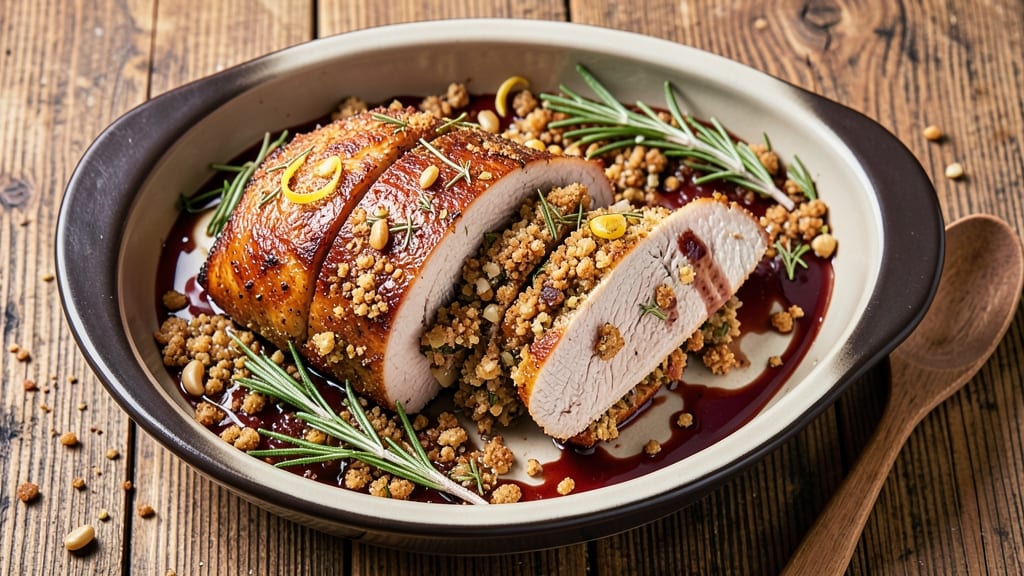
This best stuffed pork tenderloin recipe ever with stuffing in the oven delivers the juiciest, most flavorful version you'll ever make—with a golden stuffing crust that seals in every bite of moisture.
After years of testing (and a few well-done pork tenderloins), I've perfected the technique for achieving restaurant-quality results at home, using just one pan and minimal effort. The secret lies in the stuffing mixture and precise oven timing that transforms tough pork into melt-in-your-mouth perfection.
What sets this recipe apart is the herb-infused stuffing baked directly inside the pork, creating a flavorful crust while keeping the meat impossibly tender. We start with a simple breadcrumb mixture enhanced with fresh herbs, garlic, and a touch of Dijon mustard for depth—no fancy ingredients required.
The pork cooks at a controlled 325°F temperature, ensuring even doneness without drying out, while the stuffing toasts to a perfect golden brown.
By the time you're serving, you'll have a showstopping centerpiece with crispy edges, tender meat, and a stuffing that's both flavorful and structurally sound—no collapsing here. The aroma alone will have everyone gathering at the table, and each bite delivers that perfect balance of savory, herby, and slightly sweet flavors.
This is the kind of recipe that makes you look like a master host, even if you're just getting started.
Perfect for holiday dinners, family gatherings, or when you want to impress without stressing. The method scales beautifully, and leftovers reheat wonderfully. Here's how to make it—once you try this, you'll never go back to plain pork tenderloin again.
Ingredients for best stuffed pork tenderloin recipe ever with stuffing in oven
The secret to restaurant-quality stuffed pork starts with these simple yet powerful ingredients.
| Ingredient | Amount | Notes |
|---|---|---|
| Pork Tenderloin 🥩 | 1 ½ lb | Center-cut, trimmed of fat |
| All-Purpose Flour 🌾 | ½ cup | For breading consistency |
| Fresh Breadcrumbs 🍞 | 1 cup | Panko preferred for crispiness |
| Fresh Rosemary 🌿 | ¼ cup | Finely chopped, stems removed |
| Fresh Thyme 🌿 | ¼ cup | Leaves only, finely chopped |
| Shallots 🧅 | 2 whole | Minced for fine texture |
| Dijon Mustard 🍯 | 1 tbsp | For depth of flavor |
| Garlic Cloves 🧄 | 4 cloves | Minced for aromatic base |
| Unsalted Butter 🧈 | 2 tbsp | Cold, cubed for stuffing |
| Chicken Broth 💧 | ¼ cup | Low-sodium preferred |
| Dry White Wine 🍷 | ¼ cup | Sauvignon Blanc works best |
| Olive Oil 🫒 | 2 tbsp | Extra-virgin for richness |
| Salt 🧂 | 1 ½ tsp | Diamond Crystal preferred |
| Ground Black Pepper 🌶️ | ½ tsp | Freshly cracked preferred |
The pork tenderloin is your star—center-cut and trimmed for perfect even cooking. Costco or Whole Foods carry the best quality, but any well-marbled tenderloin works. Fresh herbs make all the difference here: rosemary and thyme from the grocery store's produce section (not dried) bring that vibrant flavor. Shallots add subtle sweetness—Trader Joe's has pre-minced ones if you're short on time. The Dijon mustard is non-negotiable; it's what gives that restaurant-quality depth. For the breadcrumbs, Panko creates that irresistible crispy crust—don't substitute regular breadcrumbs unless you want a softer texture.
No fresh herbs? Dried thyme and rosemary at one-third the amount will work in a pinch, though fresh is ideal. Out of white wine? Chicken broth plus a splash of lemon juice mimics the acidity beautifully. The butter in the stuffing mixture should be cold and cubed—this ensures it melts just right during baking, creating that golden crust. For the olive oil, extra-virgin makes a difference in flavor, especially when it caramelizes with the stuffing. The salt measurement is precise—Diamond Crystal is less dense than table salt, so use it as directed. Black pepper should be freshly cracked for maximum flavor impact, but pre-ground works if that's all you've got.
This dish reheats beautifully—350°F for 10 minutes brings it back to perfection. Store leftovers in an airtight container for up to 4 days in the fridge. For longer storage, freeze portions for up to 3 months. I always make double batches because this recipe disappears faster than you can say 'holiday dinner.' The stuffing mixture can be prepped ahead and kept in the fridge for up to 24 hours before stuffing the pork—just let it come to room temperature before using.
Why You'll Love This Recipe
- I’ll be real: this works for everything. Too tired to plan? Toss it together on a Tuesday. Hosting a dinner party? It’s fancy enough to impress but still feels like a comfort food. The stuffing stays moist, the pork stays tender—no one will guess how little effort it took.
- One-Pan Magic: Honestly, I love a recipe that doesn’t require a million dishes—this stuffed pork tenderloin stays put on a single sheet pan the whole time. Just sear the pork, stuff it with the rosemary-thyme breadcrumb mix, and pop it in the oven. Less cleanup, more time to actually enjoy your meal.
- Crispy-Creamy Perfection: Between us, that crispy flour crust on the outside with the juicy, herby stuffing inside? It’s the kind of contrast that makes you take a second bite without thinking. The fresh rosemary and thyme in the breadcrumbs add this bright, earthy kick that cuts through the richness of the pork.
- Weeknight or Weekend Star: I’ll be real: this works for everything. Too tired to plan? Toss it together on a Tuesday. Hosting a dinner party? It’s fancy enough to impress but still feels like a comfort food. The stuffing stays moist, the pork stays tender—no one will guess how little effort it took.
Step-by-step instructions for stuffed pork tenderloin with herb crust
This method guarantees a juicy, perfectly cooked pork tenderloin with a golden, crispy herb crust—no second pan needed!
Prepare the Herb-Stuffing Mixture
In a small bowl, combine the 1 cup fresh breadcrumbs, 0.25 cup finely chopped fresh rosemary, 0.25 cup finely chopped fresh thyme, 2 minced whole shallots, 4 minced garlic cloves, 1.5 tsp salt, and 0.5 tsp ground black pepper. Mix thoroughly to distribute the herbs evenly. This aromatic blend will infuse the pork with deep, savory flavor while creating a fragrant crust.
In a separate small bowl, whisk together 1 tbsp Dijon mustard and 2 tbsp unsalted butter until smooth. Fold this mixture into the breadcrumb-herb blend until fully incorporated. The mustard adds tangy depth, while the butter creates a rich, golden crust. Set aside while you prepare the pork.
Stuff and Sear the Pork Tenderloin
Preheat your oven to 400°F. Pat the 1.5 lb pork tenderloin dry with paper towels—this is critical for crispy skin. Using a sharp knife, make a shallow lengthwise cut down the center of the tenderloin, just deep enough to create a pocket without cutting through. Be careful not to pierce the skin.
Stuff the herb mixture into the pocket, pressing gently to fill it completely. The stuffing will expand slightly during cooking, so don't overfill. Tie the tenderloin together with kitchen twine at 1-inch intervals to maintain its shape. This ensures even cooking and prevents the stuffing from spilling out.
Heat 2 tbsp olive oil in a large oven-safe skillet over medium-high heat. Once shimmering, place the stuffed tenderloin in the skillet and sear on all sides for 2-3 minutes per side until golden brown. This step creates a flavorful crust while locking in juices. Transfer the skillet to the preheated oven.
Roast to Juicy Perfection
Roast the pork for 20-25 minutes until the internal temperature reaches 145°F (use a meat thermometer for accuracy). The stuffing will crisp slightly on top, creating a beautiful golden crust. If the top isn't golden enough after 20 minutes, broil for 1-2 minutes to finish.
While the pork roasts, prepare a pan sauce by deglazing the skillet with 0.25 cup dry white wine, scraping up any browned bits. Simmer for 2 minutes to reduce slightly, then add 0.25 cup chicken broth and simmer for another 3 minutes until slightly thickened. This sauce will complement the tenderloin beautifully.
Rest and Serve with Crispy Stuffing
Remove the pork from the oven and transfer it to a cutting board. Tent loosely with foil and let it rest for 10 minutes—this allows the juices to redistribute, ensuring every bite is moist and flavorful. The stuffing will continue to crisp slightly as it rests, creating that perfect texture contrast.
Slice the pork into ½-inch thick medallions and serve with the pan sauce spooned over the top. The herb-stuffed center will be fragrant and slightly crispy, while the pork remains tender and juicy. This one-pan method delivers restaurant-quality results with minimal effort—truly the best stuffed pork tenderloin you'll ever make!
Pro Tips For Making Best Stuffed Pork Tenderloin Recipe Ever With Stuffing In Oven
- DON’T STUFF TOO TIGHT: Stuffing pork tenderloin too tightly risks tearing the meat when it expands in the oven. Pack the breadcrumb-herb mix loosely—think "fluffy," not "tamped down"—so the pork stays intact and the filling stays where it belongs.
- SEAR THE PORK HARD: After stuffing, sear the pork in a screaming-hot skillet for 2-3 minutes per side before roasting. This locks in juices and builds a crust that keeps the stuffing from turning into a soggy mess—trust me, I’ve seen the aftermath of skipping this.
- USE DAY-OLD BREADCRUMBS: Fresh breadcrumbs absorb moisture like sponges, turning your stuffing into a gluey disaster. Toast stale bread, pulse it in a food processor, and store the crumbs overnight in the fridge—this ensures a crisp, dry texture that holds up in the oven.
- REST THE STUFFED LOIN: Let the stuffed pork sit at room temperature for 15-20 minutes before baking. Cold meat shrinks unevenly, and the stuffing won’t distribute properly—this small wait guarantees even cooking and a juicier final result. (Yes, even if you’re impatient like me.)
Common mistakes when making this recipe
Overstuffing the Pork
One of the most common mistakes is packing too much stuffing into the tenderloin pocket. When the stuffing expands during cooking, it can burst out of the cut, making a mess and leaving your pork looking unappetizing.
I learned this the hard way—my first attempt ended with rosemary-stuffed breadcrumbs scattered all over the pan! Stick to filling the pocket just until it's snug but not bulging.
A good rule of thumb is to use about ⅓ of the total stuffing mixture for a 1.5 lb tenderloin. 🌿
Skipping the Resting Time
Cutting into pork immediately after removing it from the oven might seem tempting, but it's a recipe for dry, stringy meat. The stuffing needs time to crisp properly while the pork's juices redistribute.
I always let my tenderloin rest for 10 minutes under foil—this keeps it moist and ensures the stuffing develops that perfect golden crust. Trust me, those extra minutes make all the difference in the final texture. ⏰
Using Dried Herbs Only
While dried herbs will work in a pinch, fresh rosemary and thyme bring an entirely different level of flavor to this dish. The oils in fresh herbs release during cooking, creating that vibrant aroma we all love.
If you're using dried herbs, reduce the amount to ⅓ of the fresh measurement—I've found 1 tbsp dried rosemary and 1 tbsp dried thyme work well for this recipe. But honestly, the fresh version is worth the extra effort. 🌿
Incorrect Internal Temperature
Pork tenderloin is done when it reaches 145°F internal temperature, but many home cooks rely on visual cues alone. Overcooking is a common mistake that leads to dry, tough meat.
Invest in a good meat thermometer—it's the only way to get consistent results. I use my ThermoWorks Smoke thermometer for all my pork dishes, and it's never let me down. 🌡️
Not Securing the Pork Properly
If you don't tie the tenderloin with kitchen twine, the stuffing can shift during cooking, leading to uneven doneness. The twine helps maintain the shape and ensures even heat distribution. I tie my tenderloin at 1-inch intervals using cotton kitchen twine.
This simple step prevents the stuffing from spilling out and keeps the meat looking beautiful on the plate. 🧵
Ignoring the Pan Sauce
Many recipes stop at the pork itself, but the pan sauce is what elevates this dish from good to spectacular. Deglazing the pan with wine and broth captures all those delicious browned bits that would otherwise go to waste.
I always make this sauce—it adds depth of flavor that complements the herb stuffing beautifully. Don't skip this step, even if it feels like extra work. 🍷
Nutrition facts
Frequently asked questions
Can I use a different type of stuffing inside the pork?
While this recipe uses a classic herb breadcrumb stuffing, you could try sausage and rice, spinach and feta, or even a sweet stuffing like apple and pecan for a holiday twist. Just adjust the moisture content—wet stuffings like sausage mixtures need longer baking times to crisp properly.
How do I prevent the stuffing from falling out while cooking?
Use kitchen twine to secure the tenderloin tightly at 1-inch intervals before roasting. This keeps the stuffing contained while allowing even heat distribution. Also, avoid overfilling the pocket—pack it snugly but not so much that it bulges when tied.
Can I make this ahead of time?
Yes! Assemble the stuffed tenderloin up to 24 hours ahead and refrigerate uncovered on a wire rack. When ready to cook, bring to room temperature (about 30 minutes) before searing and roasting. The stuffing will stay fresh and crisp up beautifully during cooking.
What's the best way to reheat leftovers?
Slice the pork and reheat in a 350°F oven for 10-12 minutes with a splash of broth or water to maintain moisture. For the stuffing, sprinkle with water and cover with foil to prevent drying. Microwaving works in a pinch, but oven reheating preserves the crispy texture better.
Can I substitute butter in the stuffing?
For a lighter version, use 2 tbsp olive oil instead of butter in the stuffing mixture. The texture will be slightly less rich but still delicious. If you prefer butter, keep it cold and cubed—this ensures proper browning while preventing the stuffing from becoming greasy.