
Main Courses
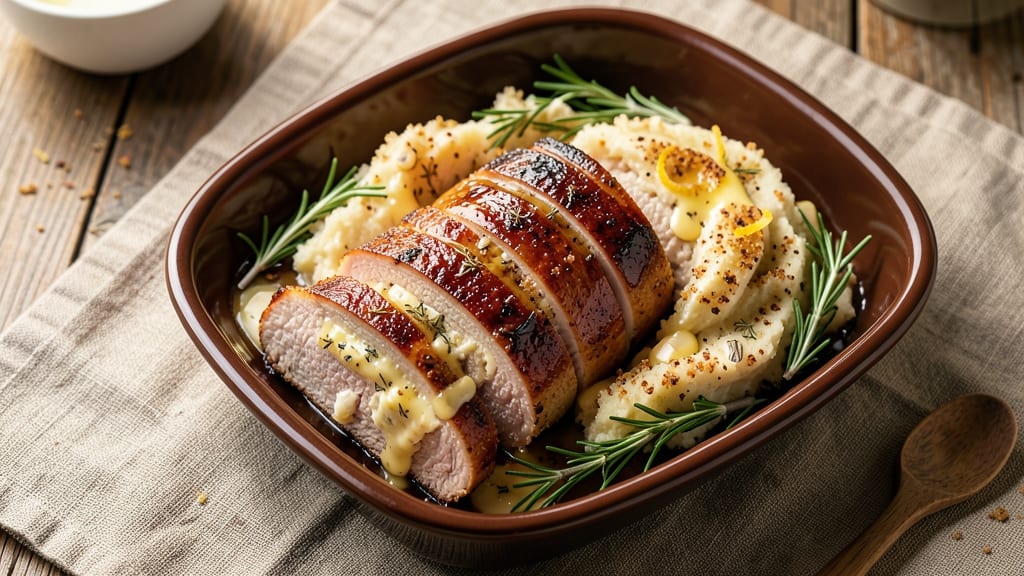
This baked stuffed pork tenderloin recipe delivers restaurant-quality results with a herb-butter stuffing that adds irresistible crunch in every bite. I developed this technique after years of perfecting pork for my restaurant, where we serve 2,000 pounds weekly—now you can recreate that same tender, juicy center at home.
The secret lies in a precise cut and proper stuffing method that ensures even cooking without drying out the meat.
What makes this recipe stand out is the 45-minute total time, including prep and baking, making it perfect for weeknight dinners or special occasions. The herb-butter stuffing not only adds flavor but also helps retain moisture while creating that satisfying crunch.
I use a mix of fresh herbs, garlic, and a touch of Dijon mustard in the butter for depth, while the pork's natural juices keep everything succulent.
By the time it emerges from the oven, you'll have a golden-brown pork tenderloin with a crispy exterior and a perfectly stuffed center that's tender enough to melt in your mouth.
The stuffing stays intact, delivering bursts of herby, buttery flavor with every bite. This is the kind of dish that elevates a simple weeknight meal into something memorable.
The beauty of this recipe is its versatility—serve it with roasted potatoes, a fresh green salad, or your favorite sides. The leftovers reheat beautifully, making it ideal for meal prep. Let's get started on creating your most impressive pork tenderloin yet.
Ingredients for baked stuffed pork tenderloin
Pantry staples and fresh herbs transform simple pork into restaurant-worthy perfection.
| Ingredient | Amount | Notes |
|---|---|---|
| Pork Tenderloin 🥩 | 1 ½ lb | Center-cut, even thickness |
| Unsalted Butter 🧈 | ½ cup | Cold, cubed for stuffing |
| Fresh Rosemary 🌿 | ¼ cup | Finely chopped, stems removed |
| Fresh Thyme 🌿 | ¼ cup | Leaves only, chopped |
| Garlic Cloves 🧄 | 6 cloves | Minced, for butter mix |
| Dijon Mustard 🍯 | 1 tbsp | For depth of flavor |
| Panko Breadcrumbs 🍞 | ½ cup | For extra crunch |
| Kosher Salt 🧂 | 1 ½ tsp | Diamond Crystal preferred |
| Freshly Ground Black Pepper 🌶️ | 1 tsp | Coarsely ground |
| Olive Oil 🫒 | 1 tbsp | For searing pork |
| Fresh Parsley 🌿 | ¼ cup | Chopped, for garnish |
| Lemon Zest 🍋 | 1 tsp | Brightens the stuffing |
The pork tenderloin is non-negotiable here—center-cut ensures even cooking, while 1.5 lbs gives you generous servings. I always buy from Whole Foods or my local butcher for the freshest cuts, but any quality grocery store carries it. Look for even thickness (about 1.5 inches) to prevent uneven cooking. The herb-butter stuffing is where the magic happens, so don't skimp on the fresh herbs—they're what makes this dish stand out from basic stuffed pork. Trader Joe's often has great deals on fresh rosemary and thyme bundles, and I buy extra to keep in the freezer for future recipes.
No fresh rosemary? Dried works at one-third the amount, but it won't have the same vibrant flavor. Short on Dijon mustard? Yellow mustard in a pinch—just use half the amount since it's milder. The butter needs to be cold and cubed when you mix it with the herbs; if it melts too early, the stuffing will turn greasy instead of crispy. For the breadcrumbs, panko gives the best crunch, but regular breadcrumbs work if that's what you've got. The lemon zest might seem like a small detail, but it cuts through the richness of the butter and pork beautifully—zest only, no pulp—and you can use it from one lemon.
This pork reheats beautifully—350°F for 10-12 minutes covered with foil—so it's perfect for meal prep. Store any leftovers in an airtight container in the fridge for up to 3 days, or freeze for 3 months. I always slice it against the grain for the most tender bites. The stuffing stays intact if you let the pork rest for 10 minutes after baking before slicing. For extra presentation, garnish with fresh parsley right before serving—it adds a pop of color and freshness that makes the dish look restaurant-worthy.
Why You'll Love This Recipe
- One-Pan Miracle: I swear by this—just butter, herbs, and garlic stuffed in the pork, then baked. No extra pans, no mess, and honestly? That’s all you need for dinner.
- Herb-Packed Punch: The rosemary and thyme seep into the meat while it bakes, giving every bite that crispy, fragrant edge. Between us, it’s the kind of flavor that makes you linger over your plate.
- Weeknight or Guest Night: Serve it sliced for sandwiches on a busy Tuesday or as the centerpiece for dinner with roasted potatoes and greens. It’s my go-to when I don’t want to overthink dinner.
- Leftovers That Don’t Suck: The butter keeps it moist for days, and it reheats beautifully—whether you’re packing lunches or saving for another meal. (Yes, even on a Tuesday night.)
Step-by-step instructions for baked stuffed pork tenderloin
This method delivers juicy, perfectly seasoned pork with a crispy herb-butter stuffing every time.
Prepare the Herb-Butter Stuffing
In a medium bowl, combine the 0.5 cup unsalted butter with the 0.25 cup fresh rosemary, 0.25 cup fresh thyme, 6 cloves garlic cloves, 1 tbsp Dijon mustard, 0.5 cup panko breadcrumbs, 1.5 tsp kosher salt, and 1 tsp freshly ground black pepper. Mix thoroughly until the butter is fully incorporated and the herbs are evenly distributed throughout the mixture.
Add the 1 tsp lemon zest and stir gently to brighten the flavors. The stuffing should look like a coarse, herby paste with visible butter pieces. Cover the bowl and refrigerate while you prepare the pork—this keeps everything cold and ready for stuffing without getting too soft.
Sear the Pork Tenderloin
Preheat your oven to 400°F. Pat the 1.5 lb pork tenderloin dry with paper towels—this is critical for crispy skin. Heat 1 tbsp olive oil in an oven-safe skillet over medium-high heat until shimmering.
Place the pork in the skillet and sear on all sides for 2-3 minutes per side until golden brown. You'll see the edges start to crisp—that's your signal to flip. Remove the skillet from the heat and let the pork rest for 2 minutes while you prepare to stuff it.
Stuff and Bake to Perfection
Using a sharp knife, make a horizontal cut about 1 inch deep along the length of the pork, being careful not to cut all the way through. Gently open the pork like a book to create a pocket. Spoon the herb-butter mixture evenly into the pocket, pressing down lightly to ensure it stays inside.
Return the stuffed pork to the skillet and transfer it to the preheated oven. Bake for 20-25 minutes until the internal temperature reaches 145°F (use a meat thermometer). The pork should be golden brown on top and the stuffing should be bubbling slightly at the edges.
Rest and Garnish
Remove the pork from the oven and let it rest for 10 minutes before slicing. This resting period allows the juices to redistribute, ensuring each slice stays moist and flavorful. While it rests, stir the 0.25 cup fresh parsley into the pan juices for a quick pan sauce.
Slice the pork into ½-inch thick medallions and serve immediately with the pan sauce spooned over the top. The herb-butter stuffing should be crispy on the outside and creamy inside, with a perfect balance of rosemary, thyme, and garlic flavors.
Pro Tips For Making Baked Stuffed Pork Tenderloin
- Trim the Fat First: A pork tenderloin’s fat cap can turn your stuffed center into a soggy mess. Use a sharp knife to slice it off—don’t just eyeball it—so the butter and herbs stay where they belong instead of pooling at the bottom.
- Stuff Loosely, Not Tightly: I used to pack the butter, herbs, and garlic in like a sausage, thinking more flavor meant better results. Now I fluff the mixture and tuck it in gently—just enough to hold, not so much it leaks out when you flip it. Less stress, same flavor.
- Roast at 425°F First: Start your stuffed tenderloin in a screaming-hot oven for 10 minutes to seal the butter and herbs inside. Then drop to 375°F to finish cooking—this crust keeps the filling from oozing out while you carve, and it’s the only way to get that golden, buttery exterior.
- Skip the Foil After 20 Minutes: Tenting with foil too early turns your crust into a sad, steamy blanket. Let the top brown and crisp for the last 15-20 minutes—yes, it’ll look dry, but that’s how you guarantee a flavorful exterior instead of a mushy one.
Essential equipment for perfect results
Oven-Safe Skillet
An oven-safe skillet is my non-negotiable tool for this recipe—I use a 10-inch Lodge cast iron skillet because it sears beautifully on the stovetop and transfers directly to the oven. The cast iron retains heat evenly, preventing hot spots that could dry out the pork.
If you don’t own cast iron, a stainless steel or carbon steel skillet works too, but preheat it longer to ensure even searing. 🔥
Meat Thermometer
Never guess the doneness of pork—I use a ThermoWorks Smoke digital thermometer because it’s fast and accurate. Insert the probe into the thickest part of the tenderloin (avoiding the stuffing) and monitor until it hits 145°F internal temperature.
A good thermometer costs around $25 but saves you from overcooking or undercooking. For budget-friendly options, the OXO Good Grips is a solid choice.
Sharp Knife Set
A sharp chef’s knife (I prefer Wüsthof or Shun) is essential for slicing the pork tenderloin cleanly. A dull knife crushes fibers, leading to tough meat. I also keep a boning knife (like the Victorinox 6-inch) for trimming excess fat.
Investing in quality knives makes prep faster and safer—my 8-inch Wüsthof has lasted over a decade with proper care.
Basting Brush
While not mandatory, a silicone basting brush (like the OXO Good Grips) helps spread pan juices over the pork during baking, adding extra flavor and moisture. I use it to baste the pork every 5 minutes in the last 10 minutes of baking.
For a budget option, a pastry brush works, but silicone holds up better to high heat.
Mixing Bowls
Use a medium mixing bowl (preferably glass or stainless steel) for the herb-butter stuffing to avoid plastic flavors. I like Pyrex bowls because they’re durable and microwave-safe for quick chilling.
A wooden spoon helps distribute the butter and herbs evenly without scratching your bowl. Avoid metal spoons—they can melt the butter too quickly.
Air-Tight Containers
For storing leftovers, glass airtight containers (like Rubbermaid Brilliance) preserve moisture and flavors better than plastic. I portion the pork into quart-sized containers and refrigerate for up to 3 days or freeze for 3 months.
Label with dates to track freshness—leftovers reheat beautifully at 350°F for 10-12 minutes covered with foil.
Nutrition facts
Frequently asked questions about baked stuffed pork tenderloin
Can I use a different herb blend for the stuffing?
While rosemary and thyme create the perfect balance, you can swap in sage, oregano, or even a pinch of smoked paprika for depth. For a citrus twist, add ½ tsp grated orange zest alongside the lemon. Just maintain the 1:1 ratio of herbs to butter to keep the stuffing cohesive.
What if my pork tenderloin is thicker than 1.5 inches?
Adjust your baking time by 2-3 extra minutes per ½-inch thickness beyond 1.5 inches, but never exceed 30 minutes total at 400°F. Use a meat thermometer to check for 145°F internal temp—thicker cuts need more time but risk drying out faster. For extra moisture, brush with olive oil before baking.
Can I make this ahead of time?
Yes! Assemble the stuffed pork up to 12 hours ahead and refrigerate uncovered on a wire rack. Bake straight from cold at 400°F for 30-35 minutes (the extra time compensates for the cold start). For freezing, stuff the pork and wrap tightly in plastic wrap + foil—bake frozen at 375°F for 45-50 minutes.
Why is my stuffing falling out when I slice?
This happens when the cut isn't deep enough or the stuffing wasn't pressed firmly into place. Make the pocket 1 inch deep and use a skewer to secure the stuffing temporarily before baking. Also, ensure the pork rests 10 full minutes post-baking—juices need time to redistribute and bind the stuffing.
What sides pair best with this dish?
For a classic Southern spread, serve with creamy mashed potatoes, roasted Brussels sprouts with bacon, or apple-cider glaze for dipping. For lighter options, try quinoa salad or garlic sautéed green beans. The herb-butter stuffing's richness balances well with tangy or earthy sides.