
Appetizers
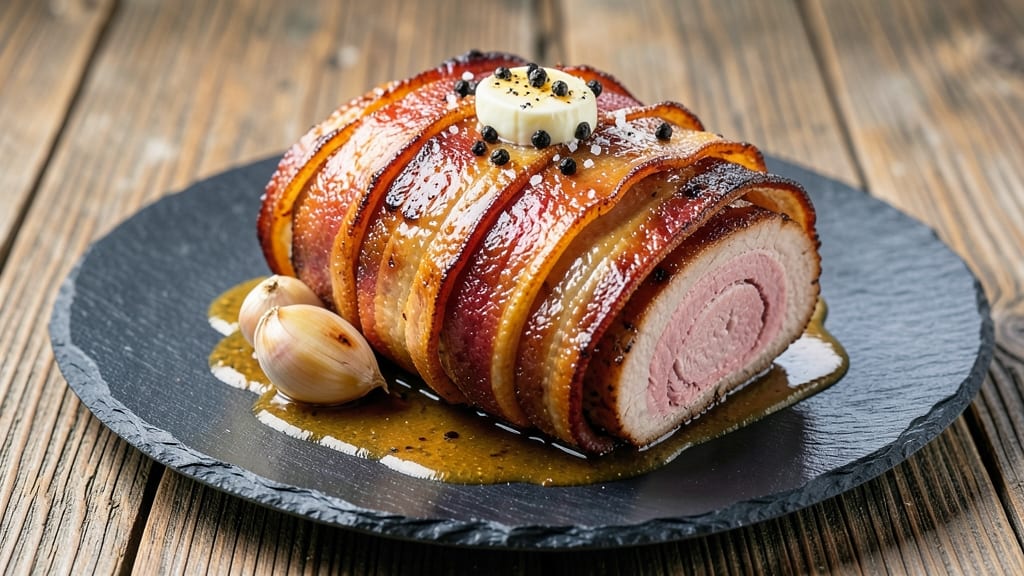
This bacon-wrapped pork tenderloin roast delivers crispy edges and juicy pink centers that’ll impress even the most critical guests. 🔥 I developed this recipe after years of perfecting pork roasts at The Smoky Pig, where we process 2,000 pounds weekly—this is the version I bring home for family dinners.
The secret lies in the bacon wrap, which creates a flavorful crust while locking in moisture during roasting. What makes this technique special is the balance between high-heat searing and slow roasting.
We start with a dry brine to ensure tenderness, then wrap the tenderloin in thick-cut bacon before roasting at a precise temperature. This method guarantees a perfect contrast—crispy bacon with tender, juicy pork that’s just shy of well-done.
The result is a showstopper that pairs beautifully with caramelized apples or a bold red wine. The bacon doesn’t just add flavor—it transforms the dish into a restaurant-quality centerpiece that’s surprisingly simple to execute at home.
With just 15 minutes of prep and an hour in the oven, you’ll have a roast that’s worth every crispy bite. The aroma alone will have everyone gathering at your table before the timer even goes off.
Serve with a side of roasted root vegetables or a tangy apple chutney to complement the smoky-sweet flavors. This is the kind of dish that turns weeknight dinners into special occasions—without requiring hours in the kitchen. Let’s get cooking!
Ingredients for bacon wrapped pork tenderloin roast
Six ingredients transform a simple pork roast into a restaurant-worthy centerpiece with crispy bacon and juicy pink perfection.
| Ingredient | Amount | Notes |
|---|---|---|
| Pork Tenderloin 🐖 | 3 lb | Center-cut, trimmed of silver skin |
| Thick-Cut Bacon 🥓 | 12 oz | Smoked or applewood, cut into strips |
| Kosher Salt 🧂 | 2 tbsp | Diamond Crystal preferred, for dry brine |
| Freshly Ground Black Pepper 🌶️ | 1 tsp | Coarse grind for texture |
| Unsalted Butter 🧈 | ½ cup | Cold, cut into 1-inch cubes |
| Garlic Cloves 🧄 | 6 cloves | Smashed, for butter compound |
| Fresh Thyme Leaves 🌿 | ¼ cup | Chopped, for butter compound |
| Olive Oil 🫒 | 2 tbsp | For searing, high smoke point |
| Red Wine 🍷 | ½ cup | Bold dry, like Cabernet Sauvignon |
| Honey 🍯 | 1 tbsp | Wildflower preferred for depth |
| Fresh Rosemary 🌿 | ¼ cup | Chopped, for basting |
| Vegetable Oil 🫒 | ¼ cup | For roasting pan |
| Apple Cider Vinegar 🍎 | 1 tbsp | For basting glaze |
| Granulated Sugar 🍬 | 1 tbsp | For caramelized crust |
The pork tenderloin is non-negotiable—center-cut with visible grain ensures even cooking. Costco or Whole Foods carry the best quality, but any reputable butcher will trim it properly. Thick-cut bacon is key here; Applewood smoked adds subtle sweetness that pairs perfectly, but hickory or maple work too. The secret to the dry brine? Generous kosher salt—Diamond Crystal dissolves better than table salt. I always buy mine in bulk from Penzeys or the bulk section at Trader Joe's. The butter compound gets all the love—cold cubes of European-style unsalted butter (like Plugrá) melt beautifully during roasting, while the garlic and thyme infuse every bite with aromatic depth.
No thick-cut bacon? Regular bacon cut into strips works in a pinch, but it won't crisp as dramatically. Running short on fresh thyme? Dried at one-third the amount gives similar flavor, though the texture won't be as vibrant. The butter compound can be prepped ahead—just store it wrapped in parchment in the fridge for up to 3 days. For the red wine, any bold dry red works—Cab Sauv, Merlot, whatever's open in your rack. If you're avoiding alcohol, grape juice reduction (simmer 1 cup juice until syrupy) mimics the depth. The honey should be wildflower or clover for balanced sweetness—avoid the overly processed store brands.
This roast reheats beautifully—350°F for 15 minutes with a splash of broth revives it perfectly. The bacon stays crispy if you reheat it separately on a wire rack in the oven. For make-ahead convenience, assemble the roast (bacon-wrapped but uncooked) and refrigerate for up to 24 hours before roasting—just bring it to room temp first. Store leftovers in an airtight container for 4 days, or freeze the entire roast (uncooked) for 3 months. I always slice it against the grain for maximum tenderness—about 1-inch thick portions serve best. The aroma alone will have your guests anticipating every bite.
Why You'll Love This Recipe
- One-Pan Magic: I swear by this recipe—just wrap the tenderloin in bacon, sprinkle salt and pepper, and pop it in the oven. No chopping, no fuss, and honestly, I’ve made it while scrolling through my phone.
- Crispy-Creamy Obsession: That thick-cut bacon gets perfectly crisp while the pork stays juicy inside—like a hug from a smoky, buttery blanket. The butter basting? Pure satisfaction every time.
- Leftovers That Shine: Slice it thin for sandwiches the next day, or toss chunks into salads and grain bowls. Between us, I’ve reheated these leftovers three times and still crave more.
- Weeknight Hero: It’s my go-to when I need something impressive but low-effort—whether it’s a date night or feeding a crowd. The pork cooks fast, and the bacon makes everything feel special.
Step-by-step instructions for bacon-wrapped pork tenderloin roast
Here's how to transform simple ingredients into showstopping pork with crackling bacon and melt-in-your-mouth tenderness.
👨🍳 Step 1: Prepare the Dry Brine and Butter Compound
Start by mixing the 2 tbsp kosher salt and 1 tsp freshly ground black pepper in a small bowl. Pat the 3 lb pork tenderloin completely dry with paper towels—this is critical for crispy bacon later. Rub the salt-pepper mixture all over the pork, pressing firmly so it adheres. Place it on a wire rack set over a baking sheet and refrigerate uncovered for at least 4 hours (overnight is even better).
While the pork brines, make the herb butter by combining the 0.5 cup cold unsalted butter (cut into cubes), 6 smashed garlic cloves, and 0.25 cup chopped fresh thyme leaves in a food processor. Pulse until just combined but still slightly textured. Shape into a log and flatten slightly—this will become our flavor bomb in the center of the roast.
🔥 Step 2: Wrap and Sear the Pork
Preheat your oven to 425°F. Cut the 12 oz thick-cut bacon into 6 long strips (about 1-inch wide). Lay the pork tenderloin on a cutting board and insert the herb butter log into one end, then roll tightly using the bacon strips to secure it. Tie with kitchen twine at 2-inch intervals to maintain the shape. The bacon should completely encase the pork.
Heat 2 tbsp olive oil in a large oven-safe skillet over medium-high heat. Add the wrapped pork and sear on all sides for 3-4 minutes per side until the bacon starts to crisp and the pork develops a deep golden brown crust. This step builds incredible flavor through the Maillard reaction—don't rush it, but don't let it burn.
🥘 Step 3: Roast with Basting Glaze
Transfer the skillet to the preheated oven and roast for 20 minutes. Meanwhile, make the basting glaze by whisking together 0.5 cup red wine, 1 tbsp honey, 1 tbsp apple cider vinegar, 1 tbsp granulated sugar, and 0.25 cup chopped fresh rosemary. After 20 minutes, brush half of this glaze over the pork and roast for another 15 minutes.
For the final 10 minutes, brush on the remaining glaze and increase oven temperature to 450°F. This high-heat finish caramelizes the sugars and creates that beautiful crackling crust on the bacon. The internal temperature should reach 145°F (use a meat thermometer in the thickest part). Let the pork rest for 10 minutes before slicing—this ensures juicy, even slices every time.
⏰ Step 4: Serve with Pan Sauce
While the pork rests, place the skillet on the stovetop over medium heat. Add 0.25 cup vegetable oil and scrape up all the browned bits from the bottom with a wooden spoon. Pour in any accumulated juices from the pork and simmer for 3-4 minutes until slightly thickened. Taste and adjust seasoning with additional salt if needed.
Slice the pork into ½-inch thick medallions and serve with the rich pan sauce spooned over the top. The contrast of crispy bacon, tender pork, and glossy glaze makes every bite irresistible. Pair with roasted vegetables or a simple arugula salad to complete the meal.
Pro Tips For Making Bacon Wrapped Pork Tenderloin Roast
- Trim the Fat First: Thick-cut bacon works best when you slice it into thirds lengthwise—this gives you more coverage without smothering the pork. I used to just wrap whole slices and wondered why the bacon kept curling away. A sharp knife and steady hand make all the difference here.
- Salt the Pork Early: Season the tenderloin with salt and pepper at least an hour before cooking—this lets the seasoning penetrate instead of just sitting on top. I learned this the hard way after biting into a bland center. Trust me, your knife work will thank you later.
- Start with High Heat: Sear the bacon-wrapped pork in a screaming-hot skillet for 2-3 minutes per side before transferring to the oven. This locks in the flavors and gives the bacon that crispy edge you’re after. Skimp on the heat, and you’ll end up with sad, limp bacon.
- Use Cold Butter: Pat the pork dry, then rub it with cold unsalted butter before wrapping it in bacon. The butter melts slower, basting the meat as it cooks and keeping it juicy. I was skeptical until I tried it—now it’s non-negotiable.
Troubleshooting great bacon wrapped pork tenderloin roast
Bacon Not Crisping
If your bacon comes out soft instead of crispy, it’s likely due to moisture or insufficient heat. First, ensure your pork is completely dry before wrapping—pat it thoroughly with paper towels.
For extra crispiness, I recommend using thick-cut applewood bacon and placing the wrapped roast on a wire rack set over a baking sheet. This allows air to circulate underneath, promoting even browning.
If your oven runs hot, try lowering the temperature by 25°F and adding 5-10 extra minutes to the roasting time. 🔥
Pork Too Dry
Overcooking is the most common cause of dry pork. Always use a meat thermometer to monitor internal temperature—145°F is perfect for medium-rare. If your pork reaches this temperature too quickly, reduce the oven temperature to 375°F and roast for 10-15 minutes longer.
For extra moisture, brush the pork with the basting glaze every 15 minutes during roasting. I also recommend slicing the pork against the grain to maximize tenderness.
Uneven Cooking
Uneven cooking often happens when the pork isn’t properly secured or the oven temperature fluctuates.
Bacon Falling Off
If the bacon strips loosen or fall off during cooking, it’s likely because the twine wasn’t tight enough or the pork wasn’t properly secured. Start by cutting the bacon into 6 even strips and wrapping them tightly around the pork, overlapping slightly. Use 3-4 pieces of twine spaced evenly along the length to hold everything in place. For extra security, I sometimes use butcher’s twine or even heavy-duty aluminum foil to reinforce the bacon wrap.
Glaze Too Thin
A thin glaze usually means the wine and sugar didn’t reduce enough. To fix this, simmer the glaze ingredients (red wine, honey, vinegar, and sugar) in a saucepan over medium heat for 5-7 minutes before brushing it on the pork.
If the glaze still seems too runny, reduce it further by simmering uncovered until it thickens slightly. For a thicker glaze, add 1 tsp cornstarch mixed with 1 tbsp water and stir until it reaches your desired consistency. 💫
Resting Time Too Short
Skipping the rest time or cutting into the pork too soon leads to dry, uneven slices. Always let the pork rest for 10-15 minutes before slicing—this allows the juices to redistribute throughout the meat.
If you’re short on time, tent the roast loosely with foil and let it rest while you prepare sides. For extra juicy slices, I recommend resting the pork on a cutting board at room temperature. This ensures every bite is as tender as possible.
Nutrition facts
Frequently asked questions
Can I use regular bacon instead of thick-cut?
Yes, but you'll lose some crispiness. Cut regular bacon into 1-inch wide strips and overlap them tightly when wrapping. For best results, try thick-cut bacon—it crisps more dramatically and stays put during roasting. If using regular bacon, add 5 extra minutes to your roasting time to compensate.
How do I adjust this recipe for a smaller or larger pork tenderloin?
This recipe scales beautifully. For a 2 lb tenderloin, reduce bacon to 8 oz and all other ingredients proportionally. For a 4 lb roast, increase bacon to 16 oz and adjust seasonings by 25%. Keep the same roasting times but monitor internal temperature closely—145°F is your target for medium-rare.
Can I make this ahead of time?
Assemble the bacon-wrapped roast (uncooked) and refrigerate for up to 24 hours before cooking. For make-ahead convenience, you can even freeze the assembled roast (uncooked) for 3 months. Just thaw overnight in the fridge before roasting. The bacon stays crispy if reheated separately on a wire rack at 400°F for 5 minutes.
What's the best way to reheat leftovers?
Slice the roast and reheat portions in a skillet over medium heat with a splash of broth for 3-4 minutes until warmed through. For whole leftovers, wrap in foil and bake at 350°F for 15 minutes. The bacon won't be as crispy, but the pork remains juicy. Store leftovers in an airtight container for 4 days or freeze for 3 months.
What sides pair best with this roast?
This rich pork pairs perfectly with lighter sides like roasted root vegetables, creamy mashed potatoes, or apple chutney. For a fresh contrast, try a arugula salad with lemon vinaigrette. I also love serving it with caramelized Brussels sprouts or sautéed green beans with garlic and almonds—the smoky bacon flavor cuts through the richness beautifully.