
Main Courses
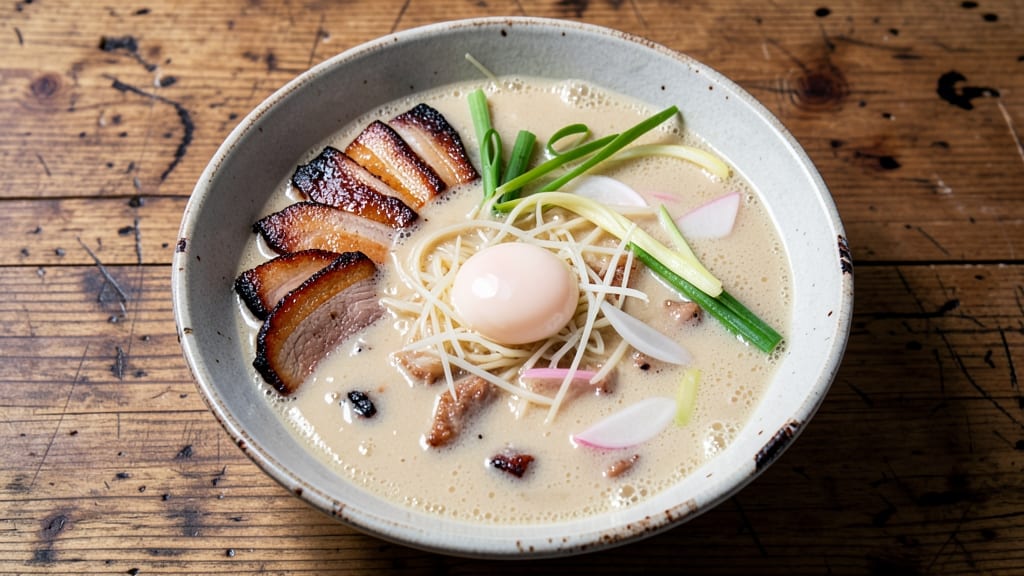
This authentic pork ramen recipe delivers the deep, meaty richness of tonkotsu broth—creamy, pork-forward, and impossible to resist. 🔥 After years of perfecting the balance between umami bomb broth and delicate noodles, I've cracked the code for home cooks to achieve restaurant-quality results.
The secret lies in slow-simmered pork bones, layered aromatics, and a precise cooking technique that transforms simple ingredients into something extraordinary.
The foundation of great ramen is the broth, which requires patience and attention to detail. We'll start with a pork bone stock that develops its signature creamy texture through hours of simmering, while a charred pork belly adds depth and richness.
Fresh ramen noodles (or high-quality dried) are cooked just until al dente to maintain their silky texture, and the toppings—soft-boiled eggs, nori strips, bean sprouts, and corn—bring freshness to cut through the richness.
What makes this recipe truly special is the harmony of flavors: the velvety pork broth, tender pork slices, and crisp toppings create a perfect balance in every bite. The broth is rich yet not overpowering, with just the right amount of saltiness and umami that defines authentic ramen.
This dish is more than just a meal—it's an experience that brings the soul of Japanese cuisine to your kitchen.
Whether you're serving this for a special dinner or a casual weeknight meal, the techniques I've developed ensure restaurant-quality results every time. The key is in the preparation—slow cooking, precise timing, and attention to detail. Let's create a bowl of ramen that will impress even the most discerning food lovers.
Ingredients for authentic pork ramen
The backbone of authentic ramen: pork-forward broth, aromatic vegetables, and silky noodles—all built on precise technique.
| Ingredient | Amount | Notes |
|---|---|---|
| Pork Bones (Knuckle or Femur) 🍖 | 3 lb | Split for maximum marrow release |
| Pork Belly (Skin-On) 🥓 | 1 ½ lb | Charred for smoky depth |
| Fresh Fennel Bulb 🥕 | 1 whole | Thinly sliced for aromatic base |
| Daikon Radish 🥬 | 1 lb | Cut into thick rounds |
| Fresh Ginger Root 🧄 | ½ cup | Julienned, skin removed |
| Green Onions 🧅 | 1 whole | White and green parts separated |
| Garlic Cloves 🧄 | 12 cloves | Smashed, not minced |
| Dried Shiitake Mushrooms 🍄 | 6 whole | Rehydrated, stems reserved |
| Ramen Noodles (Fresh or High-Quality Dried) 🍜 | 2 packages | Serves 4, al dente preferred |
| Kosher Salt 🧂 | 2 tbsp | Diamond Crystal preferred |
| White Peppercorns 🌶️ | 1 tbsp | Freshly cracked |
| Sesame Oil 🫒 | 1 tbsp | For finishing only |
| Soft-Boiled Eggs 🥚 | 4 whole | 6.5-minute cook time |
| Dried Nori Strips 🍣 | 4 sheets | Cut into 1-inch pieces |
| Bean Sprouts 🌱 | 1 cup | Fresh, rinsed thoroughly |
The pork bones are non-negotiable—knuckle or femur for that signature creamy texture. Local butchers often have them pre-split, but if not, ask for the marrow-rich ends. Pork belly must be skin-on for maximum flavor, and char it over a gas flame before adding to the broth. Fresh ginger and daikon are available at Asian markets, but most grocery stores carry them year-round. The shiitake mushrooms? Dried is essential—fresh lacks the depth. Store all aromatics in sealed containers to preserve their potency.
No daikon? Extra daikon radish or even parsnips work in a pinch, though texture differs slightly. Substituting chicken bones for pork bones will give you a lighter broth—not authentic tonkotsu. Fresh ginger can be swapped for powdered, but reduce to half the amount and toast it first for complexity. The ramen noodles? Fresh is ideal (like Nissin or Maruchan brands), but high-quality dried (like MyKitchenStory) works too. Just cook them al dente—they'll finish in the hot broth.
Broth keeps for 5 days refrigerated or 3 months frozen—portion into containers for easy reheating. Charred pork belly can be stored sealed in the fridge for 4 days or frozen for 2 months. Fresh aromatics like ginger and green onions last 2 weeks in the fridge if wrapped tightly. For the perfect bowl, assemble toppings last-minute—bean sprouts wilt fast, and eggs should be soft-boiled within 30 minutes of serving.
Why You'll Love This Recipe
- No-Chop Fennel Hack: I swear by this trick—just slice the fennel bulb in half, roast it whole with the pork bones, then scoop out the softened strands later. No knife skills required, and the broth gets this subtle, caramelized sweetness that’s chef’s kiss.
- Rich Without Fuss: Between the marrow-rich pork knuckles and the collagen melt from the skin-on pork belly, this broth builds flavor while you sleep. Honestly, I’ve let it simmer overnight and woken up to something so deep and savory, it feels like a hug in a bowl—no fancy techniques, just time.
- Leftovers That Lie: The first time I made this, I had three helpings and still packed the rest for lunch. The broth actually improves the next day—more concentrated, more umami—while the pork belly stays shockingly tender. (Yes, even after reheating.)
- Budget Booster: Pork knuckles and belly are cheap cuts that turn into liquid gold. I’ll be real: the fennel and ginger might seem fancy, but they stretch across multiple meals—think stir-fries, fried rice, or even a quick daikon salad. Every ingredient earns its keep.
Step-by-step instructions for authentic pork ramen broth
Transform humble ingredients into restaurant-quality ramen with this professional technique.
🔥 Step 1: Char the Pork Belly and Prepare the Bones
Preheat your oven to 425°F. Cut the 1.5 lb pork belly (skin-on) into 1-inch cubes and place them on a wire rack set over a baking sheet. Roast for 20-25 minutes, turning occasionally, until the skin is deeply charred and the fat begins to render. This charring adds essential smoky depth to your broth.
While the belly chars, split the 3 lb pork bones (knuckle or femur) lengthwise with a heavy cleaver to expose the marrow. This maximizes flavor extraction during the simmer. Place the bones in a large stockpot and cover with 12 cups cold water. Bring to a boil over high heat, then reduce to a simmer and cook for 10 minutes to remove impurities. Drain and rinse the bones thoroughly.
🍳 Step 2: Build the Aromatic Base
Return the cleaned bones to the stockpot and add 10 cups fresh cold water. Place over medium-high heat until it reaches a gentle simmer—never a rolling boil, or the broth will turn cloudy. Add the charred pork belly cubes, 1 whole fresh fennel bulb (thinly sliced), 1 lb daikon radish (cut into thick rounds), and 0.5 cup fresh ginger root (julienned).
Simmer uncovered for 2 hours, skimming any foam that rises to the surface. The broth should develop a rich, golden color and deep umami aroma. Here's the thing—patience is key. The longer it simmers, the more collagen breaks down into gelatin, creating that signature silky texture. Add the 12 cloves smashed garlic and 6 whole dried shiitake mushrooms (rehydrated, stems reserved) after 1 hour of simmering.
🥘 Step 3: Season and Reduce for Concentrated Flavor
Add the 2 tbsp kosher salt and 1 tbsp freshly cracked white peppercorns to the simmering broth. Let it continue cooking for another 1.5 hours until the broth reduces by about 25%—you should have roughly 8 cups of deeply concentrated liquid. The bones should be completely tender and the aromatics nearly dissolved.
Strain the broth through a fine-mesh sieve into a clean stockpot, pressing gently on the solids to extract maximum flavor. Discard the solids. Return the broth to the stove and bring to a simmer. Taste and adjust seasoning—authentic ramen broth should be deeply savory with just a hint of saltiness. The umami should be so intense you'll want to linger on it. If needed, add a splash of water to reach your desired consistency, but aim for a thick, syrupy texture.
🍽️ Step 4: Prepare the Toppings and Assemble
While the broth simmers, prepare your toppings. Cook the 2 packages ramen noodles (fresh or high-quality dried) in boiling water for 1 minute less than package instructions (they'll finish cooking in the hot broth). Drain and set aside. For the 4 whole soft-boiled eggs, cook them for exactly 6.5 minutes in simmering water, then transfer to an ice bath for 10 minutes to stop cooking.
Cut the 4 sheets dried nori strips into 1-inch pieces and rinse the 1 cup bean sprouts thoroughly. Separate the 1 whole green onion into white and green parts. The white parts will cook in the broth, while the greens will be used as a garnish. Keep everything warm until serving.
⏰ Step 5: Finish and Serve with Professional Flourish
Ladle the hot broth into serving bowls, adding 1.5 cups per bowl. Place 1 package noodles in each bowl and gently swirl to coat. Add 1 soft-boiled egg, 1 sheet nori pieces, ¼ cup bean sprouts, and ¼ of the reserved green onion whites. Drizzle with 1 teaspoon sesame oil and finish with a sprinkle of cracked white peppercorns.
Here's the moment that matters: serve immediately with chopsticks and a small bowl of chili oil on the side. Each bowl should deliver layers of smoky pork belly, sweet daikon, earthy shiitake, and silky broth. The egg should be perfectly set with a runny yolk that coats the noodles. This isn't just ramen—it's a complete flavor experience that balances richness with fresh, bright elements.
Pro Tips For Making Authentic Pork Ramen
- Char Bones Twice: Roast pork bones first at 450°F (230°C) for 20 minutes to render fat, then drop them into simmering water—this keeps the broth clear and rich. I used to skip this, and my broth always had a greasy sheen; now it’s golden and silky.
- Score Pork Belly Deep: Cut the skin-on pork belly in a diamond pattern, slicing all the way through the fat but not the meat—this renders fat faster and crisps the skin without falling apart. My first attempt left me with greasy, limp slices; now they shatter like glass.
- Simmer Ginger Slow: Add sliced ginger root after the bones have simmered for 2 hours, not at the start—this prevents bitterness and lets the broth absorb its aroma without turning harsh. I learned this the hard way when my broth tasted like medicine.
- Prep Daikon Roughly: Leave the daikon radish whole and unpeeled, just scrubbed—its skin adds subtle bitterness and texture, and chopping it small later lets you adjust the broth’s creaminess. Peeling and dicing it early makes the broth watery too fast.
Creative variations of this authentic pork ramen
Southern BBQ Ramen
Take your pork ramen to the next level with a Southern BBQ twist. Replace the charred pork belly with ½ lb pulled pork cooked low-and-slow with ¼ cup apple cider vinegar, 2 tbsp brown sugar, and 1 tbsp smoked paprika.
Swap the daikon for sweet potatoes (peeled and cubed)—roasted until caramelized—and add ½ cup BBQ sauce to the broth during the final 30 minutes of simmering. Top with pickled red onions and crispy fried shallots for that true Southern touch. 🔥
Spicy Miso-Glazed
For a bold, umami-packed variation, glaze the pork belly cubes with a mix of 2 tbsp white miso paste, 1 tbsp gochujang (Korean chili paste)>, and 1 tbsp mirin> before charring.
Simmer the broth with an extra ½ cup dried shiitake mushrooms> and add 1 tbsp doubanjiang (Chinese chili bean paste)> during the last 30 minutes. Finish each bowl with a drizzle of chili oil> and a sprinkle of toasted sesame seeds>.
This version delivers a fiery kick that pairs perfectly with the creamy broth. 🌶️
Seafood Fusion
Transform your ramen into a seafood lover’s dream by adding ½ lb shrimp (peeled and deveined)> and ½ lb scallops> to the broth during the final 5 minutes of simmering.
Replace the pork belly with charred salmon skin> for extra richness, and swap the daikon for cucumber (thinly sliced)>. Garnish with scallion oil>, sliced green onions, and a squeeze of yuzu juice> for brightness.
This fusion keeps the pork broth’s depth while introducing delicate seafood flavors. 🦐
Vegetarian Adaptation
Skip the pork entirely and build your broth using 2 lb shiitake stems>, 1 lb kombu (dried seaweed)>, and 1 lb mushrooms (cremini or oyster)> instead of pork bones.
Add 1 lb firm tofu (pressed and cubed)> and ½ cup soy sauce> to the broth for umami. Top with marinated baked tofu>, avocado slices>, and a drizzle of spicy mayo>. This version proves ramen can be just as satisfying without meat. 🌱
Winter Comfort Bowl
Warm up your kitchen with a hearty winter version featuring roasted butternut squash (cubed and tossed in olive oil)> and crispy prosciutto> layered on top. Simmer the broth with an extra ½ cup dried porcini mushrooms> and a pinch of cinnamon> for warmth.
Garnish with toasted pecans>, fresh sage leaves>, and a dollop of crème fraîche>. The sweetness of the squash balances the savory broth beautifully. ❄️
Nutrition facts
Frequently asked questions
Can I use chicken or beef instead of pork for the broth?
While you can make a delicious broth with chicken or beef, it won't be authentic tonkotsu pork ramen. Pork bones release more collagen, creating that signature creamy texture. Chicken broth will be lighter, and beef broth can be too heavy—both lack the perfect balance of richness and silkiness. If you must substitute, use a 50/50 mix of pork and chicken bones for a compromise.
How do I know when the broth is ready?
The broth should reduce to about 8 cups from 12 cups of water, with a thick, syrupy consistency. The bones should be completely tender (they'll fall apart when poked), and the aromatics should be nearly dissolved. Taste it—it should be deeply savory with just a hint of saltiness, not bland or overly salty. The color should be rich golden-brown, not pale.
Can I make ramen noodles from scratch?
Homemade ramen noodles are a game-changer. Use 2 cups all-purpose flour, 2 eggs, ¼ cup water, and 1 tsp kansui (alkaline water) (or baking soda substitute). Roll the dough thin, cut into strips, and cook in boiling water for 2-3 minutes until al dente. They'll have a chewier texture than store-bought, but require more effort.
What's the best way to store leftover pork ramen?
Store the broth separately from toppings in airtight containers. Broth keeps for 5 days refrigerated or 3 months frozen. Reheat gently on the stove—never microwave, as it ruins the texture. Keep noodles and toppings in separate containers and reheat them separately before assembling the bowl. For best results, freeze broth in portion-sized containers to reheat only what you need.
Why does my broth look cloudy?
Cloudiness usually means the broth boiled too vigorously, stirring up impurities. To fix it, strain through a fine-mesh sieve or cheesecloth, then skim off any remaining foam. For prevention, always simmer gently (small bubbles) and never let it come to a full boil. If the cloudiness persists, it might be from unrendered fat—skim that off carefully with a ladle.