
Main Courses
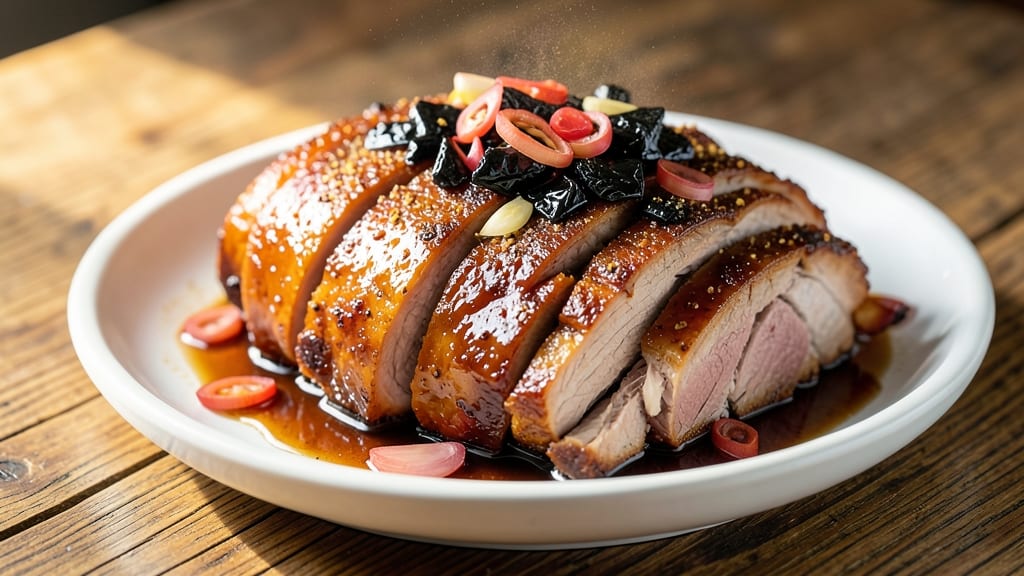
This authentic Chinese roast pork recipe delivers the perfect balance of charred bark and silky shreds—just like the Cantonese classic Char Siu. 🔥 After years of perfecting the technique, I’ve cracked the code for achieving that signature five-spice glow and sticky-sweet glaze without shortcuts.
The secret lies in the marinade: a precise blend of hoisin, honey, and aromatic spices that tenderizes while building flavor. What sets this recipe apart is the two-stage cooking process—first searing the pork to develop a deep caramelized crust, then slow-roasting until the meat falls apart at the touch.
The result? A dish with crispy edges, juicy centers, and a glaze that’s both sticky and aromatic, thanks to the five-spice powder and fermented bean paste. Every bite carries that unmistakable umami depth and smoky-sweet complexity.
Serving this pork over steamed jasmine rice with a side of pickled vegetables or cucumber salad transforms a simple meal into a restaurant-worthy experience. The pork’s rich, caramelized exterior contrasts beautifully with the tender, slightly sticky interior—each forkful is a celebration of texture and flavor.
This is the kind of dish that tastes like home, even when you’re cooking it yourself. For those who love regional variations, I’ll share how to adapt this technique for Sichuan-style roast pork later—where chili and Sichuan peppercorn add a fiery kick.
But first, let’s focus on mastering the Cantonese classic that’s been a staple in Chinese households for generations.
Ingredients for authentic chinese roast pork
The foundation of Char Siu lies in these carefully balanced ingredients—each playing a crucial role in creating the iconic five-spice glow and tender texture.
| Ingredient | Amount | Notes |
|---|---|---|
| Pork Shoulder (Boston Butt) 🐗 | 4 lb | Bone-in for maximum flavor |
| Hoisin Sauce 🍶 | ½ cup | Store-bought or homemade |
| Honey 🍯 | ⅓ cup | Wildflower preferred for depth |
| Five-Spice Powder 🌶️ | 1 ½ tbsp | Authentic Chinese blend |
| Fermented Bean Paste (Doubanjiang) 🌶️ | ¼ cup | Red fermented chili bean paste |
| Garlic Cloves 🧄 | 8 cloves | Peeled and minced finely |
| Ginger Root 🌿 | 1 ½ tbsp | Freshly grated, aromatic |
| Soy Sauce 🥄 | ⅓ cup | Dark soy for color depth |
| Sesame Oil 🥜 | 1 tbsp | Toasted for nutty aroma |
| Cornstarch 🌾 | 2 tbsp | For glaze thickening |
| Neutral Oil (Peanut or Vegetable) 🫒 | ¼ cup | High smoke point for searing |
| Brown Sugar 🍚 | ¼ cup | Dark brown preferred |
| Salt 🧂 | 1 ½ tsp | Kosher or sea salt |
| Black Pepper 🌶️ | ½ tsp | Freshly cracked |
The pork shoulder is non-negotiable for authentic Char Siu—its marbling and collagen content create that signature silky texture. Look for bone-in cuts at Asian markets or well-stocked butchers, as they deliver superior flavor. For the five-spice powder, Penzeys or Spicewalla carry authentic blends, but any quality Chinese five-spice will work. The fermented bean paste (doubanjiang) is available in the international aisle of most grocery stores—La Choy or Lee Kum Kee are reliable brands. Fresh ginger and garlic should be vibrant and aromatic, with no soft spots or sprouting. Store these in the fridge until ready to use, and grate the ginger just before marinating to preserve its potency.
No hoisin sauce? Substitute with 2 tbsp soy sauce plus 1 tbsp honey, though you'll lose some depth. Dark soy sauce can't be skipped—it provides that signature mahogany color. For the sesame oil, toasted sesame oil is essential; regular won't give the same nutty aroma. Running short on cornstarch? Arrowroot powder at half the amount works equally well for thickening. The brown sugar adds caramelization—if you only have white, add a pinch of molasses to compensate. For a deeper umami punch, add 1 tsp of MSG to the marinade, though it's optional. The key is balancing sweet, salty, and aromatic elements—don't rush this step.
Marinated pork keeps 2-3 days in the fridge, though flavor improves overnight. For longer storage, freeze portions for up to 3 months—thaw in the fridge before cooking. The fermented bean paste and five-spice powder should be stored in airtight containers in a cool, dark place to preserve their aromatic oils. Once cooked, leftover pork reheats beautifully—steam or air fry at 350°F for 10 minutes to restore crispiness. Portion into single servings for easy reheating, especially if you're planning to serve over rice or in bao buns.
Why You'll Love This Recipe
- One-Pan Magic: The pork shoulder goes in raw, the pan does all the work—no chopping veggies, no extra bowls. Just sear, glaze, and let the five-spice powder and doubanjiang work their savory, slightly funky charm while you clean up in five minutes. Honestly, I’ve made this on nights when I was too tired to think.
- Sweet-Savory Bomb: That sticky-sweet hoisin and honey glaze caramelizes into a crackly crust, but the meat stays juicy inside. The five-spice powder adds warmth without overpowering, and the doubanjiang gives it that deep, umami punch—like a hug in every bite. (Yes, even on a Tuesday night.)
- Leftovers That Shine: Slice it cold for next-day sandwiches or toss it into fried rice—it’s just as good reheated. I’ve even used it in banh mi when I’m lazy. The flavors only get better as the pork absorbs more of that glaze, so you’re basically getting two meals for the price of one.
- Budget Crowd-Pleaser: A whole pork shoulder costs less than half what you’d pay for pre-sliced char siu, and it feeds six for dinner with leftovers to spare. Between us, this is the dish I pull out for birthdays, potlucks, or when my college-aged kids bring friends over. Everyone asks for seconds, and I don’t have to stress.
Step-by-step instructions for authentic Chinese roast pork
Master this Cantonese technique for restaurant-quality pork with crispy bark and melt-in-your-mouth tenderness.
🔥 Step 1: Prepare the Pork with Five-Spice Dry Rub
Pat the 4 lb pork shoulder (Boston Butt) completely dry with paper towels—this is critical for developing that signature charred bark. In a small bowl, combine 1.5 tbsp five-spice powder, 1.5 tsp salt, and 0.5 tsp black pepper. Rub this mixture all over the pork, pressing firmly so it adheres evenly. The five-spice blend (star anise, cinnamon, clove, fennel, and Sichuan pepper) creates that authentic aromatic glow.
Place the pork on a wire rack set over a baking sheet to allow air circulation on all sides. Cover loosely with plastic wrap and refrigerate for at least 12 hours (overnight works best). This dry-brining step ensures maximum flavor penetration and helps create that crispy exterior we're after. Don't skip this—it's what separates home-cooked pork from restaurant-quality.
🍳 Step 2: Sear the Pork for Deep Flavor
Remove the pork from the fridge and let it sit at room temperature for 1 hour before cooking. Preheat your oven to 325°F—we're going for low-and-slow cooking, but we start with a high-heat sear. Heat 0.25 cup neutral oil in a large oven-safe skillet over medium-high heat until shimmering.
Place the pork in the skillet fat-side down and sear for 8-10 minutes until the fat renders and the skin develops a deep golden crust. Flip and sear the other side for another 6-8 minutes. The key here is patience—don't rush the sear or you'll end up with uneven cooking. Transfer the skillet to the preheated oven, fat-side up, and tent loosely with foil.
🥘 Step 3: Build the Five-Spice Glaze
While the pork roasts, combine 0.5 cup hoisin sauce, 0.33 cup honey, 0.33 cup soy sauce, 0.25 cup brown sugar, 0.25 cup fermented bean paste (Doubanjiang), 8 cloves minced garlic, and 1.5 tbsp grated ginger in a saucepan. Bring to a simmer over medium heat and cook for 10 minutes, stirring occasionally, until the mixture thickens slightly.
In a small bowl, whisk together 2 tbsp cornstarch with 2 tablespoons water to make a slurry. Stir this into the sauce and cook for another 2-3 minutes until it reaches a glossy, coatable consistency. Remove from heat and stir in 1 tbsp sesame oil. This glaze will give our pork that signature sticky-sweet balance with a subtle spicy kick from the Doubanjiang.
⏰ Step 4: Roast and Glaze for Perfect Texture
Roast the pork uncovered for 2.5 hours, spooning the glaze over the top every 30 minutes. The internal temperature should reach 195-203°F at the thickest part—this is when the collagen breaks down and the pork becomes fork-tender. If the glaze starts to dry out before the pork is done, add 1-2 tablespoons water to keep it moist.
Here's the thing—don't be tempted to rush this step. The low temperature ensures the pork stays juicy while the glaze develops its complex flavors. The pork is done when it's probe-tender (a knife slides in easily with no resistance) and the bark is deep mahogany brown with charred spots. If it's not quite there, return it to the oven for another 15-20 minutes.
🔪 Step 5: Rest and Shred for Maximum Tenderness
Transfer the pork to a cutting board and let it rest for 30 minutes, tented loosely with foil. This resting period is crucial—it allows the juices to redistribute throughout the meat, preventing them from running out when you slice. While it rests, skim any excess fat from the roasting juices in the skillet (you can reserve this for another use or discard it).
To shred, first remove any large fat deposits. Then, using two forks, pull the pork apart against the grain into ¼-inch thick shreds. The pork should be so tender it practically falls apart. If you're serving immediately, toss the shredded pork with any remaining glaze from the skillet. For best results, reheat gently in a skillet over low heat for 2-3 minutes before serving to maintain that perfect texture.
Pro Tips For Making Authentic Chinese Roast Pork
- Marinate Overnight: I used to rush this and wonder why my pork never had that deep, caramelized flavor. The five-spice and doubanjiang need time to penetrate—leave it in the fridge for at least 12 hours, or overnight if you can. Trust me, the difference is noticeable when you bite into it.
- Start High, End Slow: Crank the oven to 450°F (230°C) for the first 30 minutes to render fat and lock in moisture. Then drop to 300°F (150°C) for the rest—this is how you get that crispy exterior without drying out the meat. (Yes, even if you’re impatient like me.)
- Balance Sweet and Spicy: The honey and hoisin want to dominate, but too much makes the pork cloying. I mix 2 tablespoons doubanjiang with 1 tablespoon hoisin and 1 teaspoon honey per pound of pork—adjust based on how bold you like it. (Your taste buds will thank you.)
- Rest Before Slicing: Cutting into pork right out of the oven turns it into a mushy mess. Tent it with foil and let it rest for 10-15 minutes—this lets the juices redistribute. I learned this the hard way after serving dry slices to a crowd. (Not a repeatable mistake.)
Essential equipment for perfect results
Oven Essentials
Your oven is the heart of this recipe, so invest in a reliable thermometer—I swear by the ThermoWorks Oven Thermometer for accuracy.
Preheat to 325°F for the slow roast, but be ready to crank it up to 425°F in the final stages if you want extra caramelization on the bark. A wire rack over a baking sheet is non-negotiable—it allows air circulation for that perfect crust.
I use All-Clad Stainless Steel racks because they’re durable and conduct heat evenly. 🔥
For the searing step, an oven-safe skillet like Lodge Cast Iron or All-Clad Stainless Steel is ideal. These materials handle high heat without warping and distribute heat evenly.
If you don’t have an oven-safe skillet, use a regular skillet for searing and transfer the pork to a baking sheet for roasting. Just be gentle—cast iron is heavy!
Marinade Tools
A fine-mesh strainer and microplane are game-changers for prepping the marinade. Use the microplane for fresh ginger to release maximum aroma, and strain the minced garlic to avoid chunks in your glaze.
I also keep a small mixing bowl and whisk handy for combining the hoisin, honey, and spices—Pyrex glass bowls are my go-to because they’re heat-resistant and easy to clean. 🥄
For measuring, a digital kitchen scale ensures precision with ingredients like fermented bean paste and five-spice powder. If you’re new to Asian cooking, Penzeys Spice sells pre-measured five-spice blends in 1-ounce jars, perfect for this recipe.
A small saucepan with a heatproof handle (like All-Clad) is essential for simmering the glaze—you’ll be stirring frequently to avoid burning.
Shredding Gear
Shredding pork properly makes all the difference—two forks are the classic tool, but I also use heavy-duty kitchen shears for larger cuts. For a restaurant-quality finish, invest in a pork shredder (like the OXO Good Grips), which gives you ¼-inch shreds every time.
If you’re short on time, a stand mixer with a paddle attachment works in a pinch—just pulse the pork in batches. 🔪
Don’t forget a large cutting board—maple or bamboo boards are gentle on knives and add a rustic touch. I like to line mine with parchment paper for easy cleanup, especially when dealing with sticky glaze.
A small offset spatula helps scrape up every last bit of flavor from the skillet, ensuring no glaze goes to waste.
Safety First
Always use heat-resistant gloves when handling hot skillets or roasting pans—Oven Mitts by Northfield are my top pick. A meat thermometer (like Thermoworks Smoke) is critical for hitting the 195-203°F target safely.
Never guess—undercooked pork is a risk, and overcooked pork is dry. I also keep a fire extinguisher nearby when searing, just in case. 💡
For cleanup, paper towels and a spray bottle with hot water are your best friends. The glaze can be stubborn, so I soak pans immediately after cooking. A small colander helps rinse ingredients like garlic cloves or ginger scraps for composting or reuse in other dishes.
Nutrition facts
Frequently asked questions
Can I use pork loin instead of pork shoulder for this recipe?
Pork loin works but won't give you the same texture or flavor. The shoulder's fat and collagen create that signature silky, shreddable result. If you must use loin, look for a 2-inch thick cut and reduce the cooking time by 30-40 minutes—it's leaner and cooks faster. The glaze will still work, but expect a firmer texture rather than melt-in-your-mouth tenderness.
How do I adjust the recipe if I can't find fermented bean paste (Doubanjiang)?
You can substitute with 1 tbsp soy sauce + 1 tsp chili flakes + ½ tsp smoked paprika for depth. For a vegetarian-friendly version, use 1 tbsp miso paste + 1 tsp gochujang (Korean chili paste). Just remember, the fermented bean paste adds that unique umami-spicy kick that's hard to replicate. The glaze will still be sweet and sticky, but with less complexity.
What's the best way to reheat leftover roast pork without drying it out?
Reheat in a skillet over low heat with 1 tbsp water or broth for 2-3 minutes until warmed through. For oven reheating, cover with foil and bake at 300°F for 10 minutes. Microwaving works in a pinch—place on a plate with a damp paper towel for 20-30 seconds. The key is moisture and gentle heat to preserve that tender texture.
Can I make this recipe in a slow cooker or Instant Pot?
While possible, these methods won't give you the same crispy bark or caramelized glaze. For a slow cooker, sear first then cook on Low for 6-8 hours with the glaze. For Instant Pot, use the High Pressure setting for 45 minutes after searing, then broil for 3-5 minutes to crisp. The texture will be more tender than traditional, but the flavor will still be excellent.
Why does my pork turn out dry even though I followed the recipe?
Most likely, you skipped the resting time or overcooked it. Always let the pork rest for 30 minutes after roasting—this redistributes juices. Check internal temp with a thermometer: 195-203°F is perfect. If using a bone-in cut, remove the bone first as it can dry out the meat faster. For extra moisture, brush with 1 tsp honey + 1 tsp soy sauce during the last 15 minutes of cooking.