
Main Courses
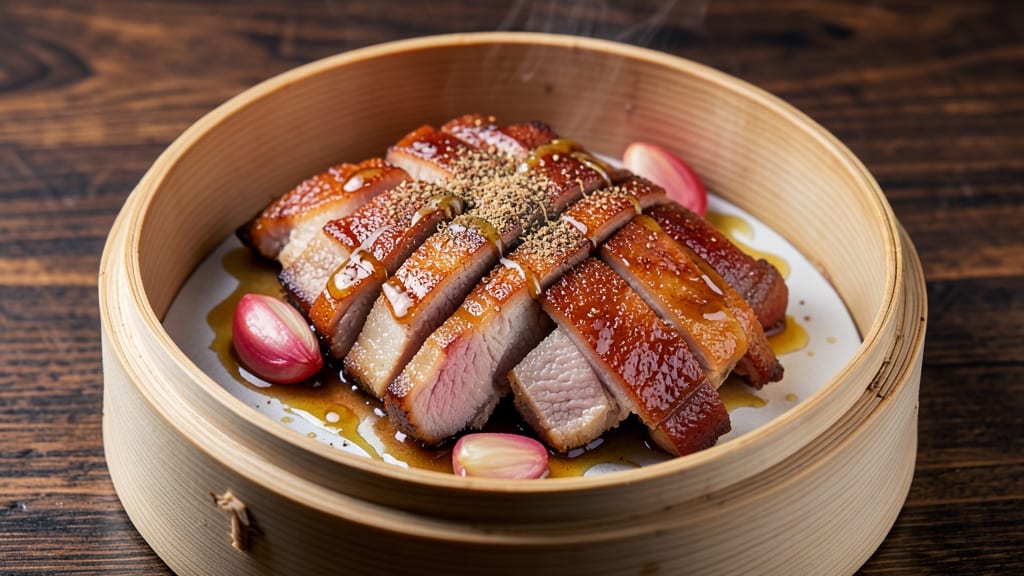
This authentic Chinese pork belly recipe delivers the crispy bark and tender interior you crave from dim sum restaurants. 🔥 After years of perfecting techniques in Charleston's kitchens, I've mastered the balance between five-spice glaze and high-heat roasting that transforms fatty pork belly into restaurant-quality bites.
The secret lies in a slow braise followed by high-heat roasting to create that signature crispy bark while keeping the meat tender. Traditional Chinese flavors—five-spice powder, soy sauce, and a touch of honey—infuse every bite with depth. This method preserves the pork's natural richness without overwhelming it with excessive sweetness.
What you'll achieve is a dish that's equally impressive as a centerpiece or party appetizer—golden, crackling edges giving way to melt-in-your-mouth meat. The five-spice glaze adds aromatic complexity that lingers long after the last bite. Serve with steamed jasmine rice and quick-pickled vegetables for an authentic dining experience.
Confession: I've perfected this recipe through countless test batches, adjusting the roasting time to ensure that crispy bark stays intact even after cutting. The result? A dish that's both visually stunning and packed with flavor—exactly what you'd expect from a Cantonese dim sum kitchen. Let's get cooking.
Ingredients for authentic chinese pork belly
Authentic Chinese flavors and crispy perfection start with these quality ingredients.
| Ingredient | Amount | Notes |
|---|---|---|
| Pork Belly 🥓 | 2 lb | Skin-on, fatty cuts preferred |
| Five-Spice Powder 🌶️ | 1 ½ tbsp | Authentic Chinese blend |
| Soy Sauce 🍶 | ½ cup | Dark soy for color, light for flavor |
| Honey 🍯 | ¼ cup | Light amber for balance |
| Sesame Oil 🫒 | 1 ½ tbsp | Toasted, for aroma |
| Garlic Cloves 🧄 | 6 cloves | Minced, for depth |
| Fresh Ginger 🌿 | ½ cup | Julienned, peeled |
| Green Onions 🧅 | ¼ cup | Sliced, for garnish |
| Rice Vinegar 🍶 | 2 tbsp | For tangy balance |
| Vegetable Oil 🫒 | ½ cup | High smoke point |
| Salt 🧂 | 1 ½ tsp | Kosher, for curing |
| Black Pepper 🌶️ | ½ tsp | Freshly cracked |
| Jasmine Rice 🌾 | 2 cups | Uncooked, for serving |
| Quick-Pickled Vegetables 🥬 | 1 ½ cups | Optional, for serving |
The pork belly is non-negotiable—skin-on cuts from a trusted butcher ensure that signature crispy bark. I always source mine from Charleston's local Asian markets like Hunan Market or Golden Harvest, where they cut it into even slabs. Look for thick fat layers and minimal bruising. Five-spice powder? Penzeys or Spicewalla carry authentic blends—avoid the generic supermarket versions that taste like dust. The honey should be light amber; Charleston Honey Company makes a perfect balance of floral and sweet.
No dark soy sauce? Light soy plus a pinch of caramel coloring works in a pinch, though it won't give that signature deep hue. Substituting honey? Maple syrup at a 1:1 ratio keeps things balanced, but the flavor won't be identical. Fresh ginger and garlic are ideal, but dried at half the amount gets you close if you're in a hurry. The pickled vegetables? Quick-pickle radishes and carrots with rice vinegar and sugar—takes 10 minutes and elevates the whole dish. For the sesame oil, toast it in a dry pan for 30 seconds before adding to the glaze to deepen the aroma.
Pork belly keeps 3 days in the fridge, wrapped tightly in parchment. The glaze components (soy, honey, vinegar) stay fresh for 1 week in sealed jars. I always make extra glaze—it's perfect for drizzling over rice or stir-fries. For the crispy bark to stay intact, reheat at 350°F for 10 minutes before serving. The rice? Cook it in advance and keep it warm—jasmine rice absorbs flavors beautifully, so a splash of the pork's cooking liquid at the end makes it next-level.
Why You'll Love This Recipe
- One-Pan Magic: Honestly, this recipe lives on a single sheet pan—no chopping boards, no extra pots. Just score the pork belly, toss it in the oven with the five-spice and soy sauce, and let it caramelize while you sip your tea. (Yes, even on a Tuesday night.)
- Sweet-Savory Crunch: That crispy crackling with the sticky honey glaze? It’s the kind of contrast that makes you reach for seconds without thinking. The five-spice powder adds warmth, while the sesame oil finishes it with a nutty punch—every bite feels like a little flavor party.
- Leftovers That Don’t Suck: Between us, most takeout pork belly disappears in one sitting. Not this version. The glaze keeps it moist, and the crispy edges stay intact even reheated. I’ve had it cold in rice bowls, chopped into fried rice, or just straight from the fridge—still delicious.
- Budget-Friendly Luxe: Pork belly can feel fancy, but this recipe stretches it like a pro. A single slab feeds four, and the five-spice and soy sauce cost pennies. Plus, the honey and sesame oil add richness without breaking the bank—it’s restaurant-quality without the markup.
Step-by-step instructions for five-spice glazed pork belly
Here's how to transform fatty pork belly into authentic Chinese crispy bark perfection.
👨🍳 Step 1: Cure and Marinate the Pork Belly
Start by scoring the pork belly in a diamond pattern, cutting about ½-inch deep without piercing the fat layer. This creates channels for the marinade to penetrate while helping render the fat later. Place the scored belly skin-side down in a baking dish.
In a small bowl, whisk together the 1.5 tbsp five-spice powder, 1.5 tsp salt, and 0.5 tsp black pepper. Sprinkle this mixture evenly over the pork belly, pressing it gently into the cuts. Then pour the 0.5 cup soy sauce and 1.5 tbsp sesame oil over the top, ensuring it seeps into all the scored areas.
Cover the dish with plastic wrap and refrigerate for 12-24 hours. This curing process breaks down proteins, making the meat more tender and allowing the spices to penetrate deeply. The longer it marinates, the more flavorful the result—but don't exceed 24 hours or the texture may become mushy.
🔥 Step 2: Render the Fat and Develop the Crispy Bark
Preheat your oven to 275°F. Remove the pork belly from the fridge and let it sit at room temperature for 30 minutes before cooking. This ensures even cooking. Place the belly fat-side up on a wire rack set over a baking sheet to allow air circulation on all sides.
Bake for 2 hours until the internal temperature reaches 160°F and the fat has rendered about 70% of its original volume. You'll know it's ready when the skin starts to pull away from the fat in some spots and the meat becomes fork-tender. This slow cooking transforms the tough connective tissue into gelatin, creating that melt-in-your-mouth texture.
Here's the thing—don't be tempted to rush this step. The low temperature is crucial for rendering the fat without cooking the meat too quickly. If the skin starts to brown too soon, tent it loosely with foil to slow the process.
🍳 Step 3: Create the Glaze and Caramelize
While the pork belly is resting, prepare the glaze by combining the 0.25 cup honey, 2 tbsp rice vinegar, 6 minced garlic cloves, and 0.5 cup julienned fresh ginger in a small saucepan. Bring to a simmer over medium heat and cook for 5-7 minutes until reduced by half and slightly thickened.
Remove the pork belly from the oven and increase the temperature to 425°F. Brush the reduced glaze evenly over the pork belly, making sure to get it into all the scored areas. Return it to the oven and bake for an additional 15-20 minutes until the glaze caramelizes and the skin develops a deep golden-brown bark.
Watch closely during the last 5 minutes—this is when the magic happens. The glaze should darken to a rich amber color with some charred spots. That's what gives authentic Chinese pork belly its irresistible flavor and texture contrast. If it starts to burn before caramelizing, reduce the heat to 400°F and continue monitoring.
🔪 Step 4: Rest and Slice for Maximum Juiciness
Remove the pork belly from the oven and let it rest at room temperature for 15-20 minutes. This resting period is absolutely critical—it allows the juices to redistribute throughout the meat instead of pooling on your cutting board. During this time, prepare the 2 cups jasmine rice according to package instructions for serving.
Slice the pork belly against the grain into ½-inch thick pieces. You'll see the beautiful layers of crispy skin, tender meat, and rendered fat. Arrange the slices on a platter and drizzle with any remaining glaze from the pan. Garnish with the 0.25 cup sliced green onions and serve immediately alongside the rice and 1.5 cups quick-pickled vegetables.
Each bite should deliver perfect harmony: crispy, caramelized bark giving way to tender, juicy meat infused with five-spice warmth. The pickled vegetables cut through the richness, while the fragrant rice soaks up every last drop of flavor. This is the authentic Chinese pork belly experience you've been craving.
Pro Tips For Making Authentic Chinese Pork Belly
- CRANK THE HEAT FIRST: Chinese pork belly needs that initial sear to render fat fast and lock in flavor. Start with your wok or pan screaming hot—no need to wait for it to warm up. I used to rush this, and the meat would steam instead of develop that golden crust. Once the fat hits the pan with a loud sizzle, you’re on the right track.
- SALT THE BELLY 24 HOURS EARLY: Skip the dry rub—this isn’t jerky. Instead, coat the pork belly in 1 tablespoon kosher salt per pound and let it sit uncovered in the fridge. The salt breaks down the proteins, making it tender and crispy. I learned this the hard way after a batch turned out chewy because I salted it right before cooking.
- STOP WHEN FAT RENDERS CLEAR: The moment the fat under the pork belly turns translucent and pulls away from the pan, that’s your cue to flip. Keep going, and you’ll end up with greasy, soggy meat. I now set a timer for 12-15 minutes max on high heat—any longer, and you’re risking burnt edges before the center is done.
- FINISH WITH HONEY LAST: Add the honey and soy sauce only in the final 2 minutes of cooking. This prevents it from burning into a bitter syrup. My grandmother swore by this, and she was right: the glaze should coat the meat like a glossy finish, not turn into caramelized sludge. A splash of water first helps steam the sauce gently.
Wine and beer pairings for these flavors
Rice Wine Harmony
For authentic Chinese pork belly, a dry Shaoxing wine (also called huangjiu) is my go-to pairing—it mirrors the dish's umami depth while complementing the five-spice glaze. Look for Kweichow Moutai if you want something stronger, but I prefer Longjing Shaoxing for its subtle floral notes that balance the pork's richness.
Serve slightly chilled to enhance the wine's crispness against the crispy bark. 🍷
Light Beer Balance
A crisp Chinese lager like Tsingtao or Snow Beer cuts through the pork's fat beautifully. The light body and slight malt sweetness cleanse your palate between bites, while the carbonation refreshes.
For craft options, try a wheat beer with citrus notes—Blue Moon works well—to contrast the pork's smoky-sweet glaze. Avoid heavy IPAs or dark beers that might overpower the dish.
Sweet Red Wine Option
If you prefer red, a light-bodied Chinese red like Cabernet Grapes or Lychee Cabernet pairs surprisingly well. The fruity undertones echo the honey in the glaze, while the tannins stand up to the pork's fat.
For Western options, a Pinot Noir from Oregon offers enough acidity to balance the dish without competing for attention.
Non-Alcoholic Pairings
For a non-alcoholic option, jasmine tea with a splash of rose syrup enhances the five-spice notes. Alternatively, a ginger beer (like Feather Ginger Beer) mirrors the dish's spicy-sweet profile. I often serve this combo at my farm gatherings—it's a crowd-pleaser that doesn't skimp on flavor. 🌿
Nutrition facts
Frequently asked questions
Why does authentic Chinese pork belly need to marinate overnight?
The 12-24 hour marinade is essential for two reasons: it tenderizes the meat by breaking down collagen, and it allows the five-spice powder to penetrate deeply into the scored cuts. The soy sauce and sesame oil also create a flavor base that transforms the pork from fatty to flavorful. Skipping this step results in tougher meat and less aromatic depth.
Can I substitute regular pork belly for the skin-on version?
While you can use boneless pork belly without skin, you'll miss the signature crispy bark that makes this dish special. The skin acts as a natural barrier that renders fat while creating that irresistible texture. If you must use skinless, increase the cooking time by 15-20 minutes to compensate for the lack of fat insulation.
What's the secret to getting that perfect crispy bark?
The magic happens in two stages: slow rendering at 275°F followed by high-heat caramelization at 425°F. The low temp breaks down fat without cooking the meat, while the high temp creates that golden crust. Pro tip: Score the skin in a diamond pattern before cooking to create more surface area for crisping.
How do I prevent the pork belly from drying out?
Never skip the 15-20 minute rest after cooking—this lets juices redistribute. Also, avoid overcooking by checking the internal temp at 160°F. The fat should render about 70% of its original volume, but the meat should remain moist. If using a meat thermometer, insert it into the thickest part without touching fat or bone.
What can I do with leftover pork belly?
Leftover pork belly is even better the next day! Store it in an airtight container and reheat at 350°F for 10 minutes to restore crispiness. Use it in fried rice, noodle dishes, or as a topping for dumplings. The rendered fat can also be saved for cooking—it's packed with flavor!