
Main Courses
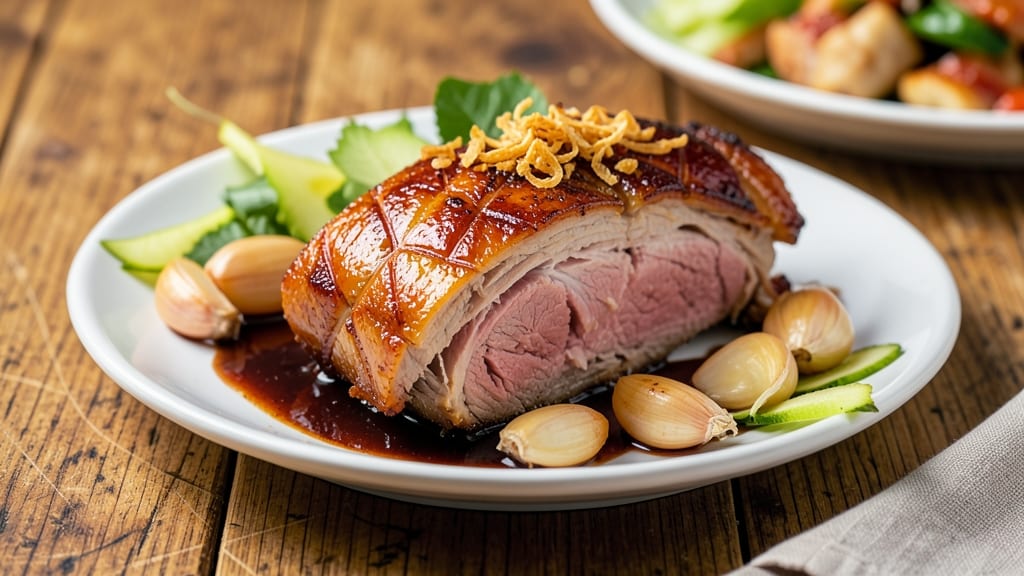
This roasted pork belly recipe Filipino style delivers the perfect balance of crispy bark and silky shreds—just like your favorite lechon. After years of experimenting with my grandmother’s handwritten notes, I’ve perfected a method that transforms tough pork belly into melt-in-your-mouth perfection with minimal effort.
The secret lies in a slow roast that renders fat while keeping the meat tender, all while building that legendary golden crust.
What sets this recipe apart is the Filipino technique of high-heat finishing to achieve that crispy exterior without drying out the meat. No fancy equipment needed—just a baking sheet, a little patience, and a trusty meat thermometer to ensure juicy, 145°F internal temperature.
The result? A dish so flavorful and satisfying, it’ll have everyone asking for seconds. My family insists this is the only way to eat pork belly—no takeout can compare.
Once you try this, you’ll understand why Filipino-style roasted pork belly is a weeknight staple and a showstopper for gatherings. The crispy skin gives way to tender, fatty meat that practically falls apart, making it ideal for sandwiches, rice bowls, or serving alongside garlic rice and atchara.
The best part? Leftovers reheat beautifully, so you’ll have dinner covered for days. Let’s get cooking!
For those who love variations, you can adjust the seasoning—add a splash of soy sauce for adobo-style depth or keep it simple with just salt and pepper for classic lechon kawali.
Either way, this recipe delivers restaurant-quality results in your own kitchen. Trust me, once you master this, you’ll never buy store-bought pork belly again.
Ingredients for roasted pork belly recipe filipino style
Filipino-style pork belly transforms simple ingredients into restaurant-quality crispy bark and tender shreds.
| Ingredient | Amount | Notes |
|---|---|---|
| Pork Belly 🐖 | 2 lb | Skin-on, thick-cut preferred |
| Kosher Salt 🧂 | 2 tbsp | Diamond Crystal preferred |
| Black Peppercorns 🌶️ | 1 tbsp | Freshly cracked for texture |
| Garlic Cloves 🧄 | 6 cloves | Smashed for infusion |
| Fresh Ginger | ½ inch | Peeled, sliced thinly |
| Fresh Ginger 🌿 | 1 tbsp | Grate finely for marinade |
| Olive Oil 🫒 | 2 tbsp | Extra-virgin for richness |
| Soy Sauce 🍶 | 1 tbsp | Filipino-style preferred |
| Brown Sugar 🍯 | 1 tbsp | Light or dark preferred |
| White Vinegar 🍶 | 1 tbsp | For tangy balance |
| Fresh Thyme Leaves 🌿 | ¼ cup | Or 1 tsp dried thyme |
| Cornstarch 🌾 | 1 tbsp | For crispy finish |
The pork belly is everything here. Look for thick-cut, skin-on pieces—the fat should be marbled but not excessive. Your local Asian market will have the best selection, but most grocery stores carry it now. If you can't find thick-cut, ask the butcher to trim it for you. Costco often sells large pieces perfect for this recipe. Freshness matters: the meat should smell clean, not sour. If the skin looks dull, rub it with a little olive oil and let it sit for 10 minutes before seasoning—helps the crust form better.
No Filipino soy sauce? Regular soy sauce plus 1 tsp sugar works in a pinch. Fresh ginger is ideal, but substitute 1 tbsp grated ginger if you're using dried. The cornstarch is non-negotiable for that legendary crisp—don't skip it. Want extra flavor? Add 1 tsp ground black pepper to the marinade. The thyme can be swapped for 1 tsp dried oregano, but fresh has that bright aroma. For the garlic, roast it first—toss whole cloves with olive oil, roast at 400°F for 10 minutes, then mash. Game-changer for depth.
Pork belly keeps beautifully. Wrap leftovers tightly in foil and store for up to 5 days—the fat actually improves with time. For reheating, low oven (275°F) for 20 minutes keeps it moist. Freeze portions in airtight containers for up to 3 months. Pro tip: Save the rendered fat—it's liquid gold for frying or basting. Use it to cook rice or drizzle over noodles. The crispy skin? Best eaten fresh, but if you must reheat, broil for 2-3 minutes to restore the crunch.
Why You'll Love This Recipe
- One-Pan Magic: I swear by this—just salt, pepper, garlic, and ginger on a sheet pan. No chopping, no fuss, and the oven does all the work while I sip coffee.
- Crispy-Creamy Bliss: That first crackle of the skin gives way to melt-in-your-mouth fat, and the ginger-garlic rub? It’s like a warm hug for your taste buds—sweet, savory, and just a little spicy.
- Leftovers I Actually Love: Serve it sliced thin over rice for breakfast, chop it into fried rice later, or pack it in lunches. Honestly, I’ve eaten this cold three days in a row and still crave it.
- Budget-Friendly Feast: Pork belly stretches further than you’d think, and the ingredients cost pennies. Feed four people for the price of takeout, with leftovers that taste even better tomorrow.
Step-by-step instructions for roasted pork belly Filipino style
Here's how to achieve that signature Filipino crispy bark with melt-in-your-mouth tenderness.
Prepare the Pork Belly for Maximum Crisp
Start by scoring the pork belly skin in a diamond pattern with a sharp knife, cutting about ¼-inch deep without piercing the fat. This creates channels for the marinade to penetrate and helps render the fat more evenly. Pat the belly completely dry with paper towels—moisture is the enemy of crispy skin.
In a small bowl, combine the 2 tbsp kosher salt, 1 tbsp freshly cracked black peppercorns, 1 tbsp finely grated fresh ginger, 1 tbsp soy sauce, 1 tbsp brown sugar, and 1 tbsp white vinegar. Mix well to create a coarse, flavorful dry rub. Generously coat the pork belly with this mixture, pressing it into the meat and skin. Let it sit at room temperature for 30 minutes while you prep the oven.
Render the Fat and Build the Marinade
Preheat your oven to 275°F—this low temperature is crucial for rendering the fat slowly without cooking the meat. Place the pork belly fat-side up on a rack set inside a roasting pan. This elevation allows hot air to circulate around the belly, promoting even fat rendering and crisping.
In a small saucepan, combine the 2 tbsp olive oil, 6 smashed garlic cloves, 0.5-inch sliced fresh ginger, and 0.25 cup fresh thyme leaves. Simmer over low heat for 5 minutes until fragrant. Remove from heat and let cool slightly—this aromatic oil will be our finishing touch later.
Roast Low and Slow Until Fork-Tender
Roast the pork belly uncovered for 3 hours, maintaining the 275°F temperature. You'll notice the fat slowly rendering and the skin beginning to crisp in patches. Here's the thing—don't disturb it. Every time you peek or move the pan, you risk losing heat and steam, which can make the skin soggy instead of crisp.
After 3 hours, check for doneness by inserting a meat thermometer into the thickest part of the meat (not touching fat or bone). It should read 195-200°F—this is when the collagen breaks down and the meat becomes silky. If it's not there yet, continue roasting in 30-minute increments until it reaches the target temperature.
Crisp the Skin and Finish with Flavor
Once the pork belly is fork-tender, increase the oven temperature to 425°F. Brush the belly with the cooled garlic-thyme oil mixture, then sprinkle 1 tbsp cornstarch evenly over the skin. This starch creates a golden, crackling crust that's the hallmark of Filipino-style pork belly.
Return to the oven for 15-20 minutes until the skin is deep golden brown and crispy. You'll smell that irresistible aroma as the starch caramelizes. The pork belly is done when the skin releases easily from the fat and has a satisfying crunch. Let it rest for 10 minutes before serving—this allows the juices to redistribute and makes slicing easier.
Shred and Serve with Confidence
Using two forks, carefully shred the pork belly against the grain into ¼-inch thick slices. The meat should pull apart easily, revealing that signature pink center and crispy exterior. Serve immediately with the rendered fat drizzled over the top—this golden liquid is pure flavor and should be savored with every bite.
For the ultimate experience, arrange the crispy pork belly slices on a platter and drizzle with any remaining pan juices. The contrast between the crunchy skin and tender meat is what makes this dish so special. Pair it with steamed rice and a simple green salad to let the pork belly shine as the star of the meal.
Pro Tips For Making Roasted Pork Belly Recipe Filipino Style
- CRANK THE HEAT FIRST: Start your pork belly in a screaming-hot oven (425°F/220°C) for the first 15 minutes—no mercy. I learned this the hard way after getting chewy, uneven results; the initial blast renders fat fast and kickstarts that crispy crust. After that, drop to 350°F (175°C) for even cooking, but that first burst is non-negotiable.
- SALT THE BELLY 24 HOURS EARLY: Generously coat the pork belly with kosher salt (about 1.5 teaspoons per pound) and refrigerate uncovered overnight. This isn’t just for flavor—it draws out moisture, which means better browning and a crackling crust when roasted. (Yes, even if you’re impatient like me, resist the urge to skip this.)
- PEEL GARLIC AND GINGER LAST MINUTE: Keep your garlic cloves whole and unpeeled until you’re ready to stuff them into the pork belly right before roasting. Same goes for ginger—peel it fresh and slice it thin just before adding. Oxidation makes prepped aromatics dull, and you’ll lose that bright punch in the final dish if you prep too early.
- REST IT UNDER FOIL: Once the pork belly hits 145°F (63°C) internally, transfer it to a tray and tent loosely with foil for 10 minutes. This traps heat and keeps the meat juicy while the fat firms up—no soggy crust here. I used to skip this, and the slices would always ooze grease instead of staying tender. (Your future self will thank you.)
Wine and beer pairings for this roasted pork belly recipe filipino style
Filipino-Inspired White Wine
For a perfect match, reach for a crisp Filipino-friendly white wine like Verdejo—its citrus notes and light body complement the pork belly’s savory-sweet balance without overpowering.
I love Spanish Verdejo (try Marqués de Riscal), but Sauvignon Blanc from New Zealand (like Cloudy Bay) works too—its zesty acidity cuts through the fat. Serve slightly chilled (45-50°F) to enhance the wine’s brightness against the dish’s richness. 🍷
Red Wine for Bold Lovers
If you prefer red, go for light-bodied wines with earthy undertones. Pinot Noir from Oregon (like Domaine Serene) or Spanish Garnacha (try Bodegas Muga) pair beautifully—their red fruit flavors mirror the pork’s caramelized crust.
Avoid heavy Cabernets; they’ll clash with the dish’s delicate balance. Decant for 30 minutes to soften tannins and let the wine breathe alongside the pork’s aromas.
Local Filipino Beer Pairings
For a casual vibe, crack open a San Miguel Pale Pilsen—its light maltiness and subtle hop bitterness cleanse the palate between bites of crispy pork. If you’re feeling adventurous, try Red Horse Original (Filipino lager) for a refreshing contrast to the dish’s richness.
Serve both at 40°F to highlight their crisp, clean profiles. 🍺
Non-Alcoholic Options
Skip the alcohol? A ginger-lime spritzer (mix ½ cup sparkling water, 2 tbsp fresh lime juice, and 1 tbsp grated ginger) mirrors the pork’s seasoning while keeping things light.
For something heartier, serve Filipino iced tea (sweetened black tea with lemon)—its floral notes complement the dish’s savory depth. Both options refresh without overpowering the pork’s star quality.
Dessert Wine Harmony
End the meal with a Moscato d’Asti (Italian sparkling wine) or Riesling Kabinett—their honeyed sweetness and effervescence balance the pork’s richness. Serve very cold (38-42°F) to let the wine’s crisp acidity cut through any lingering fat.
A small glass (2-3 oz) is perfect for cleansing the palate without overwhelming the meal’s flavors. ✨
Nutrition facts
Frequently asked questions
Can I use bone-in pork belly for this recipe?
Yes, but it requires extra time! Bone-in pork belly takes longer to cook through—plan for 4-5 hours at 275°F until the meat reaches 195-200°F internally. The bone actually helps keep the meat moist, but you'll need to adjust your roasting time and check doneness more carefully. For even cooking, consider trimming excess fat around the bone to prevent uneven crisping.
What's the best way to reheat leftover crispy pork belly?
To preserve that golden crust, reheat in a 375°F oven for 15-20 minutes on a wire rack over a baking sheet. For extra crunch, broil for the last 2 minutes. Microwaving will make the skin soggy—never do that! If you're short on time, a skillet over medium heat for 3-4 minutes per side works too, but watch closely to avoid burning.
Can I make this recipe in a slow cooker?
Not ideal for crispy skin, but you can adapt it for tender meat! Cook on low for 6-8 hours with ½ cup broth or water added to prevent drying. After slow cooking, transfer to a baking sheet, sprinkle with cornstarch, and broil for 5-7 minutes to create some crispiness. The texture won't match oven-roasted, but it's a good backup for busy days.
Why did my pork belly turn out greasy instead of crispy?
Most likely, your oven wasn't hot enough during the final crisping stage. Make sure your oven reaches 425°F before adding the cornstarch. Also, pat the skin completely dry before seasoning—any moisture will prevent crisping. For extra insurance, broil for 2-3 minutes at the very end. The cornstarch needs direct, intense heat to caramelize properly.
What are the best sides to serve with this dish?
Classic Filipino pairings include garlic fried rice (use the rendered pork fat!), atchara (pickled papaya), and steamed white rice. For something lighter, try a mango salad or sautéed bok choy. The crispy pork belly stands up to bold flavors, so don't be afraid to mix textures—crunchy, creamy, and fresh all work beautifully.