
Main Courses
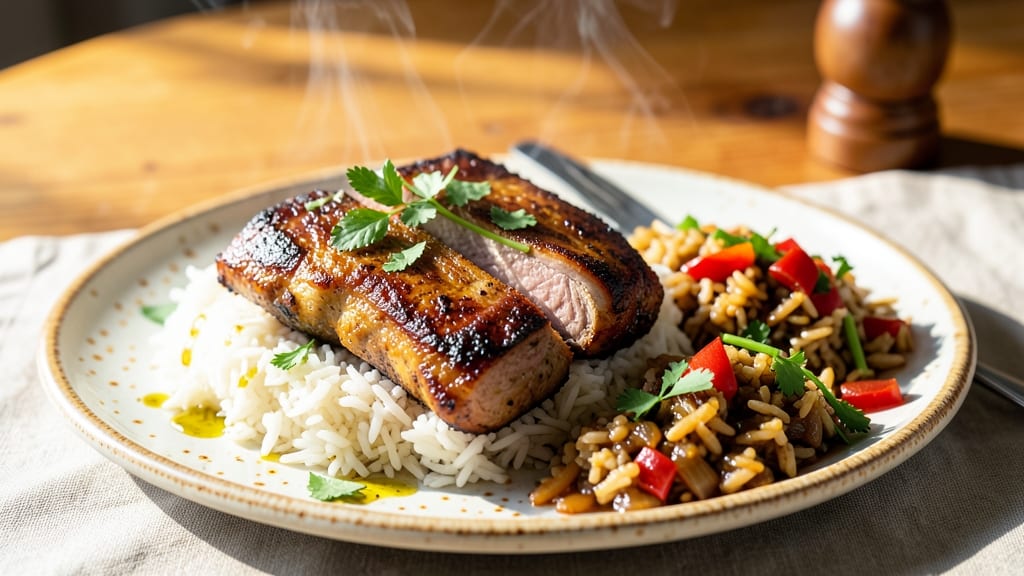
This Puerto Rican pork chops and rice recipe delivers bold, crispy edges on tender chops paired with aromatic sofrito-infused rice—just like your favorite island restaurant. The secret lies in marinating the pork overnight with adobo seasoning and fresh sofrito, ensuring deep flavor penetration and that signature caramelized crust.
Every bite combines smoky, savory pork with fluffy, herbaceous rice that clings to the grains.
What sets this dish apart is the authentic Puerto Rican technique: pan-searing the chops until golden while building a rich, slightly sweet sofrito base for the rice. The sofrito—made with tomatoes, peppers, and culantro—transforms simple white rice into a fragrant, flavorful side that complements the pork perfectly.
No shortcuts here; this is restaurant-quality comfort food made at home.
The result is a complete meal that’s both satisfying and impressive—crispy, juicy pork chops with tender centers, paired with rice that’s infused with layers of sofrito flavor. The dish comes together in one pan for the rice and another for the pork, making it manageable yet deeply flavorful.
Serve with tostones or a fresh salad for a full Puerto Rican feast.
This recipe is designed to deliver on tradition without compromise, ensuring every element—from the marinade to the rice—works together for maximum flavor. Whether you're cooking for family or hosting a dinner, this dish will transport your guests straight to the island. Let’s get started!
Ingredients for puerto rican pork chops and rice
Fourteen ingredients for a restaurant-worthy Puerto Rican feast—crispy pork chops and fragrant sofrito rice.
| Ingredient | Amount | Notes |
|---|---|---|
| Bone-In Pork Chops 🥩 | 1 ½ lb | Center-cut, 1-inch thick, ribeye preferred |
| Adobo Seasoning 🌶️ | 2 tbsp | Homemade or store-bought (Goya brand) |
| Fresh Sofrito 🍅 | 1 ½ cups | Homemade blend (tomatoes, peppers, culantro) |
| White Long-Grain Rice 🍚 | 2 cups | Uncooked, jasmine or basmati preferred |
| Chicken or Vegetable Broth 💧 | 2 cups | Low-sodium preferred for rice |
| Olive Oil 🫒 | ½ cup | Extra-virgin, for searing |
| Garlic Cloves 🧄 | 6 cloves | Minced, fresh preferred |
| Red Bell Pepper 🌶️ | 1 whole | Diced, any color works |
| Yellow Onion 🧅 | 1 whole | Diced, medium size |
| Culantro 🌿 | ¼ cup | Fresh, chopped (or substitute cilantro) |
| Salt 🧂 | 1 ½ tsp | Diamond Crystal kosher salt |
| Black Pepper 🌶️ | ½ tsp | Freshly ground |
| Bay Leaves 🍃 | 2 whole | Fresh preferred |
| Lemon Juice 🍋 | 1 tbsp | Freshly squeezed |
The pork chops are non-negotiable—bone-in, ribeye cuts give you that classic island restaurant texture. Look for center-cut chops at your local butcher or the meat department at Whole Foods or Costco for the best quality. If you can't find ribeye, pork loin chops work too, but they won't be as flavorful. The secret to crispy edges? Pat them dry before marinating and sear them low and slow. For the sofrito, homemade is worth it—fresh tomatoes, peppers, and culantro (or cilantro) make all the difference, but Goya frozen sofrito is a solid shortcut if you're in a pinch.
No fresh sofrito ingredients? Goya frozen sofrito or Trader Joe's pre-made sofrito saves time without sacrificing flavor. Swapping out culantro? Cilantro works but lacks that earthy depth—use it if that's all you've got. For the rice, jasmine or basmati stays fluffy longer than long-grain white, but don't stress if that's not what you've got. Diamond Crystal kosher salt is key here—it dissolves better than table salt and enhances every flavor. The broth? Low-sodium chicken or vegetable broth keeps the rice from tasting bland, but homemade stock is ideal if you've got it. And if you're missing bay leaves, dried works at half the amount—just crush them first for more flavor.
Marinate the pork overnight for maximum tenderness, but cover and refrigerate to keep it fresh. The sofrito can be prepped ahead—store in an airtight container for up to 5 days in the fridge or freeze for 3 months. Leftover rice? Spread it on a tray to cool before storing—prevents sogginess. This dish reheats beautifully: cover with a damp towel and microwave for 2 minutes, or warm in a skillet with a splash of broth. Portion the pork and rice separately for easy serving—no one wants dry chops or mushy rice.
Why You'll Love This Recipe
- One-Pot Magic: I swear by this trick—throw everything in one pot, and the sofrito and adobo work their magic while you stir. No chopping, no fuss, just layers of flavor building right in the broth.
- Crispy-Creamy Perfection: That bone-in pork chop? Oh, it’s gold—crispy edges from the adobo, tender meat that falls apart (in the best way), all while the rice soaks up the savory broth. Honestly, it’s the kind of dish that makes you want to lick the plate.
- Weeknight to Party: Between us, this feeds a crowd without stress. Make a double batch on Sunday, and you’ve got lunches for the week or a last-minute dinner guest covered. (Yes, even on a Tuesday night.)
- Budget-Friendly Feast: Bone-in pork chops stretch further than you’d think, and the rice and broth turn scraps into a hearty meal. I’ll be real: my grocery bill stays happy, and my family stays full—win, win.
Step-by-step instructions for sofrito-spiced pork chops and rice
Here's how to achieve perfectly crispy pork chops with fragrant sofrito and fluffy, aromatic rice.
Season and Sear the Pork Chops for Maximum Crisp
Pat the 1.5 lb bone-in pork chops completely dry with paper towels—this is non-negotiable for crispy edges. Season both sides generously with 2 tbsp adobo seasoning, pressing it into the meat so it adheres. Let them sit at room temperature for 15 minutes while you prep the sofrito.
Heat 0.5 cup olive oil in a large skillet over medium-high heat until shimmering. Add the pork chops and sear for 4-5 minutes per side until they develop a deep golden crust. Here's the thing—don't move them around. Let them develop that crust undisturbed, or you'll end up with steamed pork instead of seared perfection. You'll know they're ready when they release easily from the pan.
Build the Sofrito Base for Deep Flavor
In the same skillet (those flavorful browned bits are gold), add the diced red bell pepper and diced yellow onion. Cook for 5-6 minutes until softened and slightly caramelized. Add the 6 cloves minced garlic and cook for 30 seconds until fragrant—don't let it burn, or you'll taste bitterness.
Pour in the 1.5 cups fresh sofrito and stir to combine. Let it simmer for 3-4 minutes until the mixture thickens slightly. Here's where the magic happens: the sofrito's tomato base melds with the pork's natural juices, creating a complex sauce that'll coat every bite. Remove the skillet from heat and stir in the 1 tbsp lemon juice—this brightens the flavors and balances the richness.
Cook the Rice with Aromatics and Broth
While the pork rests, rinse the 2 cups white long-grain rice under cold water until the water runs clear. This removes excess starch and prevents gummy rice. In a separate pot, heat 2 cups chicken or vegetable broth over medium heat until steaming. Add the rice, 2 whole bay leaves, 1.5 tsp salt, and 0.5 tsp black pepper, then stir once.
Bring to a gentle boil, then reduce heat to low, cover tightly, and simmer for 15 minutes. Here's the trick: don't peek or stir. The rice needs undisturbed cooking to develop even grains. After 15 minutes, fluff with a fork and let it sit covered for another 5 minutes—this resting period ensures fluffy, separate grains every time.
Finish the Pork Chops and Combine
Return the pork chops to the skillet with the sofrito sauce and simmer for 2-3 minutes on medium-low heat, spooning the sauce over them until fully coated. The residual heat will gently cook the pork through while infusing it with sofrito flavor. Transfer the pork to a plate and tent with foil to keep warm.
Stir the 0.25 cup chopped culantro into the rice along with any accumulated juices from the pork. The culantro adds a bright, herby note that cuts through the richness of the pork and sofrito. Serve the pork chops over the rice, spooning the flavorful sofrito sauce generously on top. The contrast of crispy pork, fragrant rice, and tangy sofrito makes this dish unforgettable.
Pro Tips For Making Puerto Rican Pork Chops And Rice
- Sear Bone-In First: Slap those pork chops into a screaming-hot pan—no oil needed, the fat will render. After 3 minutes per side, pull them out and let them rest while you build the sofrito base. I learned this the hard way: skipping the sear means dry, flavorless meat that soaks up broth like a sponge instead of holding its own.
- Blend Sofrito Smooth: Pulse your fresh sofrito in batches—just until it’s almost smooth, with tiny chunks left. Over-blending turns it into mush that clings to the rice like glue. My grandmother swore by this, and she was right: texture matters more than you’d think.
- Don’t Crowd the Rice: Spread that rice out in the pot like you’re tiling a bathroom—even if it looks sparse. Crowding turns it into a gluey block instead of fluffy grains. Stir once after 5 minutes, then let it sit undisturbed. Yes, even if you’re impatient like me.
- Deglaze with Broth: After browning the pork chops, splash in ½ cup broth immediately—the bits stuck to the pan are flavor gold. Let it bubble for 30 seconds before adding the rest. I skip this when I’m lazy, but the dish is noticeably better when I don’t.
Essential equipment for perfect results
Skillet Essentials
You’ll need one large, heavy-bottomed skillet (I swear by All-Clad Stainless Steel) for searing the pork chops—it distributes heat evenly and prevents hot spots. A 12-inch cast iron skillet works too, but preheat it for 5 minutes on the stove to ensure even cooking.
Avoid non-stick pans—they don’t get hot enough for that perfect crust. 🔥
Rice Cooker or Pot
For the rice, a dedicated rice cooker (like the Cuisinart MultiCooker) simplifies the process—just add rice, broth, and seasonings, then walk away. If using a pot, opt for a heavy-bottomed stainless steel pot (like Le Creuset) to prevent scorching.
A medium-sized pot (3-4 quart capacity) is ideal for 2 cups of rice—it gives the grains room to expand without boiling over.
Measuring Tools
Precision matters for this dish. Use a digital kitchen scale (like the OXO Good Grips) for the pork chops to hit 1.5 lbs exactly—bone-in cuts can vary.
For the rice, a fine-mesh strainer ensures you rinse it thoroughly, and a medicine spoon helps measure the 0.5 tsp black pepper accurately. A microplane is perfect for mincing the 6 garlic cloves quickly and finely.
Marinating Gear
Marinate the pork overnight in a glass or ceramic dish (like a CorningWare baking dish)—these materials don’t absorb flavors or odors. Use quart-sized zip-top bags if you’re short on space, but poke a few holes in the bag for airflow.
A small bowl with a lid works for the sofrito if you’re prepping it ahead—just store it in the fridge for up to 5 days or freeze for 3 months.
Knives and Cutting Tools
A sharp 8-inch chef’s knife (like Wüsthof’s Classic) is a must for dicing the red bell pepper and yellow onion evenly—aim for ¼-inch pieces. A cutting board with a non-slip mat (I use Maple Holzer boards) keeps ingredients stable while chopping.
For the culantro, a pair of kitchen shears makes quick work of the stems, and a small knife works for the leaves.
Thermometer for Pork
While not mandatory, a meat thermometer (like the Thermoworks Smoke) ensures your pork chops reach 145°F internal temperature—safe for consumption and juicy. Insert it into the thickest part of the chop, avoiding the bone.
If you don’t have one, use the finger test: press the meat with your finger—it should feel firm but still slightly springy, not rubbery. 🌡️
Nutrition facts
Frequently asked questions
Can I substitute bone-in pork chops for boneless?
You can, but the texture and cooking time will differ. Boneless chops cook faster (3-4 minutes per side) and won't have that rich bone marrow flavor. If using boneless, reduce searing time by 1 minute per side and check for doneness at 140°F internal temperature. The crispy edges will still form, but the meat may be slightly less tender.
What's the best way to make sofrito from scratch?
Blend 2 cups tomatoes, 1 red bell pepper, 1 onion, 4 garlic cloves, ¼ cup culantro (or cilantro), and 1 tsp oregano until smooth. Cook the blend in a skillet for 10-12 minutes until thickened. For extra depth, add 1 tbsp olive oil while cooking. Store in an airtight container for up to 5 days or freeze for 3 months.
Why did my rice turn out mushy?
Mushy rice usually happens from one of three things: overcooking, not rinsing properly, or using the wrong pot. Always rinse rice until water runs clear to remove excess starch. Use a heavy-bottomed pot and maintain low heat—never boil vigorously. After cooking, let it rest covered for 5 minutes before fluffing. If it's still too soft, spread it on a tray to dry out.
Can I make this recipe in a slow cooker?
Yes, but with adjustments. Sear the pork chops first, then place them in the slow cooker with 1 cup broth and 1 tbsp adobo seasoning. Cook on Low for 6-7 hours or High for 3-4 hours until tender. For the rice, cook it separately in a pot with 2 cups broth and 1 cup sofrito on the stove. The slow cooker method works best for the pork's tenderness but won't give the same crispy edges.
What's the difference between sofrito and recaito?
Recaito is a Puerto Rican variation of sofrito that includes green bell peppers instead of red, plus green olives and capers for a briny, tangy flavor. While traditional sofrito is tomato-based, recaito has a more complex, slightly salty profile. For this recipe, stick with sofrito, but you can experiment by adding 2 tbsp chopped green olives to the rice for a recaito twist.