
Main Courses
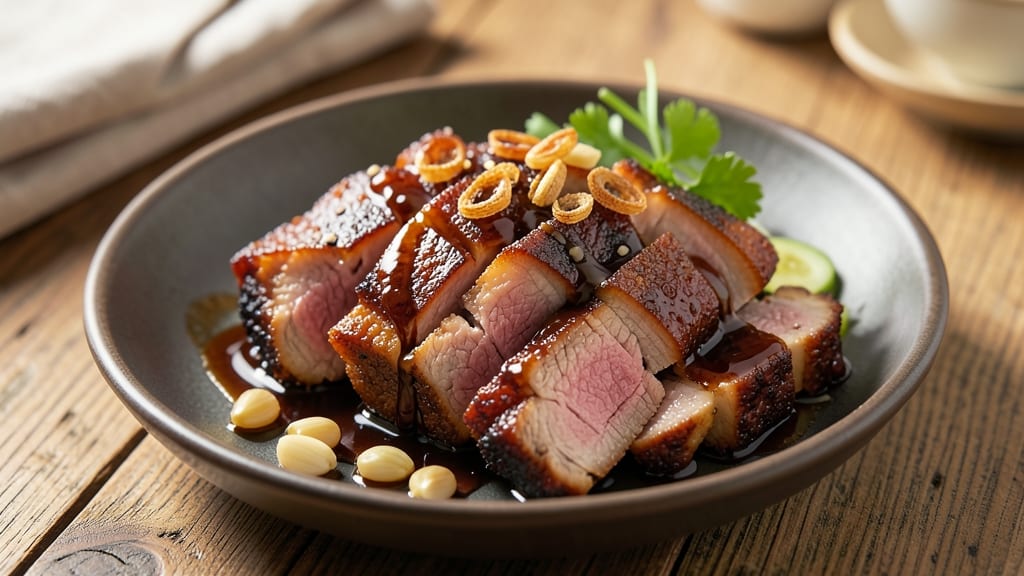
This Korean pork jowl recipe delivers crispy crackling over tender meat bathed in a sweet soy glaze—pure comfort food with restaurant-quality depth. 🌟 The secret lies in slow-braising the jowl until the fat renders into golden, crispy layers while the meat stays melt-in-your-mouth tender.
I first discovered this technique while studying traditional bossam preparation, where the contrast of textures and flavors makes every bite unforgettable.
The process begins with a simple marinade of soy sauce, garlic, ginger, and sesame oil, which infuses the jowl overnight for maximum flavor penetration.
After slow-cooking until fork-tender, the real magic happens when you crisp the fat layers in a hot pan—just a few minutes transforms the dish into something extraordinary. This method ensures you get both the crispy exterior and rich, savory interior that defines Korean-style braised pork.
What you’ll end up with is a dish that’s equal parts indulgent and balanced—crispy, caramelized edges give way to tender meat that practically falls apart, all coated in a glossy, slightly sweet sauce.
The aroma alone will have everyone gathering around your table, and the flavors are rich enough to stand alone but versatile enough to pair with steamed rice, kimchi, or quick-pickled vegetables.
Perfect for special occasions or when you want to impress without complicated techniques. The key is patience—the longer it braises, the deeper the flavor. Let’s get cooking!
Ingredients for pork jowl recipe korean
Pork jowl, soy sauce, and garlic—just three ingredients that transform into restaurant-quality crispy crackling.
| Ingredient | Amount | Notes |
|---|---|---|
| Pork Jowl 🐷 | 1 ½ lb | Skin-on, fatty cuts preferred |
| Kosher Soy Sauce 🥄 | ½ cup | High-quality, full-bodied |
| Garlic Cloves 🧄 | 6 cloves | Minced, fresh preferred |
| Fresh Ginger 🌿 | 2 tbsp | Grated, peeled |
| Sesame Oil 🫒 | 1 tbsp | Toasted, for aroma |
| Brown Sugar 🍯 | ¼ cup | Light or dark variety |
| Rice Vinegar 🍶 | 2 tbsp | White or seasoned |
| Asian Pearl Onions 🧅 | 1 cup | Sliced thin, optional garnish |
| Green Onions 🧅 | ¼ cup | Sliced, for garnish |
| Neutral Oil 🫒 | 2 tbsp | Vegetable or canola |
| Diamond Crystal Kosher Salt 🧂 | 1 ½ tsp | For seasoning |
| Ground Black Pepper 🌶️ | ½ tsp | Freshly ground |
| Sesame Seeds 🌾 | 1 tbsp | Toasted, for garnish |
| Steamed White Rice 🍚 | 2 cups | For serving (cooked) |
| Kimchi 🥬 | ½ cup | For serving (optional) |
The pork jowl is non-negotiable here—you need that thick layer of fat for crispy crackling. Local butchers often have it pre-cut, but if you're buying a whole piece, look for cuts with thick, unbroken fat layers. I usually grab mine from Whole Foods or my Korean market—they have the best selection. If you can't find jowl, pork belly works in a pinch, but it won't be as crispy. For the soy sauce, Kikkoman or Lee Kum Kee are my go-tos, but any high-quality, full-bodied soy sauce will do. The garlic and ginger should be freshly grated or minced—no powdered shortcuts here.
No sesame oil? Avocado oil or neutral oil works, but you'll lose that nutty aroma. Swapping brown sugar? Honey or maple syrup at the same amount keeps it sweet. The rice vinegar adds brightness—if you're out, apple cider vinegar is a decent stand-in. For the onions, red or yellow onions work if you can't find Asian pearl onions. And if you're feeling fancy, toast your sesame seeds in a dry pan for 30 seconds before adding them—they'll taste so much better. The key is patience with the braising; don't rush it.
This dish tastes even better the next day—make extra if you can. Store leftovers in an airtight container in the fridge for up to 4 days. For reheating, cover with foil and warm in a 350°F oven for 15-20 minutes—this keeps the crackling crispy. The rice and kimchi keep well too: rice stays fresh for 2 days in the fridge, and kimchi lasts for weeks if stored properly. I always double the sauce because it's perfect for drizzling over rice or noodles later.
Why You'll Love This Recipe
- One-Pan Simplicity: Honestly, I swear by this for lazy nights—just sear the jowl, toss in the garlic and ginger, then let the soy sauce do its magic. No flipping, no fussing, and the sesame oil finishes it all with zero extra bowls.
- Crispy-Creamy Magic: That crispy skin cracking open to reveal tender, almost melting pork? It’s the kind of contrast that makes you close your eyes and sigh. The soy sauce caramelizes into a glossy glaze that sticks to every bite like it’s begging for seconds.
- Leftovers That Shine: Between us, this dish gets better the next day—yes, really. The flavors meld even more, and I’ve reheated slices straight from the fridge for quick lunches. (My kids argue over who gets the last piece, so clearly, it’s winning.)
- Budget-Friendly Feast: Pork jowl is cheaper than most cuts, and a single piece stretches across breakfasts, banchan, or even fried rice. I’ll be real: it’s my go-to for feeding a crowd without breaking the bank—or spending hours in the kitchen.
Step-by-step instructions for Korean pork jowl
Here's how to transform fatty pork jowl into melt-in-your-mouth braise with irresistible crackling.
🔥 Step 1: Render the Fat and Sear the Jowl
Place the 1.5 lb pork jowl skin-side down in a cold heavy pot or Dutch oven. Turn the heat to medium-low and let it render its own fat for 15-20 minutes without touching. You're looking for the fat to turn golden and the skin to begin crisping—this is where all the magic happens.
Once the fat is rendered and the skin is deep golden brown, flip the jowl and sear the meat side for 3-4 minutes until it develops a rich crust. Here's the thing—don't rush this step. The slow fat rendering prevents the meat from cooking too quickly, ensuring it stays tender while the skin becomes crispy. If you see any dark brown spots forming, reduce the heat slightly to prevent burning.
👨🍳 Step 2: Build the Sweet Soy Braising Sauce
Remove the jowl and set it aside. In the same pot, add 2 tbsp neutral oil and increase heat to medium-high. Add the 6 cloves minced garlic cloves and 2 tbsp grated fresh ginger, cooking for 30 seconds until fragrant—you should smell that pungent, fresh aroma wafting up.
Pour in the 0.5 cup kosher soy sauce, 0.25 cup brown sugar, and 2 tbsp rice vinegar. Stir to combine, then return the jowl to the pot, skin-side up. The sauce should coat the bottom about halfway up the jowl. Here's where it gets sweet and savory—this balance is what makes Korean braised pork so addictive.
🥘 Step 3: Braise Until Fork-Tender
Cover the pot and transfer to a 300°F oven (or reduce stovetop heat to low). Braise for 2.5-3 hours, turning the jowl occasionally, until the meat is fork-tender and the skin is crispy and dark golden. The skin should crackle when you press it gently with tongs—this is your crispy reward.
During the last 30 minutes, uncover the pot and increase oven temperature to 350°F to crisp the skin further. The meat should pull apart easily when probed with a fork. If the braising liquid reduces too much, add 1-2 tablespoons water to maintain moisture without diluting the flavors.
🍳 Step 4: Finish with Aromatics and Serve
Remove the jowl and set it aside to rest for 10 minutes. In the same pot, add 1 tbsp sesame oil and 1 cup sliced Asian pearl onions, cooking for 2-3 minutes until softened. Stir in 1 tbsp toasted sesame seeds and 0.25 cup sliced green onions just before serving.
Slice the jowl against the grain and serve over 2 cups steamed white rice, spooning the onions and sauce on top. For an authentic touch, add 0.5 cup kimchi on the side. The contrast of crispy skin, tender meat, and sweet-savory sauce over rice is what makes this dish unforgettable.
Pro Tips For Making Pork Jowl Recipe Korean
- SCORE THE CRUST FIRST: Pork jowl needs that crispy, caramelized skin, so don’t rush the browning—render it fat-side down on medium-low heat for 15-20 minutes until it’s deep golden, almost sticky. I used to crank the heat and end up with burnt edges and grease everywhere. Let the fat melt slowly, and resist the urge to poke it.
- SALT THE JOWL 24 HOURS EARLY: Generously coat the jowl with kosher salt (about 1.5 teaspoons per pound) and refrigerate uncovered for a full day. This breaks down the collagen and keeps the meat juicy when braised. I skipped this once and ended up with tough, dry pork—don’t be lazy, even if you’re short on time.
- MINCE THE GINGER FINE: Skip the lazy chopping—grate or finely mince the ginger (about 2 tablespoons) so it dissolves into the sauce instead of sitting as chunks. Fresh ginger adds depth, but big pieces just turn to mush. Trust me, your sauce will taste smoother and more integrated.
- BRAISE LOW AND LONG: After searing, cover the jowl with just enough water or broth to come halfway up the meat, then simmer at 300°F (150°C) for 2.5-3 hours. High heat turns the meat rubbery. I learned this after a tough, chewy first attempt—patience here makes all the difference.
Common mistakes when making your pork jowl recipe korean
Rushing the Rendering
One of the biggest mistakes is rushing the fat-rendering step. The pork jowl needs 15-20 minutes at medium-low heat to slowly render its fat—this creates the crispy crackling. I’ve seen people flip it too soon, resulting in rubbery skin. Let the fat turn golden and shimmery before touching it. 🌟
Skipping the Marinade
While this recipe doesn’t require an overnight marinade, some cooks skip the soy sauce, garlic, and ginger infusion entirely. Even a 30-minute marinade makes a difference—it ensures the meat absorbs flavor deeply.
If you’re short on time, at least let the jowl sit in the sauce for 10 minutes before searing.
Overcrowding the Pot
Using a pot that’s too small forces the jowl to steam instead of sear. Choose a heavy Dutch oven with enough space for the jowl to lie flat. If your pot is too small, the skin won’t crisp properly, and the meat may turn soggy.
I use a 5-quart Dutch oven for this recipe—it’s just the right size.
Ignoring the Skin
The crispy skin is what makes this dish special, so don’t peel or discard it! If you’re worried about chewing, slice the jowl against the grain and serve it with rice—it’ll break apart easily. The skin adds texture and flavor, so leave it on until the very end. 💪
Underestimating Braising Time
Pork jowl needs 2.5-3 hours to become fork-tender. Cutting corners by reducing time results in tough meat. Use a meat thermometer—the internal temperature should reach 195-203°F for perfect tenderness. If you’re in a hurry, try pressure cooking (though texture will differ slightly).
Not Resting the Meat
Skipping the 10-minute rest after braising causes juices to spill out when sliced. Let the jowl rest on a wire rack to keep the skin crispy. I also recommend resting it in a warm oven at 200°F if you’re prepping ahead—this keeps everything hot and ready to serve.
Nutrition facts
Frequently asked questions
Can I substitute pork belly for pork jowl?
Yes, but expect slightly different results. Pork belly will still give you tender meat and crispy skin, but jowl has a more delicate fat layer that renders more evenly. For best results, use 1.5 lb pork belly with thick fat layers and follow the same braising method. The texture will be slightly richer, but the crispiness may vary.
How do I know when the pork jowl is fully cooked?
Use a meat thermometer to check—it should reach 195-203°F internally. The meat should also be fork-tender and pull apart easily. If you don't have a thermometer, look for deep golden-brown skin that crackles when pressed gently with tongs.
Can I make this recipe on the stovetop instead of the oven?
After searing, cover the pot and simmer on low heat for 2.5-3 hours, turning occasionally. Keep the lid slightly ajar for the last 30 minutes to crisp the skin. You may need to add 1-2 tbsp water if the sauce reduces too much. The stovetop method works well but requires more attention.
What's the best way to reheat leftovers?
Reheat in a 350°F oven for 15-20 minutes, covered with foil, to maintain crispiness. For a quick fix, use a skillet on medium heat for 2-3 minutes per side—just enough to warm through without drying out. Store leftovers in an airtight container for up to 4 days.
What sides pair best with Korean pork jowl?
Classic pairings include steamed white rice, spicy kimchi, and quick-pickled vegetables. For extra flavor, try steamed bok choy or korean-style cucumber salad. The sweet-savory sauce also works beautifully drizzled over ramen noodles or mandu (dumplings) for a fusion twist.