
Main Courses
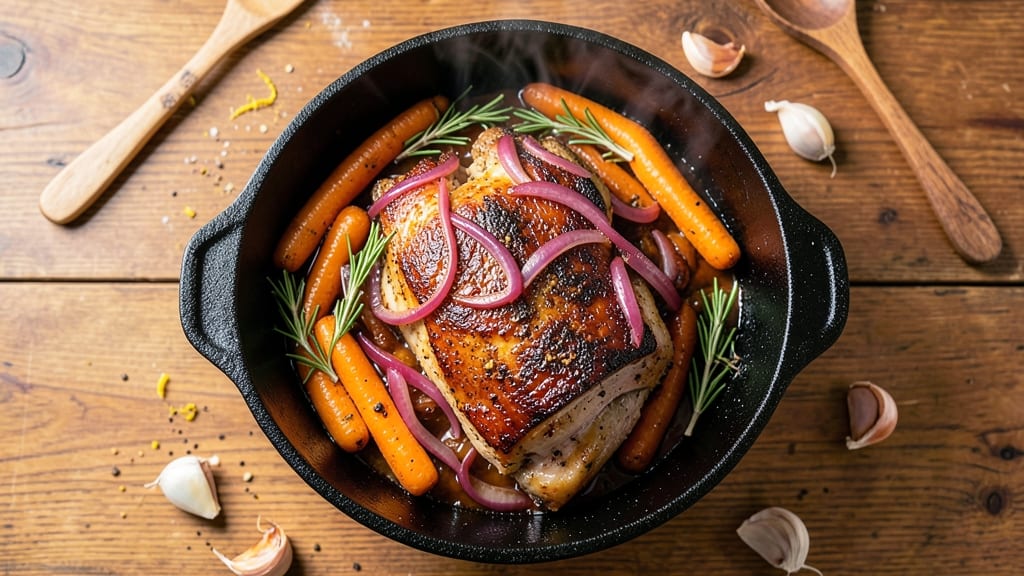
This boneless pork shoulder roast recipe transforms tough cuts into melt-in-your-mouth perfection, all while mastering the Dutch oven's magic for that coveted crispy bark over tender, shreddable meat.
The secret lies in precise temperature control—searing the roast until golden before slow-braising creates a flavorful crust that locks in juices, ensuring every bite is both satisfying and restaurant-worthy. With just a few key ingredients and the right technique, you'll achieve results that rival your favorite barbecue joint.
The Dutch oven is your secret weapon here, as it retains heat evenly while allowing you to control moisture—critical for preventing dryness.
Start with a high-heat sear to develop deep, caramelized flavors, then reduce the heat and cover the pot to let the pork cook low and slow until it reaches 203°F, where the collagen breaks down into silky strands.
This method ensures the meat stays moist and tender, while the crispy bark adds a satisfying contrast that elevates the dish from simple to extraordinary.
What you’ll end up with is a crispy, caramelized exterior that shatters with each bite, giving way to tender, pull-apart pork that falls apart effortlessly.
The aroma alone—smoky, savory, and rich—will have everyone gathered around the table, and the versatility of this dish means it works as a centerpiece for family dinners, holiday feasts, or even a cozy weeknight meal. The best part?
It’s a one-pot wonder, so cleanup is minimal, leaving you more time to enjoy the results.
Pair this roast with classic sides like mashed potatoes, crusty bread, or a fresh green salad to round out the meal. The crispy bark soaks up sauces beautifully, making every bite even more flavorful.
Whether you’re feeding a crowd or treating yourself to a special dinner, this recipe delivers restaurant-quality results with minimal effort—proof that the Dutch oven is a game-changer in any kitchen.
Ingredients for boneless pork shoulder roast recipe dutch oven
Six ingredients transform tough pork into restaurant-worthy crispy bark over tender shreds.
| Ingredient | Amount | Notes |
|---|---|---|
| Boneless Pork Shoulder Roast 🥓 | 4 lb | Well-marbled for juiciness |
| Yellow Onion 🧅 | 1 whole | Chopped into large chunks |
| Carrots 🥕 | 4 medium | Whole, peeled and halved |
| Garlic Cloves 🧄 | 6 cloves | Smashed for deep flavor |
| Fresh Rosemary 🌿 | ½ ounce | Sprigs for aroma |
| Fresh Thyme 🌿 | ½ ounce | Sprigs for depth |
| Apple Cider Vinegar 🍎 | ¼ cup | For tangy brightness |
| Brown Sugar 🍚 | ½ cup | Packed for caramelization |
| Smoked Paprika 🌶️ | 2 tbsp | For smoky depth |
| Kosher Salt 🧂 | 2 tbsp | Diamond Crystal preferred |
| Ground Black Pepper 🌶️ | 1 tbsp | Freshly cracked |
| Olive Oil 🫒 | ½ cup | For high-heat searing |
| Beef Broth 💧 | 2 cups | Low-sodium preferred |
The pork shoulder is the star—look for well-marbled cuts at Costco or your butcher for the best texture. A 4-pound roast feeds six generously, but go bigger if you're feeding a crowd. Fresh herbs make all the difference here—Trader Joe's has great pre-bundled sprigs, but even a few sprigs from your garden work. The apple cider vinegar adds brightness that cuts through the richness. If you can't find it, a splash of lemon juice works in a pinch. Smoked paprika gives that deep, smoky flavor without needing actual smoke—Penzeys has great options if you want to splurge.
No beef broth? Chicken broth or vegetable broth works just fine—just add a pinch of Worcestershire for depth. Short on brown sugar? White sugar or maple syrup (half the amount) gets you close. The vinegar can be swapped for red wine or apple juice if you're feeling fancy. Fresh herbs wilt fast, so if you're prepping ahead, store them in a damp paper towel in the fridge. The carrots and onions can be prepped the day before—just keep them in a sealed container. For extra crispiness, pound the pork to even thickness before searing—this ensures consistent browning all around.
This roast tastes even better the next day, so double the batch if you're feeding a crowd. Store leftovers in the fridge for up to 5 days or freeze for 3 months. The crispy bark gets soggy when reheated, so re-crisp in a hot pan for 2-3 minutes per side. For meal prep, portion into containers with a little extra broth—it reheats beautifully. The Dutch oven keeps well too; just wipe it clean and store it dry for next time.
Why You'll Love This Recipe
- One-Pot Magic: I swear by this recipe when I’m too tired to scrub a million dishes—just toss the pork, onions, carrots, and garlic into the Dutch oven, add the rosemary, and let it do its thing. The aromatics caramelize right in the pot, so you’re left with a single pan to clean. Not the prettiest, but the taste makes up for it.
- Deep, Savory Magic: That boneless pork shoulder? It turns ridiculously tender with a crispy edge, and the rosemary and garlic infuse every bite. Honestly, I’ll take this over store-bought pot roast any day—it’s got layers of flavor that feel fancy without the fuss.
- Leftovers for Days: Between us, this recipe makes way more than I can eat in one sitting, and that’s a win. The pork stays juicy when reheated, so I portion it into containers for lunches or throw it into sandwiches. My kids even ask for it—no joke.
- Budget-Friendly Feast: Pork shoulder is one of the most affordable cuts, and this recipe stretches it across multiple meals without breaking the bank. Plus, the onions and carrots bulk it up so everyone feels full. Solid choice for weeknights or when I’m feeding a crowd.
Step-by-step instructions for Dutch oven pork shoulder roast
Here's how to get that perfect crispy bark over tender, pull-apart pork every time.
Season and Sear the Pork Shoulder
Start by patting the 4 lb boneless pork shoulder roast completely dry with paper towels. This step is crucial—any moisture will prevent that crispy bark we're after. In a small bowl, mix together 2 tbsp kosher salt, 1 tbsp ground black pepper, 2 tbsp smoked paprika, and 0.5 cup brown sugar. Rub this mixture all over the pork, pressing it into the meat so it sticks well.
Heat a Dutch oven over medium-high heat and add 0.5 cup olive oil. Once the oil is shimmering, place the pork shoulder in the pot, fat-side down. Let it sear undisturbed for 8-10 minutes until it develops a deep golden-brown crust. Flip the pork and sear the other side for another 8-10 minutes. This initial sear locks in juices and builds flavor.
Build the Flavor Base with Aromatics
Remove the pork from the Dutch oven and set it aside. In the same pot, add the 1 whole yellow onion, 4 medium carrots, and 6 cloves garlic cloves (smashed). Stir in the 0.5 ounce fresh rosemary and 0.5 ounce fresh thyme sprigs. Pour in the 0.25 cup apple cider vinegar and let it bubble away for 3-4 minutes until the onions soften and the carrots start to caramelize.
Here's where the magic happens: sprinkle the seared pork with any accumulated browned bits from the bottom of the pot. These bits are packed with flavor—don't miss this step! Return the pork to the Dutch oven, fat-side up, and pour in the 2 cups beef broth. The liquid should come about halfway up the sides of the pork.
Slow Cook Until Fork-Tender
Cover the Dutch oven and transfer it to a preheated 300°F oven. Cook for 3 hours, then carefully flip the pork and cook for another 3 hours. This slow cooking method breaks down the tough collagen in the pork, transforming it into silky shreds. Every 30 minutes, check the broth level and add a splash of water if it's reduced too much.
You'll know it's nearly done when the internal temperature reaches 195-200°F on an instant-read thermometer. The pork should be fork-tender, with the meat practically falling apart at the touch. If the skin isn't crispy enough, transfer the pork to a baking sheet and broil for 2-3 minutes to achieve that perfect bark.
Rest and Shred for Maximum Juiciness
Remove the pork from the Dutch oven and transfer it to a cutting board. Tent it loosely with aluminum foil and let it rest for 15-20 minutes. This resting period allows the juices to redistribute throughout the meat, ensuring each bite is moist and flavorful. While it rests, skim any excess fat from the cooking liquid and strain the remaining sauce if you prefer a cleaner presentation.
To shred, locate the grain direction by looking at the meat fibers, then cut against the grain into ¼-inch thick slices. The pork should pull apart easily with minimal effort. Serve the shredded pork over the caramelized vegetables and pan sauce, or use it as a filling for tacos, sandwiches, or bowls. Every bite should deliver that perfect balance of crispy bark and tender, juicy meat.
Pro Tips For Making Boneless Pork Shoulder Roast Recipe Dutch Oven
- CRANK THE HEAT FIRST: I learned this the hard way—starting with medium heat means your pork shoulder will sweat like a marathon runner instead of searing. Get that Dutch oven screaming hot (medium-high) before adding the meat, then turn it down to medium-low once it’s golden. The crust is where all the flavor hides.
- CHOP CARROTS UNEVENLY: Yes, even if it looks messy. Cutting carrots into rough, uneven chunks means they cook faster and don’t turn to mush. Toss them in the pot after browning the pork—this way, they soak up the fond without overcooking into oblivion.
- DON’T SKIP THE ROSMARY SPRINKLE: Fresh rosemary loses its punch when submerged in liquid. After browning the pork, scatter whole sprigs on top of the meat (not buried under onions). When you add the liquid, they’ll infuse the broth without falling apart—your pork will taste like a forest, not a sad herb museum.
- LET IT REST UNDER FOIL: I used to pull the pork out too soon, and it’d turn out dry as a joke. After roasting, tent it loosely with foil and let it sit for 10 minutes. The residual heat keeps it juicy while you finish the veggies—no one wants a fork-tender shoulder that’s also a moisture disaster.
Creative variations of boneless pork shoulder roast recipe dutch oven
Global Comfort Twist
Turn this into a global comfort dish by adding 1 tbsp soy sauce and 1 tsp grated ginger to the marinade. The umami depth works beautifully with the smoky paprika, creating a fusion flavor that feels both familiar and exciting.
Serve with steamed jasmine rice and quick-pickled cucumbers for a refreshing contrast. 🌏
Sweet & Smoky Glaze
For a caramelized finish, brush the pork with a glaze made from ¼ cup honey, 1 tbsp Dijon mustard, and 1 tsp liquid smoke> during the last 30 minutes> of cooking.
This adds a sticky, glossy bark that’s irresistibly sweet and smoky. Pair with apple slices and sharp cheddar for a dessert-worthy appetizer twist.
Breakfast-Style Pork
Transform this into a breakfast casserole by mixing shredded pork with 2 cups shredded hash browns, 1 cup shredded cheddar cheese, and ½ cup sour cream.
Bake at 350°F> for 20 minutes> until bubbly. Top with fried eggs and crispy bacon for a hearty brunch. 🍳
Spicy Caribbean Fusion
Add 1 tbsp jerk seasoning> (like Badia Jerk Seasoning) and ½ tsp Scotch bonnet pepper> (seeds removed) to the dry rub. Serve with mango salsa and warm tortillas for tacos or coconut rice for a tropical-inspired meal. The heat balances perfectly with the sweet caramelized bark.
Slow-Cooker Adaptation
Skip the Dutch oven entirely and use a 6-quart slow cooker for hands-off cooking. Sear the pork as directed, then transfer it to the slow cooker with all aromatics and broth.
Cook on low for 8 hours or high for 5 hours. The result is just as tender, with minimal cleanup. Perfect for busy weeknights! ⏳
Asian-Inspired Stir-Fry
Slice the cooked pork into thin strips and stir-fry with 1 tbsp sesame oil>, 2 cloves garlic>, and 1 tbsp fresh ginger>.
Toss with bell peppers and snap peas, then drizzle with a sauce of 2 tbsp hoisin>, 1 tbsp rice vinegar>, and 1 tsp sriracha>. Serve over steamed rice for a quick, flavor-packed meal.
Nutrition facts
Frequently asked questions
Why does my Dutch oven pork shoulder turn out dry?
Dryness usually happens when the meat cooks too fast or loses moisture. Always use a meat thermometer and remove the pork at 195-200°F—it'll keep cooking as it rests. Never skip the 15-20 minute rest after cooking, and keep the Dutch oven covered during slow cooking to trap steam. For extra moisture, add ½ cup broth during the last hour of cooking.
Can I use a boneless pork butt instead of pork shoulder?
Yes! Pork butt and pork shoulder are essentially the same cut (just different names). The recipe works perfectly with either. Just adjust cooking time slightly—pork butt may need 10-15 extra minutes if it's larger. The key is the 203°F internal temp, not the clock. Both cuts yield incredible pull-apart texture.
How do I get extra crispy bark on my pork?
For maximum crispiness, sear the pork until it's deep golden-brown (almost black in spots) before braising. After slow cooking, broil for 2-3 minutes uncovered to crisp the surface. Another trick: pat the pork dry with paper towels before seasoning—moisture is the enemy of crispy bark! Use a mix of brown sugar and paprika for extra caramelization.
What's the best way to reheat leftover pork shoulder?
Reheat in the Dutch oven over medium-low heat with 2 tbsp broth for 5-7 minutes until warmed through. For crispy bark, transfer to a skillet and sear for 1-2 minutes per side. Never microwave—it makes the meat rubbery. Leftovers stay delicious for 5 days in the fridge or 3 months frozen.
Can I make this in an oven-safe skillet instead of a Dutch oven?
Any oven-safe skillet with a lid (like Lodge or All-Clad) works perfectly. The Dutch oven's deep sides help with liquid retention, but a wide skillet still delivers great results. Just ensure the pork isn't submerged in liquid—it should be half-covered with broth. The key is maintaining consistent heat and moisture, which both pots excel at.