
Main Courses
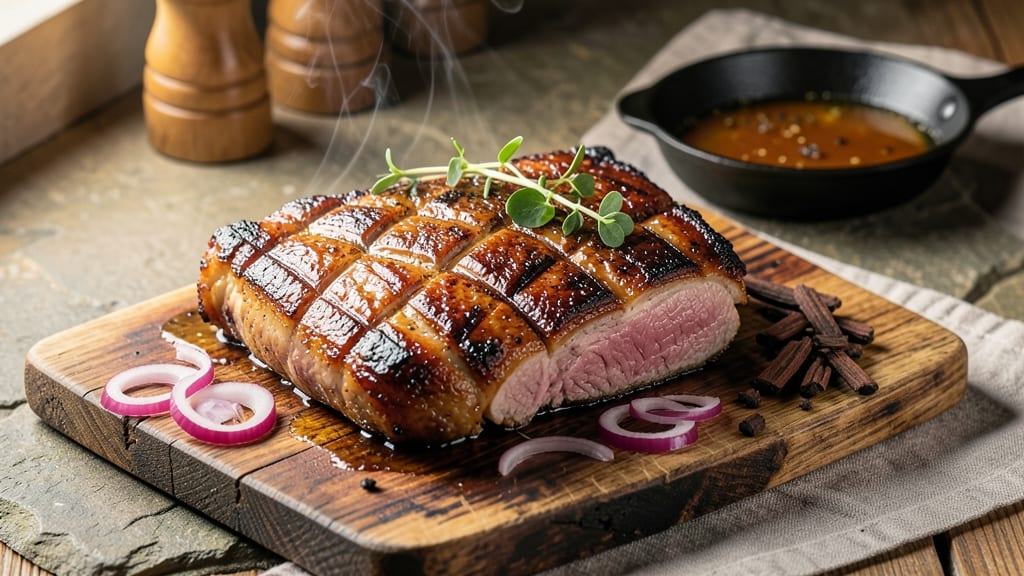
This Weber pork belly recipe delivers crispy bark and juicy pink centers that taste like a high-end BBQ joint—no fancy equipment required. I learned the hard way that patience is key: slow-smoking transforms tough fat into melt-in-your-mouth perfection, while high-heat grilling creates that coveted crackling crust.
The secret lies in precise temperature control and Weber-specific techniques that prevent flare-ups while building smoky depth.
Start with a thick-cut pork belly, scored in a diamond pattern to render fat evenly. A dry rub of coarse salt and black pepper creates that signature bark, while indirect heat on your Weber keeps the meat tender inside.
The magic happens when you finish over direct flame for that crispy exterior—just watch for flare-ups and move the belly as needed. This isn't just about cooking; it's about mastering the balance between heat, smoke, and timing.
What you'll end up with is a slab of pork belly so crisp it shatters when cut, with pink centers that practically melt in your mouth. The aroma alone will have everyone gathering around your grill, and the texture contrast—crunchy outside, tender inside—makes every bite unforgettable.
Serve with pickled vegetables or a simple rice pilaf to cut through the richness, and you've got a main course worthy of any backyard feast.
Don't let the intimidation factor fool you—this is a foolproof method once you understand the fundamentals. The Weber's versatility makes it perfect for this recipe, whether you're smoking with wood chips or searing over charcoal.
With proper preparation and attention to temperature, you'll achieve restaurant-quality results that'll have your guests asking for seconds—and maybe even the recipe.
Ingredients for pork belly recipe weber
Thick-cut pork belly and Weber magic transform simple ingredients into restaurant-quality crispy bark and juicy pink centers.
| Ingredient | Amount | Notes |
|---|---|---|
| Pork Belly 🥓 | 3 lb | Thick-cut, skin-on preferred |
| Coarse Kosher Salt 🧂 | ½ cup | Diamond Crystal preferred |
| Freshly Ground Black Pepper 🌶️ | 1 tbsp | Coarsely cracked |
| Wood Chips (Hickory or Apple) 🌳 | 1 cup | Soaked for 30 minutes |
| Charcoal Briquettes 🔥 | 2 lbs | Lumbar or Kingsford recommended |
| Yellow Onion 🧅 | 1 whole | Thinly sliced for serving |
| Fresh Parsley 🌿 | ¼ cup | Chopped, for garnish |
| Garlic Cloves 🧄 | 4 cloves | Minced for serving |
| Extra-Virgin Olive Oil 🫒 | 2 tbsp | For finishing |
| Pickled Vegetables 🥒 | 2 cups | Optional, for serving |
| Jasmine Rice 🍚 | 1 ½ cups | Uncooked, for serving |
| Aluminum Foil 📄 | 1 sheet | Heavy-duty, for wrapping |
The pork belly is non-negotiable—look for thick-cut, skin-on slabs at your local butcher or Costco for the best marbling. The fat cap should be at least 1-inch thick to render properly. If you can't find it pre-scored, use a sharp knife to cut a diamond pattern (about 1/4-inch deep) all over the fat. Whole Foods or specialty grocers often carry pre-scored belly, but it's worth the extra time to do it yourself. Freshly ground black pepper adds depth without overpowering, and Diamond Crystal kosher salt is the gold standard for that perfect bark. For wood chips, Traeger or Butcher's Choice brands are my go-to—they smoke beautifully without overpowering the pork's natural flavor.
No wood chips? Smoked paprika mixed with a splash of apple juice in a spray bottle works in a pinch. Running low on kosher salt? Morton coarse salt at half the amount gets close, but the crystal size matters for that signature crust. The onions and garlic are purely for serving—any variety works, but red onions add a nice pop of color. For a shortcut, grab pre-pickled vegetables from Trader Joe's or make your own with quick-pickle recipes. The jasmine rice is optional but balances the richness beautifully—Day-O brand is my favorite for its consistent texture. If you're grilling on a rainy day, the Weber Spirit E-310 handles indirect heat perfectly for the slow-smoking phase.
Pork belly keeps best in the fridge for 3-4 days if wrapped tightly in foil, but it's even better the next day after the flavors meld. For leftovers, slice against the grain and reheat in a 350°F oven for 15-20 minutes until crispy again. The wood chips can be reused once dried out—just store them in an airtight container. This recipe makes enough for 4 generous servings, so plan ahead if you're feeding a crowd. The crispy bark freezes surprisingly well too—just wrap individual slices in parchment before freezing for up to 3 months. Trust me, the texture holds up beautifully.
Why You'll Love This Recipe
- Smoke in Minutes: I swear by the Weber—just toss the pork belly on the grill, add those hickory chips, and let the smoke work its magic. No complicated prep, no waiting hours; the fat renders while you sip your drink, and the crust gets that perfect char in under 45 minutes.
- Crispy-Creamy Magic: That first bite—crispy, caramelized edges giving way to tender, melt-in-your-mouth pork? It’s the salt cure and slow smoke doing the heavy lifting. Honestly, I’ve tried fancy rubs, but this? It’s the simplest way to get restaurant-quality texture without the fuss.
- Weeknight or Weekend Star: Slap this on the grill for a lazy Sunday brunch or a surprise dinner for your partner. The leftovers? Even better cold the next day—sliced thin in sandwiches or cubed over rice. It’s my go-to for when I don’t want to think too hard about dinner.
- Budget-Friendly Feast: Pork belly stretches further than you’d think, especially when you’re feeding a crowd. Split one slab between two meals, and you’ve got a main dish that feels special without breaking the bank. Plus, the Weber’s heat means no wasted fuel—just pure, smoky satisfaction.
Step-by-step instructions for smoky-grilled pork belly
Master this Weber technique for irresistible crispy bark and melt-in-your-mouth pink centers.
Prepare the Pork Belly for Maximum Crisp
Start by scoring the pork belly in a diamond pattern using a sharp knife, cutting through the fat but not the meat. This creates channels for smoke penetration and helps render fat evenly. Pat the entire surface completely dry with paper towels—this is non-negotiable for crispy bark. The drier the surface, the better the crust forms.
In a small bowl, combine the 0.5 cup coarse kosher salt and 1 tbsp freshly ground black pepper. Rub this mixture all over the pork belly, pressing firmly into the scored areas. Wrap the seasoned pork belly tightly in the 1 sheet aluminum foil and refrigerate for 12-24 hours. This dry-brining process ensures deep seasoning and prevents the skin from drying out during cooking.
Set Up Your Weber for Indirect Heat
Soak the 1 cup wood chips (hickory or apple) in water for 30 minutes to prevent flare-ups. Arrange 2 lbs charcoal briquettes in a crisscross pattern on one side of your Weber grill, leaving the other side empty. Place the soaked wood chips directly on the coals—they should start smoking within 5-10 minutes. Close the lid and let the temperature stabilize at 225°F before cooking.
Here's the key: maintain indirect heat throughout the cook. The pork belly needs slow, gentle cooking to render fat and develop texture without burning. If the temperature climbs above 250°F, open the vents slightly to regulate heat. You're aiming for low and slow—this is what creates that legendary smoky flavor and tender texture.
Cook the Pork Belly Low and Slow
Once your Weber reaches 225°F, place the pork belly fat-side down on the empty side of the grill. Close the lid and cook for 3-4 hours, checking the temperature occasionally. The internal temperature should reach 165°F at the thickest part of the meat. This is where the magic happens—the fat slowly renders and bastes the meat, creating that irresistible crispy bark.
Every 45 minutes, rotate the pork belly 90 degrees to ensure even cooking. You'll notice the skin start to blister and crisp up—this is your signal that the fat is rendering properly. If the skin starts to darken too quickly, move the pork belly to a cooler part of the grill or reduce the heat slightly. The goal is golden brown skin, not charred.
Crisp the Bark and Rest for Juiciness
When the internal temperature hits 165°F, remove the pork belly from the grill and place it fat-side down on a wire rack set over a baking sheet. Transfer this setup to a 425°F oven and crisp the skin for 15-20 minutes until it's deep golden brown and crackling. This high-heat finish is what creates that coveted crispy bark.
Let the pork belly rest for 30 minutes before slicing. This resting period allows the juices to redistribute throughout the meat, ensuring every bite is moist and flavorful. Real talk: skipping this step means dry, disappointing slices. Use this time to prepare your 1.5 cups jasmine rice and any 2 cups pickled vegetables for serving.
Slice and Serve with Confidence
Slice the pork belly against the grain into ½-inch thick slices. The fat should be crispy and the meat juicy pink in the center. Arrange the slices on a platter and drizzle with 2 tbsp extra-virgin olive oil for extra richness. Garnish with 0.25 cup chopped fresh parsley and 4 minced garlic cloves for brightness.
Serve immediately with the jasmine rice and pickled vegetables on the side. The contrast of crispy pork belly with tender rice and tangy pickles is what makes this dish unforgettable. Each bite should deliver a perfect balance of smoky, crispy, and juicy—this is the Weber way.
Pro Tips For Making Pork Belly Recipe Weber
- Prep the Belly First: Trim the fat cap down to about ¼-inch thick—no need to go crazy, but don’t leave thick slabs. I learned this the hard way: thick fat burns before the meat cooks, and you end up with a sad, uneven char instead of that perfect smoky crust.
- Salt Like It’s 1985: Coarse kosher salt isn’t just for garnish—use about 1 tablespoon per pound of pork belly, rubbed in hard all over, including the fat. My grandmother swore by this, and she was right: the salt breaks down the fat and renders it crispier than any store-bought bacon ever could.
- Start Hot, Finish Slow: Sear the pork belly over direct heat for the first 10-15 minutes—you want that fat to sizzle and start browning. Then, move it to indirect heat and let the smoker do its thing at 225°F. After burning three batches, I finally figured out that patience here means the difference between a dry cut and melt-in-your-mouth perfection.
- Save the Smoke: Soak your wood chips in water for 30 minutes before adding them to the smoker—this prevents them from burning too fast and turning your pork belly into charcoal. Hickory gives bold flavor, but apple adds sweetness; I usually split the bag and use both for balance. (Yes, even if you’re impatient like me, trust the process.)
Common mistakes when making this dish
Skipping the Dry Brine
Nutrition facts
Frequently asked questions
Can I use a different wood chip flavor besides hickory or apple?
Cherry wood adds a subtle sweetness that pairs beautifully with pork belly, while pecan offers a nutty depth. Avoid overly strong woods like mesquite—they can overpower the delicate pork flavor. For a smoky profile, stick with hickory or apple, but experiment with fruitwoods like peach or plum for a milder, fruitier touch.
How do I know when the pork belly is done without a meat thermometer?
Use the touch test: press your finger gently on the meat—it should feel firm but still slightly springy. The skin should be deep golden brown with crispy edges. For a more reliable method, cut into the thickest part: the meat should be juicy pink (not gray) with a thin layer of fat that's crispy but not burnt. If in doubt, err on the side of undercooking slightly.
What's the best way to reheat leftover pork belly?
Slice the pork belly into ½-inch thick pieces and reheat in a 350°F oven for 15-20 minutes on a wire rack to restore crispiness. For a quick fix, use a skillet over medium-high heat for 2-3 minutes per side—just watch closely to avoid burning. Never microwave, as it turns the fat soggy and ruins the texture.
Can I make this recipe on a gas grill instead of charcoal?
Yes, but you'll need to create indirect heat by turning off one side of the burners. Use a gas grill smoker box with wood chips for smoke flavor. For best results, preheat the grill to 225°F and maintain that temperature using the grill's temperature gauge. Gas grills heat up faster, so monitor closely to avoid flare-ups.
Why did my pork belly turn out greasy instead of crispy?
This usually happens when the fat renders too quickly, creating a greasy film instead of crispy bark. To fix it, ensure your pork belly is completely dry before scoring and seasoning. Also, maintain a consistent 225°F temperature—if it gets too hot, the fat will melt too fast. For next time, try wrapping the belly in foil during the slow cook to trap moisture, then crisp it uncovered at the end.