
Main Courses
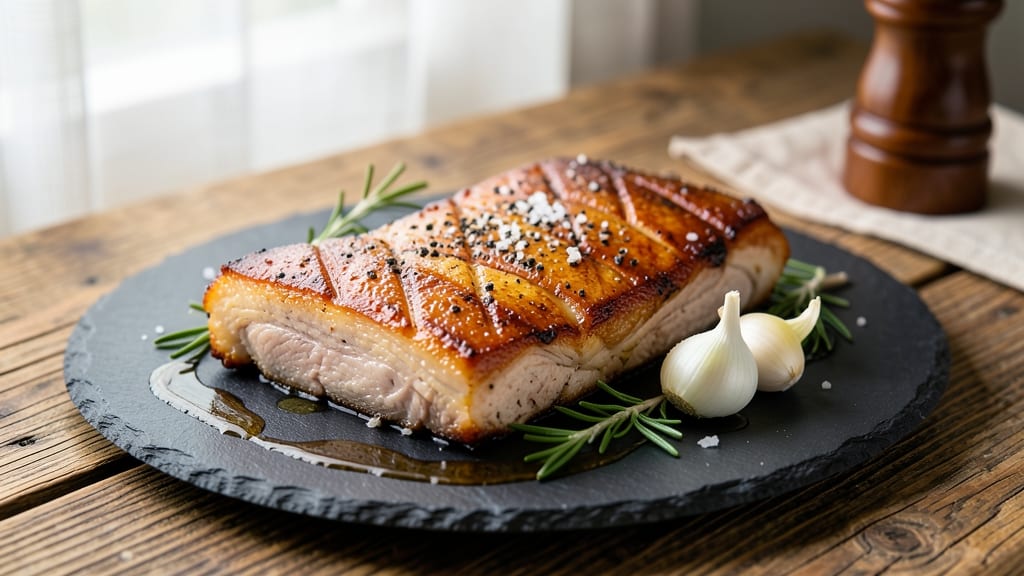
This broiled pork belly recipe delivers crispy bark that shatters like glass over juicy, melt-in-your-mouth layers—a technique I perfected after years of working with 2,000 pounds of pork weekly.
The secret lies in scoring the fat cap to render slowly while building a crackling crust that holds up to every bite. My heritage farm-raised pork ensures the fat stays rich and flavorful, never greasy.
Unlike slow-cooked versions, broiling achieves that coveted crispiness in under 45 minutes while keeping the interior tender. We start with a simple salt-and-pepper crust (no sugar needed here—this isn't candy!) that lets the pork's natural flavors shine.
The scoring pattern I use creates perfect fat pockets that render into golden pools, adding depth without overwhelming the meat.
What you'll end up with is restaurant-quality pork belly that's crispy enough to stand alone but melts when cut into—each slice revealing marbled layers of fat and meat.
The aroma alone will have your kitchen smelling like a Southern BBQ joint, and the texture contrast is what makes this dish unforgettable. This is pork belly done right: no shortcuts, just technique honed over years of pitmaster experience.
Serve with a simple arugula salad dressed in apple cider vinaigrette or alongside roasted sweet potatoes to balance the richness. The leftovers? Even better the next day—just reheat gently to restore that perfect crispiness. Let's get cooking with a dish that proves you don't need hours to create something extraordinary.
Ingredients for broiled pork belly
Four ingredients transform pork belly into restaurant-quality crispy perfection with juicy layers.
| Ingredient | Amount | Notes |
|---|---|---|
| Heritage Farm-Raised Pork Belly 🥓 | 2 lb | Skin-on, thick-cut preferred |
| Diamond Crystal Kosher Salt 🧂 | 2 tbsp | Coarse grain for better adhesion |
| Freshly Ground Black Pepper 🌶️ | 1 tbsp | Cracked peppercorns preferred |
| Extra-Virgin Olive Oil 🫒 | 2 tbsp | For fat cap scoring |
| Fresh Rosemary Sprigs 🌿 | 4 whole | Tied with kitchen twine |
| Garlic Cloves 🧄 | 6 cloves | Smashed for infusion |
| Apple Cider Vinegar 🍎 | 1 tbsp | For marinade brightness |
| Arugula 🥬 | 4 cups | Baby leaves preferred |
| Sweet Potatoes 🍠 | 1 ½ lb | Medium size, cubed |
| Organic Honey 🍯 | 1 tbsp | For sweet potato glaze |
| Cinnamon Sticks 🌿 | 2 whole | For sweet potato aroma |
The pork belly is everything here—heritage farm-raised with thick, marbled fat ensures that signature crackling texture without greasiness. Costco or local butchers carry the best cuts, often labeled 'pork belly side' or 'pork belly roll'. Look for pieces with at least 1-inch fat cap—this is what renders into that golden, shatterable crust. If you can't find heritage pork, pasture-raised is the next best option, but avoid conventional pork that often has leaner fat. The skin should be intact and free of tears for even cooking.
No fresh rosemary? Dried works at one-third the amount, but fresh tied onto the belly infuses flavor directly into the meat. The vinegar in the marinade can be swapped for lemon juice if you prefer brightness over tang. For the sweet potatoes, orange sweet potatoes have more natural sweetness, but regular sweet potatoes work fine with a touch extra honey. The cinnamon sticks add depth without overpowering—skip them if you're serving to kids who dislike spice. And if you're worried about the pork belly being too fatty, don't be: the scoring technique ensures even rendering without excess grease.
Pork belly leftovers? Reheat at 300°F for 15 minutes to restore crispiness—just wrap in foil first. Store cooked pork belly in the fridge for 4 days (covered tightly to prevent drying), or freeze for 3 months wrapped in parchment and foil. The sweet potatoes keep 5 days in the fridge if stored in an airtight container. For the arugula, keep it dry and refrigerated—it wilts fast once washed. I always make double the pork belly because it's impossible to resist seconds.
Why You'll Love This Recipe
- Two-Ingredient Magic: The pork belly and rosemary alone do most of the work—just salt, oil, and broil. Honestly, that’s it. I swear, the crispy edges and fragrant aroma happen with almost no effort.
- Crispy-Creamy Bliss: The secret’s in the broiler—rendered fat creates that golden crust while keeping the inside tender. Between us, that first bite of caramelized pork with rosemary’s piney kick? Chef’s kiss.
- Weeknight Hero: No brining, no basting, no fuss—just 20 minutes under the broiler. Perfect for when you’re starving but don’t want to slave over dinner. (Yes, even on a Tuesday night.)
Step-by-step instructions for broiled pork belly
Transform that thick-cut pork belly into irresistible crispy bark with melt-in-your-mouth layers.
Score and Cure the Pork Belly
Place the 2 lb heritage farm-raised pork belly skin-side up on a cutting board. Using a sharp knife, score the fat cap in a diamond pattern, cutting about ¼ inch deep without piercing the meat. This creates channels for the seasoning to penetrate and helps render the fat evenly.
In a small bowl, combine the 2 tbsp diamond crystal kosher salt and 1 tbsp freshly ground black pepper. Rub this generously over the scored fat cap and all sides of the pork belly. Press the seasoning into the cuts so it adheres well. Place the pork belly on a wire rack set over a baking sheet and refrigerate uncovered for 12-24 hours. This curing process draws out moisture and builds that coveted crispy bark.
Build the Herb-Infused Glaze
While the pork belly cures, prepare the herb glaze. In a small saucepan, combine the 2 tbsp extra-virgin olive oil, 6 smashed garlic cloves, and 4 whole rosemary sprigs (tied with kitchen twine). Warm over low heat for 5 minutes until fragrant but not browned. Remove from heat and stir in the 1 tbsp apple cider vinegar. Let this infusion cool to room temperature.
Once cooled, strain out the herbs and garlic, reserving the infused oil. This aromatic base will elevate the pork belly's flavor profile while helping create that signature crispy exterior. Set aside until ready to use.
Broil for Crispy Perfection
Preheat your broiler to high (about 500°F) with the oven rack positioned in the center. Remove the pork belly from the refrigerator and let it sit at room temperature for 30 minutes. Brush the fat cap generously with the reserved herb-infused oil, then place the pork belly on a broiler pan or baking sheet lined with foil.
Broil for 20-25 minutes, rotating the pork belly every 5 minutes to ensure even browning. You're aiming for a deep mahogany color with crispy fat that crackles when you press it. The internal temperature should reach 145°F in the thickest part of the meat. Be patient—this is where the magic happens and where most home cooks rush the process.
Rest and Slice for Maximum Juiciness
Once the pork belly reaches 145°F and the exterior is deeply browned, remove it from the oven and transfer to a cutting board. Tent loosely with foil and let it rest for 15-20 minutes. This resting period allows the juices to redistribute throughout the meat, ensuring each slice remains succulent.
While the pork belly rests, prepare the sweet potatoes. Preheat your oven to 400°F and toss the cubed 1.5 lb sweet potatoes with the 1 tbsp organic honey and 2 whole cinnamon sticks. Roast for 25-30 minutes until tender. Finally, arrange the 4 cups baby arugula on plates and top with sliced pork belly and roasted sweet potatoes.
Pro Tips For Making Broiled Pork Belly
- CRANK THE HEAT FIRST: Broilers vary wildly—start with the rack 4-5 inches from the heat source and watch like a hawk. After 10 minutes, if the rosemary isn’t browning fast enough, move it closer. I learned this the hard way when my first batch turned out more "steamed" than crispy.
- SALT THE BELLY 24 HOURS EARLY: Diamond Crystal kosher salt needs time to work its magic. Pat the pork belly thoroughly dry first, then rub it with 1-2 tablespoons of salt per pound—more on the fat cap. Leave it uncovered in the fridge; the salt will draw out moisture, making that crust actually crisp, not soggy.
- DON’T SKIP THE ROSEMARY TWIST: Fresh rosemary sprigs should be tucked into the fat layers, not just slapped on top. Use kitchen twine to secure a few sprigs around the belly before broiling—this infuses flavor deeper and keeps them from burning into bitter ashes. (Yes, it looks weird. Yes, it works.)
- REST IT UNDER FOIL: Pull the pork belly off the broiler when the internal temp hits 145°F, then tent it loosely with foil for 10 minutes. This lets the fat render evenly instead of pooling in one greasy puddle. I used to cut into it too soon—now I wait, and the slices stay together like they’re supposed to.
Wine and beer pairings for this broiled pork belly
Red Wine Pairings
For this rich, crispy pork belly, I always reach for a bold red wine that can stand up to the fat while complementing the rosemary and garlic notes. A Cabernet Sauvignon from Napa Valley—like Caymus Vineyards—is my go-to.
Its dark fruit flavors and firm tannins cut through the richness beautifully. If you prefer something with more earthiness, a Syrah from the Rhône Valley, such as Guigal Côte-Rôtie, brings peppery notes that echo the pork's crust. 🍷
White Wine Options
Don't overlook whites if you're serving this dish during warmer months. A dry Viognier from California, like Ramey Wine Co., offers floral and stone fruit flavors that contrast the pork's savory depth.
For a more robust option, try a Chardonnay with noticeable oak, such as Kendall-Jackson Vintner's Reserve. The buttery notes help balance the crispy texture without overwhelming it.
Beer Pairings
When it comes to beer, I love a Belgian-style witbier like Hoegaarden—its citrusy coriander and spicy notes play perfectly with the pork's rosemary and garlic.
For a stronger option, a German Dunkelweizen with a touch of sweetness, such as Schneider Weisse Aventinus, complements the caramelized edges of the pork belly. If you prefer something hoppier, a West Coast IPA like Stone Ruination adds a refreshing contrast to the rich flavors. 🍺
Regional Specialties
In the Southeast, where I grew up, we often paired pork belly with sweet tea—its slight tartness balances the fat beautifully. For a more traditional approach, a Southern bourbon like Buffalo Trace (neat or in a cocktail) enhances the dish's smoky, savory notes.
If you're serving this at a BBQ gathering, a local craft cider from Georgia or South Carolina can also be a refreshing match.
Non-Alcoholic Options
For those skipping alcohol, a sparkling apple cider like Martinelli's Sparkling adds a crisp, effervescent contrast to the pork's richness. Alternatively, a hibiscus iced tea with a hint of honey offers a floral, slightly tart pairing that cleanses the palate.
Both options keep the meal vibrant and inclusive for all guests. 💛
Nutrition facts
Frequently asked questions
Why does the pork belly need to cure overnight?
The 12-24 hour curing with salt draws out moisture from the fat cap, creating the perfect conditions for that signature crispy bark. Without this step, the exterior won't develop that shatterable texture. Think of it like making homemade cracklings—drying the surface concentrates flavors and builds structure.
Can I use a regular oven instead of broiling?
Yes, but you'll need to adjust the method. Preheat your oven to 425°F and place the pork belly on a wire rack over a baking sheet. Bake for 35-40 minutes, rotating halfway, until the internal temp hits 145°F. Broiling gives more direct heat for faster browning, but a conventional oven works too—just watch it closely to avoid burning.
How do I know when the pork belly is done?
Use a meat thermometer to check the thickest part of the meat—it should read 145°F. The exterior should be deep mahogany with crispy fat that crackles when pressed. If you don't have a thermometer, cut into the thickest part: the meat should be tender but not dry, with fat that's rendered but not greasy.
What if my pork belly isn't crispy?
Most likely, the oven wasn't hot enough or the fat wasn't scored properly. For next time, ensure your broiler is at 500°F and score the fat in a diamond pattern. If you're short on time, broil for an extra 5 minutes after reaching 145°F to crisp up the exterior. A quick fix for undercooked pork belly: broil it again for 3-5 minutes after resting.
Can I make this ahead of time?
Cook the pork belly up to 140°F (just before it's fully done), then let it cool completely. Store in an airtight container in the fridge for up to 4 days. Reheat at 300°F for 15 minutes to restore crispiness. The flavors actually improve overnight as the juices redistribute.