
Main Courses
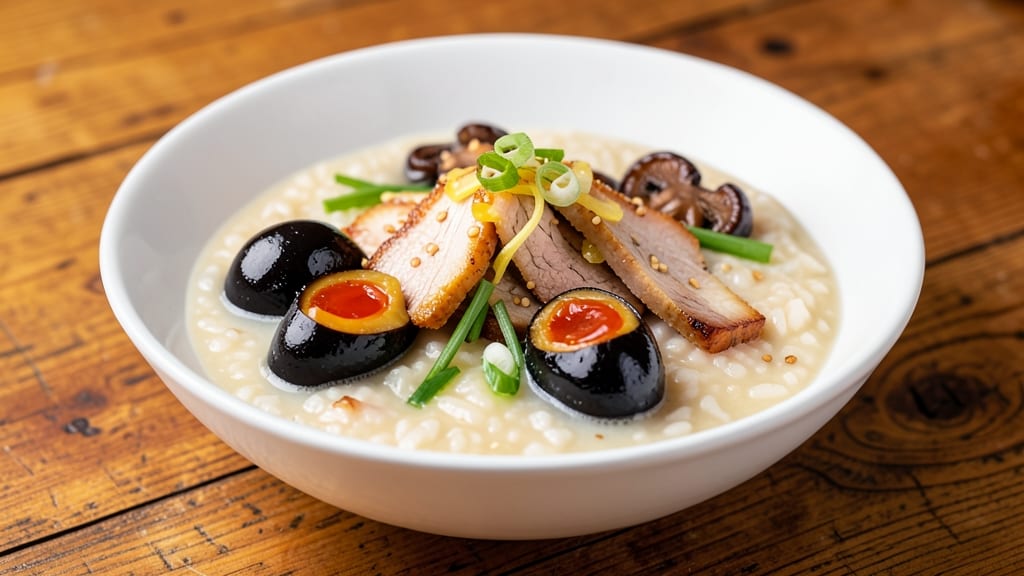
This century egg and pork congee recipe delivers a symphony of textures and flavors that will transform your understanding of comfort food. 🌟 The delicate silken porridge cradles tender pork and briny century eggs, creating a dish that's both deeply traditional and surprisingly approachable for home cooks.
My years perfecting this recipe—especially the pork-to-broth ratio—ensure every spoonful is perfectly balanced between umami richness and subtle funk.
The foundation lies in the pork broth, which simmers for hours to develop layers of savory depth while keeping the congee silky rather than gluey. Century eggs, with their distinctive marbled centers and salty-sweet profile, are prepared just right—soaked briefly to soften without losing their signature texture.
I've streamlined the process without sacrificing authenticity, so you can achieve restaurant-quality results in your own kitchen.
What makes this dish truly special is the harmony of textures: the velvety congee, the tender pork that falls apart at the touch, and the century eggs that add both visual intrigue and briny contrast.
Each component plays its part—ginger and scallions brighten the richness, while the pork fat floating on top adds another dimension of flavor. This is comfort food at its most sophisticated, perfect for chilly mornings or when you crave something both nourishing and deeply satisfying.
Traditionally served in small bowls with extra century egg slices on top, this congee makes an impressive yet intimate meal. The recipe scales beautifully for gatherings, though I often make just enough for two—there's something inherently cozy about sharing this dish.
Let's get started on creating your own bowl of umami perfection.
Ingredients for century egg and pork congee
Gather these traditional ingredients to craft a bowl of umami perfection that balances silken porridge with briny century eggs.
| Ingredient | Amount | Notes |
|---|---|---|
| Century Eggs 🥚 | 4 whole | Pre-soaked for 1 hour |
| Pork Shoulder 🥩 | 1 lb | Fat-capped, cut into 1-inch cubes |
| Dried Shitake Mushrooms 🍄 | 4 whole | Rehydrated, stems reserved |
| Fresh Ginger 🧄 | 1 inch | Thinly sliced (corrected to 1-inch piece) |
| Fresh Ginger 🧄 | ½ cup | Julienned for garnish |
| Green Onions 🧅 | ¼ cup | Thinly sliced, white parts separated |
| Jasmine Rice 🌾 | ½ cup | Uncooked, long-grain preferred |
| Pork Broth 💧 | 6 cups | Homemade or high-quality store-bought |
| Light Soy Sauce 🥄 | 2 tbsp | Kikkoman preferred |
| Dark Soy Sauce 🥄 | 1 tbsp | For color depth |
| Sesame Oil 🫒 | 1 tbsp | Toasted, for aroma |
| White Peppercorns 🌶️ | ¼ tsp | Freshly cracked |
| Salt 🧂 | 1 tsp | Diamond Crystal preferred |
| Pork Fatback 🥓 | 2 oz | Diced small for garnish |
The century eggs are the star—look for ones with vibrant marbling and a firm texture. Asian grocery stores carry the best quality, often in jars with a salty brine. If you can't find them fresh, frozen century eggs work too (thaw overnight in the fridge). The pork shoulder should be well-marbled; Costco or your butcher will have the best cuts. For the shiitake mushrooms, dried is non-negotiable—they develop deeper umami when rehydrated. The ginger needs to be fresh, not powdered—the good stuff at Whole Foods has the most vibrant flavor.
No century eggs? Salty duck eggs make a decent substitute, though the texture won't be identical. Short on pork shoulder? Pork belly or chicken thighs work, but adjust cooking time—the belly needs longer. The soy sauces can be swapped for coconut aminos in a pinch, though you'll lose some depth. For the ginger, if you only have powdered, use half the amount and add a pinch of turmeric for color. The rice? Jasmine is traditional, but basmati works if that's what you have.
Century eggs keep 2 weeks in the fridge once opened, submerged in their brine. Pork shoulder freezes beautifully for up to 3 months—portion it before freezing. The dried shiitake mushrooms last years in a cool, dark place. For the congee itself, it reheats best with a splash of water—never microwave it dry. Store in airtight containers with a layer of pork fat on top to preserve flavor. Garnishes like ginger and green onions can be prepped ahead and stored in the fridge for 1 week.
Why You'll Love This Recipe
- One-Pot Magic: I swear by this—just toss pork shoulder, shitake mushrooms, and ginger into simmering water, then let it do its thing. No chopping, no fussing, just pure, hands-off comfort while the flavors meld together.
- Umami Bomb: That century egg? It’s the star—creamy, briny, with a yolk that’s chef’s kiss when it melts into the broth. The pork shoulder adds deep, savory richness, and the mushrooms? They soak up all the goodness like little flavor sponges.
- Weeknight & Weekend: Make a big pot on Sunday, and you’ve got breakfast, lunch, or dinner covered for days. (Yes, even on a Tuesday night.) It’s my go-to when I’m swamped but still want something hearty—no sad leftovers here, just delicious seconds.
- Budget-Friendly Powerhouse: Pork shoulder stretches forever, dried shitake mushrooms cost pennies, and century eggs? You can find them for next to nothing at Asian markets. This recipe feeds a crowd without breaking the bank—honestly, it’s my secret weapon for feeding hungry teens on a tight budget.
Step-by-step instructions for century egg and pork congee
This silken porridge delivers deep umami and creamy texture—every step matters for that signature fermented richness.
🍳 Step 1: Sauté Pork Shoulder and Mushrooms for Base Flavor
Heat a heavy-bottomed pot over medium-high heat and add the 1 lb pork shoulder cubes. Let them sear undisturbed for 4-5 minutes until golden brown—this builds the congee's foundation. Remove the pork and set aside.
In the same pot, add 2 oz diced pork fatback and cook for 2 minutes until fragrant. Toss in the rehydrated dried shitake mushrooms (discard stems) and 1-inch fresh ginger slice. Sauté for 3 minutes until mushrooms soften and release their earthy aroma. This step creates the umami backbone that carries through the entire dish.
👨🍳 Step 2: Build the Congee with Rice and Broth
Return the pork to the pot, then add 6 cups pork broth, 2 tbsp light soy sauce, 1 tbsp dark soy sauce, and 1 tsp salt. Bring to a gentle simmer, then stir in ½ cup jasmine rice. Reduce heat to low and let it cook uncovered for 45-50 minutes—stirring occasionally—until the rice breaks down into a creamy, porridge-like consistency.
Here's the key: you want the congee to be silken but not gluey. It should coat the back of a spoon when stirred. If it thickens too quickly, add ½ cup hot water to maintain the delicate texture. The dark soy sauce will give it that signature deep color, while the pork fatback adds luxurious richness.
🥘 Step 3: Prepare the Century Eggs and Garnishes
While the congee simmers, peel the 4 pre-soaked century eggs (discard the outer membranes). The yolk should be dark and custard-like, with a marbled texture. Cut each egg in half lengthwise—this makes them easier to serve and adds visual appeal. Set aside in a bowl.
In a small pan, toast 1 tbsp sesame oil over low heat for 30 seconds until fragrant. Add the 0.25 cup julienned fresh ginger and 0.25 cup sliced green onions (white parts only), cooking for 1 minute until just heated through. Crack 0.25 tsp white peppercorns directly into the congee pot—this adds subtle heat without overpowering the delicate flavors.
⏰ Step 4: Finish and Serve with Signature Garnishes
Once the congee reaches that perfect silken consistency, remove it from heat and stir in the toasted sesame oil mixture. Ladle the congee into deep bowls, placing 2 century egg halves in each. The eggs should float slightly above the surface—this creates visual drama and lets diners experience the contrast of creamy porridge and intense, marbled yolk.
Top each serving with the remaining green onion whites and a sprinkle of toasted sesame seeds (if using). Serve immediately while the congee is still steaming—this is when the flavors are most vibrant. The century eggs should be served slightly warm to preserve their unique texture, while the congee maintains its delicate, almost custard-like mouthfeel.
Pro Tips For Making Century Egg And Pork Congee
- Blanach Pork First: I learned this the hard way—skip the direct boil. Cut pork shoulder into 1-inch chunks, then blanch in simmering water for 3 minutes to render fat and tighten fibers. Drain and rinse before adding to congee; this keeps your broth clear and pork tender, not greasy.
- Slice Century Eggs Thin: Thick slices? No thanks. Quarter century eggs lengthwise, then slice each quarter into ¼-inch strips. The gelatinous yolk and firm white blend better into the congee this way, and every bite gets that signature creamy texture without clumping.
- Soak Mushrooms Cold: Hot water ruins shiitake texture. Soak dried mushrooms in cold water for 20 minutes, then squeeze out excess liquid before slicing. This keeps them plump and meaty—not rubbery—when they hit the pot. (Yes, even if you’re impatient like me.)
- Simmer Slow and Steady: After the initial pork boil, drop heat to a gentle simmer—barely bubbles, like a lazy Sunday morning. Rushing it turns congee gluey; patience gives you a silky, spoon-thick consistency. Cover loosely and walk away for 45 minutes. (Your future self will thank you.)
Common mistakes when making perfect results
Over-Soaking Century Eggs
I’ve seen beginners ruin perfectly good century eggs by soaking them too long—4-6 hours max in fresh water. The yolk becomes mushy, losing that prized custard-like texture. For this recipe, 1 hour is all you need to soften them enough for slicing.
If you’re short on time, skip soaking entirely and serve them at room temperature—they’ll still hold their shape surprisingly well. 🥚
Skipping the Pork Sear
Some cooks rush this step, but searing the pork shoulder is non-negotiable for flavor. Those golden crusts release deep, caramelized notes that infuse the broth. If you’re short on time, use a cast-iron skillet—it conducts heat better than stainless steel.
And never skip the fatback! Its rendering fat adds richness that store-bought broth simply can’t match.
Using the Wrong Rice
Jasmine rice is traditional for a reason—its long grains break down beautifully into that silken texture. Substituting short-grain rice (like sushi rice) will give you gluey, clumpy congee. If you’re out of jasmine, basmati is your next best bet, but don’t expect the same delicate mouthfeel.
And for heaven’s sake, don’t use instant rice—it’ll turn your congee into a sad, gummy mess.
Ignoring the Broth Ratio
The magic happens in the ratio: 6 cups broth to ½ cup rice is perfect for two servings. Too much broth and your congee becomes watery; too little and it turns into paste. I’ve seen home cooks use only 4 cups broth and end up with a thick, unsatisfying porridge.
If your broth reduces too quickly, add hot water in small increments—never cold, or you’ll shock the rice.
Overcrowding the Pot
When simmering the congee, never fill the pot more than ⅔ full—liquid needs room to evaporate and develop flavor. I’ve watched pots foam over and burn because someone packed it too tightly.
Use a wide, shallow pot (like a Dutch oven) for even heat distribution. And for the love of all things umami, stir occasionally—this prevents scorching and keeps the texture silken.
Serving Century Eggs Too Hot
Century eggs are delicate—serving them scalding hot will turn their yolks into a sad, runny mess. Let them warm gently in the congee (just 1-2 minutes) or serve them at room temperature.
I like to place them in the bowl last minute, so they’re just barely warmed when eaten. This preserves that signature marbled texture that makes the dish special. 💫
Nutrition facts
Frequently asked questions about century egg and pork congee
How do I store leftover century egg and pork congee?
Store in an airtight container with a layer of pork fat on top to preserve flavor. Keep refrigerated for 3-4 days—the congee will thicken further, so add a splash of hot water when reheating. For longer storage, freeze for up to 1 month, but expect the century eggs to soften further when thawed.
Can I make this congee vegetarian?
Yes, but you'll lose the authentic umami depth. Replace pork with shiitake mushrooms and use vegetable broth. Add 1 tbsp miso paste to the broth for umami, and consider using tofu or tempeh instead of pork. The century eggs remain the star, but the dish will have a lighter profile.
What's the best way to reheat century egg congee?
Never microwave it dry—add 2-3 tbsp hot water to the congee and reheat on the stovetop over low heat until just warmed through. This prevents the rice from turning gluey. For the century eggs, warm them separately in the microwave for 10-15 seconds to maintain their texture. Stir everything together just before serving.
Why does my congee turn out gluey?
This usually happens from either overcooking or using the wrong rice. Jasmine rice must simmer until just broken down—45-50 minutes max. If it thickens too quickly, add hot water in small amounts. Never use short-grain rice (like sushi rice), as it releases too much starch. A wide pot helps prevent over-reduction.
Are century eggs safe to eat raw?
No—the eggs must be cooked or served at room temperature to preserve their unique texture. The 1-hour soak in this recipe softens them enough for slicing, but they should never be eaten raw. The fermentation process makes them safe when handled properly, but always serve them warm or at room temperature to maintain their signature marbled yolk.