
Main Courses
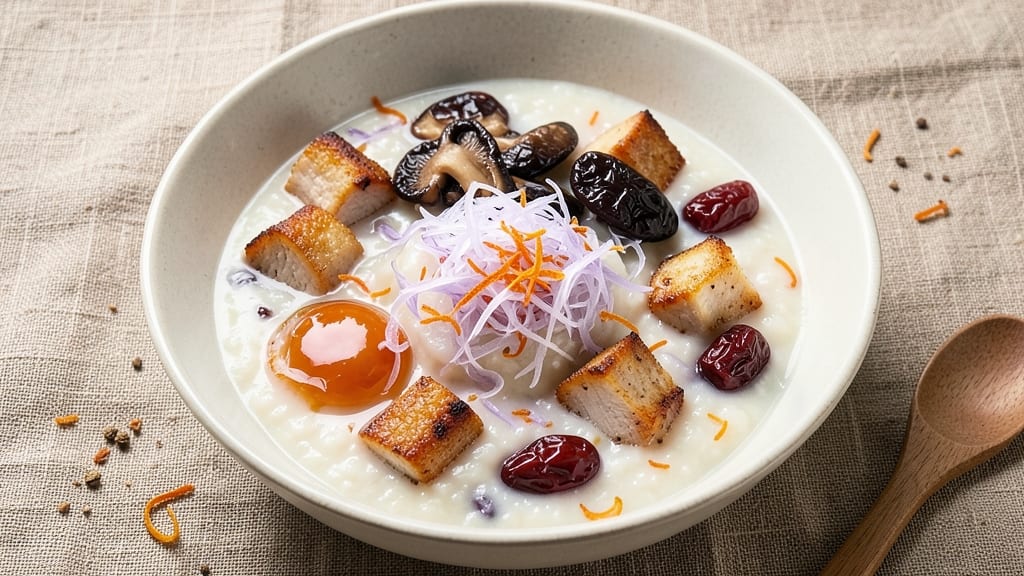
This century egg pork porridge delivers the perfect marriage of silken texture and fermented depth, a dish that bridges tradition and comfort. The key lies in the century eggs—intensely umami with their signature black exterior and creamy interior—paired with tender, braised pork that melts into the porridge.
I first encountered this dish in Charleston markets, where it was served as both a humble breakfast and a celebratory feast, proving its versatility across meals.
The process begins with properly preparing the century eggs—either sourced from specialty markets or made at home with patience and precision. The pork, slow-braised until fall-apart tender, infuses the porridge with rich, savory notes that balance the eggs' funky complexity.
What makes this dish truly special is how the textures come together: the silken porridge, the tender pork, and the eggs' creamy-yet-firm centers create each bite into a harmonious experience.
What you'll achieve is a bowl of porridge that's both deeply comforting and unexpectedly sophisticated, with layers of flavor that develop as you eat. The century eggs add a unique fermented depth that's hard to replicate, while the pork provides hearty satisfaction.
This dish is perfect for those who appreciate umami-rich flavors and want to explore traditional techniques with a modern twist.
Whether you're serving it as a breakfast staple or a special dinner, this porridge delivers restaurant-quality results at home. The slow-cooked pork and properly prepared century eggs are the foundation—everything else builds on that rich, savory base.
Let's get started on creating this dish that's as rewarding to make as it is to eat.
Ingredients for century egg pork porridge
Four century eggs and tender pork shoulder create this umami-rich porridge that balances fermented funk with silken comfort.
| Ingredient | Amount | Notes |
|---|---|---|
| Century Eggs 🥚 | 4 whole | Freshly prepared or high-quality store-bought |
| Pork Shoulder 🐖 | 1 ½ lb | Boneless, cut into 1-inch cubes |
| Dried Shiitake Mushrooms 🍄 | ¼ cup | Rehydrated for umami depth |
| Dried Tangerine Peel 🍊 | 1 tbsp | For aromatic brightness |
| Rock Sugar 🍬 | ½ cup | Or granulated sugar substitute |
| Dried Red Dates 🍇 | 4 whole | Pitted and chopped for sweetness |
| Shaoxing Wine 🍷 | ½ cup | For rich, fermented flavor |
| Light Soy Sauce 🧂 | ⅓ cup | High-quality for balance |
| Rice Vinegar 🍶 | 2 tbsp | For subtle acidity |
| Glutinous Rice Flour 🌾 | ½ cup | For silken porridge texture |
| Water 💧 | 4 cups | Filtered preferred |
| Fresh Ginger 🧅 | 1 tbsp | Grated for aromatic depth |
| Green Onions 🧅 | 3 whole | Sliced for garnish |
| Sesame Oil 🫒 | 1 tbsp | Toasted for finishing |
Century eggs are the heart of this dish—look for fresh, plump ones with intact black skins at Asian markets or specialty grocers. If you can't find them pre-made, Asian Food Grocer or H Mart often carry them. The pork shoulder should have good marbling for tenderness; trim any excess fat before cutting. For the shiitake mushrooms, dried is essential—fresh won't give that deep umami punch. Soak them in hot water for 20 minutes before using. The Shaoxing wine adds complexity, but if you can't find it, dry sherry works in a pinch—just reduce the amount by half.
No century eggs? Black salt (kala namak) with hard-boiled eggs can mimic the funky flavor, though it won't replicate the texture. Swap the pork shoulder for chicken thighs if needed—they stay juicier during braising. The glutinous rice flour is non-negotiable for that signature silken texture; Bob's Red Mill carries it if your local store doesn't. For the dried tangerine peel, substitute orange zest if you're in a hurry, but it won't be as aromatic. The rock sugar can be replaced with brown sugar, though it won't have the same crystalline texture in the porridge. If you're short on time, instant porridge mixes can be used as a base, but they lack the depth of homemade.
Century eggs keep for 1-2 weeks in the fridge once opened, stored in their liquid. The pork shoulder can be prepped ahead—braise it the day before and refrigerate, then reheat gently. The porridge mixture stays fresh for 3 days in the fridge, though the texture will thicken; just add a splash of water when reheating. For meal prep, portion the porridge into containers and store the pork separately—reheat the pork first, then stir it into the porridge. The sesame oil should be added just before serving to preserve its aroma. Freeze the porridge base (without pork) for up to 3 months—just thaw and reheat with fresh pork.
Why You'll Love This Recipe
- One-Pot Magic: I swear by this recipe when I’m too tired to wash extra bowls—the pork shoulder and shiitakes simmer right in the porridge pot, and the century eggs just slip in at the end. Minimal cleanup, maximum flavor.
- Umami Bomb: That first bite? The century eggs add a salty, creamy richness, while the pork shoulder melts into tender shreds, and the dried tangerine peel gives this porridge a subtle citrusy kick. It’s like a party in your mouth, and everyone’s invited.
- Budget Breakfast: Between us, this is my go-to when I need to feed the family without breaking the bank. Pork shoulder stretches for days, dried shiitakes add depth for pennies, and century eggs—once you try them—become a staple. Frugal but far from boring.
- Leftovers? More Like Leftovers: Honestly, I almost always make extra because this porridge only gets better the next day. The flavors meld even more, and reheating it is a breeze—just a splash of water and a quick stir. My lunchbox’s new best friend.
Step-by-step instructions for century egg pork porridge
Transform humble ingredients into a luxurious porridge with this precise, flavor-layered method.
Prepare the Century Eggs and Pork
Begin by peeling the 4 whole century eggs—gently crack each shell and separate the yolk from the jelly-like white using a small spoon. Reserve the yolks for later and set the whites aside. Next, cut the 1.5 lb pork shoulder into 1-inch cubes—this size ensures even cooking without toughness. In a separate bowl, combine the pork with 0.5 cup Shaoxing wine, 0.33 cup light soy sauce, and 1 tbsp rice vinegar, tossing until fully coated. Let it marinate for 30 minutes at room temperature while you prepare the other components.
The marination is crucial—it infuses the pork with deep umami and prevents it from drying out during the long simmer. If using store-bought century eggs, rinse them briefly under cool water to remove any surface preservatives before peeling.
Build the Umami Base
In a large pot, combine 4 cups water, 0.5 cup rock sugar, 4 whole dried red dates (pitted and chopped), 0.25 cup dried shiitake mushrooms (rehydrated in warm water for 20 minutes and drained), and 1 tbsp dried tangerine peel. Bring to a boil over medium-high heat, then reduce to a gentle simmer for 15 minutes to extract maximum flavor. Add the marinated pork cubes and simmer uncovered for 45 minutes, skimming off any foam that rises to the surface. This step develops the porridge's foundational sweet-savory depth.
Here's where the magic happens: the rock sugar caramelizes slightly, while the tangerine peel and mushrooms infuse their unique aromatics. The pork should be tender but not falling apart—press a cube with a fork to test. If it's still firm, simmer another 10 minutes.
Create the Silken Porridge Texture
In a small bowl, whisk together 0.5 cup glutinous rice flour and 1 tbsp fresh ginger (finely grated) until smooth. Slowly pour this mixture into the pork broth while stirring continuously with a wooden spoon. The porridge will thicken immediately—keep stirring for 2-3 minutes until it reaches a velvety, pudding-like consistency. If it's too thick, add 1-2 tablespoons of hot broth to adjust. Remove from heat and let it rest for 5 minutes to fully set.
This is the technique that separates good porridge from exceptional: the glutinous rice flour creates that signature silken texture, while the ginger adds a subtle warmth. Don't rush the stirring—each pass ensures no lumps form. The resting period allows the starch to fully hydrate and develop its signature mouthfeel.
Finish with Century Eggs and Garnish
Gently fold the reserved century egg yolks and whites into the porridge using a spatula, being careful not to break them. The yolks will create delicate ribbons as they melt into the warm broth. Stir in 1 tbsp toasted sesame oil and taste—adjust seasoning with a pinch of salt if needed. Divide the porridge among 4 bowls, then garnish each serving with 3 whole green onions (sliced) and a drizzle of additional sesame oil. Serve immediately while steaming hot.
The century eggs add their signature creamy, slightly funky depth, while the sesame oil provides a final aromatic punch. The green onions contribute a fresh contrast that brightens each spoonful. This dish is best enjoyed fresh—each bite should deliver a perfect balance of silken texture, savory umami, and subtle sweetness.
Pro Tips For Making Century Egg Pork Porridge
- Simmer Pork Low and Slow: After burning through three batches of pork shoulder, I learned this: once the water covers the meat, drop the heat to a bare simmer—just enough to see tiny bubbles at the edges. Too much heat turns the broth cloudy, and you’ll end up with chewy pork instead of melt-in-your-mouth tenderness. Trust me, the extra 10 minutes at low heat makes all the difference.
- Soak Shiitake Properly: Dried shiitake mushrooms love a long soak—at least 30 minutes in hot water—but don’t skip the second rinse. After soaking, give them a quick cold-water rinse to wash away the grit that clings to the caps. I used to skip this, and the texture always felt off until I tried it.
- Peel Century Eggs Fresh: The trick to century eggs isn’t just cracking them open—it’s peeling them right before adding them to the porridge. The yolk darkens fast once exposed, and the texture gets gummy if you prep them too early. Work with two eggs at a time, peel them quickly, and toss them in just before serving for that perfect creamy, jelly-like bite.
- Sweat Tangerine Peel First: Toss the dried tangerine peel into the pork broth before the mushrooms, and let it sweat for 5 minutes on medium heat. This pulls out the citrusy aroma without overpowering the dish—something I learned after a batch tasted like perfume instead of food. Then, add the mushrooms so they absorb that flavor without turning bitter.
Regional styles of century egg pork porridge
Cantonese Breakfast Classic
This porridge originated in Hong Kong and Cantonese cuisine, where it's a beloved breakfast staple. Locals call it "century egg congee" and serve it with pickled vegetables or steamed dumplings for contrast.
I first tasted it at a tiny dim sum spot in Tsim Sha Tsui, where the owner insisted the century eggs were "fresh enough to hear the ocean." 🌊
The Cantonese version emphasizes balance—sweet dates and rock sugar counter the funky eggs, while the pork provides hearty substance. Unlike Northern Chinese styles (which often use lamb), Cantonese chefs prefer pork shoulder for its marbling and tenderness.
The dish reflects the region's philosophy of harmonizing opposing flavors—sweet, salty, umami, and funky all in one bowl.
Shanghai Street Food Twist
In Shanghai, vendors transform this porridge into a street food sensation by adding crispy fried shallots and chili oil for heat. The Shanghainese version often includes preserved mustard greens (ya cai) for a tangy crunch.
I watched a vendor in Nanjing Road prepare this version with pre-cooked century eggs—a time-saving trick that still delivered incredible flavor. 🔥
Shanghainese chefs also use more ginger (sometimes up to 2 tbsp) to cut through the richness, and they finish with a dash of white pepper instead of sesame oil. The result is a bold, spicy-sweet porridge that's perfect for brisk mornings.
For a Shanghai-inspired version, swap the sesame oil for 1 tsp chili oil and add 1 tbsp fried shallots on top.
Taiwanese Home-Style Adaptation
Taiwanese households often serve this porridge as a recovery meal after illness, believing the century eggs' fermented properties boost immunity. The Taiwanese version frequently includes goji berries and lotus seeds for added texture and sweetness.
I learned this adaptation from my friend Mei-Ling, who makes it for her family every winter. 🌱
Taiwanese chefs also use less sugar (sometimes just 2 tbsp) to let the century eggs' natural funk shine. They often serve it with soft-boiled eggs on the side for extra protein.
For a Taiwanese touch, stir in 1 tbsp goji berries during the final simmer and top with crushed peanuts before serving.
Modern Fusion Approach
For a contemporary twist, I've experimented with adding smoked paprika and caramelized onions to the pork marinade, inspired by my time in Atlanta's food scene. The smoky depth pairs surprisingly well with the century eggs' funk.
I also serve it with crispy duck fat chips on the side for a Southern-meets-Asian crunch. 🍗
Another fusion idea: replace the glutinous rice flour with half chickpea flour for a protein-rich version. The texture stays silken, but you get extra staying power.
For a vegetarian adaptation, swap the pork for mushroom duxelles (finely chopped mushrooms sautéed with garlic) and use black salt instead of century eggs.
Nutrition facts
Frequently asked questions
What makes century eggs so special in this porridge?
The century eggs bring fermented funk and creamy texture that balances the rich pork. Their signature black exterior hides a jelly-like interior with deep umami flavor—perfect for cutting through the porridge's sweetness. Pro tip: Look for eggs with intact, glossy black shells for the freshest flavor.
Can I substitute pork with another protein?
Yes! For a vegetarian version, use mushroom duxelles (finely chopped mushrooms sautéed with garlic) or tofu pressed and marinated in the same sauce. Chicken thighs work too—they stay juicier than breast meat during braising. Just reduce cooking time by 10-15 minutes.
Why does the porridge turn out lumpy?
Lumps usually mean the glutinous rice flour wasn't whisked smooth or the broth wasn't hot enough when added. For silken texture: whisk the flour with 1 tbsp cold water first, then slowly pour into simmering broth while stirring vigorously. Keep heat at medium-low to prevent scorching.
How do I store leftovers?
Store the porridge base (without pork) in an airtight container for 3 days in the fridge. Reheat gently with a splash of water, then stir in fresh pork. For longer storage, freeze the porridge base for up to 3 months—thaw overnight in the fridge before reheating. Never freeze with pork added.
What's the secret to balancing the funky century egg flavor?
The key is sweetness and acidity—rock sugar and rice vinegar create harmony. For extra balance, add 1 tbsp dried tangerine peel during braising (it's aromatic but not overpowering). The pork's savory depth also helps mask any harsh funk. Taste as you go!