
Main Courses
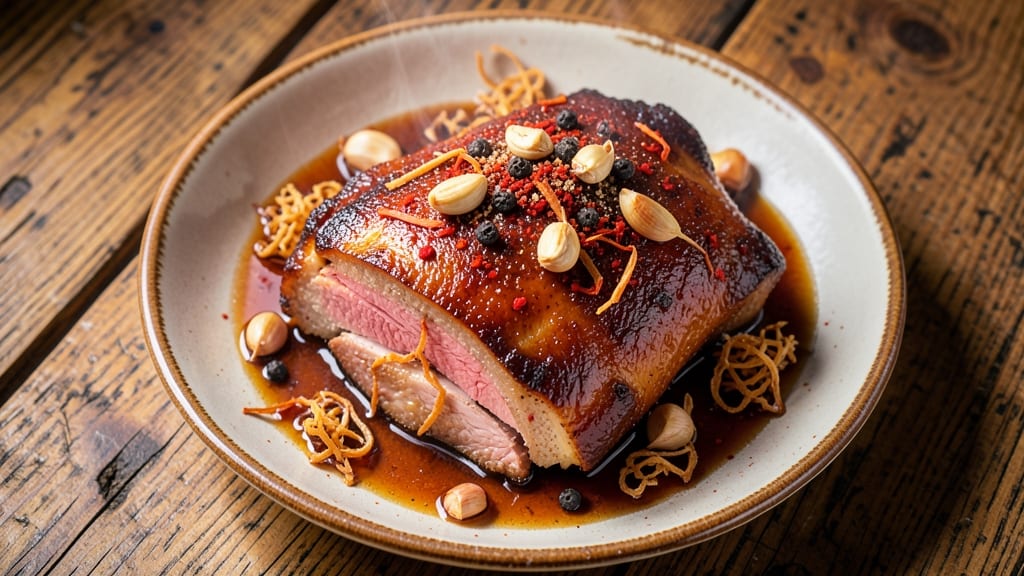
This Cebu lechon pork belly recipe brings the legendary Filipino feast to your kitchen with crispy, crackling bark and juicy pink centers—just like the golden-brown roasts from Cebu’s famous lechoneras.
The secret lies in slow-roasting over indirect heat, basting with its own rendered fat, and finishing with a touch of achuete for that signature golden hue. After years of perfecting whole-hog roasts in Charleston, I’ve adapted this technique for pork belly, delivering the same restaurant-quality results at home.
The key to authentic Cebu lechon isn’t just the high heat—it’s the patience. You’ll start with a dry-brined belly for maximum crispiness, then roast it low and slow until the internal temperature reaches 145°F, ensuring tender meat that practically melts in your mouth.
Basting every 30 minutes with the rendered fat builds that coveted smoky bark, while a final 10-minute broil under the oven’s grill creates the perfect caramelized crust. This isn’t your average pork roast—it’s a centerpiece worthy of any Filipino celebration.
What makes this recipe truly special is the balance of textures: the shatteringly crisp skin gives way to tender, marbled meat that’s still pink at the heart, a hallmark of Cebu’s lechon tradition.
The aroma alone—smoky, savory, with hints of garlic and black pepper—will have your whole house gathering before the timer even goes off. Serve it whole for a showstopping centerpiece, or carve into thick slices for sandwiches, rice bowls, or lechon kawali (fried pork belly).
For the full Cebu experience, wrap the roast in banana leaves during the final hour of cooking—this infuses subtle tropical notes and keeps the meat impossibly moist. Pair it with sinigang (sour tamarind soup) or garlic fried rice to complete the meal.
This isn’t just pork; it’s a taste of the Philippines’ most beloved tradition, brought to your table with professional precision. Let’s get cooking.
Ingredients for cebu lechon pork belly
Pork belly, garlic, and banana leaves—simple ingredients for Cebu's most legendary dish.
| Ingredient | Amount | Notes |
|---|---|---|
| Pork Belly 🥓 | 4 lb | Thick-cut, skin-on preferred |
| Kosher Salt 🧂 | ½ cup | Diamond Crystal preferred |
| Fresh Garlic Cloves 🧄 | 8 cloves | Minced for marinade |
| Black Peppercorns 🌶️ | 1 tbsp | Freshly cracked preferred |
| Achuete Annatto Seeds 🌶️ | 1 tsp | Ground for golden hue |
| Olive Oil 🫒 | ¼ cup | Extra-virgin for basting |
| Banana Leaves 🌿 | 2 whole | For final wrapping |
| Whole Cloves 🌶️ | 4 whole | For aromatics |
| Bay Leaves 🌿 | 2 whole | Dried for flavor |
| Brown Sugar 🍚 | 2 tbsp | Light variety preferred |
| Ground Black Pepper 🌶️ | 1 tsp | Freshly ground |
| Fresh Lemons 🍋 | 2 whole | Juiced for brightness |
| Fresh Cilantro 🌿 | ¼ cup | Chopped for garnish |
The pork belly is non-negotiable here. Thick-cut, skin-on from Whole Foods or your local butcher delivers the best marbling for that signature crispy bark. Look for pieces with at least 1-inch fat cap—thinner cuts won't render enough fat for basting. I always buy mine a day ahead and let it sit uncovered in the fridge so the skin dries out slightly, which helps it crisp better. Costco often has great deals on pork belly if you're feeding a crowd, but for this recipe, stick to 4 lbs for perfect proportions. The skin should be pale pink and firm to the touch, with visible fat marbling throughout.
No banana leaves? Aluminum foil works in a pinch, though it won't infuse that subtle tropical aroma. For the achuete, Filipino markets or specialty Latin grocery stores carry it in powder form—if you can't find it, turmeric at one-third the amount gives a similar golden color (though less authentic). The garlic and peppercorns should be freshly cracked for maximum flavor; pre-ground spices lose potency fast. If you're short on time, garlic powder at half the amount works, but trust me on the fresh version. The brown sugar adds just enough caramelization to the bark without overpowering the pork's natural flavor.
Store any leftover pork belly in an airtight container with a paper towel pressed against the crispy skin to preserve its texture. It reheats beautifully—just warm in a 350°F oven for 10-15 minutes until heated through. The rendered fat can be stored in a jar in the fridge for up to 3 months>—use it for frying or basting other meats. For maximum freshness, serve this within 2 days of cooking. The banana leaves lose their aroma after a few days, so use them fresh if possible. Portion the meat into individual slices and wrap tightly in plastic wrap to maintain that perfect balance of crispy skin and tender meat.
Why You'll Love This Recipe
- Minimal Chopping Required: I swear by this—just score the pork belly, salt it, and let the oven do the heavy lifting. No dicing, no mincing, no fuss. That annatto seed paste? Just crush a handful and mix it with oil. Five minutes max.
- Crispy-Creamy Magic: The garlic and peppercorns work their way into the meat until every bite has that perfect contrast—crispy, caramelized edges with melt-in-your-mouth fat. Honestly, the first time I tasted it, I nearly burnt the kitchen.
- Party in a Pan: This is my secret weapon for gatherings. Serve it sliced thin over rice for a crowd, or let guests tear into the belly like a build-your-own feast. Leftovers? Wrap them in foil and reheat—still just as good the next day.
- Budget-Friendly Feast: Pork belly stretches further than you’d think when you roast it whole. A single cut feeds four, and the salt, garlic, and annatto cost pennies. Between us, it’s the most satisfying way to stretch a meat budget without sacrificing flavor.
Step-by-step instructions for Cebu lechon pork belly
Here's how to transform a simple pork belly into Cebu-style lechon with irresistible crispy bark and melt-in-your-mouth pink centers.
Prepare the Dry Cure for Maximum Flavor
In a large bowl, combine the 0.5 cup kosher salt, 1 tbsp freshly cracked black peppercorns, 2 tbsp brown sugar, 1 tsp ground black pepper, and 1 tsp ground achuete annatto seeds. This vibrant red spice blend will give your lechon its signature golden hue while adding subtle earthy notes. Rub the mixture all over the 4 lb pork belly, pressing firmly into the meat and fat cap to ensure even distribution. The salt will begin drawing out moisture immediately, which is why we'll let it sit uncovered in the refrigerator for 24 hours—this critical step creates that coveted crispy bark while keeping the interior juicy.
After curing, rinse the pork belly thoroughly under cold water and pat it completely dry with paper towels. Any remaining moisture will prevent proper browning. The skin should look taut and slightly translucent—this is your visual cue that it's ready for the next phase. Here's the thing—don't skip the curing time. I've tried rushing this process, and the results are always less crispy and less flavorful.
Build the Aromatic Marinade and First Roast
In a small saucepan, gently heat the 0.25 cup extra-virgin olive oil over low heat. Add the 8 minced fresh garlic cloves, 4 whole cloves, and 2 whole bay leaves, letting them infuse for 2 minutes until fragrant but not browned. Remove from heat and let cool completely. This aromatic oil will become the foundation of your lechon's flavor profile.
Preheat your oven to 325°F. Place the prepared pork belly fat-side up on a rack set in a roasting pan. Pour the infused olive oil evenly over the surface, then sprinkle with the freshly juiced 2 whole fresh lemons. The acidity will help tenderize the meat while adding brightness. Roast uncovered for 2 hours, basting every 30 minutes with the accumulated juices. You're looking for the internal temperature to reach 160°F—this is when the meat begins to firm up but isn't quite ready for final cooking.
Create the Signature Cebu Lechon Bark
Increase oven temperature to 425°F. This is where the magic happens—we're going to develop that legendary crispy bark. Place the pork belly back in the oven and roast for 45 minutes, basting every 15 minutes with the pan juices. The skin should develop a deep golden color with some areas turning almost mahogany. Here's what I do: I press down gently on the fat cap during the first 10 minutes of this phase—this prevents it from curling and ensures even contact with the hot air.
If you notice the skin starting to brown too quickly in some areas, rotate the pan. The goal is even browning without burning. You'll know it's ready when the skin releases easily from the fat and has that beautiful crackly texture. The internal temperature should now read 180-185°F—this is the perfect balance between crispy exterior and tender interior.
Wrap and Rest for Juicy Perfection
Carefully transfer the pork belly to a large piece of banana leaf, placing it on its side. The banana leaf will impart subtle tropical notes while helping to steam the meat. Wrap the pork belly tightly in the banana leaf, securing it with kitchen twine if needed. Return it to the oven and cook for an additional 30 minutes at 325°F. This resting phase allows the juices to redistribute, ensuring every slice is moist and flavorful.
Remove from the oven and let rest for 20 minutes before unwrapping. The pork belly should have a deep golden bark that shatters when pressed, and the interior should be tender enough to pull apart with two forks. Here's a pro tip: If you're serving immediately, you can skip the banana leaf wrap and simply let it rest uncovered on a rack for 15 minutes—this allows the bark to crisp up even more while maintaining the juicy interior.
Slice and Serve with Fresh Garnish
Using a sharp carving knife, slice the pork belly into ½-inch thick slices, cutting against the grain for maximum tenderness. Arrange the slices on a platter and garnish with the 0.25 cup chopped fresh cilantro. The bright green color contrasts beautifully with the golden bark and pink meat, adding both visual appeal and freshness.
Serve immediately while still warm. Each slice should have that perfect combination of crispy, crackly skin that gives way to tender, juicy meat with a delicate pink center. The aroma alone will have your guests gathering around the table—this is Cebu-style lechon at its finest. For extra presentation, you can arrange the slices in a circular pattern on a large platter, mimicking the traditional lechon presentation.
Pro Tips For Making Cebu Lechon Pork Belly
- CRACK THE BELLY FIRST: Skip the whole uncooked slab—split the pork belly in half lengthwise before roasting. I learned this the hard way after wrestling with a 4-inch-thick slab that never cooked evenly. The fat renders faster, the meat crisps better, and you won’t end up with a sad, greasy center. Use a sharp boning knife and tap the blade gently to separate the layers.
- SALT THE GARLIC HARD: Crush those garlic cloves with a mortar and pestle before mincing, then toss them in a bowl with 1 teaspoon of kosher salt. The salt breaks down the garlic’s cell walls, making the flavor punchier and preventing it from burning into bitter sludge. (Yes, it’s extra work—but your lechon will taste like it came from a Cebu street vendor.)
- DON’T BAKE THE ANNATTO: Toast the achuete seeds in a dry pan for 30 seconds just until fragrant—no longer, or they’ll turn to dust. Then steep them in 1 cup of hot water for 10 minutes to make the coloring liquid. Over-toasting kills the flavor, and under-toasting means your pork will look dull. Strain the seeds out before basting, or you’ll be picking them off your crispy skin.
- BASTE WITH FAT, NOT WATER: Every 20 minutes, spoon the rendered pork fat (not broth or water) over the belly—it’s the secret to that glossy, crackling crust. I used to add water to keep things moist, but the fat’s natural emulsifiers do the job better. If the pan runs dry, add a splash of white vinegar (½ cup) to help break down the fat for better browning. (Your future self will thank you.)
Serving suggestions for leftovers
Traditional Filipino Sides
Serve your Cebu lechon with sinigang, the iconic Filipino sour tamarind soup, which balances the richness with tangy broth. I love using dried radish, shrimp, and tamarind pods for depth—it’s the perfect palate cleanser.
Pair it with garlic fried rice made with day-old jasmine rice, 3 minced garlic cloves, and 1 tbsp soy sauce for that umami kick. The crispy rice soaks up the lechon juices beautifully. 🍚
Banana Leaf Presentation
For an authentic touch, serve slices on banana leaves—they keep the meat moist and add a subtle tropical aroma. If you can’t find them, use parchment paper instead. Arrange the lechon slices in a circular pattern on the leaf, then fold the edges inward.
Garnish with cilantro sprigs and a squeeze of lemon for brightness. This presentation makes your dish feel like a true Cebu feast. 🌿
Lunchbox Staples
Leftover lechon makes incredible lechon kawali—crispy fried pork belly slices. Heat ½ inch of oil in a pan over medium-high heat, then fry the slices for 2-3 minutes per side until golden. Serve with steamed white rice and sliced cucumbers for a refreshing contrast.
For a quick lunch, stuff the slices into soft Hawaiian rolls with sliced tomatoes and a drizzle of lechon fat for extra flavor. 🥖
Drink Pairings
Cool down with calamansi juice—this Filipino citrus blend is tart and refreshing, cutting through the richness. Mix ½ cup calamansi juice, ½ cup water, and 1 tbsp sugar for a bright sipper.
For something stronger, try San Miguel Pale Pilsen, a crisp Filipino lager that complements the smoky flavors. Avoid heavy wines—they’ll overpower the dish’s delicate balance. 🍹
Modern Twists
Get creative with lechon tacos—use corn tortillas, top with lechon slices, pickled red onions, and a smear of sriracha mayo. For a deconstructed version, serve the meat over shredded cabbage, carrots, and a sweet chili dipping sauce.
Even a lechon breakfast burrito with scrambled eggs and cheddar cheese is a crowd-pleaser. 🌮
Leftovers Reinvented
Shred the lechon for lechon adobo—simmer the meat with ½ cup soy sauce, ½ cup vinegar, 3 garlic cloves, and 1 tsp black peppercorns for 20 minutes. Use the shredded meat in fried rice or pancit (Filipino noodles) for a hearty meal.
Store leftovers in an airtight container with a paper towel pressed against the skin to keep it crispy. 💡
Nutrition facts
Frequently asked questions
Why does Cebu lechon have pink meat while other pork roasts are fully cooked?
Authentic Cebu lechon maintains its signature pink center because it's traditionally cooked to 145°F internal temperature—just until the meat is tender but still slightly rare. The fat cap renders perfectly while keeping the interior juicy and flavorful. Overcooking would dry out the meat and lose that melt-in-your-mouth texture that makes lechon special.
Can I make Cebu lechon without banana leaves?
While banana leaves add authentic aroma, you can substitute with aluminum foil or even parchment paper for wrapping. The key is maintaining moisture during the final resting phase. Just skip the 30-minute wrapped cooking time if using foil—rest the pork belly uncovered on a rack for 15 minutes instead to crisp up the bark.
How do I prevent the pork belly skin from curling up during cooking? Use a rack in your roasting pan to elevate the pork belly, allowing air to circulate underneath. Gently press down on the fat cap with a spoon during the first 10 minutes of high-heat roasting (425°F). Also,
What's the best way to reheat leftover Cebu lechon?
For maximum crispiness, reheat slices in a 350°F oven for 10-15 minutes on a wire rack over a baking sheet. Place a paper towel underneath to catch any drippings. For quick reheating, pan-fry slices in lechon fat or oil over medium heat for 2-3 minutes per side until crispy again. Never microwave—it'll make the skin soggy.
Can I use a different cut of pork instead of belly?
While pork belly is traditional, you could try pork shoulder (butterflying it) or bone-in pork loin for a leaner version. However, belly's fat cap is essential for that signature crispy bark and basting liquid. If using shoulder, increase cooking time by 30-45 minutes and expect less dramatic skin crispiness. The flavor will be different but still delicious!