
Sauces & Condiments
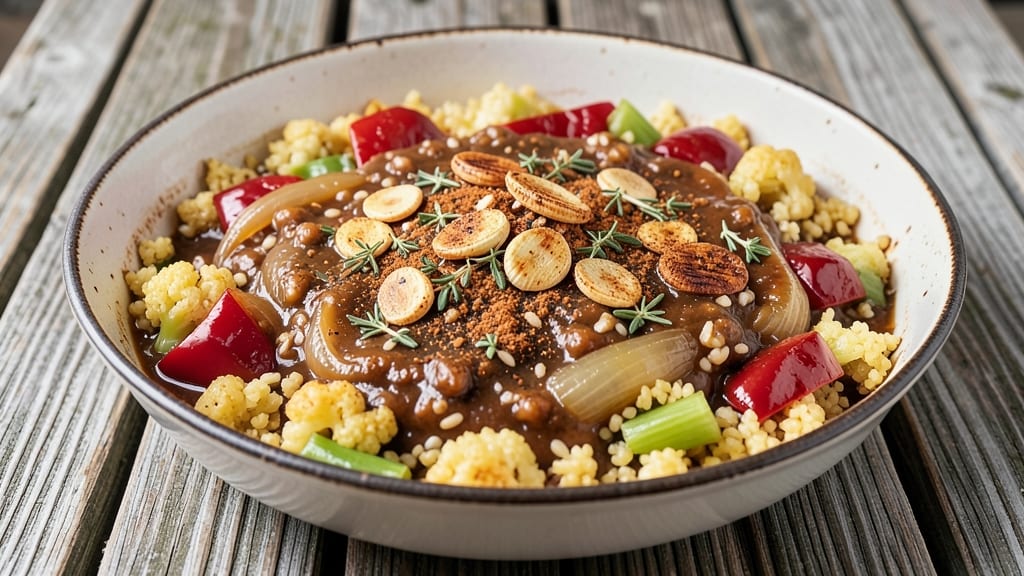
This cauliflower rice jambalaya transforms a classic Cajun dish into a lighter, vegetarian powerhouse—packed with smoky spices, tender veggies, and all the soulful flavor of the South. The secret lies in perfectly balancing bold spices with fresh ingredients, creating a one-pot wonder that’s as hearty as it is nutritious.
No meat? No problem—this version delivers the same rich, aromatic depth without sacrificing texture or taste.
With just 30 minutes of active prep and a simmering time that lets flavors meld beautifully, you’ll end up with a dish that’s crispy at the edges, tender in the center, and bursting with Cajun-inspired warmth.
The cauliflower rice absorbs the smoky, spiced broth while holding its shape, making every bite satisfying. Serve it over fluffy rice or as-is—this jambalaya is the perfect centerpiece for any meal, proving vegetarian dishes can be just as bold and comforting as the original.
Ingredients for cauliflower rice jambalaya
Fresh cauliflower rice and aromatic Cajun spices transform this vegetarian jambalaya into a smoky, satisfying one-pot masterpiece.
| Ingredient | Amount | Notes |
|---|---|---|
| Fresh Cauliflower Rice 🥬 | 6 cups | Riced from head, fresh or frozen |
| Long-Grain White Rice 🍚 | 1 cup | Uncooked, jasmine or basmati preferred |
| Cajun Holy Trinity (Bell Pepper, Onion, Celery) 🧅🧄🥕 | 1 cup | Diced, even size (1/4 cup each) |
| Garlic Cloves 🧄 | 4 cloves | Minced, aromatic intensity |
| Smoked Paprika 🌶️ | 2 tbsp | High-quality, smoky depth |
| Dried Thyme 🌿 | 1 tbsp | Fresh preferred, but dried works |
| Ground Cumin 🌿 | 1 tbsp | Toasted for enhanced flavor |
| Vegetable Broth 💧 | 3 cups | Low-sodium, homemade or quality |
| Tomato Paste 🍅 | 2 tbsp | San Marzano preferred, rich color |
| Extra-Virgin Olive Oil 🫒 | ½ cup | High-quality, fruity notes |
| Lemon Juice 🍋 | 2 tbsp | Freshly squeezed, bright acidity |
| Bay Leaves 🍃 | 2 whole | For subtle aromatic depth |
| Diamond Crystal Kosher Salt 🧂 | 1 ½ tsp | Adjust to taste, fine grain |
| Black Peppercorns 🌶️ | ½ tsp | Freshly cracked, coarse grind |
| Green Bell Pepper 🧅 | 1 whole | Diced, adds fresh crunch |
The cauliflower rice is the star—freshly riced yields the best texture, but frozen works in a pinch. Trader Joe's and Whole Foods carry pre-riced cauliflower, but a food processor handles whole heads in seconds. For the Cajun Holy Trinity, even dicing ensures balanced flavor distribution. If using dried thyme, steep it in warm broth for 10 minutes to unlock its aroma before adding to the pot. Smoked paprika from Penzeys delivers that authentic Cajun smokiness—don't skimp here. The garlic should be minced finely to disperse evenly throughout the dish.
No smoked paprika? Substitute half the amount with chipotle powder for heat, though you'll lose some smokiness. Fresh thyme is ideal, but dried at one-third the quantity works if that's what you have. Vegetable broth can be swapped for homemade mushroom broth for deeper umami. The tomato paste is non-negotiable for that rich jambalaya color—San Marzano gives the best results. For extra texture, add diced mushrooms or bell peppers if your recipe calls for them. The green bell pepper at the end adds freshness, so don't skip it unless you prefer a more rustic texture.
This dish tastes even better the next day as flavors meld. Store in an airtight container in the fridge for up to 5 days, or freeze portions for 3 months. For meal prep, double the recipe and freeze half immediately. The cauliflower rice will soften slightly when reheated, so add a splash of broth when warming. Serve over fluffy white rice or as-is—either way, it's a crowd-pleaser that keeps well for leftovers.
Why You'll Love This Recipe
- One-Pot Magic: I swear by this recipe because it’s literally one pan—no rice cooker, no extra bowls. Toss in your cauliflower rice, holy trinity, and spices, then let the garlic and smoked paprika work their magic while you stir. Honestly, the cleanup is so minimal I’ll take it over my usual jambalaya mess any day.
- Smoky, Savory Bite: That smoked paprika? It’s the star. It turns this into something richer than takeout, with just enough heat to linger. The cauliflower rice soaks up all the flavors—crisp in spots, tender in others—while the long-grain rice keeps it hearty. (Yes, even on a Tuesday night.)
- Meal Prep MVP: Between us, this is my go-to for lunches all week. The flavors actually improve after a day or two—better than most leftovers I’ve had. Pack it cold or reheat it, and it’s still packed with that deep, smoky goodness. (My daughter picks out the celery, but still asks for seconds.)
- Budget-Friendly Flex: Cauliflower rice cuts costs without sacrificing texture, and the holy trinity stretches across multiple meals. I’ll make a big batch, freeze half, and still have a solid, filling dish for days. Not the prettiest, but the taste makes up for it—and my wallet thanks me.
Step-by-step instructions for smoky Cajun-spiced cauliflower jambalaya
This one-pot wonder delivers bold Cajun flavors with a lighter, vegetable-forward twist.
Sauté the Cajun Holy Trinity and Aromatics
Heat the 0.5 cup extra-virgin olive oil in a large, heavy-bottomed pot over medium-high heat until shimmering. Add the 1 cup Cajun Holy Trinity (bell pepper, onion, celery) and cook for 8-10 minutes, stirring occasionally, until the vegetables soften and the onion becomes translucent. You'll notice the bell pepper will release its natural juices and the celery will darken slightly at the edges.
Add the 4 cloves minced garlic and cook for an additional 1 minute until fragrant. This step develops the foundational flavors of your jambalaya. If you notice the garlic starts to brown too quickly, reduce the heat slightly to prevent bitterness. The aroma should fill your kitchen—this is where the magic begins.
Toast the Spices and Incorporate the Rice
Reduce the heat to medium and add the 2 tbsp smoked paprika, 1 tbsp dried thyme, and 1 tbsp ground cumin. Stir constantly for 30 seconds to toast the spices and release their aromatic oils. You'll see the mixture darken slightly and fill your kitchen with a deep, earthy scent. This toasting step is crucial—it prevents the spices from tasting raw and enhances their flavor profile.
Add the 6 cups fresh cauliflower rice and 1 cup long-grain white rice to the pot, stirring to coat the rice grains evenly with the spices and oil. The cauliflower rice will begin to soften immediately, while the white rice will absorb the flavorful oil. Cook for 2 minutes, stirring frequently, until the rice is well-coated and the cauliflower rice starts to wilt slightly.
Build the Flavor Base with Tomato Paste and Broth
Stir in the 2 tbsp tomato paste and cook for 1 minute until it darkens slightly and blends seamlessly with the other ingredients. This step deepens the color and adds a rich, umami base to your jambalaya. Add the 3 cups vegetable broth, 1.5 tsp diamond crystal kosher salt, 0.5 tsp black peppercorns, and the 2 whole bay leaves. Bring the mixture to a gentle boil, then reduce the heat to low and cover the pot.
Simmer for 20 minutes, stirring occasionally, until the liquid has been mostly absorbed and the rice is tender. You'll know it's ready when the cauliflower rice is soft and the white rice has absorbed most of the broth. The mixture should be moist but not soupy. If you notice the rice is absorbing the liquid too quickly, add a splash of water or broth to maintain the desired consistency.
Finish with Fresh Green Bell Pepper and Lemon
Remove the pot from heat and stir in the 1 whole diced green bell pepper and 2 tbsp freshly squeezed lemon juice. The bright acidity of the lemon juice cuts through the richness of the spices and adds a refreshing finish. Taste and adjust the seasoning if needed—you might want to add a pinch more salt or a crack of black pepper to enhance the flavors.
Let the jambalaya rest, covered, for 5 minutes to allow the flavors to meld together. This resting period is essential—it gives the spices time to infuse fully and ensures each bite is packed with flavor. Serve immediately, garnished with additional fresh herbs if desired. This one-pot wonder is best enjoyed straight from the pot, with the flavors at their peak.
Pro Tips For Making Cauliflower Rice Jambalaya
- Sauté the Holy Trinity Slow: I learned this the hard way—if you rush the bell pepper, onion, and celery, they’ll turn mushy instead of sweet and tender. Cook them on medium heat for 8-10 minutes, stirring occasionally, until the onion is translucent and the celery softens but doesn’t brown. This builds the flavor base without burning, which is especially important when you’re not using meat to carry the dish.
- Salt the Cauliflower Rice First: Toss your fresh cauliflower rice with a pinch of salt and let it sit for 5 minutes before cooking. This draws out moisture, so it crisps up better when it hits the pan—no more soggy, limp rice. (Yes, even if you’re impatient like me.)
- Use Half the Rice, Double the Liquid: Cauliflower rice absorbs way more liquid than regular rice, so cut your white rice portion in half and add an extra ½ cup of broth or water. If it’s still dry after simmering, just add a splash more—this isn’t a science experiment, but it keeps the texture light and jamalaya-like.
- Toast the Smoked Paprika: Skip the pre-mixed spice blends and toast 1 teaspoon of smoked paprika in the pot for 30 seconds before adding the broth. This deepens the smoky flavor and prevents it from tasting like dust. (Your future self will notice the difference.)
Common mistakes when making great cauliflower rice jambalaya
Overcooking Cauliflower Rice
Cauliflower rice turns mushy when overcooked, losing its perfect texture. I’ve burned more batches than I’d like to admit by simmering too long. Aim for 20 minutes of covered simmering—any longer, and the rice will break down into a sad, watery mess.
If your jambalaya looks dry before that time, add ¼ cup broth instead of extra cooking time. 🥬
Skipping Spice Toasting
Toast those spices! Skipping the 30-second toast for smoked paprika, thyme, and cumin means raw, bitter flavors. I learned this the hard way—my first attempt tasted like a spice cabinet exploded.
Toast over medium heat until fragrant, then immediately add the rice to lock in those flavors. This step makes all the difference. 🌶️
Uneven Holy Trinity Sizes
Unevenly diced bell peppers, onions, and celery mean some pieces cook faster than others. I’ve had crunchy celery stalks mixed with mushy bell peppers—not ideal. Dice everything into ¼-inch pieces for consistent cooking.
A sharp knife and steady hand are your best tools here. Trust me, your jambalaya will thank you. 🧅
Ignoring the Resting Time
Rushing to serve right after cooking? Big mistake. Letting the jambalaya rest for 5 minutes covered lets flavors meld and juices redistribute. I’ve served it too soon, only to get complaints about dry, separate textures. Patience pays off—every bite will be richer and more cohesive. ✨
Using Low-Quality Broth
Cheap, salty broth ruins the balance of flavors. I’ve used store-brand vegetable broth in a pinch, and the results were off—too salty or bland. Invest in a good low-sodium broth (like Pacific Foods or homemade) for the best depth.
If you must use canned, dilute it with water to cut the sodium. Your taste buds will notice the difference. 💧
Forgetting the Lemon Juice
That final splash of lemon juice brightens the dish and cuts through the richness. I’ve made this mistake—skipping it leaves the jambalaya feeling heavy. Add it at the end, even if you’re not a fan of citrus. The acidity balances the spices perfectly, making every bite feel fresh. 🍋
Nutrition facts
Frequently asked questions
Can I make this cauliflower rice jambalaya without white rice?
For a completely low-carb version, skip the white rice and use 8 cups cauliflower rice instead. The texture will be lighter, but you'll still get that satisfying jambalaya experience. If you want extra heartiness, add ½ cup cooked quinoa per serving. The key is adjusting the liquid ratio—reduce broth by ½ cup if eliminating white rice.
How do I make this dish spicier?
Add ½ teaspoon cayenne pepper or 1 teaspoon hot sauce (like Crystal or Tabasco) to the spice toasting step. For extra heat, stir in 1 chopped jalapeño with the Holy Trinity. Remember, you can always add more heat at the end—just don't reduce the other spices, as this will throw off the balance.
Can I prep this jambalaya ahead of time?
This dish actually tastes better the next day! Cook it completely, then refrigerate in an airtight container for up to 5 days. When reheating, add 2-3 tablespoons broth per serving to restore moisture. For freezing, portion into meal-sized containers and freeze for up to 3 months. Thaw overnight in the fridge before reheating.
What's the best way to serve this vegetarian jambalaya?
Serve it with a dollop of Greek yogurt or sour cream for cooling contrast, and a sprinkle of fresh parsley or cilantro. For extra protein, top with avocado slices or black beans. The classic pairing is with crusty bread or over fluffy white rice, but this version stands well on its own. Garnish with lemon wedges for that fresh finish.
Why does my cauliflower rice turn out mushy?
Overcooking is the most common culprit! Cauliflower rice only needs 20 minutes of simmering—any longer breaks it down. Also ensure you're using fresh cauliflower rice (not pre-shredded bags) and don't overcrowd the pot. For extra insurance, stir in 1 tablespoon lemon juice at the end to help maintain texture.