
Sauces & Condiments
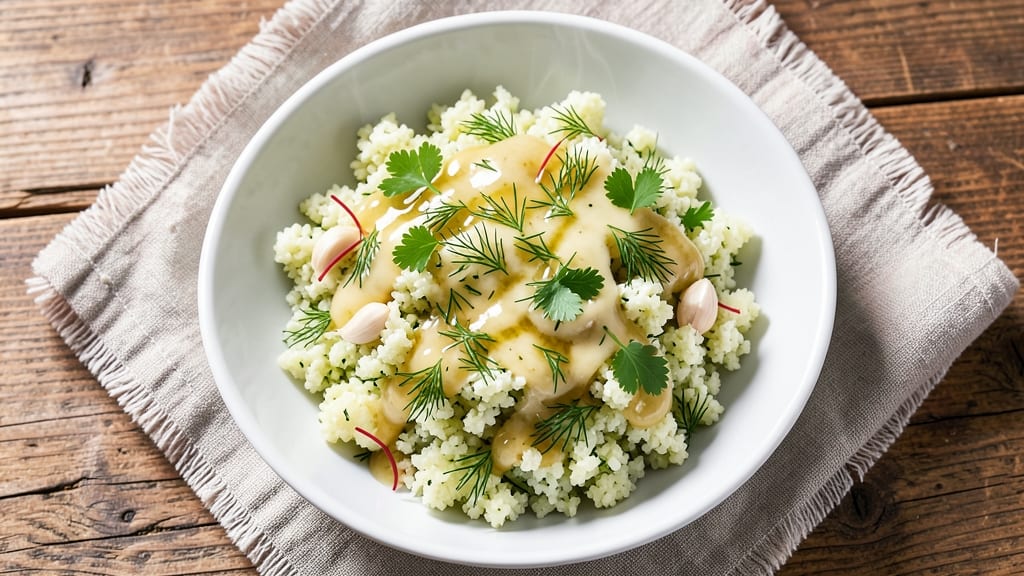
This cauliflower rice dressing recipe transforms humble riced cauliflower into a vibrant, herb-packed vinaigrette that's lighter than traditional creamy dressings yet packed with fresh, bright flavor.
The secret lies in blending finely textured cauliflower rice with tangy vinegar and aromatic herbs, creating a dressing that clings beautifully to salads, bowls, and roasted vegetables without weighing them down.
The result is a versatile, vegan-friendly dressing with a creamy texture and clean, herbal notes that elevate any dish. Perfect for meal prep, this dressing stays fresh in the fridge for up to 5 days, making it an ideal pantry staple for quick, healthy meals.
Whether drizzled over greens, tossed with grain bowls, or used as a dip, its adaptability makes it a must-have in your sauce rotation.
Ingredients for cauliflower rice dressing
Fresh herbs and tangy vinegar blend seamlessly with creamy cauliflower rice for a vibrant, plant-based dressing.
| Ingredient | Amount | Notes |
|---|---|---|
| Fresh Cauliflower Rice 🥬 | 1 ½ cups | Freshly grated or store-bought |
| Extra-Virgin Olive Oil 🫒 | ½ cup | High-quality, fruity variety |
| Apple Cider Vinegar 🍏 | ¼ cup | For tangy brightness |
| Fresh Lemon Juice 🍋 | ¼ cup | Freshly squeezed |
| Fresh Dill Weeds 🌿 | ¼ cup | Finely chopped |
| Fresh Parsley Leaves 🌿 | ¼ cup | Finely chopped |
| Fresh Chives 🌱 | 2 tbsp | Finely chopped |
| Garlic Cloves 🧄 | 2 cloves | Minced |
| Sea Salt 🧂 | ½ tsp | Fine grain preferred |
| Black Pepper 🌶️ | ¼ tsp | Freshly ground |
Fresh herbs are the heart of this dressing—farmers markets or grocery store herb sections are your best bet for vibrant, flavorful leaves. Opt for organic dill and parsley if possible, as they tend to have more robust flavor. The cauliflower rice should be finely textured for a smooth dressing; if making it fresh, pulse in a food processor until it resembles rice grains. For the olive oil, choose a high-quality extra-virgin variety with noticeable fruity notes—it makes all the difference in the final flavor.
No fresh dill? Tarragon or cilantro can work in a pinch, though the flavor will differ slightly. Short on lemon juice? Lime juice works equally well—just adjust the acidity to taste. The garlic can be omitted for a milder dressing, but roasted garlic adds a sweet, mellow depth. For a smoother texture, blend the dressing until silky, but leave it slightly chunky for that rustic, fresh appeal. If the dressing separates, simply whisk or blend again before serving.
Store the dressing in an airtight container in the fridge for up to 5 days, though it's best used within 3 days for optimal freshness. The herbs will keep their vibrant color if you pour a thin layer of olive oil over the top before sealing. For meal prep, portion into small jars—perfect for drizzling over salads or grain bowls throughout the week. Freezing isn't recommended due to the herbs, but the base dressing (without fresh herbs) can be frozen for 1 month.
Why You'll Love This Recipe
- No-Fuss Freshness: I swear by this dressing because it’s literally just chopping cauliflower, a splash of vinegar, and a handful of dill—no peeling, no dicing, no waiting. The cauliflower rice stays crisp when raw, so you can toss it together in minutes and still have time to actually eat.
- Bright Tangy Magic: That lemon juice and apple cider vinegar combo? It’s the secret weapon here—sharp enough to cut through heavy dishes but bright enough to make everything feel lighter. Honestly, I’ve used it on grilled chicken, roasted veggies, and even as a dip, and it never fails to add that wow factor.
- Meal Prep MVP: Between us, this dressing keeps perfectly for up to a week in the fridge—no weird texture changes, no sad wilted herbs. I make a big batch on Sundays, portion it out, and use it all week for salads, wraps, or as a quick topping. It’s my low-effort way to eat fresh without the daily chopping.
- Budget Brightener: Fresh dill and lemon juice might sound fancy, but they stretch so far in this recipe. A single head of cauliflower and a lemon last me multiple dressings, and the olive oil adds richness without breaking the bank. Plus, it’s a great way to use up veggies before they go bad.
Step-by-step instructions for cauliflower rice dressing
This herb vinaigrette transforms cauliflower rice into a vibrant, flavorful dressing perfect for salads or dips.
Prepare the Fresh Herb Base
In a medium bowl, combine the 0.25 cup fresh dill weeds, 0.25 cup fresh parsley leaves, 2 tbsp fresh chives, and 2 cloves minced garlic cloves. Use a sharp knife to finely chop the herbs—this ensures they blend smoothly and release their bright flavors. I like to press the garlic cloves through a garlic press for even distribution without bitter almonds.
The herbs should look like confetti at this stage. If you're using store-bought cauliflower rice, give it a quick rinse under cold water to remove any excess moisture, then drain thoroughly in a fine-mesh strainer. This step prevents a watery dressing later. Pat the cauliflower rice dry with a clean kitchen towel or paper towels.
Whisk the Vinegar and Lemon Juice
In a separate small bowl, whisk together the 0.25 cup apple cider vinegar and 0.25 cup fresh lemon juice until fully combined. This mixture should be smooth and slightly bubbly. The acidity from the vinegar and lemon juice will brighten the flavors and help emulsify the dressing later. Taste a small amount—it should be pleasantly tart but not overpowering.
Add the 0.5 tsp sea salt and 0.25 tsp black pepper to the vinegar-lemon mixture and stir until dissolved. This balances the acidity and adds depth to the dressing. Set this mixture aside while you prepare the remaining ingredients.
Combine All Ingredients for Emulsification
Add the 1.5 cups fresh cauliflower rice and the herb mixture to the vinegar-lemon mixture in the bowl. Stir gently to combine, ensuring the herbs are evenly distributed. In a slow, steady stream, drizzle in the 0.5 cup extra-virgin olive oil while whisking continuously. This gradual addition is key to creating a smooth, emulsified dressing rather than a separated one.
Whisk vigorously for 2-3 minutes until the dressing thickens slightly and clings together. You'll notice the texture become creamy rather than grainy. If the dressing looks too thick, add 1-2 teaspoons of water to loosen it. The final consistency should coat the back of a spoon lightly but still allow for easy drizzling.
Rest and Adjust for Perfect Balance
Cover the bowl with plastic wrap and let the dressing rest at room temperature for 10-15 minutes. This allows the flavors to meld and the cauliflower rice to absorb the liquid fully. After resting, taste the dressing again and adjust the seasoning if needed—add a pinch more salt if it tastes flat or a splash more lemon juice if the acidity has mellowed too much.
The dressing is now ready to use. It pairs beautifully with fresh garden salads, grilled vegetables, or as a dip for low-carb snacks. Store any leftovers in an airtight container in the refrigerator for up to 5 days, shaking well before each use to redistribute the ingredients.
Pro Tips For Making Cauliflower Rice Dressing
- Squeeze, Don’t Pour: Fresh lemon juice is your brightest weapon here—don’t just dump it from the bottle. Roll the lemon over a cutting board first to soften it, then cut it open and hand-squeeze it through a fine-mesh strainer. The extra pulp adds subtle bitterness and body that bottled juice can’t match.
- Toast the Cauliflower: Skip the raw rice—gently sauté your cauliflower rice in olive oil for 2–3 minutes until it’s just fragrant and slightly softened. This step prevents the dressing from tasting like a wet salad and makes the dill’s flavor pop. (Yes, even if you’re impatient like me.)
- Balance the Vinegar: Apple cider vinegar can overpower if you’re not careful. Start with 1 tablespoon, taste it, then adjust—this dressing should taste tangy but not like you’re pickling something. If it’s too sharp, add a pinch of honey or a splash more olive oil to round it out.
- Chop Dill Like Herbs: Don’t just tear the dill—give it a rough chop with a knife. This releases more oils and distributes the flavor evenly. If you’re using stems, finely mince them too; they’re packed with flavor and won’t make your dressing look like confetti.
Serving suggestions for this recipe
Salad Pairings
This dressing shines on mixed greens like arugula, spinach, or butter lettuce—the bright herbs and tangy acidity cut through delicate leaves beautifully. For a heartier salad, toss with shredded kale and roasted Brussels sprouts to balance the dressing's lightness.
I often add toasted walnuts or pumpkin seeds for crunch and extra protein. 🥗
Grain Bowl Topper
Drizzle over quinoa, farro, or brown rice bowls to add freshness and moisture. The cauliflower rice base blends seamlessly with Mediterranean flavors—try pairing it with grilled chicken, falafel, or roasted vegetables.
A sprinkle of crumbled feta or vegan feta adds a salty contrast. For a complete meal, top with cherry tomatoes and cucumber slices.
Dipping Sauce
Use this dressing as a dip for crudités like bell peppers, carrots, or celery sticks. It also elevates low-carb snacks like zucchini fries, jicama slices, or endive leaves.
For extra flair, serve with warm pita chips or gluten-free crackers. The creamy texture makes it perfect for scooping, while the herbs keep it fresh and vibrant.
Protein Pairings
This dressing complements grilled or roasted proteins like salmon, shrimp, or tofu beautifully. Drizzle over seared scallops or grilled chicken breast for a light, herbaceous finish.
For a full meal, toss with quinoa and steamed asparagus. The acidity in the dressing helps cut through richer proteins, balancing flavors perfectly. ✨
Meal Prep Uses
Store leftovers in glass jars with airtight lids for up to 5 days—shake well before each use. Portion into small containers for easy grab-and-go salads or bowls. Freeze the base (without herbs) for 1 month if you're short on time, then blend with fresh herbs when ready to use.
This makes it ideal for busy weeks when fresh ingredients are limited.
Garnish Ideas
Finish with toasted sesame seeds, crushed red pepper flakes, or edible flowers for added texture and color. A drizzle of chili oil adds heat, while toasted pine nuts bring nutty richness.
For a pop of color, add thinly sliced radishes or microgreens. These garnishes elevate the dressing from simple to restaurant-worthy with minimal effort. 💫
Nutrition facts
Frequently asked questions
Why does this cauliflower rice dressing stay creamy without dairy?
The secret lies in the finely textured cauliflower rice, which acts like a natural thickener when blended with olive oil and vinegar. The emulsification process (whisking oil into the acid-base) creates a stable, velvety texture. Plus, the herbs release oils that help bind everything together naturally.
Can I make this dressing ahead of time?
Store it in an airtight container for up to 5 days in the fridge. For best flavor, use within 3 days—the herbs stay brightest when fresh. Shake well before each use to redistribute the ingredients. The flavors actually improve slightly overnight as everything melds together.
What if my dressing separates?
Simply whisk or blend vigorously for 1-2 minutes to re-emulsify. The separation happens when the cauliflower rice absorbs too much liquid. If it's still too thick, add 1 teaspoon of water at a time until smooth. For prevention, use freshly grated cauliflower rice (not pre-packaged) and pat it completely dry before mixing.
Are there any substitutions for the fresh herbs?
For dill, try tarragon or cilantro (though flavor will differ). For parsley, basil or mint work in a pinch. If you're missing chives, use green onion tops or extra parsley. For a stronger garlic flavor, add 1 extra clove or use garlic powder (½ teaspoon). Always adjust seasoning after substituting.
How can I make this dressing spicier?
Add ½ teaspoon of red pepper flakes or 1 teaspoon of hot sauce to the base before emulsifying. For smoky heat, stir in ½ teaspoon of smoked paprika. If using fresh peppers like jalapeño, finely dice ½ pepper and blend it in. Always taste first—the heat builds as the dressing sits.