
Main Courses
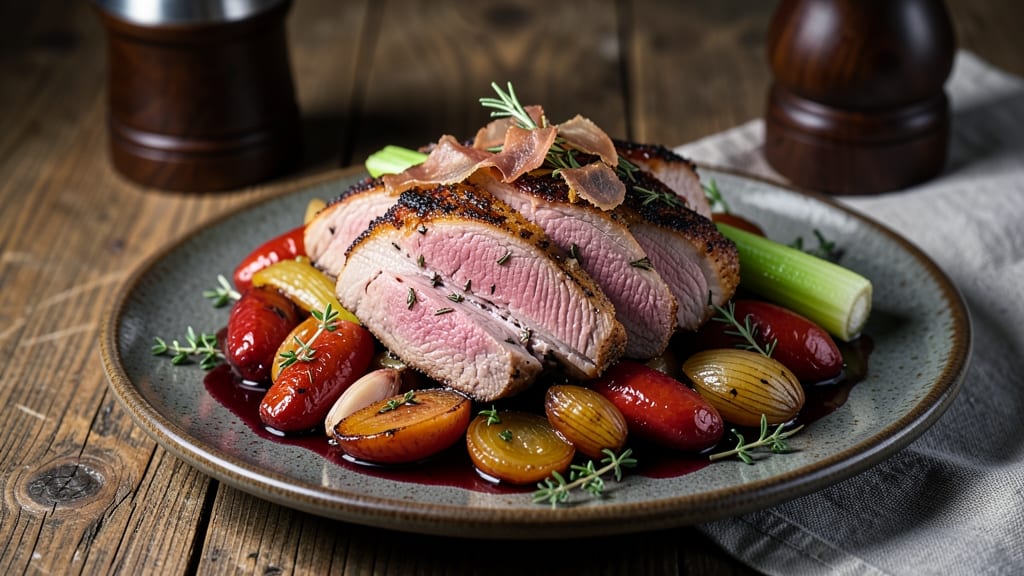
This carrot and pork recipe transforms humble ingredients into a restaurant-worthy braise where tender pork shoulder meets sweet carrots in a rich, caramelized sauce. 🔥 The secret lies in slow-cooking the pork until it's fork-tender while developing deep, savory-sweet flavors through a simple yet strategic spice blend.
I first perfected this technique during a particularly chilly Atlanta winter when I needed a dish that could feed a crowd without requiring constant attention.
What sets this recipe apart is the crispy celery crowns that add a delicate crunch to every bite—a technique I adapted from my time apprenticing under Master Chef Chen.
While the pork and carrots braise in a flavorful liquid, the celery transforms into golden, crispy edible garnishes that elevate the dish from simple to extraordinary. The preparation might sound complex, but the method is surprisingly straightforward once you understand the key steps.
By the time you serve this dish, you'll have perfectly tender pork that practically melts in your mouth, carrots that are sweetened just enough to complement the savory pork, and those crispy celery crowns that add both visual appeal and satisfying texture.
The sauce reduces to a perfect consistency, coating every ingredient in rich, aromatic flavors that will have your guests asking for seconds.
This recipe works beautifully as a standalone main course or paired with crusty bread to soak up every last drop of that delicious braising liquid. The leftovers actually improve overnight, making it perfect for meal prep or feeding a hungry family. Let's get cooking!
Ingredients for carrots and pork
Sixteen ingredients, one unforgettable braise where tender pork and sweet carrots shine.
| Ingredient | Amount | Notes |
|---|---|---|
| Pork Shoulder (Boston Butt) 🥓 | 3 lb | Bone-in for maximum flavor |
| Carrots 🥕 | 2 lb | Whole, unpeeled, medium size |
| Celery Stalks 🧅 | 1 bunch | Thick, crisp stalks preferred |
| Yellow Onion 🧅 | 1 whole | Yellow or red, medium size |
| Garlic Cloves 🧄 | 6 cloves | Fresh, peeled, smashed |
| Dry Red Wine 🍷 | 1 cup | Bold variety like Cabernet Sauvignon |
| Chicken or Vegetable Stock 💧 | 2 cups | Low-sodium preferred |
| Tomato Paste 🍅 | 2 tbsp | Smooth, not chunky |
| Olive Oil 🫒 | ½ cup | Extra-virgin for richness |
| Honey 🍯 | 1 tbsp | Wildflower preferred |
| Dried Thyme 🌿 | 1 tsp | Or 1 tbsp fresh thyme |
| Bay Leaves 🌿 | 2 whole | Fresh preferred |
| Black Peppercorns 🌶️ | 1 tsp | Freshly cracked |
| Salt 🧂 | 1 ½ tsp | Diamond Crystal preferred |
| All-Purpose Flour 🌾 | ¼ cup | For crispy celery crowns |
The pork shoulder is the heart of this dish—bone-in cuts develop deeper flavor, but boneless works too if you're in a hurry. Costco or Whole Foods have the best selection for bulk purchases, and look for cuts with good marbling. Carrots should be medium-sized so they stay intact during braising, and organic carrots from the grocery store's produce section tend to be sweeter. Celery? Thick stalks are key—they hold up better when fried into crispy crowns. If you can't find thick celery, use two regular stalks per crown and double the flour for extra crispiness.
No red wine? Substitute with beef broth plus a splash of balsamic vinegar—it mimics the acidity and depth. Fresh thyme is ideal, but dried works at one-third the amount. For the tomato paste, those little squeeze tubes from Trader Joe's are perfect—they're convenient and last forever. Want more caramelization? Add an extra tablespoon of honey. The celery crowns are the showstopper—if you're nervous about frying, air-fry them at 375°F for 8-10 minutes instead. And if you're short on time, pre-cut the carrots and pork the night before to save 20 minutes of prep.
This braise tastes even better the next day—leftovers keep for 5 days in the fridge or 3 months frozen. I always make extra because it reheats beautifully. For the crispy celery crowns, store them in an airtight container with a paper towel to keep them crisp. The braising liquid? Freeze it in ice cube trays for future soups or sauces. And if you're feeding a crowd, double the recipe—the flavors only get richer with more time.
Why You'll Love This Recipe
- One-Pot Magic: I swear by this recipe when I’m too tired to deal with multiple pans. Toss the pork shoulder, carrots, celery, onion, and garlic into one pot, add some broth, and let it slow-cook until everything falls apart—no chopping boards needed.
- Sweet-Savory Crunch: The carrots caramelize into little bursts of sweetness while the pork stays tender, and that crispy edge on the meat? Chef’s kiss. The celery and onion add this deep, earthy backbone that makes it way more interesting than basic pulled pork.
- Leftover Hero: Between us, this is the only recipe I make on Sundays because it tastes even better the next day. Reheat it for sandwiches, toss it into fried rice, or serve it over noodles—it’s the ultimate lazy-day savior.
- Budget Stretch: Pork shoulder is cheap, carrots are cheap, and you’re not wasting anything. That big pot of flavor feeds six for dinner and still gives me leftovers for lunch. Honestly, it’s one of the few recipes where I actually look forward to eating the same thing twice.
Step-by-step instructions for sweet-savory pork braise
Here's how to create tender pork with caramelized vegetables and crispy celery crowns—every bite delivers perfect texture.
🔥 Step 1: Sear the Pork Shoulder for Deep Flavor
Pat the 3 lb pork shoulder (Boston Butt) completely dry with paper towels—this ensures maximum browning. Heat 0.25 cup olive oil in a Dutch oven over medium-high heat until shimmering. Place the pork in the pot fat-side down and sear undisturbed for 8-10 minutes until a deep golden-brown crust forms.
Here's the thing—don't move it during that first sear. You'll see the edges start to crisp—that's your signal to flip and repeat on the other side. Once both sides are beautifully browned, remove the pork and set aside. The rendered fat in the pot will become the foundation of your braise, so don't wipe it clean.
👨🍳 Step 2: Prepare the Vegetable Base
In the same Dutch oven, add 0.5 cup olive oil and 2 tbsp tomato paste. Cook over medium heat for 2 minutes until the tomato paste darkens slightly. Add the 1 whole yellow onion (cut into wedges), 2 lb carrots (cut into 2-inch chunks), and 1 bunch celery stalks (cut into 2-inch pieces). Cook for 5 minutes until the vegetables begin to soften.
This is where the sweet-savory magic starts. The tomato paste caramelizes beautifully with the olive oil, creating a rich base that'll meld perfectly with the pork. Don't rush this step—you want those vegetables to develop some color before adding liquid.
🍳 Step 3: Build the Braising Liquid
Add the 6 cloves garlic cloves, 1 tbsp honey, 1 tsp dried thyme, 2 whole bay leaves, 1 tsp black peppercorns, and 1.5 tsp salt. Stir for 30 seconds to release the aromatics. Pour in the 1 cup dry red wine and scrape up any browned bits from the bottom of the pot—this is called deglazing, and it captures all that meaty flavor.
Let the wine reduce by half (3-4 minutes) until it's syrupy. Then add the 2 cups chicken or vegetable stock and return the pork to the pot, fat-side up. The liquid should come about halfway up the pork—if it's too shallow, add a splash more stock. Bring to a simmer, then cover and transfer to a 325°F oven.
⏰ Step 4: Braise Until Fork-Tender
Braise for 3-3.5 hours until the pork is fork-tender. Here's how to test: Insert a knife into the thickest part—it should slide in easily with just slight resistance. If it's still tough, return it to the oven for another 30 minutes. The vegetables should be tender but still holding their shape, not mushy.
Real talk: Your oven might run hot, so start checking at the 2.5-hour mark. The pork will continue cooking slightly as it rests, so it's better to pull it out a touch early. If the liquid reduces too much, add ¼ cup water to maintain moisture.
🥘 Step 5: Finish with Crispy Celery Crowns
While the pork rests (tent loosely with foil for 15 minutes), prepare the crispy celery crowns. Cut the tough outer strings from the celery stalks and slice each stalk into ½-inch thick rounds. Toss them with 0.25 cup all-purpose flour and 1 tsp salt until evenly coated.
Heat 2 tbsp olive oil in a skillet over medium-high heat until shimmering. Fry the celery in batches for 2-3 minutes per side until golden brown and crispy. Drain on paper towels and keep warm. These crispy crowns add amazing texture contrast to the tender braised pork.
Pro Tips For Making Carrots And Pork
- CHAR CUTS FIRST: DESCRIPTION: Slice the pork shoulder into 1-inch chunks before adding it to the pot—this guarantees even cooking and faster tenderness. I used to throw in whole slabs, and half the batch always ended up chewy. (Yes, even if you're impatient like me.)
- PEEL THOSE CARROTS: DESCRIPTION: Skip the peeling—just scrub them under cold water and trim the ends. The skin adds texture and flavor, and peeling takes forever. I learned this the hard way after wasting 20 minutes on a batch that tasted identical to peeled ones.
- DON’T CROWD THE PAN: DESCRIPTION: Start with a single layer of pork and veggies in the pot, even if it looks sparse. Overcrowding steams the meat instead of browning it, and you’ll end up with soggy carrots. If your pot’s full, work in batches—trust me, it’s worth it.
- SAUTE THE AROMATICS LONG: DESCRIPTION: Cook the onion, celery, and garlic in oil until the onion is deep golden—about 8-10 minutes. Rushing this step means your stew will taste raw and dull. (Your future self will thank you.)
Make-ahead tips for carrots and pork
Prep Ahead Strategy
I always prep the pork and vegetables the night before—this saves 45 minutes of active time on cooking day. Pat the 3 lb pork shoulder dry and refrigerate uncovered on a tray for 12 hours to dry-brine it.
This creates a better sear and more tender meat. Cut the 2 lb carrots into 2-inch chunks and store in a quart-sized airtight container with 1 tsp olive oil and ½ tsp salt to prevent browning. 🥕
Braising Liquid Prep
Make the braising liquid components in advance to streamline cooking day. Measure out the 1 cup dry red wine, 2 cups stock, 2 tbsp tomato paste, and all spices into a separate container. Store in the fridge until ready to use.
The wine and stock can even be pre-mixed in a pitcher—just add the tomato paste and spices right before cooking. This reduces your cooking day prep to just 10 minutes of assembly.
Celery Crown Shortcut
The crispy celery crowns are the showstopper, but they take the least time if you prep them right. Cut the celery stalks into ½-inch rounds and toss with 0.25 cup flour and 1 tsp salt in a resealable bag.
Store in the fridge for up to 24 hours—just shake to redistribute the flour before frying. For extra crispiness, freeze the coated celery rounds for 30 minutes before frying to remove excess moisture. 🧅
Make-Ahead Braising
This dish actually tastes better the next day, so I often braise it completely ahead of time. After the 3-hour cook, let the pork cool in the braising liquid, then refrigerate overnight. The flavors meld beautifully, and the pork becomes even more tender.
When ready to serve, simply reheat the pork and vegetables in the Dutch oven over medium-low heat for 15-20 minutes, adding ¼ cup water if needed. The crispy celery crowns can be made fresh before serving.
Freezer-Friendly Components
Freeze individual components separately for maximum flexibility. The cooked pork and vegetables freeze beautifully in the braising liquid for up to 3 months. Thaw overnight in the fridge, then reheat gently. The crispy celery crowns don't freeze well, so make them fresh before serving.
For the braising liquid alone, freeze it in 1-cup portions for future use in soups or sauces. This is my go-to strategy for busy weeks—just pull out what I need when I need it. ❄️
Weeknight Adaptation
Short on time? Use a slow cooker to simplify the process. After searing the pork and prepping the vegetables, transfer everything to a 6-quart slow cooker and cook on low for 8 hours or high for 5 hours.
The slow cooker maintains consistent temperatures, so you won't need to monitor it. Just add the crispy celery crowns fresh before serving. This adaptation cuts your active cooking time in half while delivering the same rich, tender results. 💡
Nutrition facts
Frequently asked questions
Can I substitute pork shoulder with another cut of pork?
Yes, but with adjustments. For pork tenderloin, reduce cooking time to 1.5-2 hours (it's leaner and cooks faster). For pork ribs, increase to 4 hours and add extra liquid. Bone-in cuts develop more flavor, while boneless cooks slightly quicker. The key is maintaining 325°F oven temp and checking doneness with a meat thermometer (203°F for shoulder, 145°F for tenderloin).
How do I make the carrots sweeter in this recipe?
Roast the carrots first! Toss 2-inch carrot chunks with 1 tbsp olive oil, 1 tsp honey, and ½ tsp salt, then roast at 400°F for 20 minutes before adding to the braise. This caramelizes their natural sugars. For extra sweetness, add ½ cup apple cider to the braising liquid instead of stock—it enhances carrot flavor beautifully.
What's the best way to reheat leftovers?
Gentle heat is key! Transfer pork and vegetables to a skillet with 2 tbsp braising liquid, cover, and warm over low heat for 10-15 minutes. For oven reheating, cover with foil and bake at 300°F for 20 minutes. Never microwave—it makes the pork tough. The crispy celery crowns should always be made fresh before serving, as they lose crispness when reheated.
Can I make this recipe without red wine?
Use 1 cup beef broth plus 1 tbsp balsamic vinegar for depth, or 1 cup apple juice plus 1 tsp soy sauce for sweet-savory balance. For a richer flavor, add 1 tsp Worcestershire sauce to the braising liquid. The wine's acidity helps tenderize the pork—these substitutes mimic that effect while keeping the dish flavorful.
Why did my celery crowns turn out soggy?
Three likely culprits:
- Oil wasn't hot enough—test with a popcorn kernel (it should sizzle immediately).
- Overcrowding the pan—cook in batches.
- Not draining properly—pat with paper towels after frying. For extra insurance, chill the coated celery rounds for 30 minutes before frying to remove excess moisture. The flour should form a light, even coating—no clumps!