
Main Courses
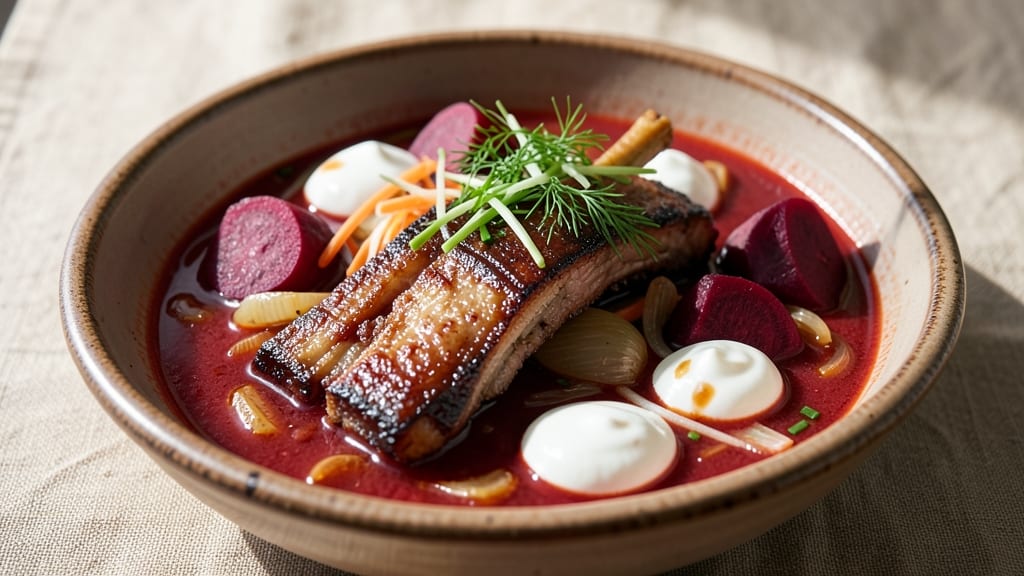
This borscht recipe with pork ribs brings together two traditions I've perfected over years of cooking: the deep, earthy sweetness of beets and the smoky richness of slow-cooked pork.
The ribs add a hearty, meaty depth that transforms this classic Eastern European soup into something truly special—especially when you braise them low and slow. My version keeps the soul of traditional borscht while adding that Southern comfort food touch I know you'll love.
The secret lies in the layers: first, the ribs simmer until they're fall-off-the-bone tender, their collagen melting into the broth. Then, the beets—roasted until caramelized—infuse the soup with natural sweetness without overpowering the smoky pork.
I use a combination of beef and vegetable broth to balance the flavors, creating a rich base that's both comforting and complex. This isn't just soup; it's a full meal in one pot.
By the time you're ready to serve, you'll have a steaming bowl of borscht with tender pork ribs that practically melt in your mouth, vibrant beets, and a broth so flavorful it tastes like it's been simmering all day.
The ribs become the star, their smoky aroma filling your kitchen long before the first spoonful. This is the kind of dish that turns weeknight dinners into something memorable.
Pair it with a crusty dark bread to soak up every last drop of that beet-infused broth, and a dollop of sour cream to cool the richness. The contrast of textures and temperatures makes every bite perfect. Let's get cooking—this is borscht you'll want to make again and again.
Ingredients for borscht recipe with pork ribs
Six hearty ingredients transform this classic Eastern European soup into a smoky, meaty masterpiece.
| Ingredient | Amount | Notes |
|---|---|---|
| Pork Ribs 🍖 | 3 lb | Baby back or spare ribs, meaty |
| Beets 🧅 | 2 lb | Medium, whole, organic preferred |
| Onions 🧅 | 3 whole | Yellow, medium, chopped |
| Garlic Cloves 🧄 | 6 cloves | Fresh, peeled, minced |
| Carrots 🥕 | 4 whole | Medium, peeled, chopped |
| Celery Stalks 🥬 | 4 whole | Fresh, chopped |
| Beef Broth 💧 | 4 cups | Low-sodium, homemade or quality store-bought |
| Vegetable Broth 💧 | 2 cups | Low-sodium, for balance |
| Tomato Paste 🍅 | ½ cup | Smooth, no sugar added |
| Apple Cider Vinegar 🍎 | 2 tbsp | For depth and tang |
| Bay Leaves 🌿 | 2 whole | Fresh, for aromatic flavor |
| Black Peppercorns 🌶️ | 1 tsp | Freshly cracked, for heat |
| Salt 🧂 | 1 ½ tsp | Kosher or sea salt |
| Sour Cream 🥛 | ½ cup | Full-fat, for serving |
| Olive Oil 🫒 | ¼ cup | Extra-virgin, for roasting |
The ribs are the star here, so pick meaty, well-marbled cuts—Costco or local butcher shops often have the best selection. For the beets, organic is ideal since they’re roasted whole, but regular beets work too. I always grab extra because they’re so versatile—roast half for the soup, slice the rest for salads. The onions, carrots, and celery form the aromatic base, so fresh is non-negotiable. If you’re short on time, pre-chopped veggie mixes from the grocery store save steps without sacrificing flavor. The broths? Homemade is best, but Swanson’s or Pacific Foods low-sodium options are solid shortcuts.
No beef broth? Chicken broth with an extra splash of soy sauce works in a pinch. Running low on apple cider vinegar? White vinegar or lemon juice adds the same tang, though the flavor won’t be identical. The tomato paste can be swapped for 1 cup crushed tomatoes, but it’ll dilute the broth slightly. For the ribs, if you can’t find baby back, spare ribs are just as delicious—they’re meatier and more forgiving. The bay leaves? Remove them before serving—they’re for flavor, not eating. And if you’re avoiding sour cream, a dollop of Greek yogurt gives a similar creamy contrast.
This soup tastes even better the next day, so make a double batch if you can. Store it in the fridge for up to 5 days—the flavors meld beautifully. For freezing, portion it into airtight containers and thaw overnight in the fridge. The ribs? Save them for sandwiches or a quick stir-fry. The roasted beets keep for 1 week in the fridge if stored properly, so use them up before they get rubbery. And that sour cream? Keep it cold until serving to maintain its tangy freshness.
Why You'll Love This Recipe
- One-Pot Magic: I swear by this—just ribs, beets, and a handful of veggies in one pot. No chopping chaos, no extra bowls, and that deep, smoky pork flavor steeping right into the broth while you stir. (Yes, even on a Tuesday night.)
- Rich & Unexpected: The ribs add this meaty, almost tender pull that turns borscht into something heartier than your usual soup. That caramelized onion base? It’s the secret—sweet, savory, and impossible to resist.
- Leftovers That Shine: This soup tastes better the next day. I make a big batch on Sundays, and by Wednesday, the flavors have melded into something even more comforting. Freeze half if you’re feeling extra—just reheat and serve.
- Budget-Friendly Feast: Pork ribs stretch across meals, and beets last forever. You’re getting a full, satisfying dish for way less than takeout. Plus, the leftovers? Perfect for lunchboxes or quick dinners when you’re tired of salads.
Step-by-step instructions for borscht with pork ribs
This hearty soup brings together smoky pork ribs and vibrant beets for a rich, one-pot masterpiece.
Sear and Roast the Pork Ribs
Preheat your oven to 325°F. In a large Dutch oven, heat the 0.25 cup olive oil over medium-high heat until shimmering. Add the 3 lb pork ribs in a single layer, searing them for 4-5 minutes per side until deeply browned and crispy in spots. This step builds incredible flavor through the Maillard reaction.
Transfer the seared ribs to a plate and place them in the preheated oven. Roast for 1 hour until the meat is tender when pierced with a fork. While they roast, you'll prepare the vegetables that will form the soup's vibrant base. The ribs should develop a rich, caramelized crust from the oven's dry heat.
Build the Vegetable Base
In the same Dutch oven, add 2 tablespoons apple cider vinegar and scrape up all the browned bits from the bottom. This deglazing captures all that meaty flavor. Add 3 whole chopped onions, 4 whole chopped carrots, and 4 whole chopped celery stalks, cooking for 8-10 minutes until softened and slightly caramelized.
Stir in the 6 cloves minced garlic cloves and cook for 30 seconds until fragrant. Add the 2 lb beets, peeled and cut into ½-inch cubes, and cook for another 5 minutes. The beets will begin to soften and release their signature deep red color into the pan. This step establishes the soup's signature earthy sweetness and vibrant hue.
Simmer the Broth and Infuse Flavors
Pour in the 4 cups beef broth and 2 cups vegetable broth, stirring to combine. Add the 0.5 cup tomato paste, 2 whole bay leaves, 1 teaspoon cracked black peppercorns, and 1.5 teaspoons salt. Bring to a gentle boil, then reduce heat to medium-low and let it simmer for 20 minutes.
After the initial simmer, add the roasted pork ribs back to the pot. The meat should be fully submerged in the broth. Let everything simmer together for another 30-40 minutes until the pork ribs are fork-tender and the vegetables are completely soft. This long simmer allows all the flavors to meld beautifully while keeping the meat moist and tender.
Finish and Serve with Sour Cream
Once everything is tender, carefully remove the pork ribs from the broth and let them rest on a cutting board for 5 minutes. Using two forks, shred the meat into bite-sized pieces, discarding any large bones. Return the shredded pork to the pot and stir gently to combine.
Taste the broth and adjust seasoning if needed. For serving, ladle the hot borscht into bowls and top each serving with a dollop of 0.5 cup sour cream. The cool, creamy sour cream provides a beautiful contrast to the warm, smoky broth. Serve immediately while hot, with crusty bread on the side to soak up every last drop of that flavorful broth.
Pro Tips For Making Borscht Recipe With Pork Ribs
- Sear the Ribs First: Don’t skip browning the pork ribs—hit them with a hot, dry pan for 4-5 minutes per side until they develop a deep crust. That caramelized layer holds flavor better than raw meat ever could, and it keeps the broth from turning muddy later. (Yes, even if you’re impatient like me.)
- Peel Beets After Cooking: Raw beets are stubborn, but cooked ones slide right off the skin. Simmer whole until fork-tender, then shock in ice water before peeling—no more scraping stubborn fibers or wasting time with a vegetable peeler. Pro move: Save the cooking water for broth.
- Don’t Rush the Beet Reduction: After boiling the beets, reduce that purplish water down to a thin syrup—about 10 minutes on medium heat. Skim off any foam that rises, and resist the urge to walk away. This concentrated flavor is what turns good borscht into great borscht.
- Add Garlic Late: Toss in the minced garlic with the sour cream or dill at the very end—right when the soup hits the table. Raw garlic burns easily, and if you add it too early, it’ll turn bitter and overpower the dish. (I learned this the hard way after one disastrous batch.)
Regional styles of this recipe
Ukrainian Grandmother Style
In my grandmother’s kitchen in Kyiv, borscht was never just a soup—it was a celebration. She’d roast the beets whole in the oven until caramelized, then peel them while still warm. The ribs? Always braised low and slow with a splash of carrot juice (yes, really!) to deepen the color.
I still use that trick today—it’s the secret to that signature deep red hue. The key is patience: let the broth simmer for at least 3 hours to develop layers of flavor.
My grandmother swore by a pinch of dill seeds instead of fresh dill, saying they held up better during cooking. 🌱
Polish Smoky Version
Poland takes borscht in a smokier direction, often adding smoked sausage alongside pork ribs. I’ve adapted this by wrapping the ribs in smoked paprika and ground juniper berries before roasting—just ½ teaspoon each—for an earthy, woodsy note.
The broth gets a splash of dark beer (like Żywiec) instead of vinegar, adding maltiness. Serve with rye bread slathered in garlic butter for the full Polish experience. The ribs here are more about texture than tenderness, so I sear them extra crispy before braising.
Russian Hearty Adaptation
Russian borscht is all about heartiness, and that’s where pork ribs truly shine. The traditional approach calls for potatoes (about 2 cups diced) added during the final 15 minutes of simmering to keep them from turning mushy.
I also add 1 cup sauerkraut, drained and chopped, for tangy contrast. The ribs are often served on the side as a separate course, not shredded into the soup. For extra richness, stir in 1 tablespoon honey at the end—it balances the acidity beautifully.
This version is a full meal in itself, perfect for cold winters.
Jewish Delicatessen Twist
New York’s Jewish delis put their own spin on borscht by adding egg noodles (about 1 cup uncooked) and a generous handful of matzoh meal (about ¼ cup) to thicken the broth. The ribs here are often cured and smoked beforehand, giving the soup a deeper, meatier flavor.
I like to add 1 teaspoon mustard seeds during the final simmer for a subtle kick. Serve with challah bread and a side of pickled herring for the full deli experience. The contrast of textures—creamy noodles, tender ribs, and crispy bread—makes every spoonful unforgettable. 🥖
Modern Fusion Approach
For a contemporary take, I’ve experimented with miso paste (about 1 teaspoon white miso) in the broth for umami depth, paired with kimchi (about ½ cup chopped) for fermented tang. The ribs get a dry rub of gochugaru (Korean chili flakes) and sesame oil before roasting.
This fusion version is served over steamed jasmine rice instead of bread, with a drizzle of sriracha** and extra sour cream. It’s bold, complex, and a crowd-pleaser for anyone craving something beyond the traditional. The best part? The flavors evolve even better the next day.
Nutrition facts
Frequently asked questions
Can I substitute the pork ribs for another type of meat?
For a similar texture, try beef short ribs or smoked turkey legs. Chicken thighs work too, but they won't have the same rich, smoky depth. If you're vegetarian, mushrooms (like portobello) or hearty lentils can mimic the meaty texture—just increase the simmering time to 45 minutes for lentils to soften properly.
How do I make this borscht less acidic?
The apple cider vinegar adds depth, but if you prefer a milder taste, reduce it to 1 tablespoon or swap for lemon juice. For extra sweetness, add 1 tablespoon honey or maple syrup during the final 10 minutes of simmering. The roasted beets naturally balance acidity, so don't skip them!
Can I make this ahead of time?
This borscht tastes even better the next day! Store it in an airtight container in the fridge for up to 5 days. The flavors meld beautifully, and the ribs stay tender. Reheat gently on the stove over low heat—never microwave, as it can make the broth watery. Add a splash of water or broth if needed to restore consistency.
What’s the best way to reheat leftovers?
Reheat on the stovetop over medium-low heat, stirring occasionally, until piping hot (165°F). For extra richness, add 1-2 tablespoons of broth or water to thin it out. If the ribs seem dry, cover the pot and let them steam for 5 minutes off the heat. Microwaving can make the broth watery and the ribs tough.
How can I make the broth clearer?
For a clearer broth, strain the soup through a fine-mesh sieve after simmering but before adding the ribs back in. If you prefer some texture, use a cheesecloth-lined strainer instead. Skim excess fat from the surface during simmering, and avoid stirring vigorously—gentle simmering helps keep solids suspended naturally.