
Main Courses
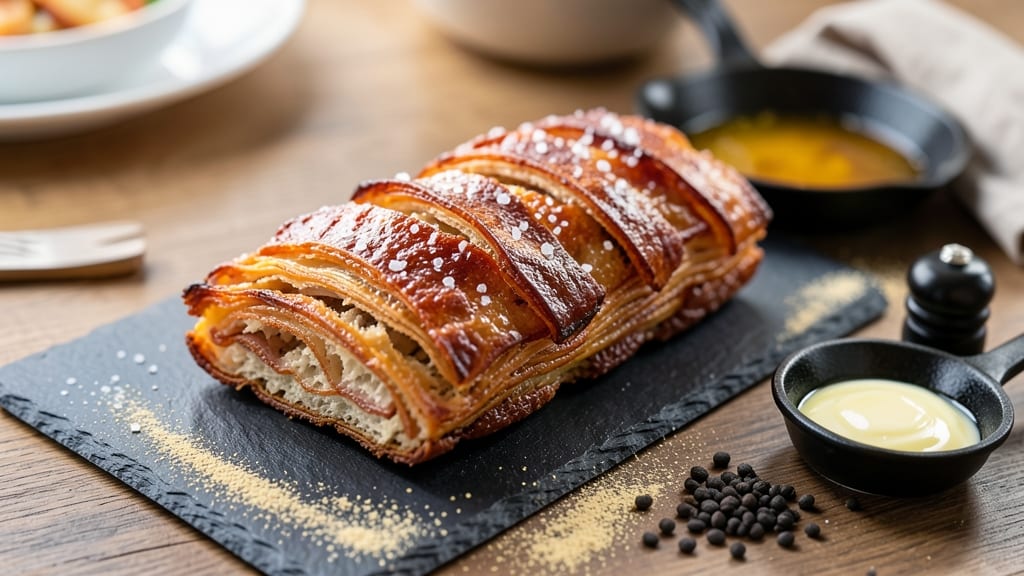
This carnivore bread recipe transforms pork rinds into a zero-carb, eggy-rich loaf that satisfies cravings without the carbs. After years of experimenting with keto-friendly baking, I finally cracked the code for a crispy exterior and tender interior—no flour in sight.
The secret lies in the perfect ratio of pork rinds to egg binder, creating a texture that mimics traditional bread while keeping it strictly carnivore-compliant.
The beauty of this recipe is its simplicity: just three core ingredients (pork rinds, eggs, and a touch of fat for binding) come together to form a loaf that's both sturdy and delicate.
Baking at 375°F ensures a golden crust while keeping the inside moist and eggy—think of it as a cross between a cracker and a soft roll, but with zero carbs. It's the kind of recipe that proves carnivore diets don't mean giving up texture or satisfaction.
What you'll end up with is a crunchy, zero-carb loaf that holds its shape when sliced and pairs perfectly with butter, charcuterie, or even as a wrap for your favorite carnivore-friendly fillings.
The eggy richness makes it deeply satisfying, while the pork rind base delivers that familiar bread-like crunch. This isn't just another keto hack—it's a game-changer for anyone following a strict carnivore lifestyle.
Perfect for meal prep or serving alongside hearty proteins, this bread keeps well for days and reheats beautifully. Whether you're hosting a carnivore-friendly gathering or just craving something bread-like without the carbs, this recipe delivers. Let's get baking!
Ingredients for carnivore bread recipe pork rinds
Three core ingredients transform pork rinds into a zero-carb loaf with restaurant-quality texture.
| Ingredient | Amount | Notes |
|---|---|---|
| Pork Rinds 🥓 | 1 ½ cups | Finely crushed into crumbs |
| Large Eggs 🥚 | 4 whole | Room temperature preferred |
| Unsalted Butter 🧈 | ¼ cup | Melted, full-fat for binding |
| Ground Black Pepper 🌶️ | ½ tsp | Freshly cracked for depth |
| Sea Salt 🧂 | ¼ tsp | Diamond Crystal preferred |
| Garlic Powder 🧄 | ¼ tsp | For subtle savory note |
| Olive Oil 🫒 | 1 tbsp | For greasing loaf pan |
| Aluminum Foil 📄 | 1 sheet | For covering during bake |
The pork rinds are the foundation—look for high-quality, thick-cut varieties at stores like Costco or Trader Joe's. These should be free from additives or seasoning packets, as those can alter the texture. If you can't find thick-cut, pulse regular pork rinds in a food processor until you get fine, breadcrumb-like consistency. The eggs must be fresh and room temperature for proper binding; older eggs won't create the same tender crumb. For the butter, full-fat is non-negotiable—it's what creates that satisfying richness and helps the loaf hold together.
No pork rinds? Crushed pork cracklings or bacon bits can work in a pinch, though texture will differ slightly. Short on eggs? Add an extra 1 tbsp of melted butter to compensate for binding. The garlic powder and black pepper are optional but recommended—they elevate the savory profile without overpowering. For a nut-free, dairy-free version, replace butter with avocado oil (though texture will be slightly less tender). If your loaf pan is non-stick, you can skip the olive oil entirely—just ensure it's well-greased with butter for that classic bread-like release.
This loaf reheats beautifully—wrap slices in foil and warm in a 350°F oven for 3-5 minutes for maximum crispiness. Store in an airtight container at room temperature for up to 5 days, though it's best enjoyed within 2 days for optimal texture. For longer storage, freeze individual slices wrapped in parchment paper for up to 3 months. The bread's structure makes it perfect for meal prep—slice and portion before baking, then reheat as needed. Leftovers can also be crumbled and used as a zero-carb breading for proteins.
Why You'll Love This Recipe
- I’ll be real: this is my go-to when I’m too tired to bake or don’t have time for store-bought. A dollar’s worth of pork rinds and eggs turns into enough bread to feed my family for days—no fancy ingredients, no wasted dough. It’s the kind of recipe that makes me feel like I’m winning at life.
- Five-Ingredient Magic: I swear, this is the kind of recipe where you look at the list and think, "That’s it? Really?"—and then you bake it. The pork rinds crumble into a sturdy base while the eggs and butter bind it into something that actually holds together, no fancy mixers or waiting for dough to rise.
- Crispy-Creamy Crunch: Between us, this isn’t your sad, dry bread. The pork rinds give it that addictive shatter when you tear it, while the melted butter and eggs inside stay rich and buttery—like a cross between a cracker and a biscuit. Honestly, I’ve seen people devour entire loaves without a second thought.
- Zero-Waste Leftovers: This bread stays fresh for days (yes, even in my chaotic kitchen), and the best part? It’s perfect for soaking up soups, pairing with charcuterie, or just eating straight from the bag. I’ve sent slices to work in my lunchbox, and they’ve never come back uneaten.
Step-by-step instructions for zero-carb pork rind loaf
This method transforms simple ingredients into a satisfying, keto-friendly loaf with perfect texture and flavor.
Crush Pork Rinds and Prepare the Binding Mixture
Place the 1.5 cups pork rinds in a heavy-duty plastic bag and seal tightly. Use a rolling pin or small skillet to crush them into fine crumbs—aim for a consistency similar to coarse breadcrumbs. The finer you crush them, the more bread-like the texture will be. I find pulsing in a food processor for 10-15 seconds works best for even consistency.
In a separate bowl, melt the 0.25 cup unsalted butter in a microwave-safe container using 30-second intervals until fully liquid. Let it cool slightly before mixing. This butter will act as the fat binder that holds everything together while adding richness. The reason we use full-fat butter here is that it provides the necessary fat content for proper binding without adding moisture that would make the loaf soggy.
Whisk Eggs and Season the Mixture
In a large mixing bowl, crack the 4 whole large eggs and whisk them vigorously for about 2 minutes until the yolks and whites are fully combined and the mixture lightens in color. This step is crucial for creating air pockets that will give your loaf a lighter texture. Room temperature eggs incorporate better, so if they're straight from the fridge, let them sit at room temperature for 15-20 minutes before whisking.
Add the melted butter to the egg mixture and whisk again for 30 seconds until fully incorporated. Then add the 0.5 teaspoon ground black pepper, 0.25 teaspoon sea salt, and 0.25 teaspoon garlic powder. Mix well to distribute the seasoning evenly throughout the wet ingredients. This is where the flavor foundation gets established, so don't rush this step—you want every bite to have that savory depth.
Combine Wet and Dry Ingredients
Gradually fold the crushed pork rinds into the wet mixture using a spatula, being careful not to overmix. You're looking for a consistency similar to wet sand—just moist enough to hold together when pressed but not sticky. If the mixture feels too dry, add 1-2 teaspoons of water at a time until it comes together. The texture should be firm enough to hold its shape when you press it between your fingers but still pliable.
This is the critical stage where the loaf's structure forms. If you overmix now, you'll develop gluten and end up with a dense, cake-like texture rather than the light, airy crumb we're aiming for. The pork rinds should be fully coated in the egg-butter mixture, with no dry spots remaining.
Assemble and Bake the Loaf
Preheat your oven to 350°F. Lightly grease an 8x4-inch loaf pan with the 1 tablespoon olive oil, then line it with the sheet of aluminum foil, shiny side up. This prevents sticking and makes removal easier later. Transfer the pork rind mixture to the prepared pan and press it firmly into the corners and edges to create an even loaf shape. The pan should be filled to about ¾ full for proper baking.
Cover the pan tightly with the remaining aluminum foil and bake for 30 minutes. After this initial baking period, remove the foil and continue baking for another 15-20 minutes, or until the top is golden brown and the internal temperature reaches 160°F. The loaf should feel firm to the touch and pull away slightly from the sides of the pan. If it's browning too quickly, tent it loosely with another piece of foil to prevent over-browning.
Rest and Slice for Perfect Texture
Remove the loaf from the oven and let it cool in the pan for 10 minutes. Then carefully transfer it to a wire rack to cool completely for at least 30 minutes before slicing. This resting period allows the internal structure to set properly, preventing crumbly slices. The loaf will firm up as it cools, developing that satisfying bread-like texture we're after.
Slice the loaf into ¼-inch thick pieces using a sharp serrated knife. Each slice should have a crisp exterior with a slightly chewy, eggy interior. For best results, serve the loaf at room temperature. It keeps well at room temperature for 2-3 days or can be refrigerated for up to 5 days. The texture remains excellent even after reheating in a toaster oven for 3-5 minutes.
Pro Tips For Making Carnivore Bread Recipe Pork Rinds
- PULVERIZE THE RINDS: I learned this the hard way—skipping the food processor and just tearing pork rinds by hand leaves uneven crumbs that won’t bind properly. Pulse them until you’ve got fine, sand-like bits, but not so fine they turn into dust. Think "wet sand at the beach," not flour.
- USE COLD BUTTER: Don’t melt that butter first—drop it into the egg mixture in small chunks while the processor runs. Cold butter creates pockets of fat that make the bread fluffier and more tender. (Yes, even if you’re impatient like me.)
- DON’T OVERMIX THE DOUGH: The second you see the mixture come together into a shaggy ball, stop. Overmixing develops gluten, and this isn’t sourdough—you want a tender, crumbly texture, not a chewy loaf. Two or three pulses after the dough forms is all it needs.
- PRESS HARD, BAKE LOW: Pack the dough into your pan with serious pressure—this isn’t the time to be gentle. Then bake at 325°F (not higher) for the first 20 minutes to let the eggs set without browning. After that, crank it to 375°F to get that golden crust. (Your future self will thank you.)
Flavor customization for these flavors
Spicy Kick
For a bold, smoky heat, add 1 teaspoon of smoked paprika and ½ teaspoon of cayenne pepper to the egg mixture. This transforms your loaf into a carnivore-friendly cornbread alternative with a deep, charred flavor reminiscent of my Nonna's Italian sausage.
If you love heat, try 1 tablespoon of chipotle powder for a slow-building smokiness that pairs perfectly with butter or spicy meats. 🌶️
Herb-Infused Variety
Swap the garlic powder for 1 teaspoon dried rosemary and ½ teaspoon dried thyme for a Mediterranean twist. The herbs add an earthy depth that works beautifully with olive oil drizzled on top post-bake.
For a fresh herb version, finely chop 2 tablespoons of fresh parsley and mix it into the wet ingredients—it brightens the flavor profile without adding carbs.
Cheesy Carnivore Twist
For a rich, cheesy loaf, fold in ½ cup of shredded sharp cheddar or Parmesan cheese into the dry pork rind mixture. The cheese melts during baking, creating pockets of gooey goodness that make every bite irresistible.
I like to use Parmigiano-Reggiano for its nutty depth, but Gruyère adds a creamy texture that's hard to resist. Just be mindful of cheese brands—stick to full-fat varieties for best results.
Everything Bagel Seasoning
Create a savory, crunchy topping by mixing 1 teaspoon of sesame seeds, ½ teaspoon of poppy seeds, and ½ teaspoon of onion powder together. Sprinkle this blend evenly over the loaf before the final 15 minutes of baking.
The seeds toast beautifully, giving you a zero-carb version of everything bagel seasoning that's perfect for dipping in cream cheese or pairing with smoked salmon. 🥯
Sweet & Savory Glaze
For a dessert-like twist, brush the baked loaf with a mixture of 1 tablespoon melted butter and 1 teaspoon of powdered erythritol or monk fruit sweetener after removing it from the oven. Let it cool slightly, then drizzle with ½ teaspoon of vanilla extract for a sweet, buttery finish.
This creates a carnivore-friendly "cinnamon roll" that's perfect for breakfast or a sweet treat without the sugar crash.
Crispy Pork Rind Crust
For an extra-crispy exterior, press a layer of crushed pork rinds directly onto the top of the loaf before baking. After the initial 30 minutes covered, uncover and bake for an additional 10-15 minutes until the crust is deep golden and shatteringly crisp.
This technique mimics the crust of a classic breadstick and adds a satisfying crunch to every bite. It's especially great for serving with soups or dipping in warm olive oil.
Nutrition facts
Frequently asked questions
Why does this carnivore bread need eggs?
Eggs act as the binding agent that holds the pork rinds together while adding richness and moisture to the texture. Without them, the crumbly pork rinds would just fall apart. The eggs also create air pockets during whisking, giving the bread that satisfying lightness. For a dairy-free version, you could try using avocado oil as a partial substitute, though texture will differ slightly.
Can I make this bread without butter?
Yes, but the texture will be less tender. Replace the butter with an equal amount of melted bacon fat or lard for a carnivore-friendly alternative. The fat content is crucial for binding, so avoid water-based substitutes. If you're strictly avoiding all fats, add an extra 1-2 tablespoons of egg whites to help with cohesion.
How do I fix a crumbly loaf?
Crumbly texture usually means the mixture was too dry or overmixed. Next time, add 1-2 teaspoons of water at a time to the dry ingredients until it holds together when pressed. Also ensure you're not overmixing after adding the pork rinds—just fold until combined. For a quick fix, try pressing the baked loaf under a heavy pan for 10 minutes to compress the crumbs.
Is this bread safe for strict carnivore diets?
This recipe contains only animal-based ingredients: pork rinds, eggs, and butter. There are no plant-based additives or hidden carbs. Just double-check your pork rinds for any non-carnivore-friendly additives like MSG or artificial seasonings. The recipe naturally fits within strict carnivore guidelines while providing that bread-like satisfaction.
Can I make individual portions instead of a loaf?
Yes! Shape the mixture into 1-inch thick rounds and bake them directly on a parchment-lined baking sheet at 375°F for 15-18 minutes. These will have a crispier texture than the loaf but work perfectly as crackers. For even smaller portions, use a cookie scoop to create mini "bread bites" that bake in 10-12 minutes. Great for snacking or appetizers!