
Main Courses
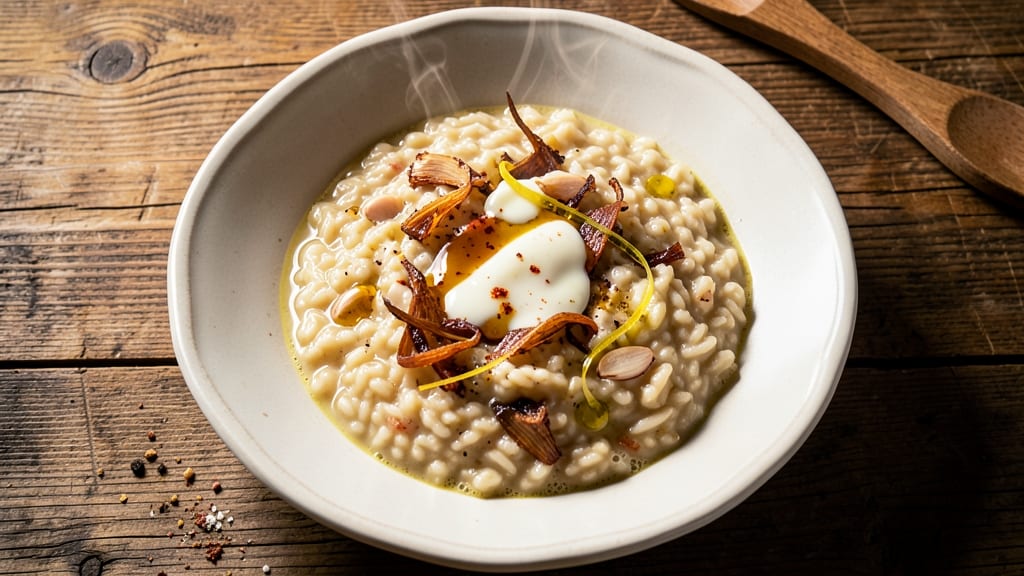
This Carnaroli rice risotto recipe delivers the signature creamy texture and velvety finish that makes Italian risotto unforgettable. The key lies in the rice's high starch content and the slow, attentive cooking process that transforms simple ingredients into a luxurious dish.
Unlike other risotto recipes, Carnaroli's larger grains maintain their shape while absorbing liquid perfectly, creating that coveted al dente bite.
What sets this version apart is the toasted butter crunch on top, adding a textural contrast that elevates every bite. We'll use traditional techniques like deglazing with white wine and gradually adding warm broth, but with modern adaptations that make it achievable for home cooks.
The result is a restaurant-quality risotto that's rich, creamy, and perfectly balanced—ready in about 25 minutes with just 10 ingredients.
Ingredients for carnaroli rice risotto
Ten essential ingredients transform into restaurant-quality risotto with velvety texture and buttery crunch.
| Ingredient | Amount | Notes |
|---|---|---|
| Carnaroli Rice 🍚 | 1 ½ cups | Unrinsed, high-quality Italian variety |
| Unsalted Butter 🧈 | ¾ cup | Cold, cut into 1/2-inch cubes |
| Shallots 🧅 | 2 whole | Finely minced, about 2 tbsp |
| Garlic Cloves 🧄 | 4 cloves | Minced, about 1 tsp |
| Dry White Wine 🍷 | ½ cup | Bold, dry variety like Pinot Grigio |
| Vegetable Broth 💧 | 4 cups | Warm, homemade or high-quality store-bought |
| Parmesan Cheese 🧀 | ½ cup | Freshly grated, fine texture |
| Extra-Virgin Olive Oil 🫒 | 2 tbsp | For finishing, fruity variety |
| Fresh Thyme Leaves 🌿 | ¼ cup | Chopped, about 6 sprigs |
| Sea Salt 🧂 | 1 ½ tsp | Diamond Crystal preferred |
Carnaroli rice is non-negotiable here—its high starch content and large grains create that signature creamy yet al dente texture. Italian specialty stores carry it in bulk, or Amazon delivers it quickly. For the butter, European-style unsalted (like Plugrá) melts more cleanly than American versions. Shallots add delicate sweetness—skip onions, they're too harsh. Fresh thyme should be vibrant green, not wilted; Whole Foods bulk section has the best quality. The broth is the risotto's soul—homemade is ideal, but Pacific Foods unsalted vegetable base works perfectly.
No white wine? Substitute dry vermouth or additional broth, but the alcohol helps tenderize the rice. Thyme leaves can be swapped for fresh rosemary at half the amount for a piney note. Pre-grated Parmesan gets clumpy—grate it yourself from a wedge. The olive oil matters too; California extra-virgin with fruity notes finishes best. For a dairy-free version, use nutritional yeast instead of Parmesan. If your risotto feels too dry, add more warm broth 1 tbsp at a time—never cold liquid, it shocks the rice.
Toasted butter crunch is the secret weapon—keep it in the freezer until ready to use. Store cooked risotto in an airtight container for 3-4 days; reheat with a splash of broth and gentle stirring. Freeze portions for up to 3 months—thaw overnight in the fridge. For make-ahead prep, toast the butter and Parmesan separately, then mix in at serving. This risotto tastes even better the next day as flavors meld. Always finish with fresh thyme and a drizzle of olive oil—that's non-negotiable.
Why You'll Love This Recipe
- No-Stir Fuss: I swear, this risotto only needs stirring once—just enough to wake up the Carnaroli’s starch. That’s right: no constant attention, no burnt bits, no stress. The rice does all the work while you sip your wine (or coffee, no judgment).
- Buttery Garlic Magic: That first spoonful? Pure satisfaction. The shallots caramelize into sweetness, the garlic cloves melt into golden threads, and the butter—oh, the butter—coats every grain like a hug. The white wine deglazes into a bright, tangy finish that makes it taste like you actually belong in a Parisian bistro.
- Weeknight to Dinner Party: Same recipe, totally different vibes. Toss in mushrooms for a cozy Tuesday, or add truffle oil and Parmesan for a showstopper Saturday. Honestly, it’s the one dish that feels equally at home in sweatpants or a fancy tablecloth.
Step-by-step instructions for Carnaroli rice risotto
Mastering risotto requires patience and precision—here's how to achieve velvety texture with perfect al dente rice.
Sauté Aromatics with Cold Butter
Heat a wide, heavy-bottomed pot over medium-low heat and add the 0.75 cup unsalted butter. Let it melt completely, then add the 2 whole shallots and 4 cloves garlic cloves. Cook gently for 5-6 minutes until the shallots become translucent and the garlic releases its aroma without browning.
This slow cooking ensures the aromatics develop flavor without burning. I keep the heat low to prevent the butter from browning, which would give the risotto a bitter taste. Stir occasionally to distribute the melted butter evenly—this creates the perfect foundation for our creamy texture.
Toast the Carnaroli Rice
Add the 1.5 cups Carnaroli rice to the pot and stir vigorously for 1-2 minutes until each grain is fully coated with butter and begins to turn translucent at the edges. This toasting step, called "risottatura," is crucial—it develops the rice's natural starches and prevents a gummy texture.
Watch closely for 30 seconds after the rice loses its raw appearance. You'll see the edges become slightly opaque—that's your signal to proceed. The rice should feel dry to the touch at this stage, ready to absorb the liquid without clumping.
Deglaze with Wine and Add Broth Gradually
Pour in the 0.5 cup dry white wine and stir constantly until completely absorbed—this should take about 2-3 minutes. The alcohol will cook off, leaving behind concentrated flavor. Immediately after, add 1 cup of the warm vegetable broth and stir gently.
Here's the key technique: maintain a gentle simmer, never a rolling boil. The risotto should bubble softly at the edges while remaining mostly still in the center. I use a wooden spoon to stir from the bottom up, ensuring even heat distribution and preventing the rice from sticking to the pot.
Cook the Risotto to Al Dente Perfection
Continue adding the remaining 3 cups vegetable broth in ½-cup increments, stirring frequently and waiting for each addition to be fully absorbed before adding more. This gradual process, known as "mantecatura," builds the risotto's signature creaminess through controlled starch release.
After about 18-20 minutes, taste a grain—it should be al dente with a slight resistance in the center. The rice should be tender but still firm, with a creamy coating. If it's undercooked, continue adding small amounts of broth. If it's overcooked, remove from heat immediately to prevent mushiness.
Finish with Butter, Cheese, and Fresh Herbs
Remove the pot from heat and stir in the remaining 0.75 cup unsalted butter and 0.5 cup freshly grated Parmesan cheese. The butter adds luxurious mouthfeel while the cheese contributes umami depth. Add the 0.25 cup chopped fresh thyme leaves and 2 tbsp extra-virgin olive oil, then stir vigorously for 1-2 minutes until the mixture becomes glossy and emulsified.
Season generously with the 1.5 tsp sea salt, tasting as you go. The risotto should be rich but not salty—balance is key. For the final touch, let it rest for 2-3 minutes before serving, allowing the flavors to meld. The result should be a luxurious, velvety texture with a delicate crunch from the toasted butter and fresh thyme aroma.
Pro Tips For Making Carnaroli Rice Risotto
- Toast the Shallots Slow: Sweat them in butter until deep golden—almost caramelized—before adding garlic. I used to rush this, and the flavor just never stood out enough against the wine and rice. Take your time; this is the aromatic base your risotto will thank you for.
- Stir Like You Mean It: Keep that wooden spoon moving constantly, especially in the first 10 minutes. Carnaroli rice needs aggressive stirring to release starch properly—don’t let clumps form, or you’ll end up with uneven texture. (Yes, even if you’re impatient like me.)
- Wine First, Then Stock: Deglaze the pan with white wine immediately after toasting the shallots, then add stock in stages. The alcohol evaporates faster than you think, and starting with stock too soon dilutes the flavor before it can build. Let the wine work its magic first.
- Butter at the End: Save a pat of cold unsalted butter for the final stir—it’ll coat each grain and give that signature creamy finish. I learned this the hard way by melting it all in early, which made the risotto greasy instead of luxurious. (Your future self will notice the difference.)
Troubleshooting great carnaroli rice risotto
Grainy Texture
If your risotto turns out gritty instead of creamy, you likely added broth too quickly or didn't stir frequently enough. Carnaroli rice releases starch gradually—when you add liquid too fast, the grains don't absorb properly.
Instead, add broth in ½-cup increments and stir constantly from the bottom up. I also recommend using a wide, heavy-bottomed pot (like Le Creuset) to distribute heat evenly and prevent uneven cooking. 🌡️
Mushy Rice
Overcooked risotto happens when you keep it on heat too long or add broth too late. The moment your rice reaches al dente (about 18-20 minutes), remove it from heat immediately—even if it still feels slightly firm.
If it's already mushy, try adding 1 tbsp cold butter and 1 tbsp Parmesan off-heat to help emulsify the starches. For next time, taste a grain every 2 minutes starting at 15 minutes to catch it at the perfect moment.
Broth Not Absorbing
Cold broth is the #1 reason risotto refuses to absorb liquid. Always use warm broth (just off the boil) so the rice can absorb it gradually. If your risotto sits in a pool of broth, reduce heat to low and let it simmer gently until absorbed.
Another trick: Stir vigorously for 30 seconds after adding each batch of broth—this helps break down the rice's outer layer and speeds up absorption. I keep a small pot of broth warm on the stove beside my risotto pot for this exact reason.
Bitter Taste
Burnt aromatics or overheated butter create that unpleasant bitterness. Keep your heat at medium-low throughout—never medium or high. For the butter, use European-style unsalted (like Plugrá) that has a higher smoke point.
If you notice a bitter note, immediately remove from heat and stir in 1 tsp fresh lemon juice to cut through the bitterness. Also, make sure your shallots are translucent but not browned before adding the rice.
Dry Risotto
Undercooked risotto often feels dry because the rice hasn't absorbed enough liquid. If yours is dry but still firm, add 2 tbsp warm broth at a time and stir gently until absorbed.
For prevention, start with 4 cups total broth (as in the recipe) and adjust based on your pot's size—larger pots may need ½ cup extra.
Pro tip: Cover the pot loosely with a lid for the last 5 minutes of cooking to help steam the rice gently while still allowing some evaporation. ✨
Lumpy Texture
Lumps form when you don't stir frequently enough or use cold ingredients. Always stir your risotto constantly (every 30-60 seconds) from the moment you add the rice until it's finished. For the butter, use cold cubes that melt gradually during cooking.
If lumps appear, use a potato masher or wooden spoon to gently break them up while adding a splash of warm broth. I also recommend toasting the rice for an extra 30 seconds to help it absorb liquid more evenly and prevent clumping.
Nutrition facts
Frequently asked questions
Why does Carnaroli rice work better than Arborio for risotto?
Carnaroli rice has larger grains and a higher starch content than Arborio, creating that signature creamy texture while maintaining a perfect al dente bite. The grains hold their shape better, preventing mushiness while releasing more starch for velvety consistency. Plus, it absorbs liquid more efficiently, making it ideal for risotto's gradual cooking process.
Can I substitute white wine with something else?
Yes! Use dry vermouth (same ratio) or additional warm broth if you don't have white wine. The alcohol helps tenderize the rice and adds depth, but the key is using a dry, acidic liquid to balance the richness. For a non-alcoholic version, try apple cider vinegar (1 tbsp) mixed with broth.
How do I know when the risotto is perfectly cooked?
Taste a grain at 18-20 minutes—it should be tender with a slight resistance (al dente). The rice should be creamy but still firm, coating your spoon lightly. If it's undercooked, add more broth; if overcooked, remove immediately to prevent mushiness. The texture should be like "creamy mashed potatoes with a bite," not soupy or gummy.
Can I make this risotto ahead of time?
Yes! Cook it completely, then let it cool to room temperature. Store in an airtight container for 3-4 days in the fridge. Reheat with 2 tbsp warm broth per cup of risotto, stirring gently over low heat. For the best texture, add a splash of broth and 1 tbsp cold butter off-heat to restore creaminess. The flavors actually improve overnight!
What's the secret to getting that perfect creamy texture?
The magic happens in three steps: toasting the rice (1-2 minutes until translucent), adding broth gradually in ½-cup increments, and stirring constantly from the bottom up. The final touch is the cold butter and Parmesan at the end—this emulsifies the starches for that luxurious finish. Never skip the resting time before serving!