
Main Courses
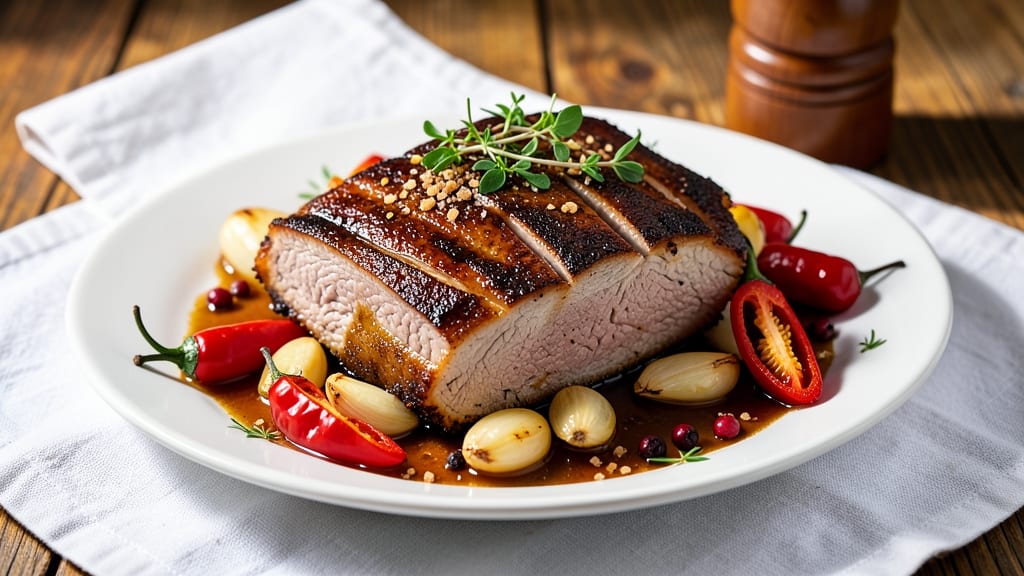
This Caribbean pork loin recipe brings bold island flavors to your table with a jerk-spiced crust and tangy pineapple glaze that transforms simple pork into a showstopper. 🌟 As someone who's spent years perfecting pork dishes at Atlanta's The Smoky Pig, I can tell you this technique delivers restaurant-quality results at home—crispy on the outside, tender on the inside, with layers of smoky, sweet, and spicy flavors that sing.
The magic starts with a homemade jerk marinade—a blend of allspice, Scotch bonnet peppers, thyme, and garlic—that creates that signature crust when seared. I like to let the pork marinate overnight, but even 4 hours makes a difference.
The pineapple glaze, simmered with rum and soy sauce, adds a bright, sticky contrast that balances the heat perfectly. What you'll end up with is golden, crackling pork that practically falls apart when sliced, glistening with caramelized pineapple glaze.
The jerk seasoning gives it that deep, smoky aroma that fills your kitchen, while the glaze adds a sweet-tangy finish that's impossible to resist. This is the kind of dish that makes dinner feel like a celebration.
Serve it with coconut rice and peas, grilled plantains, or a crisp coleslaw to round out the meal. Pair with a cold sorrel drink or rum punch for the full Caribbean experience. Let's get cooking!
Ingredients for caribbean pork loin
Bold Caribbean flavors start with this pork loin—jerk-spiced crust meets sticky pineapple glaze.
| Ingredient | Amount | Notes |
|---|---|---|
| Pork Loin 🍖 | 1 ½ lb | Center-cut, bone-in preferred |
| Scotch Bonnet Peppers 🌶️ | 2 whole | Seeds removed for less heat |
| Allspice Berries 🌿 | 1 tbsp | Ground or whole, toasted |
| Fresh Thyme Leaves 🌿 | ¼ cup | Stems removed, finely chopped |
| Garlic Cloves 🧄 | 6 cloves | Minced, not pressed |
| Brown Sugar 🍚 | ¼ cup | Light or dark, packed |
| Soy Sauce 🥢 | 2 tbsp | Light or dark, low-sodium preferred |
| Dark Rum 🍹 | ½ cup | 180-proof or higher |
| Fresh Pineapple 🍍 | 1 cup | Juice only, no pulp |
| Olive Oil 🫒 | 2 tbsp | Extra-virgin for searing |
| Lime Juice 🍋 | 2 tbsp | Freshly squeezed |
| Salt 🧂 | 1 ½ tsp | Diamond Crystal kosher |
| Ground Black Pepper 🌶️ | ½ tsp | Freshly cracked |
| Honey 🍯 | 1 tbsp | Wildflower preferred |
The Scotch bonnet peppers are non-negotiable for that signature jerk heat, but handle them with gloves—they'll burn your skin. Trader Joe's or Latin markets usually carry them fresh, but if you can't find them, habanero peppers work in a pinch (use half the amount). For the allspice, I always grab the whole berries from Penzeys—toasting them in a dry pan for 2 minutes before grinding deepens the flavor. The pork loin should be center-cut; bone-in stays juicier when seared, but boneless works if that's what you've got. Look for a piece with good marbling—it's worth the extra dollar at Whole Foods or your local butcher.
No Scotch bonnet? Habanero or even a cayenne-pepper blend can stand in, but reduce the amount by half. Fresh thyme wilting? Dried thyme at one-third the amount saves the day. The rum is key—dark rum adds depth, but if you're avoiding alcohol, extra pineapple juice works (just add 2 tbsp more). For the pineapple glaze, canned pineapple juice (like Del Monte) is fine, but fresh juice has that bright, tropical punch. The honey? Wildflower or clover adds subtle floral notes that balance the heat beautifully.
Marinate the pork for at least 4 hours—overnight is ideal. Store it in a sealed container in the fridge, with the marinade pressed down against the meat. The jerk seasoning keeps for 1 week in the fridge if stored in an airtight jar, but the pineapple glaze? 3 days max—it separates if left too long. For leftovers, reheat in a skillet with a splash of water to keep it moist. This dish is a crowd-pleaser, so double the glaze if you're feeding more than four—it disappears fast.
Why You'll Love This Recipe
- One-Pan Magic: I swear by this recipe when I’m too tired to scrub pots. The pork loin roasts right alongside the peppers and garlic—no flipping, no fuss—just a single sheet pan that goes straight from oven to table. (Yes, even on a Tuesday night.)
- Heat Without the Hassle: Between us, I’ve tried making jerk pork with fresh Scotch bonnets before, but this version is smart—the peppers add just enough kick to wake up your taste buds without turning your kitchen into a ghost pepper warzone. That allspice? It lingers like a warm hug after the first bite.
- Leftovers That Don’t Suck: This isn’t one of those recipes where the second helping tastes sad. The pork stays tender, the spices cling, and I’ve reheated slices straight from the fridge for sandwiches or tacos without a single complaint. (My roommate’s favorite, weirdly.)
- Weeknight Crowd-Pleaser: Honestly, this is my go-to for game day, potlucks, or when my partner’s friends drop by unannounced. It feeds four easily, scales up without breaking the bank, and the thyme-garlic crust? People always ask for the recipe—and I get to say, “It’s just pork and love.”
Step-by-step instructions for jerk-spiced pork loin
Here's how to create a perfectly balanced Caribbean dish with smoky, spicy crust and sweet-tangy glaze.
🔥 Step 1: Create the Jerk Marinade and Sear the Pork
In a food processor, combine the 2 whole Scotch Bonnet peppers (seeds removed), 1 tbsp allspice berries, 0.25 cup fresh thyme leaves, 6 cloves garlic, 0.25 cup brown sugar, 2 tbsp soy sauce, 0.5 cup dark rum, 2 tbsp lime juice, 1.5 tsp salt, and 0.5 tsp black pepper. Pulse until finely ground, then transfer to a bowl.
Pat the 1.5 lb pork loin dry with paper towels and rub the marinade all over, pressing it into the meat. Let it sit at room temperature for 15 minutes while you preheat your oven to 400°F. Heat 2 tbsp olive oil in an oven-safe skillet over high heat until shimmering. Place the pork in the skillet and sear for 3-4 minutes per side until deeply browned. The crust should be dark and caramelized—this is your flavor foundation.
🍳 Step 2: Build the Pineapple Glaze and Roast
While the pork sears, place the skillet in the preheated oven. Pour in the 1 cup fresh pineapple juice and 1 tbsp honey, scraping up all those beautiful browned bits from the bottom. Return the pork to the skillet and roast for 20-25 minutes, basting occasionally with the pan juices, until the internal temperature reaches 145°F.
Here's the thing—you want that glaze to reduce and thicken while the pork cooks. If it looks too thin after 15 minutes, carefully remove the pork and reduce the glaze on the stovetop over medium-high heat for 2-3 minutes until syrupy. The pork should be tender but still slightly firm to the touch, with a glossy, sticky glaze clinging to it.
⏰ Step 3: Rest and Serve with Perfect Balance
Transfer the pork to a cutting board and tent loosely with foil. Let it rest for 10 minutes—this crucial step allows the juices to redistribute, ensuring each slice stays moist. Meanwhile, return the glaze to the skillet and reduce it further if needed, until it coats the back of a spoon. Taste and adjust seasoning with a pinch of salt or a splash of lime juice if desired.
Slice the pork against the grain into ¼-inch thick pieces and arrange on a platter. Drizzle generously with the reduced glaze and serve immediately. The result should be tender, juicy pork with a perfect balance of smoky jerk spices, sweet pineapple, and bright citrus notes. The crust should be dark and slightly crisp, while the interior remains succulent.
Pro Tips For Making Caribbean Pork Loin
- Sear the Pork First: Hit the pork loin with a screaming-hot pan for 2-3 minutes per side before adding anything else—this locks in juices and builds flavor. I used to skip this, and the meat always ended up dry; now it stays tender even when braised.
- Toast the Allspice: Lightly toast the whole allspice berries in a dry pan for 30 seconds until fragrant—it deepens their aroma and makes them work harder. My grandmother swore by this, and she was right: the difference in the final dish is noticeable.
- Handle Scotch Bonnets Carefully: Wear gloves when chopping Scotch bonnet peppers—they’re way hotter than jalapeños, and the oils will burn your fingers. If you’re sensitive, remove the membranes and seeds first, but leave a little heat for that authentic Caribbean kick.
- Deglaze with Beer: After searing the pork, splash in ½ cup dark beer (or even a cheap rum) to scrape up the browned bits—it adds richness and cuts through the heat of the peppers. I was skeptical until I tried it, and now I never skip it.
Regional styles of this dish
Jamaican Jerk Style
This is the classic approach I learned from my time in Charleston, where Jamaican flavors dominate. The jerk marinade here is all about the Scotch bonnet peppers and allspice, which give that signature smoky, spicy crust.
I like to add pimento wood chips to my smoker for extra depth—just toss a handful in with the coals. For a true Jamaican touch, serve with festival (sweet fried dumplings) and steamed cabbage on the side. 🌶️
The key to authentic Jamaican jerk is patience—the pork should marinate for at least 12 hours if possible. I often double the marinade and save half for future meals. The pineapple glaze adds a sweet contrast that balances the heat perfectly, just like they do at island cookouts.
Don’t skip the lime juice in the marinade—it brightens all the flavors.
Bahamian Rum-Glazed
In the Bahamas, they take their pork with a sweeter, rum-heavy approach. Here, I’d increase the dark rum to ¾ cup and add 1 tbsp grated ginger to the marinade for warmth.
The glaze becomes more like a caramelized rum reduction, almost like a Bahamian take on a black pudding sauce. Serve with conch fritters and sweet potato salad for a true Bahamian feast. 🍹
For extra richness, I sometimes add 1 tbsp melted butter to the glaze while reducing it. The butter cuts through the acidity of the pineapple and adds a velvety texture. Bahamian cooks often use honey instead of brown sugar in their jerk rubs, so
Nutrition facts
Frequently asked questions
Can I substitute Scotch bonnet peppers if I can't find them?
Use habanero peppers instead, but reduce the amount by half since they're hotter. For a milder heat, try 2-3 cayenne peppers or 1 tbsp red pepper flakes mixed with 1 tsp smoked paprika. Always taste your marinade before applying—adjust with more brown sugar or lime juice if needed.
How do I prevent the pork from drying out?
Keep the pork loin bone-in for extra moisture, and never skip the 10-minute rest before slicing. For larger cuts (2 lbs+), increase roasting time by 5-10 minutes but check with a meat thermometer—it should hit 145°F internally. Basting with pan juices every 5 minutes also helps maintain tenderness.
What's the best way to reheat leftovers?
Reheat in a skillet over medium-low heat with 1 tbsp water or pineapple juice to prevent drying. Cover with a lid for 3-4 minutes until warmed through (165°F). For extra flavor, add 1 tsp rum or 1 tbsp glaze while reheating. Microwaving works in a pinch but can make the crust soggy.
Can I make this recipe in a slow cooker?
Yes! Sear the pork first, then transfer to a slow cooker with the marinade and pineapple glaze ingredients. Cook on low for 6-8 hours or high for 3-4 hours, basting occasionally. The result will be more tender but less caramelized. For extra depth, add 2 tbsp chicken broth to the slow cooker.
What sides pair best with this dish?
For a full Caribbean spread, try coconut rice and peas, grilled plantains, or sweet potato salad. For a lighter option, mango avocado salsa or black bean coleslaw cuts through the richness. Don't forget a rum punch or sorrel drink to complete the experience!