
Main Courses
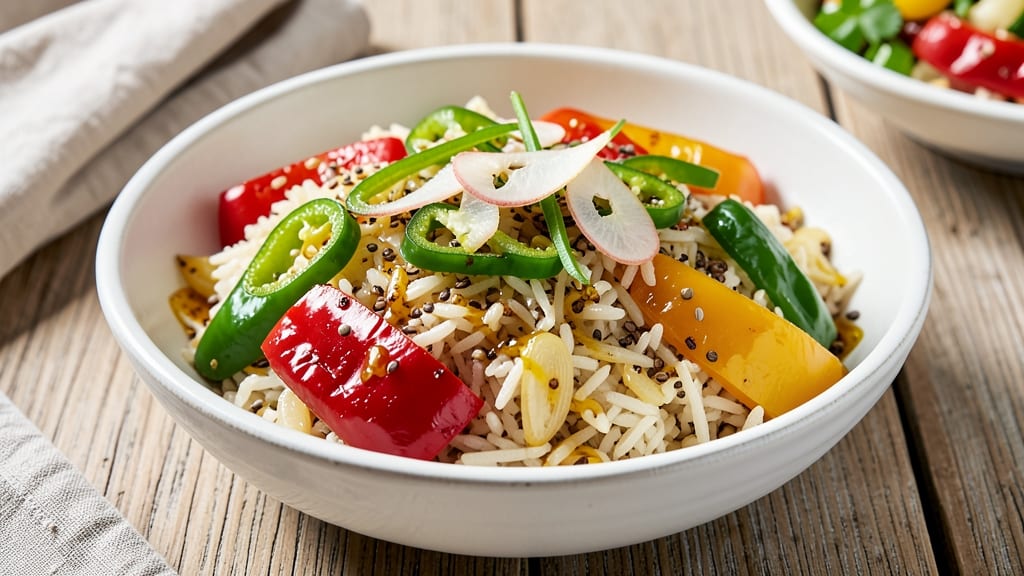
This capsicum rice recipe without onion and garlic delivers bold, aromatic flavor using asafoetida (hing) and shallots as substitutes, creating a vibrant one-pan dish with crisp-tender bell peppers and fragrant basmati rice.
The secret lies in blooming whole spices and toasting the rice properly—techniques that build depth without relying on onion or garlic. Perfect for those avoiding alliums while still craving restaurant-quality flavor.
By the end, you'll have golden, slightly charred capsicums mingling with nutty rice, all infused with warm spices like cumin, coriander, and a pinch of hing that mimics onion's savory punch. The dish stays light yet satisfying, ideal for weeknight dinners or meal prep.
Garnish with fresh cilantro and lemon zest for brightness—this recipe proves flavorful cooking doesn't require onion or garlic to shine.
Ingredients for capsicum rice recipe without onion and garlic
Fifteen ingredients to create aromatic, restaurant-quality capsicum rice without onion or garlic.
| Ingredient | Amount | Notes |
|---|---|---|
| Long-Grain Basmati Rice 🍚 | 1 cup | Uncooked, rinsed thoroughly |
| Bell Peppers (Mixed Colors) 🍅 | 3 whole | Medium-sized, cut into strips |
| Shallots 🧅 | 2 whole | Minced finely for depth |
| Asafoetida (Hing) 🌿 | ¼ tsp | Crushed between palms first |
| Green Chilies 🌶️ | 2 whole | Slit lengthwise for heat |
| Ginger (Fresh) 🧅 | ½ inch | OR 1 tsp grated ginger |
| Cumin Seeds 🌶️ | 1 tsp | Toasted until aromatic |
| Ground Coriander 🌿 | 1 tsp | Freshly ground preferred |
| Turmeric Powder 🧂 | ½ tsp | Bright yellow color |
| Garam Masala 🌶️ | ½ tsp | For final layer of warmth |
| Fresh Cilantro 🌿 | ¼ cup | Chopped for garnish |
| Lemon Zest 🍋 | 1 tsp | Brightens the dish |
| Vegetable Oil 🫒 | 2 tbsp | High smoke point preferred |
| Salt 🧂 | ¾ tsp | Adjust to taste |
| Water 💧 | 1 ½ cups | Room temperature preferred |
The hing (asafoetida) is non-negotiable here—it's the onion substitute that delivers that savory depth. Buy it from Indian grocery stores like Patel Brothers or Spicewalla for the freshest. The shallots add subtle sweetness without overpowering, so don't skip them. For the bell peppers, mixed colors give the best visual appeal, but stick to red, yellow, or green if that's what's available. Fresh ginger is ideal, but if you're using the grated version, measure by the tablespoon—it's more concentrated than fresh. Toast your cumin seeds until they're fragrant and just starting to pop—this builds the base flavor that carries through the entire dish.
No hing? Asafoetida powder from the bulk section works in a pinch, though it's less potent. Swapping the shallots for a pinch of onion powder (if accidentally included) would defeat the purpose, but extra green chilies at double the amount add heat without alliums. The garam masala can be tricky—MTR or Everest brands are widely available and reliable. If you're short on time, a blend of ground cumin, coriander, and black pepper (each 1/4 tsp) mimics it. For the rice, basmati is essential—it stays separate and fragrant. Jasmine rice works too, but it tends to get mushy when mixed with the peppers. The lemon zest might seem like an afterthought, but it's what lifts the entire dish—use a Microplane for fine, bright zest.
Store the hing in an airtight container away from light—it keeps for up to a year. The cilantro wilts fast, so wrap it in damp paper towels and store in a sealed bag for up to 5 days. This dish reheats beautifully—just add a splash of water and cover tightly. It tastes even better the next day as the flavors meld. For meal prep, divide into containers with a layer of lemon zest on top to preserve freshness. The rice portion keeps for 4 days in the fridge, while the peppers can be roasted ahead and stored separately for 3 days.
Why You'll Love This Recipe
- Uses what you’ve got: basmati rice, random bell peppers, and a few spices. I’ve made this for three with leftover rice, six with fresh, and it’s always the same reliable, satisfying bowl.
- No-Chop Chaos: I swear by this recipe on lazy days—just dice those bell peppers into rough chunks (no fancy knife work needed) and let the shallots caramelize while you stir. The rice handles the rest.
- Hing Magic: That tiny pinch of asafoetida (hing) transforms the dish—deep, umami warmth without onion or garlic. It’s the secret that makes this taste properly flavorful, not just bland veggie rice.
- Lunchbox Hero: Pack this cold or warm for work—it reheats beautifully and keeps its texture. My kids actually finish their lunch when it’s in the container. (Yes, even the picky ones.)
Step-by-step instructions for vibrant capsicum rice
This one-pan method delivers perfectly cooked rice with tender bell peppers and aromatic spices.
Prepare the Spice Base
Heat the 2 tablespoons vegetable oil in a heavy-bottomed pan over medium heat. Add the 1 teaspoon cumin seeds and let them sizzle for 30 seconds until fragrant and lightly golden. This is your flavor foundation—don't rush this step or the spices will burn.
Next, add the 2 whole shallots and cook for 3 minutes until softened and translucent. The shallots should release their sweet aroma without browning. Add the 0.5 inch fresh ginger and 2 whole green chilies (slit lengthwise), cooking for another 2 minutes until the ginger becomes translucent and the chilies soften slightly. This aromatic trio builds the flavor base for your dish.
Add Rice and Spices
Stir in the 1 cup long-grain basmati rice, coating each grain evenly with the spiced oil. Cook for 1 minute until the rice absorbs the flavors and turns slightly translucent at the edges. This step ensures every bite carries the full spice profile.
Add the 0.25 teaspoon crushed asafoetida (hing), 0.5 teaspoon turmeric powder, and 0.75 teaspoon salt. Stir vigorously for 30 seconds to distribute the spices evenly. The hing will release its distinct umami flavor, while the turmeric adds that signature golden hue. This is where the magic happens—don't skip the stirring.
Cook the Bell Peppers
Add the 3 whole bell peppers (cut into strips) and cook for 5 minutes over medium heat. Stir occasionally to prevent burning. The peppers should soften slightly while maintaining their vibrant color. You'll notice their natural sweetness intensify as they cook.
Pour in the 1.5 cups water and bring to a gentle boil. Once boiling, reduce heat to low, cover the pan with a tight-fitting lid, and simmer for 15 minutes. This low-and-slow cooking method allows the rice to absorb the liquid evenly while keeping the peppers tender-crisp.
Finish with Aromatics
After 15 minutes, remove the lid and check the water level. If it's completely absorbed but the rice still feels firm, add 2-3 tablespoons water and cover again for another 5 minutes. The rice should be tender but still have a slight bite—this is perfect al dente texture.
Stir in the 1 teaspoon lemon zest and 0.5 teaspoon garam masala. The lemon zest brightens the dish while the garam masala adds that warm, complex finish. Cook uncovered for 2 more minutes to let the flavors meld together. The lemon zest will infuse the dish with a refreshing citrus note that balances the richness.
Garnish and Serve
Remove from heat and let the rice sit covered for 5 minutes. This resting period allows the steam to redistribute, resulting in fluffier rice. Fluff with a fork and garnish with the 0.25 cup fresh cilantro. The cilantro adds freshness and a pop of color that makes the dish visually appealing.
Serve immediately while hot. The vibrant colors of the bell peppers will contrast beautifully with the golden rice, creating an inviting presentation. Each bite should deliver tender rice, sweet peppers, and a harmonious blend of warm spices with a bright citrus finish. This dish comes together in one pan with minimal cleanup—perfect for weeknight meals.
Pro Tips For Making Capsicum Rice Recipe Without Onion And Garlic
- CHAR THE SHALLOTS FIRST: Don’t just toss them in raw—cut the shallots into thin half-moons and fry them in hot oil until they’re deep golden, almost caramelized. This step builds flavor without onion/garlic, and I learned the hard way that skipping it leaves the rice tasting flat (yes, even with hing). Use about 2 tablespoons of oil—enough to sizzle properly.
- SALT THE RICE WATER LATE: Add salt to the boiling water after the rice goes in, not before. Basmati rice absorbs salt better this way, and I used to overdo it early, ending up with bitter-tasting grains. A pinch (½ teaspoon per cup of water) is enough—taste the water before draining.
- ROAST THE PEPPERS UNTIL BLISTERED: Don’t just chop and cook—char the bell peppers over a flame or under a broiler until their skins blacken in spots. This smoky depth replaces the missing onion/garlic punch, and the texture becomes sweeter. Peel the blistered skin off before dicing, or leave it on for extra rustic bite.
- USE HING AT THE RIGHT MOMENT: Crush the asafoetida on a spoon and add it after the shallots have caramelized but before the peppers go in. This lets the hing’s umami bloom without burning, and I once added it too early—resulted in a bitter, almost soapy taste. A tiny pinch (⅛ teaspoon) is all you need.
Essential equipment for this dish
Heavy-Bottomed Pan
Your essential tool for this recipe is a heavy-bottomed pan—I recommend a 10-inch cast-iron skillet or stainless steel pan like All-Clad. These distribute heat evenly, preventing hot spots that can burn your bell peppers or scorch the spices.
Cast iron also adds a subtle, earthy flavor over time. If you don’t own one, a high-quality non-stick pan (like GreenPan) works too, but avoid cheap versions—they can’t handle the low-and-slow simmering required for perfect rice. 🔥
Tight-Fitting Lid
A tight-fitting lid is non-negotiable for trapping steam and cooking the rice evenly. I use a glass lid (like those that come with Le Creuset pans) because it lets you check the rice without losing heat.
If your lid doesn’t seal well, consider a silicone pot cover as a backup. Pro tip: Place a damp paper towel under the lid to prevent condensation from dripping back into the pan—this keeps your rice from getting soggy. ⚡
Microplane for Zest
For the lemon zest, a Microplane (like the OXO Good Grips) is a game-changer. It produces fine, bright zest without the bitter pith, which elevates this dish instantly. If you don’t have one, a grater works, but you’ll need to sift out the pith manually.
Trust me, the difference in flavor is noticeable—1 teaspoon of zest from a Microplane is far more potent than what you’d get from a knife. 🍋
Fine-Mesh Strainer
Rinsing your basmati rice thoroughly before cooking removes excess starch, which prevents the grains from sticking together. A fine-mesh strainer (like OXO’s Good Grips) is ideal for this—it’s gentle on the rice and drains water efficiently.
If you’re short on time, a colander works, but it can be rougher on delicate grains. Pro move: Rinse the rice twice under cold water to ensure all starch is gone. This step is critical for achieving that signature fluffy texture. 💫
Wooden Spoon
Use a wooden spoon (like Ozeri’s Ambition series) to stir the rice and peppers—it won’t scratch your pan like metal utensils. Wood also helps distribute heat more evenly, preventing hot spots. Avoid plastic spoons, as they can melt under high heat.
For extra flavor, I sometimes toast my wooden spoon in the oil for 30 seconds before using it—this infuses the rice with a subtle smoky note. 🌿
Optional: Spice Grinder
If you’re using whole spices (like coriander seeds), a small spice grinder (like Spicewalla’s) ensures you get fresh, aromatic grounds. Pre-ground spices lose potency quickly, so grinding them fresh right before cooking makes a huge difference.
For this recipe, toasted cumin seeds and freshly ground coriander are worth the effort—they’re the backbone of the dish’s flavor. If you don’t have a grinder, a mortar and pestle works in a pinch. ✨
Nutrition facts
Frequently asked questions
Can I substitute shallots with something else?
Yes! If you don’t have shallots, use 1 tablespoon onion powder (if accidentally included) or 1 celery stalk (finely chopped) for a milder flavor. For extra depth, add 1/4 teaspoon celery salt—it mimics shallots' sweetness without alliums. The key is balancing sweetness and aroma, so adjust based on your taste.
What if I can’t find asafoetida (hing)?
No hing? Try these substitutes: 1/4 teaspoon soy sauce (for umami) or 1/8 teaspoon onion powder (if accidentally included). For a vegan option, 1/2 teaspoon nutritional yeast adds a cheesy, savory note. The dish will still taste good, but hing is the secret to that authentic depth.
How do I make this dish spicier?
Boost the heat by adding 1 extra green chili (seeds in) or 1/4 teaspoon cayenne pepper to the spice base. For smoky heat, stir in 1/2 teaspoon smoked paprika at the end. Remember: Start with less and adjust—green chilies add fresh heat, while cayenne delivers a dry, intense burn.
Can I use frozen bell peppers?
Frozen peppers work, but they’ll release more water, potentially making the rice soggy. Pat them dry thoroughly before adding. For best results, use fresh peppers—their natural sweetness and texture shine in this dish. If using frozen, add them after the rice has absorbed most of the water to avoid dilution.
How can I make this dish protein-rich?
Add 1 cup cooked chickpeas (for vegan protein) or 1/2 cup shredded chicken (cooked separately). For extra richness, stir in 1/2 cup paneer (cubed and pan-fried) at the end. The protein absorbs the spices beautifully—just add it in the last 5 minutes of cooking to keep it tender.