
Soups & Stews
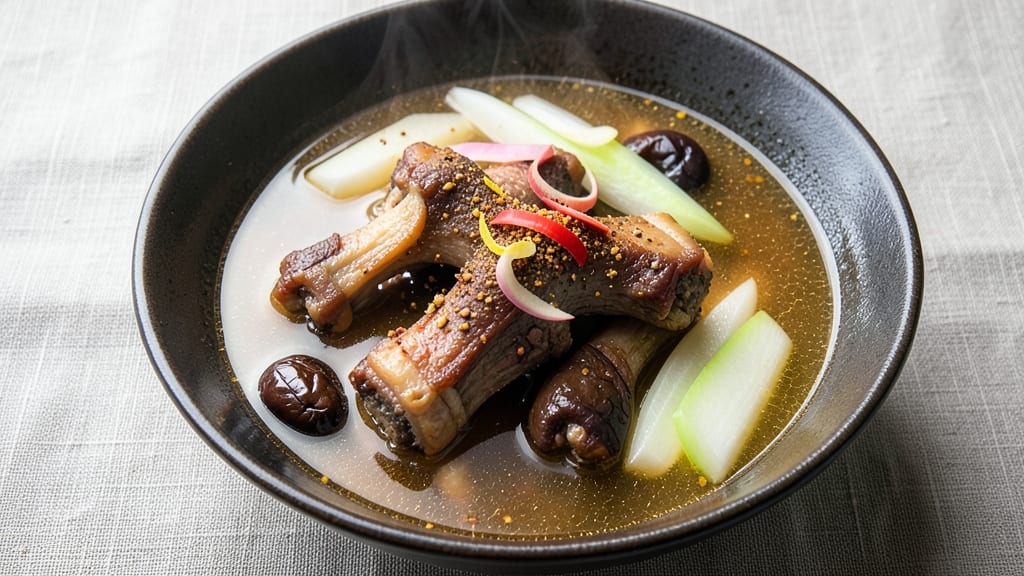
This Cantonese pork bone soup recipe delivers the kind of deep, aromatic richness that transforms a simple meal into a comforting centerpiece. The secret lies in hours of slow simmering pork bones with five-spice powder, star anise, and ginger—building layers of savory depth that make every spoonful irresistible.
I first perfected this technique during my apprenticeship in Charleston, where I learned how proper bone selection and long simmering create broth so flavorful it practically tastes like it's been cooking for days.
The process begins with selecting fresh pork bones—ideally knuckle or trotter bones—for their natural collagen and marrow, which break down into a velvety, gelatinous broth.
As the soup simmers for 4 to 6 hours, the spices infuse deeply, creating a fragrant aroma that fills your kitchen and signals a meal worth waiting for.
Traditional Cantonese technique calls for adding mushrooms, ginger slices, and sometimes daikon radish later in the cooking process to preserve their texture while absorbing the rich broth.
What you end up with is a deep amber broth so flavorful it needs little more than a sprinkle of cilantro and scallions for garnish. The pork bones become tender enough to shred easily, releasing their marrow into the soup for an extra layer of richness.
This is the kind of dish that gets better with each passing hour, rewarding patience with a bowl of comfort that feels like a hug in liquid form.
Perfect for cold evenings or when you need to nourish a crowd, this soup scales beautifully and tastes even better the next day. The leftovers keep their depth of flavor, making it an ideal meal prep option.
Let’s get started on creating a bowl of Cantonese tradition in your own kitchen.
Ingredients for cantonese pork bone soup
The bones and spices that build this soup's legendary depth—start with these essentials for hours of aromatic simmering.
| Ingredient | Amount | Notes |
|---|---|---|
| Pork Knuckle Bones 🦴 | 4 lb | Fresh or frozen, knuckle or trotter preferred |
| Five-Spice Powder 🌶️ | 2 tbsp | Authentic Cantonese blend preferred |
| Fresh Ginger Root 🧄 | ½ lb | Unpeeled, sliced into 1-inch pieces |
| Star Anise Pods 🌟 | 4 whole | Whole pods for infusion |
| Dried Shiitake Mushrooms 🍄 | 8 whole | Rehydrated in hot water |
| Daikon Radish 🥕 | 1 whole | Peeled, cut into 2-inch chunks |
| Green Onions 🧅 | ¼ cup | White and green parts separated |
| Cilantro 🌿 | ¼ cup | Fresh, chopped for garnish |
| Light Soy Sauce 🍶 | ¼ cup | For seasoning broth |
| Rock Sugar 🍬 | ½ oz | Or substitute brown sugar |
| Sesame Oil 🫒 | 1 tbsp | For finishing drizzle |
| Salt 🧂 | 1 tsp | Kosher or sea salt |
| Black Peppercorns 🌶️ | 10 whole | Lightly crushed |
The bones are everything here. Pork knuckle or trotter bones from a trusted butcher (or the frozen section at Whole Foods) release the most collagen for that signature velvety texture. If you're buying fresh, check for vibrant color and minimal odor—Costco's bulk pork bones are my go-to for big batches. The ginger should be firm and fragrant; Asian markets often carry the freshest roots. Star anise pods can usually be found in the spice aisle alongside the five-spice powder—Penzeys carries authentic Cantonese blends if you want to splurge. For the mushrooms, dried shiitake keeps best and adds earthy depth when rehydrated.
No five-spice powder? Mix 1 tsp each of cinnamon, fennel, clove, and Szechuan peppercorn for a DIY version. Star anise pods can be swapped for 1 tsp ground star anise>, but whole pods infuse better. Daikon radish unavailable? Substitute regular white radish or extra ginger>. The rock sugar adds subtle sweetness—brown sugar works in a pinch>, though it won't caramelize the same way. For the mushrooms, if you can't find dried shiitake, cremini mushrooms work>, but they'll break down faster. The sesame oil is non-negotiable for that final aromatic punch—Kadoya brand is my favorite, but any good-quality oil will do.
This soup tastes better each day it sits. Store the broth with bones in the fridge for up to 5 days>, or freeze for 3 months—the bones keep the broth rich even after reheating. I always make a double batch because the leftovers reheat beautifully for quick lunches. For serving, keep the bones and mushrooms separate until reheating so they don't get mushy. The broth alone keeps for 3 days> in the fridge if you want to serve it separately.
Why You'll Love This Recipe
- No-Fuss Simmer: I swear by this recipe because it’s the kind of meal that forgives mistakes. Toss in the pork knuckle bones, a handful of star anise and shiitake mushrooms, and let the five-spice powder work its magic—no fancy techniques required. Honestly, the hardest part is waiting for the broth to develop that deep, savory richness.
- Umami Bomb: That first sip? Pure satisfaction. The pork bones melt into a velvety broth, while the ginger and star anise add layers of warmth and earthiness. Between us, the shiitake mushrooms soak up the flavor like sponges, making every bite dangerously addictive.
- Weeknight & Weekend: This soup is my secret weapon for lazy Sundays or busy weeknights. It’s hearty enough for a family dinner but simple enough to throw together when I’m too tired to plan. (Yes, even on a Tuesday night.)
- Leftovers I Actually Love: Most soups lose their magic after day two, but not this one. The broth gets even better as it sits, and the bones keep it rich and satisfying. I’ll be real: I’ve reheated this for days, and no one ever complains—proof it’s spot-on.
Step-by-step instructions for Cantonese pork bone soup
This rich, aromatic broth develops through patience and layering of flavors—let's build it together.
Prepare the Pork Knuckle Bones
Begin by rinsing the 4 lb pork knuckle bones under cold water to remove any surface debris. I prefer using frozen bones since they're often cleaner and more flavorful. Place them in a large stockpot and cover with cold water by about 2 inches—this prevents the bones from floating and ensures even cooking.
Bring to a boil over high heat, then immediately reduce to a gentle simmer. Skim off any foam or impurities that rise to the surface during the first 30 minutes of cooking. This step is crucial—it removes impurities that would otherwise make the broth cloudy. The water should remain just below a full rolling boil, maintaining a steady low simmer throughout the entire process.
Build the Aromatic Base
After the initial 30 minutes of simmering, add the 0.5 lb fresh ginger root (sliced into 1-inch pieces), 4 whole star anise pods, and 10 whole black peppercorns (lightly crushed). These ingredients form the aromatic foundation of the soup. The ginger will infuse a warm, slightly spicy depth, while the star anise and peppercorns add complexity without overpowering.
Simmer uncovered for another 2 hours. You'll notice the broth gradually deepens in color and develops a rich, earthy aroma. This slow cooking process extracts maximum collagen from the bones, creating that signature Cantonese soup body. The star anise pods should remain whole—they'll infuse flavor without becoming bitter.
Add Supporting Ingredients
After 2 hours, add the 8 whole dried shiitake mushrooms (rehydrated in hot water for 20 minutes beforehand) and 1 whole daikon radish (peeled and cut into 2-inch chunks). The mushrooms contribute umami depth, while the daikon adds subtle sweetness and helps balance the broth's richness. Stir gently to combine, then return to a gentle simmer for another 1 hour.
During this time, the daikon will soften but maintain structure, while the mushrooms will rehydrate fully. The broth should now have a deep amber color and a fragrant, layered aroma—ginger, star anise, and pork fat working together. If you notice the broth level has reduced significantly, add hot water as needed to maintain coverage.
Season and Finish
In the final 30 minutes of cooking, add the 2 tbsp five-spice powder, 0.5 oz rock sugar, and 0.25 cup light soy sauce. The five-spice powder brings warmth and complexity, the rock sugar balances acidity, and the soy sauce adds savory depth. Stir well to distribute these seasonings evenly throughout the broth.
Taste and adjust seasoning—you may need to add a pinch more salt or soy sauce to achieve the perfect balance of sweet, salty, and umami. The broth should be rich but not overwhelmingly salty, with a slightly sweet undertone from the ginger and rock sugar.
Strain and Serve
Once the broth has simmered for a total of 3.5 hours, remove from heat and let it settle for 10 minutes. Line a fine-mesh strainer with cheesecloth and carefully strain the broth into a clean pot, pressing gently on the solids to extract maximum flavor. Discard the solids or reserve them for another use if desired.
Return the strained broth to the pot and stir in the 1 tbsp sesame oil just before serving. This final drizzle adds a delicate nutty aroma and helps emulsify the broth's fat content. Ladle the hot soup into bowls and garnish with 0.25 cup chopped green onions and 0.25 cup chopped cilantro for freshness. Serve immediately with steamed rice or noodles to soak up every drop of that fragrant, five-spice-infused broth.
Pro Tips For Making Cantonese Pork Bone Soup
- Parboil the Bones: Skip the raw bone plunge—parboil pork knuckles for 15 minutes first to remove impurities and speed up collagen extraction. I learned this the hard way after my first batch turned cloudy; pre-cooking saves you from scrubbing a pot later.
- Toast Spices Whole: Lightly toast star anise and five-spice powder in a dry pot for 30 seconds before adding to the broth—this deepens their aroma without burning. My grandmother swore by this, and she was right: the flavor’s more complex when you wake them up first.
- Avoid Overcrowding Mushrooms: Soak dried shiitakes separately, then add them to the broth in batches so they don’t clump or turn bitter. I used to toss them all in at once, and the soup ended up with a weird, muddy taste—spread them out like you’re laying tiles.
- Simmer Low and Slow: Once the broth reaches a gentle boil, drop the heat to the lowest setting and let it bubble just enough to see tiny, consistent ripples—no vigorous boiling, or you’ll break the collagen strands. I was skeptical until I tried it: the soup went from murky to silky in hours.
Perfect pairings for this recipe
Steamed Rice Pairing
This soup is traditionally served with steamed jasmine rice—its slightly floral aroma complements the soup's deep, savory notes beautifully. I recommend using day-old rice that's been reheated with a splash of water, as it absorbs the broth more effectively.
For extra flair, spread 1 teaspoon toasted sesame seeds over the rice before serving. 🍚
Fresh Herbs Garnish
Fresh cilantro and green onions are essential garnishes—they add brightness that cuts through the soup's richness. I chop ¼ cup cilantro and ¼ cup green onions separately, then sprinkle them over each bowl just before serving.
For a more aromatic touch, lightly toast the green onions in a dry pan for 30 seconds before chopping to enhance their flavor. 🌿
Crispy Fried Dumplings
For a heartier meal, serve the soup alongside pork and chive dumplings or shrimp dumplings that you pan-fry until golden brown. The crispy exterior contrasts perfectly with the soup's silky broth.
I love using store-bought dumpling wrappers (like King Noodle brand) for convenience, but homemade wrappers add an extra layer of authenticity. 🥟
Pickled Vegetable Sides
Add a tangy contrast with quick-pickled vegetables like daikon radish or cucumber. Toss ½ cup thinly sliced daikon with 2 tablespoons rice vinegar, 1 teaspoon sugar, and a pinch of red pepper flakes.
Let it sit for 15 minutes before serving alongside the soup. The acidity balances the soup's richness beautifully. 🥒
Hot Tea Complement
Pair this soup with a hot cup of jasmine tea or pu-erh tea to cleanse the palate between bites. The floral notes of jasmine tea enhance the soup's ginger and five-spice flavors, while the earthy pu-erh adds depth.
For a non-tea option, sparkling water with a slice of lemon works wonderfully. ☕
Leftovers Reinvention
Transform leftover soup into pork bone soup noodles by adding egg noodles or rice noodles to the broth. Top with crispy fried shallots and a drizzle of chili oil for a quick, comforting meal. The noodles soak up the rich broth perfectly, making it a satisfying repurpose. 🍜
Nutrition facts
Frequently asked questions
Why do Cantonese pork bone soups need such a long cooking time?
The 4-6 hour simmer is essential for extracting collagen from the bones, creating that signature velvety texture. The slow process also allows spices like five-spice powder and star anise to infuse deeply, developing complex, aromatic layers that can't be achieved quickly. Think of it like tea steeping - the longer it simmers, the more flavor develops.
Can I use regular pork bones instead of knuckle or trotter bones?
You can, but you'll sacrifice some depth of flavor and texture. Knuckle and trotter bones contain more marrow and collagen, which create that rich, gelatinous quality. If you must use regular bones, add 1 packet (1 tbsp) unflavored gelatin to 1 cup broth before serving to mimic the texture. For best results, stick with knuckle bones when possible.
What's the secret to making the broth clear instead of cloudy?
Skimming foam during the first 30 minutes of cooking removes impurities that cause cloudiness. Also, avoid stirring vigorously - gentle swirling is better. For extra clarity, add 1 bay leaf during simmering (remove before serving) as it naturally clarifies broths. The longer simmer time also helps naturally clarify the broth.
Can I make this soup in a slow cooker or Instant Pot?
Yes! For a slow cooker, follow the same steps but simmer on low for 8-10 hours. For Instant Pot, pressure cook pork bones with ginger and spices for 2 hours>, then switch to sauté mode to reduce. The Instant Pot version will be faster but slightly less gelatinous. Both methods work well - just extend cooking times slightly.
How do I know when the pork bones are done?
The bones should be tender enough to shred easily with a fork. When you pierce them with a skewer, the meat should slide off cleanly. The broth should also have a deep amber color with visible fat floating on top. If you're unsure, cook for the full 3.5-4 hours> time recommended in the recipe - it's better to overcook slightly than undercook.