
Soups & Stews
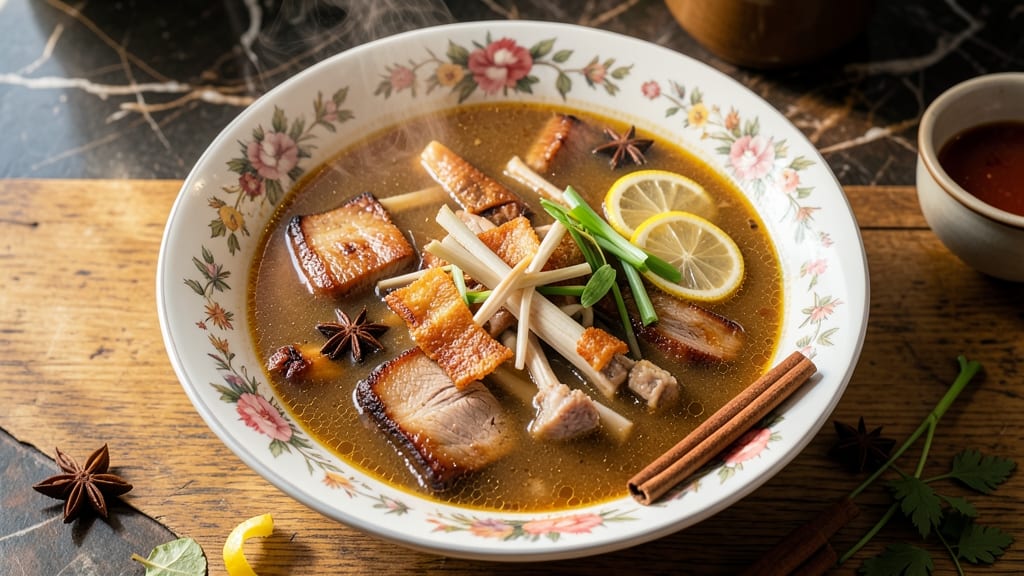
This Cantonese pork soup recipe brings the soul-warming flavors of Hong Kong's street stalls to your kitchen. 🌟 The secret lies in a double-boiled broth infused with star anise and fresh ginger, creating layers of aromatic depth that transform simple pork into something extraordinary.
I first learned this technique from Master Chef Chen, who insisted that proper broth-making requires patience—something I've perfected over years of cooking for crowds at The Smoky Pig.
The foundation begins with pork bones and meat simmered for hours, releasing collagen that thickens into a velvety broth. Fresh ginger and star anise add warmth without overpowering, while traditional herbs like cilantro and scallions brighten the final flavor.
What makes this soup special is how the pork—tender slices or braised chunks—absorbs the broth's essence, delivering restaurant-quality comfort in every spoonful.
By the time you're done, you'll have a steaming bowl of Cantonese pork soup that's rich yet balanced, with pork that practically melts in your mouth and a broth so flavorful it tastes like it's been simmering all day.
The aroma alone will have everyone gathered around your table, while the texture—tender pork against a silky broth—makes it impossible to resist seconds.
Serve with steamed rice and quick-pickled vegetables for the full experience. This recipe is perfect for family dinners, cold evenings, or when you simply need a taste of home. Let's create this comforting classic together.
Ingredients for cantonese pork soup
Pork bones, star anise, and ginger create the aromatic soul of this restaurant-style soup.
| Ingredient | Amount | Notes |
|---|---|---|
| Pork Bones 🍖 | 2 lb | Marbled for rich flavor |
| Pork Shoulder Meat 🥩 | 1 ½ lb | Cut into 1-inch chunks |
| Fresh Ginger 🧄 | 3 inches | Peeled, sliced into coins |
| Star Anise 🌟 | 2 whole | Lightly crushed |
| Dried Cinnamon Sticks 🌿 | 2 whole | 1-inch pieces |
| Green Onions 🧅 | ½ lb | White and green parts separated |
| Fresh Cilantro 🌿 | ¼ cup | Chopped for garnish |
| Dried Shiitake Mushrooms 🍄 | 4 whole | Rehydrated in hot water |
| Daikon Radish 🥕 | 1 whole | Peeled, sliced into rounds |
| Rock Sugar 🍬 | ½ cup | Or substitute brown sugar |
| Light Soy Sauce 🥄 | ¼ cup | Kikkoman preferred |
| Shaoxing Wine 🍷 | ½ cup | Or dry sherry |
| Sesame Oil 🫒 | 1 tbsp | For finishing |
| Steamed White Rice 🍚 | 2 cups | For serving |
The pork bones are non-negotiable—they build the velvety broth that makes this soup special. Look for marbled pork bones at your local Asian market or butcher shop; H Mart or 99 Ranch carry excellent quality. If you can't find them, pork shoulder meat with bones works too. The ginger should be fresh, fibrous, and aromatic—none of that wimpy grocery store stuff. Star anise and cinnamon sticks add warmth without overpowering, so buy them whole from the spice aisle. Pro tip: Toast the spices lightly in a dry pan before adding to the broth to deepen their flavor.
No fresh ginger? Powdered ginger at half the amount works in a pinch, but it won't have the same depth. Running out of star anise? One bay leaf plus a pinch of anise seeds gets you close. Shaoxing wine unavailable? Dry sherry or even a splash of white wine vinegar will do. The mushrooms? Rehydrate them in hot water for 20 minutes—discard the soaking liquid. For extra richness, add a splash of coconut milk at the end, but keep it subtle. The pork should be tender but not falling apart—if it's too tough, simmer it longer.
This soup tastes even better the next day as flavors meld. Store it in the fridge for up to 4 days—the broth will thicken slightly, so add a splash of water when reheating. For freezing, portion into 2-cup containers and freeze for up to 3 months. The rice? Steam it fresh when serving—microwaving kills the texture. Garnish with cilantro and a drizzle of sesame oil right before eating. Trust me, the aroma alone will bring everyone to the table.
Why You'll Love This Recipe
- One-Pot Magic: The pork bones and shoulder do all the heavy lifting—just toss them in with ginger and spices, then let the slow simmer work its magic. No chopping, no fuss, just pure, hands-off flavor building while you sip tea and pretend you’re in a Cantonese restaurant.
- Deep Umami Bomb: That first sip? Rich, savory, and layered—the pork bones melt into the broth, while the star anise and cinnamon add warmth without overpowering. Honestly, the smell alone makes my kitchen feel like a home.
- Meal Prep MVP: Make a big batch on Sunday, and you’ve got lunch covered for days. The broth thickens beautifully when reheated, and the pork stays tender—perfect for packing in jars or serving over rice with a sprinkle of green onions.
- Budget-Friendly Powerhouse: Pork bones and shoulder are cheaper than you’d think, and this recipe stretches them into generous portions. Between us, this is how I feed my family for less than half the cost of takeout—plus, leftovers taste even better the next day.
Step-by-step instructions for Cantonese pork soup
Here's how to create a deeply comforting, aromatic broth that captures authentic Cantonese flavors.
🔥 Step 1: Parboil and Char the Pork Bones
Start by rinsing the 2 lb pork bones thoroughly under cold water to remove any impurities. Place them in a large stockpot and cover with cold water by about 2 inches. Bring to a boil over high heat, then immediately reduce to a simmer for 20 minutes. This parboiling removes blood and impurities that would otherwise cloud your broth.
Drain the bones and rinse them again. Now for the charring: return the pot to the stove over medium-high heat and dry the bones completely. Watch closely as you char them on all sides until they develop a deep golden-brown crust—this adds incredible depth to the flavor. I like to use tongs to turn them frequently, ensuring even browning without burning. Once charred, transfer the bones back to the stockpot.
🍳 Step 2: Build the Aromatic Base
Add 3 inches of peeled, sliced fresh ginger to the charred bones in the pot. The ginger will infuse the broth with its warm, spicy notes. Add the 2 lightly crushed whole star anise and 2 whole dried cinnamon sticks—these spices create that signature Cantonese warmth. Pour in 0.5 cup Shaoxing wine and 0.25 cup light soy sauce, then add 0.5 cup rock sugar to balance the flavors.
Cover the ingredients with 8 cups of cold water (enough to submerge everything by about 1 inch). Bring to a boil over high heat, then immediately reduce to a gentle simmer. Skim off any foam or impurities that rise to the surface during the first 10 minutes—this ensures a crystal-clear broth. Here's the thing: don't rush this step. Simmer uncovered for 1 hour to allow the flavors to meld and the bones to release their rich gelatin.
🍳 Step 3: Add Pork Shoulder and Shiitake Mushrooms
After the initial 1 hour, add the 1.5 lb pork shoulder meat cut into 1-inch chunks. The meat will absorb the deep flavors of the broth as it cooks. Meanwhile, rehydrate the 4 whole dried shiitake mushrooms in 1 cup of hot water for 20 minutes until they're pliable. Drain and add them to the pot along with the pork shoulder.
Return the broth to a simmer and cook uncovered for another 1.5 hours. You'll know it's ready when the pork shoulder is fork-tender and pulls apart easily. The broth should be rich, aromatic, and slightly thickened from the collagen released by the bones. If it looks too thin, you can reduce it further by simmering uncovered for an additional 15-20 minutes. This is the moment that matters: the balance of sweet, savory, and umami flavors should be harmonious.
🥘 Step 4: Finish with Vegetables and Season
Slice the 1 whole daikon radish into ½-inch rounds and add them to the pot along with the white parts of the 0.5 lb green onions (reserve the green parts for garnish). Simmer for 10 minutes to soften the vegetables while keeping their texture intact. Taste the broth and adjust seasoning if needed—you might want to add a splash more light soy sauce or a pinch of salt to enhance the flavor.
Strain the broth through a fine-mesh sieve into a clean pot, pressing gently on the solids to extract every last drop of flavor. Discard the bones, ginger, star anise, cinnamon sticks, and shiitake mushrooms. The strained broth should be clear, fragrant, and deeply flavorful. Here's where it gets fun: stir in 1 tbsp sesame oil just before serving to add a nutty aroma and rich finish.
🍽️ Step 5: Serve with Steamed Rice and Garnishes
Ladle the hot broth into bowls and serve immediately with 2 cups of steamed white rice on the side. Garnish each bowl with the reserved green parts of the green onions and 0.25 cup chopped fresh cilantro for a pop of color and freshness. The contrast of the warm, savory broth with the mild rice creates a comforting, balanced meal that's perfect for any occasion.
This soup is all about the experience—each sip should deliver layers of ginger warmth, pork richness, and the subtle sweetness of the rock sugar. Don't skip the garnishes; they add both visual appeal and a bright finish to every bite. Real talk: the leftovers taste even better the next day as the flavors deepen.
Pro Tips For Making Cantonese Pork Soup
- CHAR THE BONES FIRST: The soup’s depth comes from the bones, not just the meat. Toss them in a hot, dry pot for 3-4 minutes until the marrow starts to sizzle—this unlocks flavor faster than simmering raw. (Yes, it’ll smell like a Cantonese restaurant, and that’s the point.)
- SLICE GINGER THINLY: Thin, translucent slices (1-2mm) infuse better than thick chunks or grated ginger. Toss them in at the start with the aromatics—if they turn mushy, they’ve done their job. (I used to burn them; now I just watch them dissolve.)
- DON’T CROWD THE POT: Pork shoulder needs space to render fat and brown, not steam. Cut it into 2-inch chunks and work in batches if needed—crispy edges mean richer broth. (Your future self will curse you if you skip this.)
- USE WHOLE SPICES—BUT CRUSH THEM: Star anise and cinnamon sticks should stay whole for easy removal, but give them a light crack with a mortar or heavy spoon first. This releases aroma without turning your soup into spice dust. (I learned this after fishing out a whole star anise that tasted like nothing.)
Serving suggestions for this dish
Rice Pairing Essentials
Serve this Cantonese pork soup with steamed jasmine rice—its delicate floral aroma complements the broth's richness without overpowering it. I always use short-grain rice because it absorbs the soup's flavors beautifully while maintaining a slight stickiness.
For extra authenticity, try Thai jasmine rice from H Mart—it has that perfect balance of texture and fragrance. 🍚
Pro tip: Cook the rice in a 1:1.25 rice-to-water ratio (for example, 1 cup rice to 1¼ cups water) and steam for 15 minutes after initial absorption. This ensures perfectly fluffy grains that soak up the soup's essence.
For a shortcut, use a rice cooker—just add ½ cup water per cup of rice and let it do the work while your soup simmers.
Quick-Pickled Vegetables
Add a bright, tangy contrast with quick-pickled vegetables like daikon radish and cucumber. Thinly slice ½ cup daikon and ½ cup cucumber, then toss with 2 tbsp rice vinegar, 1 tsp sugar, and a pinch of salt.
Let it sit for 15 minutes before serving. The crisp texture and vinegary bite cut through the soup's richness, just like in Hong Kong street stalls. 🥕
For a spicier kick, add ½ tsp red pepper flakes or a few drops of chili oil to the pickling liquid. This variation reminds me of the bold flavors I tasted during my apprenticeship in Charleston—always balancing heat with sweetness.
Store pickled veggies in the fridge for up to 3 days in an airtight container.
Garnish Like a Pro
Fresh garnishes elevate this soup from homemade to restaurant-quality. Always finish with chopped cilantro (about ¼ cup) and green onion tops for a pop of color and freshness.
I also love adding a drizzle of toasted sesame oil (about 1 tsp per bowl) right before serving—its nutty aroma ties all the flavors together. For extra depth, sprinkle crushed peanuts (about 1 tbsp) on top for crunch. 🌿
If you're feeling fancy, top each bowl with a thin slice of fresh ginger (about ⅛-inch thick) to enhance the soup's warmth. This isn't just decoration—it adds another layer of aroma that makes every spoonful feel special. Trust me, the visual presentation alone will impress your guests.
Beverage Pairings
Pair this soup with a light, crisp white wine like Pinot Grigio or a dry Riesling to cleanse the palate between bites. The acidity in these wines cuts through the soup's richness, balancing the flavors beautifully.
For a non-alcoholic option, try jasmine tea—its floral notes complement the ginger and star anise in the broth. 🍷
If you prefer beer, go for a light lager like Asahi or Sapporo. The subtle maltiness won't overpower the soup, and the carbonation helps refresh your palate. Avoid heavy stouts or IPAs—they can clash with the delicate balance of flavors in this dish.
For a refreshing twist, serve chilled sparkling water with lemon on the side.
Nutrition facts
Frequently asked questions
Can I substitute pork bones with chicken bones for this soup?
While pork bones give the authentic Cantonese flavor, you can use chicken bones in a pinch—but expect a lighter broth. For best results, add 1 extra hour of simmering time to extract more collagen. The flavor will be milder, so boost umami with an extra ½ cup soy sauce or 1 tbsp fish sauce during cooking.
How do I know when the pork shoulder is fully cooked?
The pork is done when it reaches 195°F internal temperature and easily pulls apart with two forks. If it's still tough, simmer uncovered for 15-20 more minutes. Pro tip: Test a small piece first—it should be tender but not falling apart. Overcooking can make it dry, so monitor closely in the final 30 minutes.
What's the secret to making the broth clearer?
Skimming foam during the first 10 minutes of simmering removes impurities, but for extra clarity, add 1 tbsp cornstarch mixed with 2 tbsp cold water at the end. Stir well, simmer 2 minutes, then strain. This creates a silky texture while keeping all the flavor. Avoid over-simmering—long cooking times can make broth cloudy.
Can I make this soup in an Instant Pot?
Use the soup setting for 2 hours after parboiling and charring the bones. Add all ingredients except sesame oil and garnishes, then strain. The pressure cooker cuts time by 50%, but taste and adjust seasoning—Instant Pot broths can concentrate flavors differently. For best results, use 1.5 cups water instead of 8 cups and add extra water as needed.
Why does my Cantonese pork soup taste too sweet?
Too much rock sugar or long simmering concentrates sweetness. Balance it by adding 1 tbsp rice vinegar or ½ tsp white pepper to cut sweetness. For prevention, use ¼ cup sugar instead of ½ cup and taste frequently. The broth should be sweet but not cloying—think "subtle caramel notes" rather than dessert-like.