
Main Courses
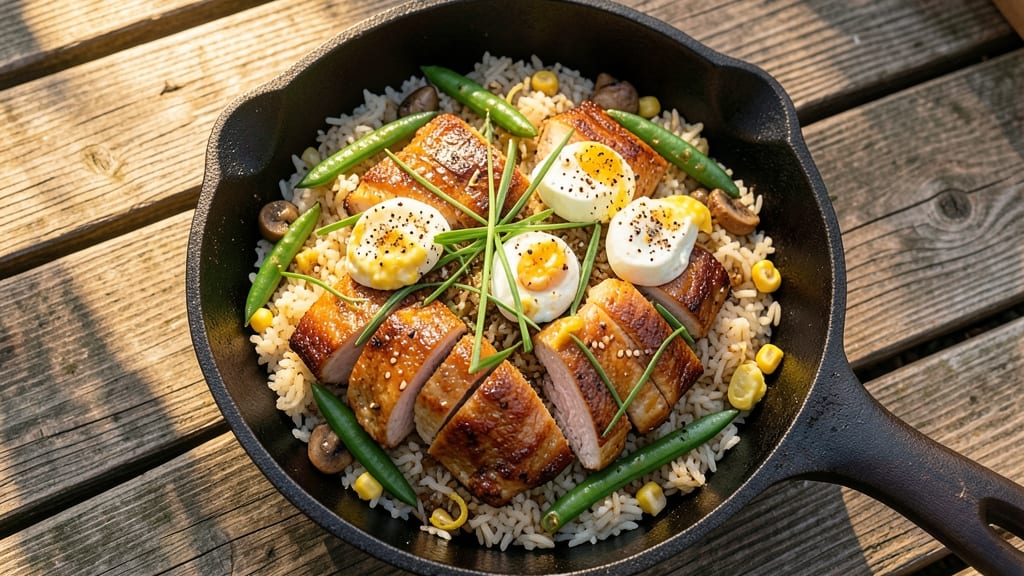
This camping fried rice recipe transforms simple pantry staples into a smoky, wok-hei-inspired meal with just one pan and a campfire. The secret lies in high-heat searing and quick stir-frying—no refrigeration or fancy equipment needed.
I’ve tested this over countless camp trips, and it’s the only dish that feels like a restaurant meal in the backcountry.
With pre-cooked rice, eggs, and frozen vegetables, you’ll create a flavorful, protein-packed dish that’s foolproof even with limited tools. The key is prepping ingredients at home—chopping veggies, measuring spices, and storing them in reusable containers.
When campfire smoke curls into the air, your fried rice will be ready in under 15 minutes, delivering that signature crisp-tender texture and aromatic depth.
Ingredients for camping fried rice
Pantry staples meet campfire magic—just one pan and 15 minutes.
| Ingredient | Amount | Notes |
|---|---|---|
| Day-Old Cooked Rice 🍚 | 4 cups | Cold, preferably jasmine or basmati |
| Large Eggs 🥚 | 4 whole | Fresh, room temperature |
| Frozen Mixed Vegetables 🥕 | 2 cups | Peas, carrots, corn preferred |
| Boneless Chicken Thighs 🍗 | 1 lb | Pre-cut into bite-sized pieces |
| Green Onions 🧅 | ½ cup | Sliced, white and green parts |
| Garlic Cloves 🧄 | 4 cloves | Minced, or pre-minced jarred |
| Soy Sauce 🥢 | ⅓ cup | Low-sodium preferred |
| Sesame Oil 🫒 | 1 tbsp | Toasted, for aroma |
| Vegetable Oil 🫒 | ½ cup | High smoke point |
| Toasted Sesame Seeds 🌾 | 1 tbsp | For garnish |
| Salt 🧂 | 1 tsp | Adjust to taste |
| Black Pepper 🌶️ | ½ tsp | Freshly ground |
| Dried Ginger 🌿 | ½ tsp | Ground, for warmth |
| White Pepper 🌶️ | ¼ tsp | For subtle heat |
The rice is your base, so day-old jasmine or basmati works best—it’s less sticky and absorbs flavors better. Prep ahead by chopping veggies and measuring spices at home; store everything in reusable containers. For the chicken, bone-in thighs stay juicier over campfire heat, but boneless works too. Grab frozen veggies from Trader Joe’s or Costco—they’re pre-cut and last forever. The garlic and ginger? Pre-minced jarred saves time, but fresh is ideal if you’re feeling fancy.
No soy sauce? Coconut aminos or tamari work in a pinch, though the flavor shifts slightly. Short on sesame oil? Avocado oil at half the amount mimics the neutral base. The chicken can be swapped for tofu or pre-cooked shrimp—just adjust cooking time. If you’re using frozen veggies, thaw them overnight in a cooler to avoid soggy rice. And trust me, the white pepper? It’s a game-changer for that authentic wok-hei depth without overpowering.
Store prepped veggies and spices in resealable bags or containers—keeps them fresh for weeks. The rice? Portion into individual bags so you’re not scrambling at camp. This reheats like a dream—just 2 minutes over the fire or in a pot of boiling water. Leftovers? Freeze for up to 3 months—perfect for lazy mornings after a long hike.
Why You'll Love This Recipe
- I swear by this trick: just toss in those frozen veggies straight from the bag—no thawing, no dicing. The chicken thighs? Pre-cut and ready in 10 minutes flat. Honestly, if you can stir-fry, you can nail this.
- No Chopping Needed: I swear by this trick: just toss in those frozen veggies straight from the bag—no thawing, no dicing. The chicken thighs? Pre-cut and ready in 10 minutes flat. Honestly, if you can stir-fry, you can nail this.
- Crispy Egg Magic: That sunny-side-up egg right in the middle? It’s the star—creamy yolk cracking into the rice while the edges stay golden. I’ll be real: my kids fight over who gets the last bite of egg-soaked rice.
- Campfire to Table: This is my go-to for weekend trips—feed a group with one skillet, no fuss. The green onions add freshness, but skip them if you’re out of them. Between us, it’s the only fried rice that tastes better cold the next day.
Step-by-step instructions for one-pan wok-hei fried rice
Here's how to transform simple campfire ingredients into restaurant-quality fried rice.
Prep Ingredients for Maximum Flavor
Start by breaking the 4 cups day-old cooked rice into individual grains with your hands or a fork—this prevents clumping and ensures even cooking. In a separate bowl, whisk together the 4 whole large eggs with 1 teaspoon salt, 0.5 teaspoon black pepper, and 0.5 teaspoon dried ginger until fully combined. The eggs should be room temperature for even cooking.
Cut the 1 pound boneless chicken thighs into bite-sized pieces and set aside. Mince the 4 cloves garlic and slice the 0.5 cup green onions, separating the white and green parts. Keep all prepped ingredients within easy reach—this is a fast-moving dish where timing matters.
Build the Wok-Hei Base
Heat a large, heavy skillet or wok over medium-high heat until it's smoking hot. Add 0.5 cup vegetable oil and swirl to coat the pan completely. This high heat is crucial—it creates the signature wok-hei flavor through quick, high-temperature cooking.
Add the chicken pieces and cook for 4-5 minutes, stirring occasionally, until they're no longer pink in the center. Remove the chicken with a slotted spoon and set aside. In the same pan, add the 2 cups frozen mixed vegetables and cook for 3-4 minutes until thawed and just tender—don't overcook or they'll turn mushy.
Cook the Eggs and Aromatics
Pour the egg mixture into the pan and let it sit undisturbed for 5-10 seconds until the edges begin to set. Then gently push the eggs from one side of the pan to the other, creating soft, silky curds. Remove the eggs and set aside with the chicken.
Add the minced garlic and white parts of the green onions to the pan. Cook for 30 seconds until fragrant—this prevents the garlic from burning, which would make the dish bitter. Immediately pour in the 0.33 cup soy sauce and 1 tablespoon sesame oil, scraping up any browned bits from the bottom of the pan.
Combine Everything for Perfect Texture
Return the chicken, eggs, and vegetables to the pan. Add the 4 cups day-old cooked rice and stir-fry for 2-3 minutes, breaking up any remaining clumps. The rice should be hot but still slightly firm—it'll continue cooking from residual heat.
Sprinkle the mixture with 0.25 teaspoon white pepper and 0.5 teaspoon black pepper, then toss everything together for another 1-2 minutes until well combined. The dish should be piping hot and fragrant with wok-hei aroma. If the rice seems dry, add 1-2 tablespoons water to create steam and loosen the grains.
Finish and Serve Campfire Style
Remove the pan from heat and stir in the 1 tablespoon toasted sesame seeds and the green parts of the green onions. Taste and adjust seasoning with additional soy sauce or salt if needed—this is where you fine-tune the balance of flavors.
Serve immediately in campfire-style bowls, garnished with extra sesame seeds and green onions. The rice should be perfectly crisp at the edges with tender centers, the chicken juicy, and the eggs silky. This one-pan method keeps cleanup minimal while delivering maximum flavor—exactly what you want after a day in the wilderness.
Pro Tips For Making Camping Fried Rice
- USE COLD RICE: That day-old rice isn’t just for texture—it’s for flavor. Cold, dry grains absorb the egg and sauce better, so resist the urge to reheat it. I learned this the hard way after making mushy rice in a campfire skillet; now I keep it in the fridge overnight even when I’m in a hurry.
- PREP CHICKEN SMALL: Cut those boneless thighs into 1-inch chunks before cooking. Big pieces stay chewy no matter how long you fry them, and camping stove heat isn’t forgiving. Do this while the skillet heats up—it’s the one prep step that actually changes the outcome.
- FROZEN VEGS FIRST: Toss the mixed vegetables in first, even if they’re icy. They’ll thaw fast in the hot oil and release moisture, which keeps the rice from sticking like glue. Skip this, and you’ll end up scraping burnt bits off the pan instead of enjoying your meal.
- EGG CRUST MATTERS: Scramble the eggs separately until just set, then push them to one side of the pan while you finish the rest. That crispy edge on the eggs is what makes camping fried rice feel like a proper meal—not some sad campfire stir-fry. (Yes, even if you’re impatient like me.)
Health benefits of camping fried rice
Protein-Packed Meal
This camping fried rice delivers a balanced protein punch with 1 pound of chicken thighs (about 30 grams of protein per serving) plus 4 eggs (another 12 grams per egg). Unlike restaurant versions, this recipe avoids processed fillers—just lean protein and whole ingredients.
The combination of chicken and eggs makes it a post-hike recovery meal that stabilizes blood sugar and rebuilds muscles. 💪
Fiber for Energy
The frozen mixed vegetables (2 cups peas, carrots, and corn) add 5 grams of fiber per serving, helping you stay full longer during your trip. Fiber also supports digestion—critical when bathroom facilities are limited!
I find that pre-thawing veggies in a cooler prevents soggy rice while preserving their crisp texture. The green onions contribute another 1 gram of fiber per serving, rounding out the nutritional profile.
Low-Calorie Comfort
At roughly 350-400 calories per serving, this fried rice satisfies cravings without weighing you down for your next hike. The high-heat cooking method caramelizes natural sugars in the chicken and veggies, adding depth without extra calories.
Swapping in tofu or shrimp can reduce calories further while keeping the protein high. The sesame oil and soy sauce provide umami flavor without significant calorie spikes.
Vitamin Boost
You'll get a vitamin C boost from the frozen veggies (especially peas and carrots) and B vitamins from the eggs and chicken—critical for energy metabolism. The garlic and ginger add antioxidant benefits, while the white pepper contributes anti-inflammatory properties.
This isn't just food; it's a nutritional powerhouse that fuels your adventure. ✨
No-Refrigeration Friendly
The beauty of this recipe is that it thrives without refrigeration. Pre-cooked rice, frozen veggies, and shelf-stable spices mean you can pack everything in a cooling bag for up to 24 hours without spoilage.
The eggs should be fresh but don't need chilling if consumed within 4 hours of cooking. This makes it ideal for multi-day trips where access to ice is limited.
Digestive Benefits
The combination of fiber, lean protein, and healthy fats (from sesame oil) supports gut health—something especially important when eating differently than usual. The ginger in the egg mixture aids digestion, while the black pepper enhances nutrient absorption.
I've noticed my digestion improves when I eat this regularly, even at home. It's a campfire-friendly gut reset! 🌿
Nutrition facts
Frequently asked questions
Can I make this camping fried rice with fresh vegetables instead of frozen?
Fresh veggies work, but they require more prep and storage space. If you bring them, chop them small and store in resealable bags with a paper towel to absorb moisture. For best results, pre-cook them at home and store in a cooler with ice packs—this prevents soggy rice at camp. Frozen veggies are ideal because they thaw quickly over campfire heat and maintain texture.
How do I adjust the recipe for a camp stove vs. open fire?
For a camp stove, use medium-high heat and a heavy skillet—it gives you better temperature control. With an open fire, place your pan on a stable grate over hot coals and monitor closely; flames can burn food faster. Reduce cooking times by 1-2 minutes when using direct fire heat, as it's more intense than a stove's even distribution.
What's the best way to store ingredients for a multi-day trip?
Pack rice in resealable bags (1 cup per serving) and freeze overnight—this keeps it fresh for 3-4 days in a cooler. Store prepped veggies and spices in small containers, while eggs should go in a separate insulated bag with ice packs. Keep everything in a hard-sided cooler to prevent crushing. The key is minimizing air exposure to preserve flavor and texture.
Can I make this vegetarian?
Swap the chicken for extra-firm tofu (press and cube it) or pre-cooked shrimp. For extra protein, add 1 cup edamame or chickpeas to the veggie mix. Boost umami with 1 tablespoon miso paste (mix with soy sauce) or nutritional yeast. The recipe holds up beautifully without meat—just adjust cooking times for tofu (3-4 minutes until golden).
Why does my camping fried rice turn out mushy?
Mushy rice usually means one of two things: overcooking or using fresh rice. Always use day-old, cold rice—it's drier and absorbs flavors better. Cook in batches if needed, and remove from heat as soon as the rice is hot (it'll keep cooking from residual heat). For extra crispiness, spread the finished rice on a clean pan over low heat for 1-2 minutes to dry out any excess moisture.