
Main Courses
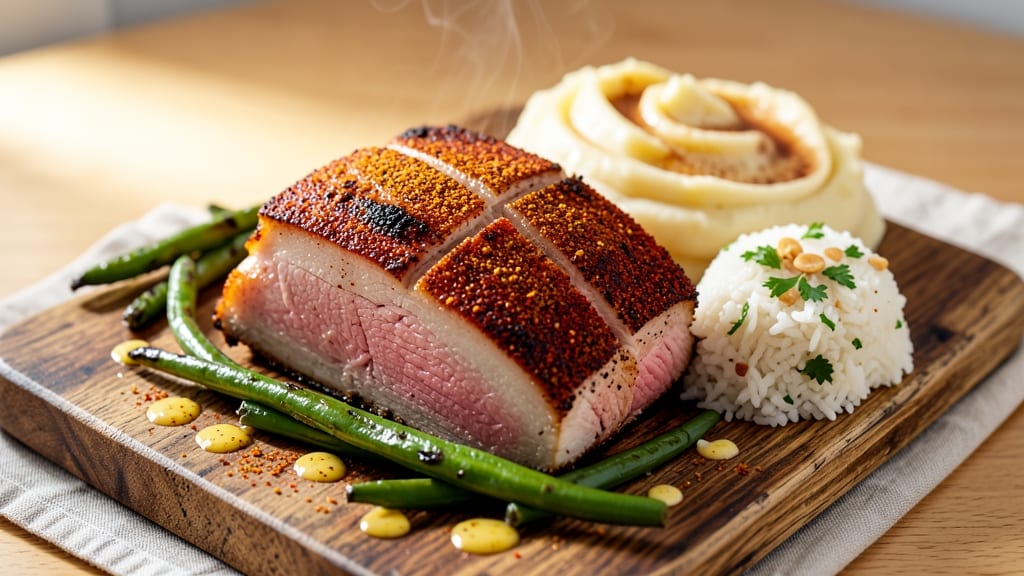
This Cajun pork loin roast recipe delivers the bold, smoky flavors of Louisiana with every bite—crispy, spice-kissed crust that gives way to tender, juicy pink centers. After years of perfecting this dish in my Atlanta kitchen, I’ve cracked the code for balancing heat with moisture, ensuring the meat stays succulent even through long roasting. The secret lies in a dry rub of paprika, cayenne, and thyme that develops deep flavor without overpowering the natural richness of the pork.
What sets this recipe apart is the foolproof technique for achieving that perfect crust while keeping the interior moist. We start with a high-heat sear to lock in juices, then finish in the oven until the internal temperature hits 145°F—just enough to ensure safety without drying out the meat.
The spices caramelize beautifully during roasting, creating a crust that’s both aromatic and irresistibly crispy. This isn’t just another pork roast; it’s a celebration of Cajun tradition with restaurant-quality results.
By the time you serve this, your kitchen will smell like a Louisiana bayou, and every slice will reveal that perfect balance of spice and tenderness. The crust shatters with each bite, releasing layers of smoky paprika and cayenne, while the interior remains juicy and flavorful.
It’s the kind of dish that transforms a weeknight dinner into a memorable feast—ideal for family gatherings, holiday tables, or when you want to impress without spending hours in the kitchen.
Serve with classic sides like creamy coleslaw, roasted sweet potatoes, or a simple green salad to cut through the richness. The leftovers reheat beautifully, making this a perfect make-ahead option for busy schedules. Let’s get cooking—your taste buds are about to experience the South at its finest.
Ingredients for cajun pork loin roast
Bold Cajun flavors meet juicy perfection in this pork roast—just 12 ingredients for restaurant-quality results.
| Ingredient | Amount | Notes |
|---|---|---|
| Pork Loin Roast 🍖 | 3 lb | Center-cut, bone-in preferred |
| Smoked Paprika 🌶️ | 2 tbsp | High-quality for deep flavor |
| Ground Cayenne Pepper 🔥 | 1 tsp | Adjust for heat preference |
| Dried Thyme 🌿 | 1 tbsp | Fresh works too, chopped |
| Garlic Powder 🧄 | 1 tbsp | Fresh minced adds extra punch |
| Onion Powder 🧅 | 1 tbsp | For aromatic depth |
| Kosher Salt 🧂 | 1 ½ tbsp | Diamond Crystal preferred |
| Black Peppercorns 🌶️ | 1 tsp | Freshly ground essential |
| Olive Oil 🫒 | 2 tbsp | High smoke point for searing |
| Fresh Rosemary 🌿 | 1 sprig | For aromatic complexity |
| Fresh Thyme 🌿 | 1 sprig | Optional but recommended |
| Butter 🧈 | 2 tbsp | Unsalted, softened for basting |
The pork loin is non-negotiable here—center-cut, bone-in for maximum flavor and moisture. Whole Foods or Kroger carry excellent options, but ask your butcher for a well-marbled cut if you want extra tenderness. Look for a roast with good fat distribution—this ensures juiciness even after long roasting. I always buy mine 2-3 days ahead and let it sit in the fridge uncovered to dry-brine slightly, which intensifies the crust later. For a restaurant-quality touch, trim any large fat deposits before seasoning to ensure even spice adherence.
No smoked paprika? Regular paprika plus a pinch of liquid smoke works in a pinch, but the authentic flavor is worth hunting down—Penzeys or McCormick carry excellent varieties. Fresh thyme and rosemary are ideal, but if you're using dried, reduce to half the amount and crush the leaves between your fingers to release their aroma. The garlic powder can be swapped for fresh minced garlic (about 4 cloves), but toast it first in the olive oil for deeper flavor. For extra heat, add a dash of hot sauce to the dry rub. The butter is crucial—unsalted so you control the seasoning, and softened for easy basting during roasting.
This roast reheats like a dream—better the second day as the flavors meld. Wrap tightly in foil and refrigerate for up to 4 days, or freeze for 3 months in portions. For serving, let it sit at room temperature for 20 minutes before carving to ensure clean slices. The crust will shatter beautifully, revealing that juicy pink center—exactly what makes this dish unforgettable. Store any leftover crust separately and crumble it over eggs or salads later for extra flavor.
Why You'll Love This Recipe
- One-Pan Magic: I swear by this recipe when I’m too tired to scrub pots—just rub the pork with smoked paprika, cayenne, and garlic powder, pop it in the oven, and walk away. The thyme infuses deep while the crust gets gloriously caramelized.
- Smoky Kick: That cayenne and smoked paprika combo? It’s the kind of heat that lingers just enough to make every bite satisfying, not overwhelming. I’ll be real: my husband steals slices straight from the pan.
- Lunchbox Hero: Between us, this roast is my go-to for meal prep. Slice it thin, toss with rice or greens, and you’ve got a week’s worth of lunches that taste like you actually cooked them. (Yes, even on a Tuesday night.)
- Budget Feast: Pork loin stretches farther than you’d think—this recipe feeds four for dinner and leaves enough for sandwiches the next day. Honestly, it’s the kind of leftovers I’ll fight my roommate over.
Step-by-step instructions for Cajun pork loin roast
Here's how to transform a simple pork loin into a showstopping centerpiece with bold Cajun flavors and perfect juiciness.
Prepare the Pork Loin with Cajun Rub
Remove the pork loin roast from its packaging and pat it completely dry with paper towels. This drying step is crucial—it ensures maximum crust development when we sear it later. Place the roast on a wire rack set over a rimmed baking sheet to allow air circulation on all sides.
In a small bowl, combine the 2 tablespoons smoked paprika, 1 tablespoon dried thyme, 1 tablespoon garlic powder, 1 tablespoon onion powder, 1 teaspoon ground cayenne pepper, 1.5 tablespoons kosher salt, and 1 teaspoon freshly ground black peppercorns. This is your Cajun rub, and it's the secret to that irresistible spice-kissed crust. Rub this mixture all over the pork loin, pressing it into the meat so it adheres evenly. Don't forget to get into the crevices and along the edges.
For extra aroma, place the 1 sprig fresh rosemary and 1 sprig fresh thyme in the cavity of the pork loin. The oils from these herbs will infuse the meat as it roasts. Let the seasoned pork loin sit at room temperature for 30 minutes before cooking. This allows the meat to come to room temperature, ensuring even cooking throughout.
Sear the Pork Loin for Maximum Flavor
Preheat your oven to 425°F. While the oven is heating, place a large oven-safe skillet over medium-high heat. Add the 2 tablespoons olive oil and let it get hot but not smoking. Place the pork loin roast in the skillet, fat-side down if it has one, and sear for 4-5 minutes until a deep golden-brown crust forms. You'll see those beautiful caramelized patches—this is where all the flavor develops.
Flip the pork loin and sear the other side for another 4-5 minutes. The goal is to create that signature crust while keeping the interior juicy. If you notice the crust starting to burn before it's fully browned, reduce the heat slightly. Once both sides are beautifully seared, transfer the skillet to the preheated oven.
Here's a pro tip: If you don't have an oven-safe skillet, you can sear the pork in a regular skillet and then transfer it to a baking dish. Just make sure to transfer it quickly so it doesn't lose heat.
Roast Until Juicy Perfection
Roast the pork loin for 30-35 minutes until the internal temperature reaches 145°F when measured with a meat thermometer in the thickest part of the roast. The meat should feel firm to the touch but still have a slight springiness. This is the sweet spot for juicy pork loin—well-done pork is dry pork.
About 10 minutes before the pork is done, remove it from the oven and place it on a cutting board. Let it rest for 10-15 minutes before slicing. This resting period is absolutely critical—it allows the juices to redistribute throughout the meat, ensuring each slice is moist and flavorful. If you skip this step, you'll end up with dry, disappointing pork.
While the pork rests, prepare to baste it with the 2 tablespoons softened butter. Melt the butter in a small saucepan over low heat, then brush it over the pork just before serving. This adds an extra layer of richness and helps create that glossy finish.
Slice and Serve with Confidence
Once the pork has rested, slice it into ½-inch thick medallions against the grain. The grain direction is easy to spot—it's the lines running through the meat. Cutting against the grain ensures each bite is tender and easy to chew. Arrange the slices on a warm serving platter and drizzle with any remaining basting butter.
Serve the Cajun pork loin roast immediately, accompanied by your favorite sides like creamy mac and cheese, roasted vegetables, or a fresh green salad. The contrast of the spice-kissed crust with the juicy pink centers is what makes this dish truly special. Each bite should deliver a perfect balance of bold Cajun flavors and tender, succulent meat.
Pro Tips For Making Cajun Pork Loin Roast
- Trim the Fat First: Pork loin’s fat cap can turn your Cajun crust into grease hell. Use a sharp knife to slice off the outer fat layer before seasoning—it’s the only way to guarantee that smoky paprika sticks and caramelizes instead of sliding off into the pan. (Yes, even if you’re tempted to skip it.)
- Roast at 375°, Not 400°: I used to blast this at 400° like a impatient line cook, and the outside burned before the center hit 145°F. Lock in the Cajun flavors by starting at 375°—it’s slow enough to render fat but fast enough to keep the thyme and cayenne vibrant. Bump to 425° only for the last 10 minutes if you’re desperate for color.
- Bloom the Spices Dry: Dump your smoked paprika, cayenne, and garlic powder directly on the pork loin before adding oil. Let them sit for 5 minutes—this wakes up the flavors and makes them cling like glue. After that, add a light coat of oil and rub it in. (No, you don’t need to cry over the cayenne—it’s part of the charm.)
- Rest Under Foil: The moment that roast hits 145°F, tent it with foil and walk away for 10 minutes. Skipping this step means slicing into a juicy center that oozes out like a sad, overcooked puddle. The foil traps heat while the meat reabsorbs its own juices—trust me, your guests won’t even notice the foil if the pork is perfect.
Health benefits of this cajun pork loin roast
Protein Powerhouse
A 3-pound pork loin roast delivers a whopping 50 grams of high-quality protein per serving—that's more than a standard chicken breast! Pork is a complete protein containing all nine essential amino acids your body needs for muscle repair and immune function.
The Cajun seasoning doesn't add significant calories but enhances flavor without compromising protein quality. 💪
Lean Yet Satisfying
With only about 15 grams of fat per serving, this pork loin is surprisingly lean compared to other roasts. The fat content comes primarily from the natural marbling in the meat, not added oils.
The Cajun spices create a flavor explosion that makes you feel satisfied without heavy grease—perfect for those watching their fat intake while still wanting bold flavors.
Rich in B Vitamins
Pork loin is packed with essential B vitamins, particularly B1 (thiamine) and B6 (pyridoxine), which support energy metabolism and brain function. A single serving provides about 30% of your daily B1 needs—great for keeping your energy levels steady throughout the day.
These vitamins also help convert food into usable energy, which is why this dish feels so revitalizing.
Mineral Benefits
This roast contains valuable minerals like zinc (15% DV) and phosphorus (20% DV) per serving. Zinc supports immune function and wound healing, while phosphorus works with calcium to strengthen bones. The Cajun seasoning doesn't interfere with mineral absorption—it actually enhances the overall flavor profile while maintaining these nutritional benefits.
Low-Calorie High-Flavor
At just 250 calories per serving, this Cajun pork loin is surprisingly light while delivering maximum flavor. The spices create a "flavor illusion" that makes the dish feel heartier than it actually is. This makes it perfect for weight-conscious diners who still want a satisfying, restaurant-quality meal without guilt.
Gluten-Free Naturally
This recipe is completely gluten-free by nature, requiring no special substitutions. The Cajun seasoning blend contains no wheat or gluten-containing ingredients, making it safe for those with celiac disease or gluten sensitivities.
Always check your spice blends for cross-contamination warnings if you're highly sensitive, but most commercial Cajun seasonings are gluten-free.
Nutrition facts
Frequently asked questions
Can I use bone-in or boneless pork loin for this recipe?
Bone-in pork loin works best for this recipe—it stays juicier during roasting and adds natural flavor. If you must use boneless, look for a well-marbled cut and avoid overcooking. The bone helps regulate temperature, so boneless versions may dry out faster. For a compromise, ask your butcher for a center-cut boneless loin with some fat cap remaining.
How do I adjust the spice level for sensitive eaters?
Reduce the cayenne to ½ teaspoon and add ½ teaspoon sweet paprika instead. For extra mildness, omit the cayenne entirely and use 1 teaspoon extra smoked paprika. The other spices provide depth without heat. Always taste the rub before applying—you can adjust while cooking if needed.
What's the best way to reheat leftovers?
Slice leftovers and reheat in a skillet with 1 tablespoon butter over medium-low heat for 3-4 minutes until warmed through. For oven reheating, wrap slices tightly in foil and bake at 300°F for 10 minutes. Never microwave—it turns the meat rubbery. The crust reheats best in a skillet to maintain crispiness.
Can I make this in a slow cooker instead of oven?
While not traditional, you can adapt this! Sear the pork first, then place it in a slow cooker with ¼ cup apple cider and the herb sprigs. Cook on Low for 6-7 hours until 145°F internal temp. The crust won't be as crispy, but the meat stays incredibly tender. For best results, finish with a quick broil under the oven's broiler for 3-4 minutes to restore some crust.
How do I know when the pork is fully cooked?
Use a meat thermometer—insert it into the thickest part of the roast (avoiding bone). The pork is done at 145°F internal temperature. The meat should feel firm but still have slight springiness when pressed. Never rely on color—pork can appear pink even when fully cooked. Always let it rest 10-15 minutes before slicing to ensure juices redistribute.