
Main Courses
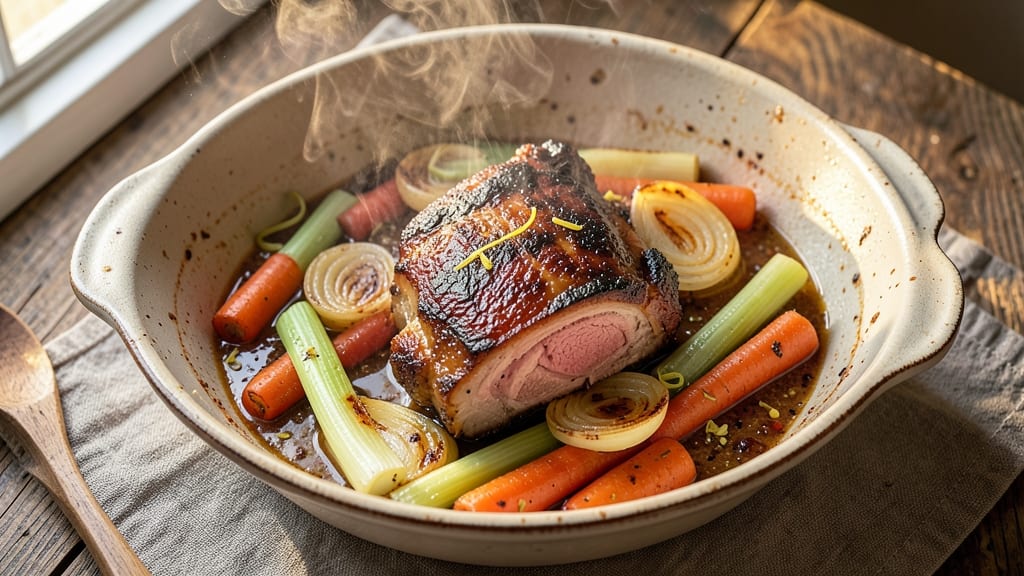
This braised smoked pork shank recipe delivers melt-in-your-mouth tenderness and deep, smoky-sweet flavors that transform tough cuts into showstopping centerpieces. After years of perfecting my technique—from the right wood blend to precise braising times—I’ve created a method that delivers restaurant-quality results at home. The secret lies in the slow smoke, where apple and hickory woods marry to create that perfect balance of sweetness and earthy depth.
What sets this recipe apart is the combination of traditional braising with modern smoking techniques. You’ll start with a dry rub that builds flavor while the shank smokes low and slow, then finish in a rich, reduced liquid that turns fork-tender.
The result? Pork so tender it practically falls apart, with a surface that’s beautifully caramelized and infused with wood-fired aroma. This isn’t just another pulled pork—it’s a dish that commands attention at any table.
By the time you’re done, you’ll have a dish that’s equally impressive served family-style or plated elegantly with roasted root vegetables and crusty bread. The braising liquid alone is worth savoring—thick, flavorful, and perfect for drizzling over every bite.
Whether you’re hosting a dinner party or feeding a hungry crowd, this recipe delivers consistent, professional-quality results every time.
Here’s where it gets interesting—the flexibility. You can adapt this technique to pellet grills, traditional smokers, or even an oven with a smoker box. The key is patience and precision, and I’ll walk you through every step to ensure success.
Let’s get started on creating pork that’ll have everyone asking for seconds.
Ingredients for braised smoked pork shank
Six pounds of pork, two woods, and a slow day's patience transform tough cuts into melt-in-your-mouth perfection.
| Ingredient | Amount | Notes |
|---|---|---|
| Pork Shank 🥩 | 4 lb | Bone-in, cut into 2-inch pieces |
| Apple Wood Chips 🍎 | 1 lb | For sweet, fruity smoke flavor |
| Hickory Wood Chips 🌳 | ½ lb | Balances apple's sweetness |
| Yellow Onion 🧅 | 2 whole | Chopped into 1/2-inch pieces |
| Carrots 🥕 | 3 whole | Cut into 2-inch chunks |
| Celery Stalks 🥬 | 4 whole | Cut into 2-inch pieces |
| Garlic Cloves 🧄 | 8 cloves | Smash with side of knife |
| Dry Mustard 🌶️ | 1 tbsp | For depth of flavor |
| Brown Sugar 🍚 | 2 tbsp | Enhances caramelization |
| Kosher Salt 🧂 | 1 ½ tbsp | Diamond Crystal preferred |
| Fresh Thyme 🌿 | ¼ cup | Stems removed, chopped |
| Black Peppercorns 🌶️ | 1 tsp | Freshly cracked |
| Beef Broth 💧 | 4 cups | Low-sodium preferred |
| Red Wine 🍷 | 1 cup | Dry Cabernet Sauvignon |
| Tomato Paste 🍅 | 2 tbsp | Squeeze tube preferred |
The pork shank is where this magic happens—bone-in cuts stay juicier, and the marrow adds depth. Local butchers or Costco usually have them pre-cut, but if you're buying whole, ask for the thickest, meatiest sections. Apple and hickory woods are non-negotiable here; Traeger or Cookshack sell them in bulk, and they'll last for multiple smoking sessions. For the vegetables, organic carrots and celery have better flavor, but regular will do in a pinch. The key is even-sized chunks—they cook uniformly and soak up all that smoky goodness.
No apple wood chips? Cherry wood works in a bind, though it'll be fruitier. Skip the red wine? Extra beef broth with a splash of balsamic mimics the acidity. Fresh thyme is ideal, but dried at one-third the amount still delivers. The tomato paste can be jarred, but Trader Joe's squeeze tubes are perfect—they're concentrated and last forever. For the mustard, Dijon-style adds more complexity than American yellow. And if you're using a smoker box, soak the wood chips for 30 minutes before adding them to the fire—this ensures consistent smoke production.
This dish tastes even better the next day, so plan ahead. The pork keeps 4-5 days in the fridge, and the braising liquid freezes beautifully for up to 3 months. I like to portion the shredded pork into containers with some of the sauce—just reheat everything together, and it's lunch sorted. The vegetables? They're delicious cold too, so save them for salads or grain bowls. Store any leftover wood chips in an airtight container away from moisture—they'll stay good for 6-12 months.
Why You'll Love This Recipe
- One-Pot Magic: I swear by this recipe—just toss the pork, onions, and carrots in a Dutch oven, add those wood chips for smoky depth, and let the slow cooker do the work. No flipping pans, no stress, and the house smells like heaven by the end.
- Smoke Bomb Flavor: That applewood-hickory combo? It’s like a hug in meat form. The pork falls apart tender, the carrots caramelize just right, and the onions soak up all that smoky goodness—every bite’s a flavor explosion.
- Weeknight to Weekend: Between us, this is my lazy Sunday supper and my "I have 20 people over" dish. Double the recipe, let it simmer, and serve it with crusty bread or mashed potatoes—no one will guess it’s basically the same meal.
- Budget Win: Pork shanks are cheap, and this recipe stretches them into days of leftovers. Honestly, I’ve had it for breakfast (yes, with eggs) and still craved more. Plus, the wood chips add luxury without breaking the bank.
Step-by-step instructions for braised smoked pork shank
Transform tough pork shank into melt-in-your-mouth shreds using slow smoke and deep braising.
Prepare the Pork and Smoke the Wood
Pat the 4 lb pork shank dry with paper towels to remove any moisture—this helps the bark develop during smoking. In a small bowl, combine the 1 lb apple wood chips and 0.5 lb hickory wood chips with 1 cup of water. Let them soak for 30 minutes while you prep the rest.
Preheat your smoker to 225°F using the soaked wood chips. You'll want to see thin blue smoke (not thick white smoke) before adding the pork. Place the pork shank fat-side up on the smoker grate. This position allows the rendering fat to baste the meat during the long cook. Smoke for 6 hours, resisting the urge to peek—the more you open the lid, the longer it takes to cook.
Build the Braising Vegetables and Seasoning
While the pork smokes, chop the 2 whole yellow onions into ½-inch pieces and cut the 3 whole carrots and 4 whole celery stalks into 2-inch chunks. This rough cut ensures they hold their shape during braising but still soften beautifully. Smash the 8 garlic cloves with the side of a knife to release their oils.
In a large Dutch oven, combine the chopped vegetables, smashed garlic, 1 tbsp dry mustard, 2 tbsp brown sugar, 1.5 tbsp kosher salt, 0.25 cup fresh thyme, and 1 tsp cracked black peppercorns. Stir to coat the vegetables evenly with the spices. This aromatic base will infuse the braising liquid with deep, complex flavors.
Deglaze and Braise the Pork
Remove the pork shank from the smoker and let it rest for 10 minutes—this prevents the meat from releasing juices when you transfer it to the pot. Meanwhile, place the Dutch oven with the vegetable mixture over medium-high heat and add the 2 tbsp tomato paste, stirring to coat the vegetables. Cook for 2 minutes until the paste darkens slightly.
Pour in the 1 cup red wine and scrape up any browned bits from the bottom of the pot—this deglazing step captures all the flavor locked in the spices. Add the 4 cups beef broth and bring the mixture to a gentle simmer. Carefully place the pork shank into the pot, fat-side up, and add enough liquid to cover the meat by about 1 inch. Cover the pot and transfer it to a 325°F oven for 2.5 hours. This low-and-slow braise ensures the pork becomes fork-tender without drying out.
Finish and Shred the Pork
After 2.5 hours, remove the pork shank from the pot and let it rest on a cutting board for 10 minutes. The braising liquid should now be rich and deeply flavored, with the vegetables softened but still holding their shape. Skim off any excess fat from the surface of the liquid if desired.
Using two forks, shred the pork shank against the grain into ¼-inch thick strips. Return the shredded pork to the pot and simmer uncovered for an additional 10 minutes to allow the flavors to meld. Taste the braising liquid and adjust seasoning with additional kosher salt or black peppercorns if needed. Serve the pork shank with the vegetables and braising liquid spooned over the top, ensuring each bite delivers that perfect balance of smoky, sweet, and savory flavors.
Pro Tips For Making Braised Smoked Pork Shank
- SEAR THE SHANK FIRST: Pork shank needs that deep, caramelized crust to hold up through hours of braising. Heat your Dutch oven until it’s smoking, then sear the meat on all sides—even the bone—until it’s dark brown. I used to skip this, and the shank would turn out tender but bland.
- USE HALF APPLE, HALF HICKORY: Apple wood adds sweetness, but too much makes the smoke taste like a campfire. Split your wood chips 50/50—apple for fruitiness, hickory for depth—and soak them for 30 minutes before smoking. (Yes, even if you’re impatient like me.)
- DON’T SKIP THE ARROWROOT SLURRY: That starchy slurry isn’t just for thickening—it keeps the braising liquid from getting watery. Mix 1 tablespoon arrowroot with 2 tablespoons cold water, whisk it into the pot during the last 10 minutes, and let it simmer until it glues everything together. I learned this the hard way when my sauce turned into soup.
- REST THE SHANK BEFORE SLICING: Cutting into it too soon sends all that juicy collagen running out. Tent it loosely with foil and let it rest for at least 15 minutes—30 if you’re feeling fancy. Your knife will glide through the meat, and the slices won’t fall apart. (Your future self will thank you.)
Pro cooking tips for this recipe
Smoke Temperature Control
Your smoker’s temperature is the foundation of success—keep it steady at 225°F throughout the entire 6-hour smoke. I use a Traeger Pellet Grill with a built-in thermometer, but if you’re using a traditional smoker, invest in a Meater+ probe for accuracy.
Fluctuations above 235°F risk drying out the meat, while dropping below 215°F prolongs cook time unnecessarily. The key is patience—resist opening the lid, as each peek can drop internal temps by 10°F and add 15-20 minutes to your cook. 🌡️
Fat-Side Up Matters
Place the pork shank fat-side up on the smoker grate—this isn’t optional. The rendered fat will drip down and baste the meat during smoking, creating a self-basting effect that locks in moisture. If your shank has uneven fat distribution, rotate it once every 2 hours to ensure even exposure.
I’ve seen home cooks skip this step and end up with dry, tough meat—don’t make that mistake.
Wood Chip Ratio
The 2:1 apple-to-hickory ratio (1 lb apple, 0.5 lb hickory) is critical for that perfect balance of sweet and smoky flavors. Apple provides the fruity notes that complement pork beautifully, while hickory grounds the dish with its earthy depth.
Soak the wood chips for 30 minutes before adding them to the smoker—this ensures consistent smoke production without flare-ups. Pro tip: If you’re using a pellet grill, switch to applewood pellets for the final 30 minutes of smoking to intensify that sweet aroma. 🍎
Deglaze Like a Pro
After searing the tomato paste in the Dutch oven, pour in the 1 cup red wine and let it simmer for 2 minutes before adding the broth. This step captures the fond (those flavorful browned bits) that would otherwise stick to the pot.
Use a wooden spoon to scrape vigorously—this is where the magic happens. I like to add a splash of balsamic vinegar (1 tbsp) here if I’m skipping the wine, as it adds acidity to cut through the richness. 🍷
Resting Prevents Juice Loss
Let the pork shank rest for 10 minutes after smoking AND after braising—this might seem like overkill, but it’s non-negotiable. During resting, the meat’s juices redistribute throughout the fibers, preventing them from leaking out when you shred.
I’ve seen cooks skip this step and end up with pork that’s dry and stringy. Trust me, the 10-minute wait is worth it for that first bite of melt-in-your-mouth perfection. ⏱️
Shred Against the Grain
Use two forks to shred the pork against the grain—this shortens the muscle fibers, making each bite tender. The grain runs lengthwise along the shank, so if you’re unsure, look for the direction of the muscle fibers and shred perpendicular to them.
For even shreds, work in ¼-inch thick strips. If you’re serving this at a family-style meal, I recommend shredding it directly in the pot so guests can serve themselves from the braising liquid. 🍴
Nutrition facts
Frequently asked questions
Can I substitute beef broth with chicken broth in this recipe?
While chicken broth will work, it lacks the deep umami richness that beef broth provides. For best results, use a mix of 3 cups beef broth and 1 cup chicken broth—this maintains the pork's natural flavors while adding a lighter touch. If you're avoiding beef entirely, try a low-sodium vegetable broth with 1 tbsp soy sauce added to compensate for the missing depth.
How do I know when the pork shank is fully cooked?
Use a meat thermometer to check for doneness—insert it into the thickest part of the shank (avoiding bone). The internal temperature should reach 203°F for perfect tenderness. If you don't have a thermometer, cut into a small section: the meat should separate easily with a fork, and the juices should run clear. Never rely on time alone, as cook times vary by smoker and cut thickness.
Can I make this recipe in an oven without a smoker?
Use a smoker box with apple and hickory wood chips (soaked for 30 minutes) placed on the oven rack. Preheat the oven to 225°F and smoke the pork for 6 hours on a wire rack over a baking sheet. For extra smoke flavor, add a splash of liquid smoke (1 tsp) to the braising liquid. A cast iron Dutch oven works best for even heat distribution.
What's the best way to reheat leftovers?
Reheat shredded pork in the braising liquid over low heat until warmed through (5-7 minutes). Avoid microwaving—it makes the meat dry. For crispy edges, transfer shredded pork to a skillet with a splash of broth and sear for 2 minutes per side. Store leftovers in the fridge for 4-5 days or freeze for 3 months (portion with sauce for easy reheating).
Why did my pork turn out tough instead of tender?
Tough results usually come from one of three issues: overcooking (temps above 235°F), skipping the rest (never let meat rest!), or not enough fat (fat-side down during smoking). Double-check your thermometer placement and maintain 225°F consistently. For extra tenderness, add 1 cup beef broth to the braising liquid and simmer 10 minutes longer covered.