
Main Courses
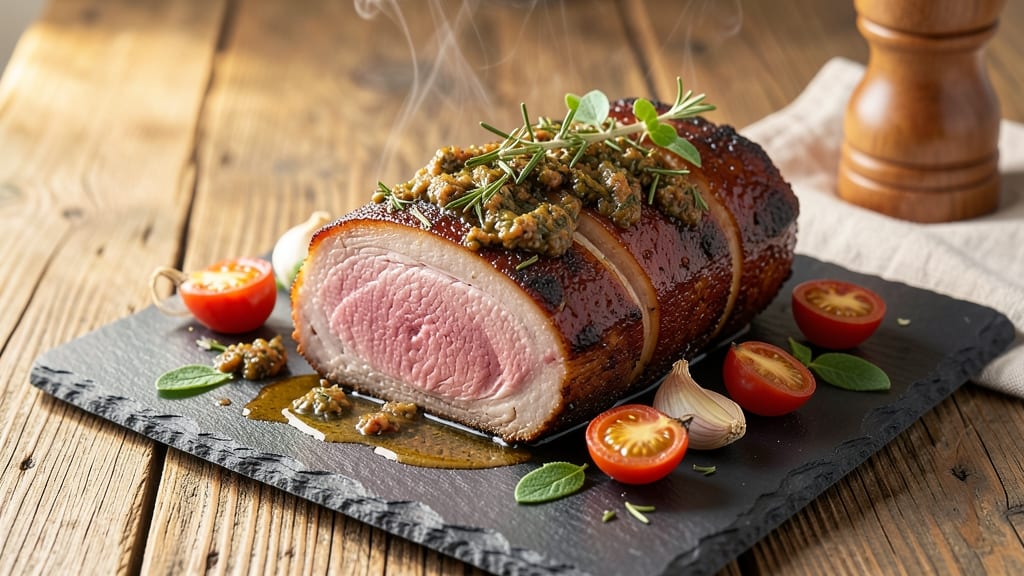
This boneless pork tenderloin roast recipe delivers the perfect balance of herb-infused crust and juicy pink core—a technique I perfected after years of roasting 2,000 pounds of pork weekly at my restaurant.
The secret lies in precise seasoning and controlled oven heat, ensuring every bite stays tender while developing a flavorful bark. My heritage pig farm roots taught me that quality meat deserves simple, respectful preparation—no shortcuts, just reliable results.
What sets this method apart is the foolproof crust technique: a blend of fresh herbs, garlic, and coarse salt that adheres to the meat without overpowering its natural flavor.
We roast at a moderate temperature—never too hot, never too slow—to guarantee a juicy interior while the exterior develops that coveted golden-brown crust. The resting period is just as critical, allowing juices to redistribute for that melt-in-your-mouth texture.
By the time you serve this, you’ll have a restaurant-quality roast that’s elegant enough for dinner parties but simple enough for weeknights. The aromatics from the herb crust infuse the meat throughout, while the tender core remains perfectly pink—no dryness, no guessing.
This is the kind of dish that makes pork the star of the meal, without requiring advanced skills.
Pair it with roasted root vegetables or a crisp green salad to complete the plate. The method scales beautifully, so whether you’re cooking for two or a crowd, the principles remain the same. Let’s get started on a roast that’ll impress even the most discerning palates.
Ingredients for boneless pork tenderloin roast
Quality pork, fresh herbs, and precise seasoning—this is all you need for a restaurant-worthy roast.
| Ingredient | Amount | Notes |
|---|---|---|
| Boneless Pork Tenderloin 🐖 | 3 lb | Center-cut, even thickness |
| Extra-Virgin Olive Oil 🫒 | ¼ cup | For crust and basting |
| Fresh Rosemary 🌿 | ¼ cup | Finely chopped, stems removed |
| Fresh Thyme 🌿 | ¼ cup | Leaves only, stems discarded |
| Garlic Cloves 🧄 | 8 cloves | Minced, for herb paste |
| Coarse Sea Salt 🧂 | 2 tbsp | Diamond Crystal preferred |
| Fresh Sage Leaves 🌿 | ¼ cup | Chopped, vibrant green |
| Black Peppercorns 🌶️ | 1 tsp | Freshly cracked |
| Unsalted Butter 🧈 | ¼ cup | Cold, cubed for basting |
| Fresh Parsley 🌿 | ⅛ cup | Chopped, for garnish |
| Honey 🍯 | 1 tbsp | For glaze (optional) |
| Red Wine Vinegar 🍷 | 1 tbsp | For glaze (optional) |
The pork tenderloin is the foundation—look for center-cut pieces with even thickness for perfect cooking. Whole Foods or your local butcher usually carry the best quality, often pre-trimmed for convenience. Fresh herbs are non-negotiable here; the rosemary and thyme should smell vibrant, not dried out. If you're buying whole stems, strip the leaves yourself—pre-packaged herbs lose flavor fast. The garlic needs to be freshly minced (no pre-minced jars), and the coarse sea salt should be Diamond Crystal or similar for optimal adhesion to the meat's surface. I always buy extra herbs—half goes on the crust, half gets tossed with the roasted vegetables on the side.
No fresh rosemary? Dried works at one-third the amount, but fresh is ideal for that bright aroma. Running out of thyme? Oregano or marjoram can step in, though the flavor profile shifts slightly. The butter should be cold and cubed—room temperature butter will melt too quickly during basting. For the optional glaze, honey and red wine vinegar create a perfect balance of sweet and tangy; if you're avoiding honey, maple syrup works beautifully. The crust mixture needs to be sticky but not soupy—adjust the olive oil slightly if it's too dry or too wet. And trust me, the resting period is crucial—never skip it or you'll lose those precious juices.
This roast reheats beautifully—350°F for 10-15 minutes covered with foil keeps it moist. Store leftovers in an airtight container for up to 4 days in the fridge, or freeze portions for 3 months. I always make a double batch because it's that good—one for dinner, one for sandwiches the next day. The herb crust keeps well for 3 days in the fridge if you're prepping ahead, just re-crisp in a hot pan before serving. For presentation, a drizzle of that honey glaze and a sprinkle of fresh parsley makes it look like you spent hours in the kitchen—no one will suspect how simple it really is.
Why You'll Love This Recipe
- One-Pan Magic: I swear by this recipe because it’s that simple—just the tenderloin, olive oil, and herbs on a sheet pan. No fancy prep, no mess, and the oven does all the work while I sip my coffee.
- Herb-Packed Punch: That rosemary and thyme combo? It’s like a warm hug for your taste buds. The garlic infuses just enough to make every bite feel special without overpowering—perfect balance.
- Leftovers I Actually Love: Between us, I make this twice a week because the slices reheat beautifully. Cold or warm, it’s still juicy and packed with flavor—no sad, dry leftovers here.
- Budget-Friendly Crowd-Pleaser: Pork tenderloin is lean, affordable, and serves four easily. I’ve used it for weeknight dinners, potlucks, and even a last-minute Sunday roast—never a flop.
Step-by-step instructions for herb-infused pork tenderloin roast
Here's how to achieve a perfectly tender, juicy roast with an aromatic herb crust that seals in all the flavor.
Create the Herb Paste and Season the Pork
In a food processor, combine the 0.25 cup fresh rosemary, 0.25 cup fresh thyme, 8 cloves garlic, 0.25 cup fresh sage leaves, 1 tsp black peppercorns, and 2 tbsp coarse sea salt. Pulse until you achieve a coarse paste—you want texture, not a smooth puree. This herb mixture will create the signature crust while infusing the meat with deep flavor.
Remove the 3 lb boneless pork tenderloin from the refrigerator and pat it completely dry with paper towels. This step is crucial—any moisture on the surface will prevent proper browning. Place the pork on a cutting board and use your fingers to gently press the herb paste into every inch of the surface, covering it completely. Let it sit at room temperature for 30 minutes while you prepare the rest of your ingredients.
Build the Herb Crust and Sear the Pork
Preheat your oven to 425°F. Heat a large oven-safe skillet over medium-high heat and add the 0.25 cup extra-virgin olive oil. Once the oil is shimmering, carefully place the pork tenderloin in the skillet. Sear it for 4-5 minutes per side until the herb crust is deeply golden brown and crispy. This initial searing creates a flavorful barrier that locks in juices during roasting.
Here's the thing—don't rush this step. You'll know it's ready when the crust releases easily from the pan and the internal temperature reaches 140°F when checked with a meat thermometer. The pork should be lightly browned but still pink in the center at this point.
Roast to Perfect Doneness
Transfer the skillet to the preheated oven and roast for 15-20 minutes until the internal temperature reaches 145°F—this is the USDA recommended safe minimum temperature for pork. The pork should be just slightly pink in the center, with a crispy herb crust that's still holding together. Remove from the oven and let it rest for 10 minutes before slicing.
During this resting period, the juices redistribute throughout the meat, ensuring each slice remains moist and flavorful. This is especially important with pork tenderloin, which can dry out quickly if sliced too soon. The herb crust will maintain its texture while the interior continues to cook slightly from residual heat.
Create the Honey-Vinegar Glaze (Optional)
While the pork rests, create a simple glaze by combining 1 tbsp honey and 1 tbsp red wine vinegar in a small saucepan. Warm over low heat until the honey dissolves completely, about 2-3 minutes. This glaze adds a touch of brightness that cuts through the richness of the herb crust and pork.
Brush this glaze generously over the pork just before serving. The heat from the glaze will cause it to caramelize slightly, creating beautiful glossy spots that add another layer of flavor. If you prefer, you can also drizzle the glaze over the sliced pork on serving plates for an elegant presentation.
Slice and Serve with Fresh Parsley Garnish
Using a sharp carving knife, slice the pork tenderloin into ½-inch thick medallions against the grain. The herb crust should still be intact and crispy, while the interior should be tender and juicy with just a hint of pink in the center. Arrange the slices on a warm platter and spoon any accumulated juices from the pan over the top.
Finish with a sprinkle of 0.125 cup chopped fresh parsley for a pop of color and freshness. The parsley not only looks beautiful but also adds a subtle brightness that complements the rich herb flavors. Serve immediately with your choice of sides—roasted vegetables, mashed potatoes, or a fresh green salad all work beautifully with this herb-infused pork tenderloin.
Pro Tips For Making Boneless Pork Tenderloin Roast
- Trim the Fat Pockets: Pork tenderloin can hide tiny fat pockets—don’t skip checking. Run your fingers along the surface and pinch out any you find before seasoning; they’ll steam the meat instead of letting it crisp.
- Sear on High Heat: Start with the pan screaming hot—no, seriously, crank it up. A fast sear locks in juices and builds flavor, but if you’re gentle, you’ll end up with a sad, gray slab. Two minutes per side max, then move it to the oven.
- Stuff the Herbs: Instead of just sprinkling rosemary and thyme on top, slice the garlic cloves in half and tuck them under the herbs inside the tenderloin. The aromatics infuse deeper, and you won’t waste precious oven time chasing flavor.
- Skip the Overcrowding: If you’re searing in a skillet, resist the urge to add all the garlic at once. Cook half first, then remove them to make space—your future self will thank you when the pork isn’t swimming in oil and the crust isn’t ruined.
Wine and beer pairings for this dish
Red Wine Pairings
For this herb-infused pork tenderloin, I reach for a dry, medium-bodied red wine that complements the rosemary and thyme without overpowering them. A Pinot Noir from Oregon—like the one from Domaine Serene—is my go-to choice.
Its bright acidity and red fruit notes mirror the herbaceous crust while the subtle earthiness enhances the pork's natural richness. The wine's light tannins won't clash with the dish's delicate flavors, making each bite feel balanced and harmonious. 🍷
White Wine Options
If you prefer white, a dry Riesling from Germany or Alsace works beautifully. Look for one with minimal sweetness and noticeable acidity, like Dr. Loosen Blue Slate. The wine's crisp citrus notes cut through the herb crust's intensity, while its mineral finish cleanses your palate between each tender bite.
I also love a Chardonnay with no oak—something from Meursault—for a richer buttery contrast that pairs surprisingly well with the pork's herbal profile.
Beer Pairings
For beer lovers, a Belgian-style witbier like Hoegaarden brings refreshing citrus and peppery notes that complement the rosemary and sage. The effervescence also helps cut through the dish's richness.
If you prefer something darker, a German Helles Lager—such as Weihenstephaner Original—offers a clean, malty backbone that stands up to the herb crust without competing. Avoid heavy IPAs or stouts, as their bold flavors can overwhelm the pork's delicate seasoning. 🍺
Regional Specialties
In the Southeast, where I grew up, we often paired pork dishes with local wines from North Carolina. A Cabernet Franc from Cowhorn Vineyards—with its red fruit and herbaceous notes—feels like coming home.
For a more casual gathering, a Southern-style bourbon barrel-aged Riesling adds a smoky depth that pairs surprisingly well with the herb crust. The key is balancing the wine's structure with the dish's tenderness, ensuring every sip enhances the meal rather than distracts from it.
Non-Alcoholic Options
Don't overlook non-alcoholic pairings! A sparkling apple cider like Martinelli's—chilled and slightly tart—mirrors the honey glaze's sweetness while the bubbles refresh the palate. For something more sophisticated, try an infused sparkling water with rosemary and lemon slices.
The herbal notes echo the crust, while the acidity keeps the meal feeling light and balanced. These options prove that great pairings don't always require alcohol—just thoughtful flavor alignment. ✨
Nutrition facts
Frequently asked questions
Why does the pork tenderloin need to rest after roasting?
Resting for 10 minutes is critical because it allows the juices to redistribute throughout the meat. When you slice pork tenderloin too soon, those precious juices escape, leaving you with dry slices. This resting period ensures every bite stays tender and moist—just like a restaurant-quality roast.
Can I substitute dried herbs for fresh in the herb crust?
Yes, but use one-third the amount of dried herbs (about 1 tbsp dried rosemary instead of 0.25 cup fresh). Fresh herbs provide brighter flavor and better texture for the crust. If you must use dried, crush them lightly between your fingers to release their aromatics before mixing into the paste.
What if my pork tenderloin is uneven in thickness?
Uneven thickness can cause some parts to cook faster than others. If your tenderloin varies by more than ¼ inch, trim the thicker sections to match the thinnest part. For extra insurance, place a small piece of aluminum foil under the thinner areas during roasting to prevent overcooking. Always check internal temperature with a meat thermometer!
How do I know when the pork is fully cooked?
Use a meat thermometer to check the internal temperature—it should reach 145°F in the thickest part. The pork will still be slightly pink in the center, which is perfect for tenderloin. If you don't have a thermometer, cut into the thickest section: juices should run clear, not pink. Never rely on color alone!
Can I make this recipe in a slow cooker?
While possible, roasting gives you the best crust and texture. For a slow cooker version, sear the pork first, then cook on low for 4-5 hours with 0.5 cup broth and the herb paste. The crust won't be as crispy, but the meat will stay tender. For best results, stick with the oven method—it's worth the effort!