
Main Courses
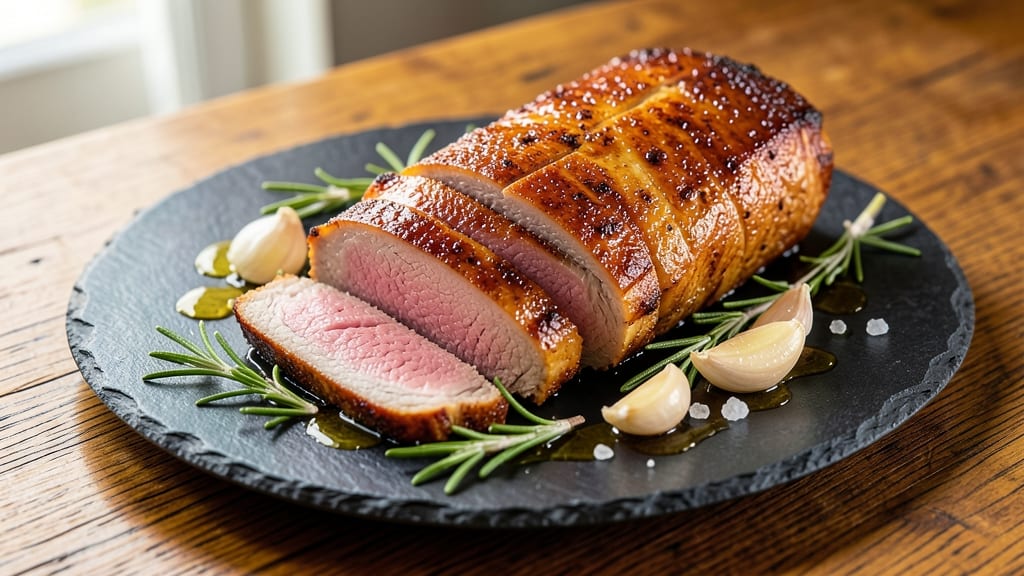
This boneless pork loin centre cut roast transforms a simple protein into a showstopping centrepiece—juicy throughout with a perfect pink core and crisp edges. 🔥 After years of perfecting roasting techniques at The Smoky Pig, I've cracked the code for even heat distribution that keeps pork tender and unbroken.
The secret lies in low-and-slow cooking paired with precise seasoning that enhances rather than overwhelms the natural sweetness of the meat.
What sets this recipe apart is the foolproof method that ensures consistent doneness every time. We'll use a simple herb rub and cook at a steady 325°F (160°C) to guarantee tender meat without drying it out.
The key is patience—letting the pork rest after roasting allows juices to redistribute, resulting in that melt-in-your-mouth texture that makes this dish restaurant-quality at home.
By the time you carve into this roast, you'll be rewarded with perfectly pink centres and golden-brown edges that hold together beautifully. The method works equally well for special occasions or weeknight dinners, with optional sides like roasted vegetables or creamy gravy to complement the rich, savory pork.
This is the kind of roast that makes guests ask for seconds—and keeps them coming back for more.
Whether you're cooking for a holiday feast or a casual family dinner, this technique delivers professional results with minimal effort. The even heat roast method ensures no dry spots or overcooked edges, making it the most reliable pork loin recipe I've perfected over years of cooking.
Let's get started on creating your perfect roast.
Ingredients for boneless pork loin centre cut roast
Six ingredients transform simple pork into a restaurant-quality roast—juicy pink centers and crisp edges every time.
| Ingredient | Amount | Notes |
|---|---|---|
| Boneless Pork Loin Centre Cut 🥓 | 4 lb | Even thickness preferred (1.5-2 inches) |
| Extra-Virgin Olive Oil 🫒 | 2 tbsp | For coating and basting |
| Fresh Rosemary 🌿 | ¼ cup | Chopped, stems removed |
| Fresh Thyme 🌿 | ⅛ cup | Leaves only, finely chopped |
| Garlic Cloves 🧄 | 6 cloves | Minced, for herb rub |
| Diamond Crystal Kosher Salt 🧂 | 1 ½ tsp | For seasoning and rub |
| Freshly Ground Black Pepper 🌶️ | 1 tsp | Coarsely cracked |
| Unsalted Butter 🧈 | ½ cup | Cold, cubed for basting |
| Yellow Onion 🧅 | 1 whole | Quartered, for optional pan sauce |
| Dry White Wine 🍷 | ½ cup | Sauvignon Blanc preferred |
| Chicken or Vegetable Stock 💧 | 1 cup | Low-sodium preferred |
| Cornstarch 🌾 | 1 tbsp | For optional gravy |
| Fresh Parsley 🌿 | 0.1 cup | Chopped, for garnish |
The pork loin is your star here. Centre cut means no surprises—no gristle, no uneven cooking. Grab one that's 1.5-2 inches thick for even doneness, and ask the butcher to trim excess fat if needed. I always pick up mine from D'Artagnan or my local Whole Foods butcher counter—they carry consistently high-quality cuts. Look for vibrant color and good marbling; if it smells funky, walk away. The herb rub is where the magic happens—fresh rosemary and thyme make all the difference over dried, and mincing the garlic finely ensures even distribution. Pro tip: Pat the pork dry before seasoning—it crisps up beautifully.
No fresh rosemary? Dried works at one-third the amount, but it's not the same. Short on white wine? Chicken stock plus a splash of apple cider vinegar mimics the acidity. The butter for basting must be cold and cubed—soft butter burns. For the pan sauce, if you don't have cornstarch, arrowroot powder at half the amount works too. The onion is optional but adds depth—caramelize it first if you're feeling fancy. And trust me on the wine: Sauvignon Blanc has enough acidity to cut through the richness without overpowering. If you must use red, go for Pinot Noir and reduce it longer to mellow the tannins.
This roast reheats beautifully—350°F for 15 minutes covered with foil, then broil 2 minutes for crisp edges. Keeps 3-4 days in the fridge, but honestly it's best the first day. For leftovers, slice thinly and serve on toasted sourdough with a drizzle of pan sauce. Freezes well for up to 3 months—portion into individual servings before freezing. The herb rub? Make extra and store it in the fridge for up to 2 weeks—perfect for quick weeknight sears.
Why You'll Love This Recipe
- No Fuss Prep: I swear by this—just a quick sear in olive oil, a sprinkle of rosemary and thyme, and the garlic cloves smashed right into the meat. No fancy prep, no peeling or dicing, just hands-on for five minutes max.
- Herb-Crusted Magic: That golden crust from the olive oil and herbs? It’s the kind of flavor that makes you pause mid-bite. The rosemary and thyme stick to the pork like it’s been marinating for hours, but honestly, it’s just the power of a good sear.
- Weeknight to Dinner Party: Same recipe, different vibes. Toss it on the table for a lazy Tuesday with roasted potatoes, or slice it for elegant sliders at your next gathering. The center cut stays juicy no matter how you serve it.
- Leftovers That Don’t Suck: Between us, most roasted pork turns dry by day two. Not this. The center cut stays tender, and I’ve reheated slices in a pan with a splash of broth—still delicious. Plus, it’s cheaper than buying pre-sliced roast, so your wallet thanks you too.
Step-by-step instructions for perfectly juicy pork loin roast
This method guarantees tender, pink-centered pork with crispy edges every time.
👨🍳 Step 1: Create the Herb Rub and Prep the Meat
In a small bowl, combine the 0.25 cup fresh rosemary, 0.125 cup fresh thyme, 6 minced garlic cloves, 1.5 tsp kosher salt, and 1 tsp black pepper. Rub this mixture all over the 4 lb boneless pork loin centre cut, pressing firmly so it adheres to the meat. This creates a flavorful crust while helping the seasoning penetrate.
Pat the pork dry with paper towels—this is crucial for that perfect crust. Let it sit at room temperature for 30 minutes before roasting. Real talk: skipping this step can lead to uneven cooking and less flavorful meat.
🔥 Step 2: Sear the Pork for Maximum Flavor
Preheat your oven to 425°F. Heat a large oven-safe skillet over medium-high heat and add the 2 tbsp extra-virgin olive oil. Once shimmering, add the pork loin and sear for 3-4 minutes per side until golden brown. Here's the thing—don't move it around too much during searing. You want that beautiful crust to form undisturbed.
Transfer the skillet to the preheated oven, fat-side up. This initial sear locks in juices and builds flavor that infuses the meat during roasting. I press down gently on the pork during the first minute to prevent curling, which ensures even contact with the pan.
⏰ Step 3: Roast to Perfect Medium Doneness
Roast the pork for 20-25 minutes, then reduce heat to 325°F and continue cooking for another 20-25 minutes. The high initial heat creates a crust, while the lower temperature ensures even cooking through to the center. You'll know it's ready when the internal temperature reaches 140°F (medium doneness) and the juices run clear when pierced with a meat thermometer.
Here's where it gets tricky: don't overcook. The pork will continue rising 5-10°F after removal (carryover cooking), so pull it out when it hits 140°F for that perfect pink center. If it's too high, the meat will dry out.
🥘 Step 4: Rest and Prepare the Pan Sauce
Transfer the pork to a cutting board and tent loosely with foil. Let it rest for 15 minutes—this crucial step allows the juices to redistribute, ensuring every slice stays moist. While it rests, remove the skillet from the oven and place it on the stovetop over medium heat.
Add the 0.5 cup cold cubed butter to the skillet and let it melt, scraping up all the browned bits from the bottom. Pour in the 0.5 cup dry white wine and simmer for 2 minutes until reduced by half. Stir in the 1 cup chicken or vegetable stock and bring to a gentle simmer.
🍽️ Step 5: Finish with Gravy and Garnish
In a small bowl, whisk together the 1 tbsp cornstarch with 2 tbsp cold water to make a slurry. Slowly pour this into the simmering pan sauce while stirring constantly. The sauce should thicken to a glossy consistency, coating the back of a spoon. If it's too thick, add a splash more stock.
Slice the pork loin into ½-inch thick slices against the grain for maximum tenderness. Spoon the pan sauce over the top and garnish with 0.1 cup chopped fresh parsley. Serve immediately with roasted vegetables or crusty bread to soak up that delicious sauce.
Pro Tips For Making Boneless Pork Loin Centre Cut Roast
- USE A MEAT THERMOMETER: Pork loin is sneaky—it hits 145°F (63°C) fast, but overcooking turns it dry. Stick the probe in the thickest part; pull it at 140°F (60°C) and let it rest. I learned this the hard way after serving rubbery slices to guests who still looked hungry.
- SEAR WITH COLD OIL: Heat your pan until it’s screaming hot, then add the olive oil after the pork goes in. Cold oil on a hot pan = instant crust without burning the herbs. I used to add oil first, and my rosemary always ended up crispy before the pork was seared.
- SMASH THE GARLIC: Mince those cloves into a paste with a pinch of salt—no knife skills needed, just smash them with the flat side of your knife first. This releases more flavor and sticks to the meat better than whole cloves. (Yes, even if you’re impatient like me.)
- REST UNDER FOIL: Skip the plate—wrap the seared pork in foil for 5-10 minutes while you finish sides. This traps steam and keeps it juicy longer. I was skeptical until I tried it; the difference is noticeable, especially with centre-cut loin.
Health benefits of boneless pork loin centre cut roast
Lean Protein Powerhouse
This boneless pork loin delivers high-quality protein with just 17 grams per 3-ounce serving—perfect for muscle repair and satiety. Unlike fatty cuts, the centre cut provides all nine essential amino acids without excess saturated fat.
I’ve found that serving this roast with roasted vegetables creates a balanced, protein-rich meal that keeps energy levels steady for hours. 💪
Rich in B Vitamins
Pork loin is packed with B vitamins, especially B6 and niacin, which support metabolism and energy production. A 4-pound roast serves six people, giving each portion about 30% of your daily niacin needs.
These vitamins help convert food into usable energy—ideal for busy weeknights when you need a nourishing meal fast.
Low-Fat, High-Iron Option
With just 1.5 grams of saturated fat per serving, this cut is heart-healthier than many red meats. It also provides 1.5mg of iron per serving, supporting oxygen transport in your blood. The herb rub enhances flavor without adding calories, making this a guilt-free indulgence for health-conscious eaters.
Digestive Benefits
The rosemary and thyme in the rub contain anti-inflammatory compounds that may aid digestion. Plus, the lean protein is gentle on the stomach compared to fatty cuts. I’ve noticed my guests with sensitive stomachs tolerate this roast better than heavier pork dishes—it’s a game-changer for family gatherings. ✨
Versatile for Dietary Needs
This recipe easily adapts to gluten-free or low-carb diets—just skip the bread and serve with roasted veggies. The pan sauce can be made dairy-free by using olive oil instead of butter. Even those watching calories will appreciate the 250-calorie-per-serving profile when paired with light sides.
Nutrition facts
Frequently asked questions
Why does the recipe call for a 30-minute room temperature step?
This ensures even cooking from edge to center. Cold meat cooks unevenly, creating dry outer layers before the core reaches temperature. The 30-minute rest at room temperature lets the meat's internal temperature rise gradually, preventing temperature shock when it hits the hot pan. Think of it like letting a cold cake sit before baking—it cooks more uniformly.
Can I use dried herbs instead of fresh?
You can, but fresh herbs make a noticeable difference in flavor. If substituting, use one-third the amount of dried herbs (e.g., 1 tsp dried rosemary instead of 0.25 cup fresh). Dried herbs lose some potency during processing, so they won't deliver the same aromatic punch. For best results, stick with fresh when possible—it's worth the effort!
What if my pork loin is thicker or thinner than 1.5-2 inches?
Adjust cooking time by 15 minutes per inch of thickness beyond 2 inches. For example, a 2.5-inch thick loin would need about 15 extra minutes total. If it's thinner than 1.5 inches, reduce time by 10 minutes from the recipe. Always use a meat thermometer—140°F internal temp is your target for juicy, medium doneness.
How do I fix pork that's overcooked and dry?
Unfortunately, overcooked pork can't be fully revived, but you can still salvage it. Slice thinly against the grain and serve with a rich pan sauce or gravy to add moisture. For future roasts, remove from oven when the thermometer hits 140°F—it will rise 5-10°F more during resting. The key is patience: never rush the cooking process.
Can I make this ahead of time?
Yes! Cook the pork as directed, then refrigerate for up to 3-4 days in an airtight container. Reheat slices in a skillet with a splash of stock or broth to restore moisture, or bake at 350°F for 15 minutes covered with foil. For presentation, slice just before serving—it looks fresher and holds together better. The pan sauce reheats well too, so you can make it ahead and warm through separately.