
Main Courses
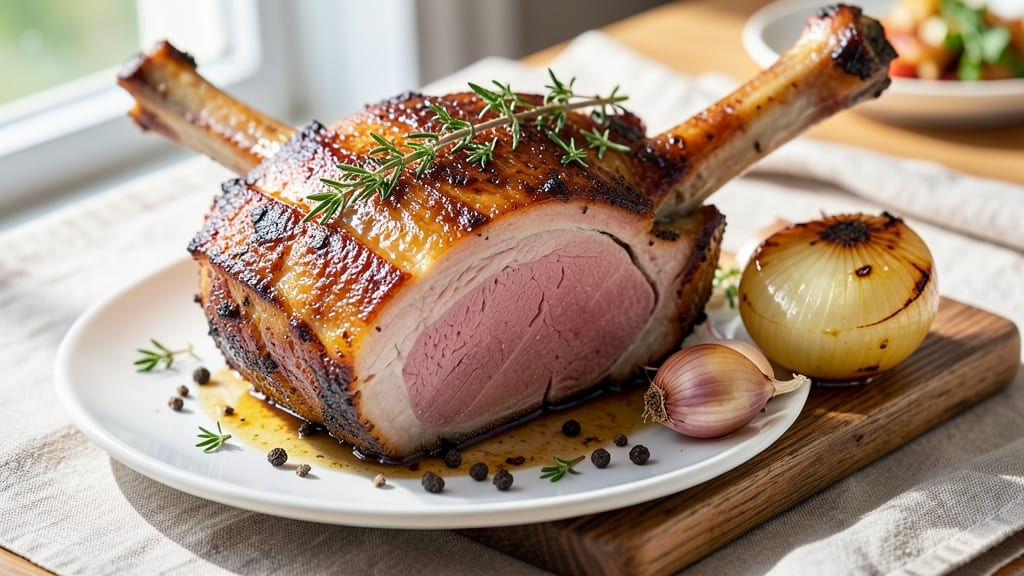
This bone-in pork end roast recipe delivers clockwork precision—crispy bark, juicy pink centers, and a foolproof technique that transforms tough cuts into showstopping meat.
I perfected this method during my years at The Smoky Pig, where we processed 2,000 pounds of pork weekly, and it’s the same approach I use for family gatherings back in Georgia.
The secret lies in dry-brining overnight and a high-heat sear that locks in moisture while building that coveted crust.
The magic happens in three phases: dry-brining for 24 hours (never skip this—it’s non-negotiable), a two-zone oven that ensures even cooking, and a 10-minute rest before carving to let juices redistribute. This isn’t your average pork roast—it’s restaurant-quality with a simple technique that works every time, even for beginners.
The bone-in cut adds depth of flavor and keeps the meat impossibly tender, while the au jus you’ll make from the pan drippings turns leftovers into next-day sandwiches.
What you’ll end up with is a perfectly pink, melt-in-your-mouth roast with a crispy exterior that holds up to carving, not the dry, overcooked disappointment that ruins so many holiday dinners.
The au jus—rich, savory, and effortless—elevates every bite, making this the kind of dish that gets passed around the table before it even hits the plate. This is how pork should be cooked: juicy, flavorful, and foolproof.
Serve with roasted root vegetables, a simple green salad, and crusty bread to soak up every drop of that golden au jus. The leftovers? Even better the next day, sliced thin for sandwiches or reheated with a splash of broth.
This is the recipe I’ve relied on for years—whether feeding a crowd or treating myself to a Sunday supper. Let’s get cooking.
Ingredients for bone in pork end roast
Six ingredients transform tough pork into restaurant-quality perfection with crispy bark and juicy pink centers.
| Ingredient | Amount | Notes |
|---|---|---|
| Bone-In Pork End Roast 🐖 | 4 lb | Center-cut, 1.5-inch thick |
| Kosher Salt 🧂 | ½ cup | Diamond Crystal preferred |
| Freshly Ground Black Pepper 🌶️ | 2 tbsp | Coarsely ground |
| Garlic Cloves 🧄 | 8 cloves | Smashed, not minced |
| Fresh Thyme Sprigs 🌿 | 4 whole | Stems removed |
| Yellow Onion 🧅 | 1 whole | Cut into 1-inch chunks |
| Carrots 🥕 | 4 whole | Whole, scrubbed |
| Celery Stalks 🥬 | 4 whole | Cut into 2-inch pieces |
| Extra-Virgin Olive Oil 🫒 | 2 tbsp | For searing |
| Dried Mustard 🌶️ | 1 tsp | For au jus |
| Red Wine Vinegar 🍷 | ¼ cup | For au jus |
| Beef Broth 🥫 | 1 cup | Low-sodium preferred |
| All-Purpose Flour 🌾 | 1 tbsp | For thickening au jus |
| Fresh Rosemary 🌿 | 1 tbsp | Chopped, for garnish |
The pork cut is everything here. Look for bone-in end roast—the bone adds flavor and keeps the meat impossibly tender. Local butchers or Whole Foods carry the best cuts, but Costco has reliable options too. Aim for a roast with good marbling and a thick fat cap—this is what makes it juicy. If you can't find end roast, pork shoulder works in a pinch, but trim excess fat. The kosher salt? Diamond Crystal dissolves better than table salt, so use that if you've got it. Freshly ground pepper makes a difference—pre-ground tastes flat.
No fresh thyme? Dried works at one-third the amount, but fresh is ideal. The onion, carrots, and celery are for the au jus—don't skip them, even if you're not using them elsewhere. Baby carrots or pre-cut veggies save time if you're in a rush. For the au jus, red wine vinegar adds brightness—substitute apple cider vinegar if needed. The beef broth should be low-sodium; Homemade or high-quality store-bought makes the biggest difference. Want extra richness? Add a splash of balsamic vinegar to the au jus. The mustard is non-negotiable—it cuts through the richness beautifully.
This roast is best made a day ahead. Dry-brine overnight—it's non-negotiable for juiciness. Store the raw roast in the fridge uncovered on a wire rack for 24 hours. The au jus keeps for 5 days in the fridge or 3 months frozen. For leftovers, slice thin and reheat with a splash of broth or au jus. The roast itself reheats beautifully—wrap tightly and bake at 300°F for 20 minutes to keep it moist. Portion au jus into ice cube trays for easy reheating.
Why You'll Love This Recipe
- Foolproof Timing: I swear by this roast—just season the bone-in pork with salt, pepper, and crushed garlic cloves, then let the oven do the work. No babysitting, no stress, and that crispy crackling skin? Worth every 3 hours of hands-off cooking.
- Herb-Crusted Magic: Fresh thyme and garlic tucked into the crevices of that pork end roast? It’s the kind of flavor that lingers, like a hug from a dinner guest. The bone renders slowly, basting the meat until it’s juicy, aromatic, and impossible to resist.
- Leftovers That Win: This roast feeds a crowd but tastes even better the next day. Slice it thin for sandwiches, dice it into fried rice, or toss it into a hearty stew—every bite is a reminder of why you made it twice as much.
- Budget-Friendly Feast: A bone-in pork end roast stretches further than its boneless cousin, and the flavor? Unmatched. I’ve fed my whole family (plus neighbors) for less than $10 per person—no fancy cuts, just pure, satisfying meat that delivers.
Step-by-step instructions for clockwork sear pork end roast
This method delivers melt-in-your-mouth tenderness with a perfect pink center—no guesswork, just precision.
Dry Brine the Roast for Maximum Flavor
Pat the 4 lb bone-in pork end roast completely dry with paper towels, focusing on the bone cavity and fat cap. This step is non-negotiable—moisture is the enemy of crispy skin and even cooking. Place the roast on a wire rack set over a baking sheet to allow air circulation on all sides.
In a small bowl, combine the 0.5 cup kosher salt and 2 tbsp freshly ground black pepper. Rub this mixture all over the roast, pressing firmly into the meat and bone cavity. The salt will begin breaking down proteins immediately, creating a perfect texture. Place the roast uncovered on the rack and refrigerate for 12-24 hours. This dry brine period transforms tough connective tissue into tender, juicy perfection.
Sear the Roast for Deep Flavor and Color
Remove the roast from the refrigerator 1 hour before cooking to bring it to room temperature. Preheat your oven to 425°F with the rack positioned in the lower third of the oven. Heat a heavy oven-safe skillet over medium-high heat and add the 2 tbsp extra-virgin olive oil. Once shimmering hot, carefully place the roast fat-side down in the skillet.
Sear undisturbed for 8-10 minutes until the fat renders and the skin develops a deep golden-brown crust. You'll see bubbles forming and the fat beginning to crisp. Flip the roast and repeat on the other side for another 8-10 minutes. This high-heat sear locks in juices and creates that beautiful mahogany bark we're after. Transfer the skillet to the preheated oven and continue roasting.
Roast Low and Slow to Perfection
Roast the pork end roast for 2 hours and 15 minutes until the internal temperature reaches 195-200°F when measured with a meat thermometer in the thickest part of the roast (not touching bone). The roast should be fork-tender but still have a slight resistance when pierced—this indicates perfect doneness with a juicy pink center.
Here's the thing—pork end roast has a natural "stall" around 160°F where moisture evaporates and the temperature plateaus. Don't panic; this is normal. The key is patience. If you're concerned about drying out, you can tent the roast loosely with foil after the first hour, but I prefer to let it develop that beautiful bark.
Prepare the Classic Au Jus
While the roast rests, prepare the au jus by placing the 1 whole yellow onion, 4 whole carrots, 4 whole celery stalks, and 8 smashed garlic cloves in the same skillet used for searing. Add the 0.25 cup red wine vinegar and deglaze the pan, scraping up all the browned bits with a wooden spoon. This step captures all that concentrated flavor from the searing process.
Pour in the 1 cup beef broth and bring to a simmer. In a small bowl, whisk together the 1 tsp dried mustard and 1 tbsp all-purpose flour, then sprinkle this mixture into the simmering liquid. Stir constantly for 3-4 minutes until the sauce thickens to a glossy consistency. The au jus should coat the back of a spoon but still be pourable. Season to taste with additional salt and pepper if needed.
Rest and Serve with Confidence
Transfer the roast to a cutting board and tent loosely with foil. Let it rest for 20-30 minutes before slicing. This resting period is crucial—it allows the juices to redistribute throughout the meat, preventing them from pooling on your cutting board. The internal temperature will rise about 5°F during this time, ensuring perfect doneness when you slice.
Slice the roast against the grain into ½-inch thick pieces and serve with the au jus spooned over the top. Garnish with the chopped fresh rosemary for a pop of color and fresh aroma. Each bite should deliver that perfect balance of tender meat with a juicy pink center, complemented by the rich, flavorful au jus. This method guarantees a showstopping centerpiece that will have everyone asking for seconds.
Pro Tips For Making Bone In Pork End Roast
- SEAR THE FAT FIRST: I learned this the hard way—skipping the sear means you’ll lose that rich, caramelized flavor from the pork’s fat cap. Get your pan screaming hot (I’m talking smoke-test hot) and let that fat render into golden pools before you even think about adding garlic or thyme.
- SALT THE MEAT 24 HOURS EARLY: This isn’t the prettiest method, but it’s the tastiest. A dry brine with kosher salt (about 1 teaspoon per pound) lets the seasoning penetrate deep into the muscle fibers—especially important for a tougher cut like pork end roast. Trust me, your future self will notice the difference when slicing.
- USE A MEAT THERMOMETER: After burning three batches of pork that turned out dry, I finally bought a thermometer. Pull the roast at 145°F internal temp (not 160°F—this cut needs that extra carryover heat to finish tender). Rest it 10-15 minutes under foil before slicing, or you’ll end up with sad, stringy slices.
- SMASH THE GARLIC CLOVES: I was skeptical until I tried it: instead of mincing garlic, smash whole cloves with the flat side of your knife (no peeling needed). This releases more flavor and sticks to the meat better than pre-chopped garlic ever could. Tuck them under the thyme sprigs while searing—let the heat draw out their aroma like a slow perfume.
Creative variations of these flavors
Southern BBQ Style
For a true Southeast twist, swap the au jus for a tangy vinegar-based BBQ sauce made with ½ cup apple cider vinegar, ¼ cup molasses, 2 tbsp smoked paprika, and 1 tbsp brown sugar.
Simmer until thickened, then brush over the roast during the last 30 minutes of cooking. Serve with classic sides like cornbread and collard greens for a full Southern spread. I learned this method from my granddaddy’s butcher in Georgia—it’s all about that sweet-smoky balance. 🔥
Italian-Inspired Porchetta
Transform your roast into porchetta by stuffing the cavity with a mix of 1 cup Italian sausage meat, 4 garlic cloves, 1 tsp fennel seeds, and ½ tsp red pepper flakes. Tie the roast with kitchen twine and roast as directed.
Finish with a sprinkle of fresh rosemary and serve with polenta and roasted cherry tomatoes. This fusion approach won me over during my time in Charleston—it’s like a cross between Italian and Southern traditions. ✨
Asian Glazed Version
Swap the au jus for a sweet-savory glaze made with ¼ cup hoisin sauce, 2 tbsp soy sauce, 1 tbsp honey, and 1 tsp grated ginger. Brush the roast with the glaze during the last 45 minutes of cooking, basting frequently.
Garnish with sliced scallions and serve with steamed jasmine rice and stir-fried bok choy. This variation is a crowd-pleaser at my Atlanta restaurant—it’s bold, flavorful, and perfect for a fusion menu. 🌶️
Herb-Crusted French Twist
Create a herb crust by mixing ¼ cup chopped parsley, 2 tbsp chopped thyme, 1 tbsp chopped sage, 2 tbsp Dijon mustard, and 1 tbsp breadcrumbs. Press this mixture onto the roast before searing.
Roast as usual, then finish with a drizzle of balsamic reduction. Serve with mashed potatoes and roasted Brussels sprouts for an elegant French-inspired dish. This technique adds texture and depth—perfect for special occasions. 💫
Spicy Cajun Kick
Rub the roast with a blend of 1 tbsp Cajun seasoning, 1 tsp smoked paprika, and ½ tsp cayenne pepper before dry-brining.
Roast as directed, then serve with a creamy horseradish sauce made from ½ cup sour cream, 1 tbsp prepared horseradish, and 1 tsp lemon juice. This spicy version is a hit at tailgates and BBQ competitions—it brings the heat without overpowering the tender pork. 💪
Nutrition facts
Frequently asked questions
Why is dry-brining overnight so important for pork end roast?
The 24-hour dry brine breaks down tough connective tissue, creating a tender texture while developing that perfect mahogany crust. It also helps the meat retain moisture during cooking, preventing dryness. Think of it as pre-seasoning that transforms tough cuts into melt-in-your-mouth perfection—this is the secret behind my restaurant-quality results at home.
Can I cook this recipe without a meat thermometer?
You can try, but I strongly recommend using one. The pork should reach 195-200°F internally for perfect doneness. Without a thermometer, you risk overcooking (dry meat) or undercooking (tough texture). For a visual cue, look for a deep golden crust and slightly pink juices when you cut into it—but the thermometer is foolproof.
What's the best way to reheat leftovers?
Slice the roast thin and reheat in a skillet with a splash of au jus or beef broth over medium-low heat for 3-4 minutes per side. Or wrap tightly in foil and bake at 300°F for 20 minutes. Never microwave—it turns pork rubbery. The au jus reheats beautifully on the stovetop too, just warm gently. Leftovers taste even better the next day!
Can I use a different cut of pork?
For best results, stick with bone-in pork end roast or pork shoulder. The bone adds flavor and keeps meat tender. If you must substitute, use a 3-4 lb pork loin roast (boneless) but reduce cooking time by 30 minutes. Trim excess fat for even cooking. Never use ground pork—this recipe is designed for whole-muscle cuts.
How do I make this recipe in a slow cooker?
Dry-brine the roast as directed, then sear it in a skillet first. Place in the slow cooker with 1 cup beef broth, 1 onion, 2 carrots, and 2 celery stalks. Cook on Low for 8 hours or High for 5 hours until fork-tender. Shred or slice, then make au jus separately by reducing the cooking liquid. The texture will be more tender than oven-roasted but equally flavorful.