
Main Courses
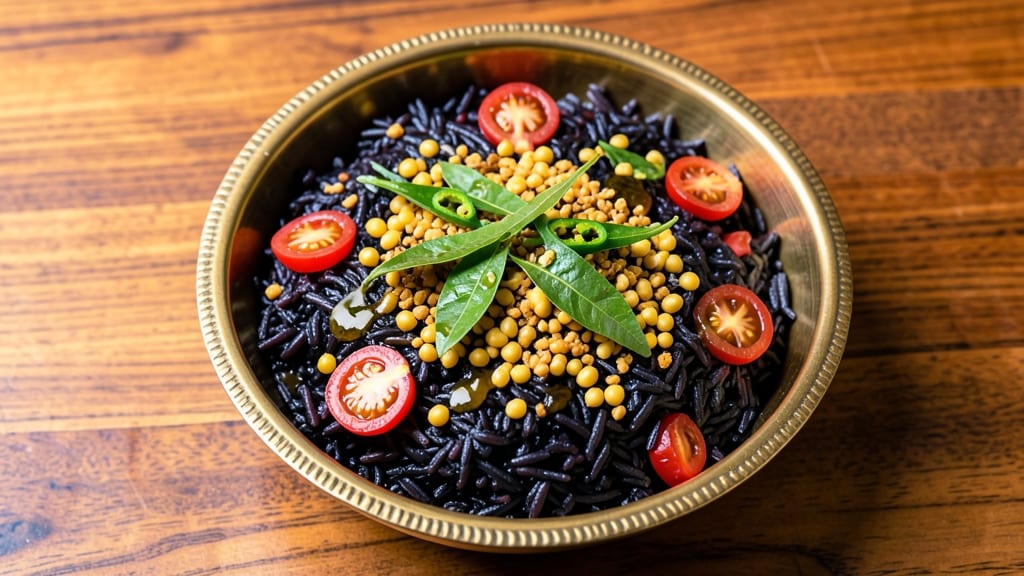
This South Indian black rice recipe transforms humble grains into a fragrant, nutty dish with a toasted coconut finish that feels like a celebration.
The secret lies in soaking the deep purple rice overnight to soften its firm texture, then tempering it with mustard seeds and curry leaves—a technique that unlocks its earthy depth. Every bite delivers a perfect balance of chewiness and nuttiness, with coconut adding a satisfying crunch.
Traditional Tamil Nadu methods ensure authenticity: the rice cooks gently with lentils and vegetables, absorbing flavors into its porous grains. The final touch—lightly toasted coconut—elevates this simple dish into something special, perfect for festive occasions or everyday meals.
Ready in about 1 hour, it’s a complete, satisfying dish that proves South Indian cuisine shines in its simplicity.
Ingredients for black rice south indian
Transform humble grains into a fragrant, nutty South Indian celebration with these authentic ingredients.
| Ingredient | Amount | Notes |
|---|---|---|
| Black Rice (Forbidden Rice) 🌾 | 1 cup | Uncooked, soaked overnight |
| Yellow Lentils (Toor Dal) 🌱 | ½ cup | Split, rinsed thoroughly |
| Fresh Curry Leaves 🌿 | ¼ cup | Packed, finely chopped |
| Medium Tomatoes 🍅 | 2 whole | Ripe, diced finely |
| Green Chilies 🌶️ | 2 whole | Slit lengthwise, seeds removed |
| Mustard Seeds 🌰 | 1 tbsp | Whole, for tempering |
| Coconut (Unsweetened) 🥥 | ½ cup | Fresh, grated and toasted |
| Ghee (Clarified Butter) 🧈 | 2 tbsp | For tempering |
| Asafoetida (Hing) 🌿 | ⅛ tsp | Pinch for aroma |
| Turmeric Powder 🧂 | ¼ tsp | Freshly ground preferred |
| Cumin Seeds 🌱 | ½ tsp | Toasted lightly |
| Salt 🧂 | 1 tsp | Adjust to taste |
| Water 💧 | 3 cups | For cooking rice |
| Fresh Cilantro 🌿 | ¼ cup | Chopped, for garnish |
The black rice is the star—look for forbidden rice or Tamil Nadu black rice at Indian specialty stores like Patel Brothers or Bharat Bazaar. It's pricier than white rice but worth it for its deep purple hue and nutty flavor. Soak it overnight to soften its firm texture; this step is non-negotiable. For lentils, yellow toor dal is traditional, but moong dal works in a pinch. Curry leaves are essential—fresh ones from the Indian produce section have the most vibrant flavor, though dried leaves can substitute at half the amount. The tomatoes should be ripe but firm; Roma tomatoes work best for their meaty texture.
No fresh curry leaves? Dried leaves work at half the amount, but the flavor won't be as bright. The green chilies can be swapped for red chilies if you prefer milder heat, or Kashmiri chilies for color without heat. Mustard seeds are traditional for the tempering, but if you're avoiding them, sesame seeds add a similar nutty depth. For the coconut, unsweetened desiccated coconut from the bulk bins is convenient, but freshly grated adds a superior texture. The ghee can be replaced with vegetable oil or coconut oil for a lighter version, though it won't have the same richness. Asafoetida is optional but adds that signature South Indian aroma—skip it if you're sensitive to its strong flavor.
This dish tastes even better the next day as flavors meld. Store in an airtight container in the fridge for up to 4 days. For longer storage, freeze portions for 3 months. The coconut topping can be made ahead and stored separately—just toast it fresh before serving. To reheat, add a splash of water and simmer gently. The rice keeps its texture better when reheated this way. Garnish with fresh cilantro just before serving to keep it vibrant. This recipe serves as a complete meal, but you can easily double it for larger gatherings—just scale the water proportionally.
Why You'll Love This Recipe
- No-Soak Needed: I swear by this—just rinse the black rice, toss it in with the dal, and let the pressure cooker do the work. No overnight soaking, no fuss, and still that perfect chewy texture.
- Dal-Tomato Magic: That tempering of curry leaves, tomatoes, and green chilies? It’s the soul of this dish. The dal soaks up all the flavors while the rice stays nutty and firm—like a cozy hug in a bowl.
- Lunches for Days: Make a big batch on Sunday, and you’ve got hearty meals for the week. The rice holds up beautifully, and the dal-tomato base actually tastes better the next day—trust me, I’ve tested it.
- Pocket-Friendly Luxury: Black rice might sound fancy, but it’s cheaper than white rice in bulk, and toor dal stretches into a full meal. Fresh curry leaves and tomatoes make it feel special without breaking the bank.
Step-by-step instructions for black rice South Indian recipe
This method delivers perfectly balanced earthy black rice with nutty lentils and aromatic coconut crunch.
Soak and Prepare the Base Ingredients
Begin by rinsing the 1 cup black rice (forbidden rice) thoroughly under cold water until the water runs clear. This removes excess starch that could make the rice gummy. Transfer the rinsed rice to a bowl and cover with plenty of water—at least 4 cups—then let it soak overnight at room temperature. The rice will triple in volume and develop its signature deep purple hue.
While the rice soaks, rinse the 0.5 cup yellow lentils (toor dal) until the water remains clear. Drain both the soaked rice and lentils in a fine-mesh strainer, then transfer them to a heavy-bottomed pot. Add 3 cups water, 0.25 tsp turmeric powder, and 1 tsp salt. Bring to a gentle boil over medium-high heat, then immediately reduce to low heat and simmer uncovered for 20 minutes, stirring occasionally to prevent sticking.
Temper the Flavors with Ghee and Spices
In a small skillet, heat 2 tbsp ghee (clarified butter) over medium heat until it shimmers but doesn't smoke. Add the 0.5 tsp toasted cumin seeds and let them sizzle for 30 seconds until fragrant. Immediately add the 1 tbsp mustard seeds and 0.125 tsp asafoetida (hing)—you'll hear a distinctive crackling sound as the mustard seeds pop. Stir for 1 minute until the seeds turn golden.
Quickly add the 0.25 cup finely chopped fresh curry leaves and 2 slit green chilies, cooking for 30 seconds until the curry leaves darken slightly. Pour this spiced ghee mixture into the simmering rice-lentil pot and stir gently to combine. Cover and cook for another 15 minutes on low heat, allowing the flavors to meld completely.
Finish with Toasted Coconut and Fresh Herbs
In a dry skillet, toast the 0.5 cup unsweetened coconut over medium heat for 3-4 minutes, stirring constantly until it turns a rich golden brown and releases its nutty aroma. Remove from heat immediately to prevent burning. Meanwhile, finely dice the 2 whole medium tomatoes and set aside.
Once the rice-lentil mixture is tender (the rice should be al dente with a slight bite), stir in the toasted coconut and diced tomatoes. Cook uncovered for 5 minutes on low heat, allowing the tomatoes to soften and release their juices. The mixture should be fragrant with a balance of earthy rice, nutty lentils, and coconut sweetness.
Garnish and Serve Immediately
Transfer the finished dish to a serving bowl and let it sit for 2 minutes to allow the flavors to settle. Garnish with 0.25 cup chopped fresh cilantro, scattering it evenly over the top. The cilantro adds a bright contrast that cuts through the richness of the coconut and ghee.
Serve immediately while still warm, as the textures and flavors are at their peak. The black rice should have a firm yet tender bite, the lentils creamy but distinct, and the coconut adding a satisfying crunch with every bite. This dish pairs beautifully with yogurt or a simple cucumber raita for balance.
Pro Tips For Making Black Rice South Indian
- Soak Black Rice Overnight: I learned this the hard way—rushing the soak turns black rice into a mushy mess. Use at least 4 cups of water per cup of rice, cover, and let it sit 8+ hours (or overnight). The longer it soaks, the creamier the texture when cooked, and it cuts the cooking time in half.
- Temper Toor Dal First: Don’t just toss raw dal into the rice pot—heat it separately with a pinch of turmeric and salt until it smells nutty (about 2 minutes). This removes bitterness and ensures the dal cooks evenly with the rice, giving that signature South Indian flavor balance.
- Blend Tomatoes Roughly: Skip the fine purée—chop tomatoes into uneven chunks before blending. The texture stays vibrant in the dish, and the seeds add a subtle sweetness that smooth blends miss. (Yes, even if it looks less polished.)
- Bloom Spices in Oil: After frying curry leaves and chilies, add whole spices (cumin, mustard seeds) to the oil and let them sizzle for 10 seconds before adding tomatoes. This step makes the difference between a flat-tasting base and a fragrant, layered flavor that carries through the entire dish.
Essential equipment for great black rice south indian
Heavy-Bottomed Pot
This is your workhorse for cooking black rice—its thick base distributes heat evenly and prevents scorching. I swear by a stainless steel pot like the Calphalon Classic 3-Ply or All-Clad D5 for their durability and heat control.
If you're on a budget, a heavy enameled cast iron Dutch oven from Le Creuset works beautifully too. The key is avoiding thin aluminum pots, which can create hot spots and burn your rice. 🔥
Fine-Mesh Strainer
A fine-mesh strainer is essential for rinsing both the black rice and lentils thoroughly. I use a stainless steel strainer from OXO—it's gentle on your hands and rinses grains more effectively than plastic ones.
The small holes remove excess starch that makes rice gummy, which is especially important for black rice's firm texture. Skip the colander; its larger holes won't do the job properly.
Small Skillet for Tempering
For the tempering step, a small stainless steel skillet (8-inch diameter) is ideal. I recommend a Made In or All-Clad skillet—they heat up quickly and maintain consistent temperatures.
This is where you toast the mustard seeds, cumin, and curry leaves, so you need a pan that can handle high heat without warping. A non-stick skillet isn't necessary, but it makes cleanup easier if you're sensitive to scrubbing.
Dry Skillet for Coconut
Toasted coconut needs a dry skillet with good heat distribution to avoid burning. A cast iron skillet like Lodge's 10.25-inch is perfect—it retains heat well and develops a natural non-stick surface over time. If you don't have cast iron, a carbon steel skillet works too, but season it first.
Avoid non-stick pans here; coconut can stick even to well-seasoned surfaces, and the high heat can release harmful fumes.
Wooden Spoon for Stirring
Use a wooden spoon (preferably bamboo or teak) for stirring the rice and lentils. Wood is gentle on your pot's surface and won't scratch enameled coatings. I keep a long-handled spoon from Amazon Basics in my kitchen—it's affordable and sturdy.
Metal utensils can scratch the pot or, worse, react with the acidic tomatoes or coconut, altering flavors. A silicone spatula is a good alternative if you prefer flexibility.
Air-Tight Container for Storage
Once your dish is ready, store leftovers in a glass airtight container with a tight-sealing lid. I love Pyrex glass containers or mason jars from Ball—they preserve flavors better than plastic and are microwave-safe for reheating.
Label the container with the date; this dish tastes best within 4 days when refrigerated. For longer storage, freeze portions in quart-sized freezer bags, leaving 1 inch of headspace for expansion. 💫
Nutrition facts
Frequently asked questions
Why does black rice need to soak overnight?
Black rice has a tough outer layer that requires soaking to soften its firm texture and improve digestibility. Overnight soaking (at least 8 hours) breaks down the starches, allowing the grains to absorb flavors better and cook evenly. Skipping this step results in chewy, unevenly cooked rice.
Can I substitute toor dal with another lentil?
Yes, but flavors will vary slightly. Moong dal is the best alternative—it cooks faster and has a milder taste. For heartier texture, try masoor dal, but increase cooking time by 5 minutes. Avoid red lentils (masoor dal) if you prefer separate grains, as they tend to break down completely.
What's the secret to perfect coconut toasting?
Toast coconut over medium heat in a dry skillet, stirring constantly for 3-4 minutes until golden brown. The key is patience—burning turns it bitter. For extra flavor, add a pinch of salt while toasting. Freshly grated coconut toasts faster than pre-shredded; if using pre-shredded, spread it in a single layer to prevent clumping.
How do I make this dish less spicy?
Reduce or remove the green chilies entirely, and use Kashmiri chilies instead for color without heat. For extra mildness, add 1 tsp sugar when tempering to balance flavors. If using store-bought coconut, check for added chili powder—opt for plain unsweetened varieties.
Can I make this recipe without ghee?
Yes, use coconut oil or vegetable oil for tempering, though ghee adds richness. For a lighter version, use 1 tbsp oil instead of ghee. The coconut flavor will still shine, but the dish will have a slightly different mouthfeel. Toast the spices in oil for 1 minute longer to compensate for the lack of ghee's aroma.