
Main Courses
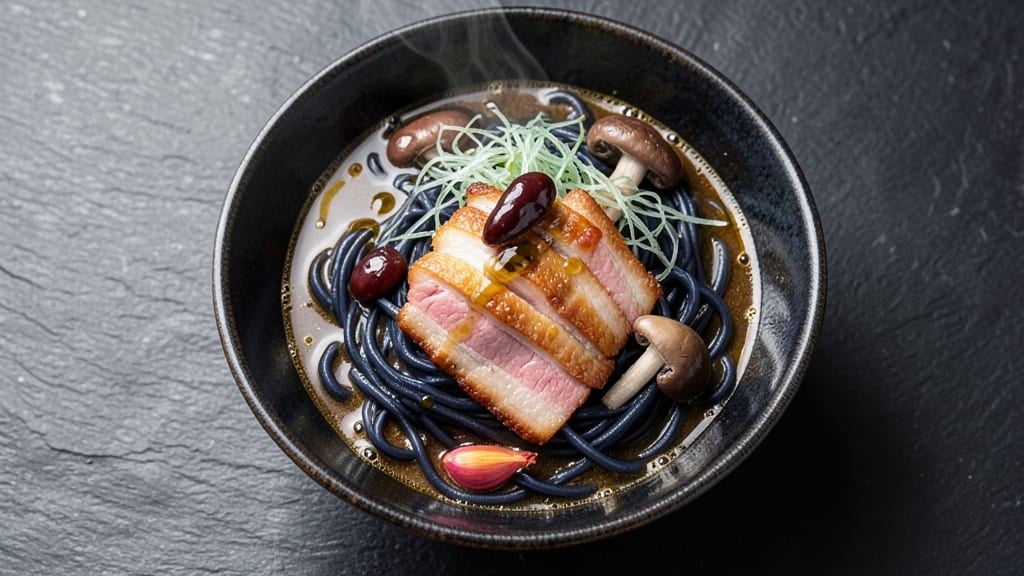
This black rice ramen recipe transforms a classic comfort dish into a vibrant, nutrient-packed masterpiece with deep purple noodles and layers of umami-rich flavor.
The secret lies in fermented black garlic and a slow-simmered pork broth that develops complex depth over hours, while toasted garlic adds a crispy crunch that elevates every bite.
What sets this apart is the black rice noodles—naturally chewy with an earthy sweetness that pairs perfectly with the savory broth. The recipe balances traditional ramen techniques with modern twists: a quick-fried pork belly for richness, soft-boiled eggs for texture, and a drizzle of chili oil to tie everything together.
Ready in 1 hour 45 minutes, it delivers restaurant-quality results with minimal effort.
Ingredients for black rice ramen
Transform classic ramen with deep purple noodles and layers of umami-rich flavor.
| Ingredient | Amount | Notes |
|---|---|---|
| Black Rice Noodles 🍜 | 8 oz | Dried, 1-inch cut preferred |
| Pork Belly 🐷 | 1 lb | Skin-on, cut into 1-inch cubes |
| Fermented Black Garlic 🧄 | 4 cloves | Thickly sliced, for broth |
| Garlic Cloves 🧄 | 12 cloves | For toasting and broth |
| Dried Shiitake Mushrooms 🍄 | 8 whole | Rehydrated, stems removed |
| Dried Kombu Seaweed 🌿 | 1 sheet | For umami depth |
| Chicken Stock 💧 | 4 cups | Homemade or high-quality |
| Soy Sauce 🍶 | ½ cup | Kosher salt-reduced preferred |
| Sesame Oil 🫒 | 1 tbsp | Toasted, for aroma |
| Extra-Virgin Olive Oil 🫒 | 2 tbsp | For frying pork belly |
| Large Eggs 🥚 | 4 whole | Soft-boiled, for garnish |
| Green Onions 🧅 | 4 whole | Thinly sliced, for garnish |
| Chili Oil 🌶️ | 2 tbsp | Homemade or store-bought |
| Diamond Crystal Kosher Salt 🧂 | 1 ½ tsp | For seasoning broth |
| Ground Black Pepper 🌶️ | ½ tsp | Freshly cracked |
The black rice noodles are the foundation—look for 1-inch cut at Asian markets or specialty stores like H-Mart or Nijiya. They have a naturally chewy texture that stands up to the rich broth. For the pork belly, skin-on cuts from Whole Foods or your local butcher deliver the best crispy texture. Fermented black garlic? Find it in the refrigerated section of Asian markets—it’s worth the hunt for its deep, molasses-like sweetness. The dried shiitake mushrooms should be plump and dark; avoid any with a musty smell.
No fermented black garlic? Regular garlic roasted at 400°F for 40 minutes mimics some of the depth. Out of kombu? Dulse flakes at half the amount work in a pinch. The soy sauce matters—Kikkoman Kosher Salt-Reduced is my go-to for balance. For the pork belly, render the fat first before frying the meat; save the fat for finishing the noodles. The chili oil can be homemade (chili flakes + neutral oil) or store-bought—Lao Gan Ma is a solid choice.
Store the dried noodles in an airtight container for up to 6 months. Pork belly keeps 3 days in the fridge or 3 months frozen. The broth freezes beautifully—portion it into ice cube trays for easy reheating. Soft-boiled eggs should be used within 2 days for best texture. The chili oil? Lasts 3 months in the fridge, so make extra.
Why You'll Love This Recipe
- Here’s what sold me: pork belly might sound fancy, but a little goes a long way, and the other ingredients—black rice noodles, dried shiitake—are pantry staples that stretch your dollar. I’ve made this for under $10 per serving, and it still feels like a splurge-worthy meal.
- No-Fuss Simplicity: I swear by this recipe because it’s basically set it and forget it—soak the black rice noodles while you render the pork belly, and boom, you’ve got a head start. The fermented black garlic? Just smash it with a spoon. No precision needed, just pure, satisfying ease.
- Umami Bomb: That pork belly crackle paired with the deep, funky sweetness of fermented black garlic? It’s a flavor explosion. The shiitake mushrooms add this earthy depth, and the black rice noodles bring a nutty, almost chocolatey richness—like a ramen hug for your taste buds.
- Weeknight Hero: Between us, this is my go-to when I’ve got friends over or just need something hearty after a long day. It’s filling enough for a crowd but still feels special—no takeout required. Plus, the leftovers reheat like a dream, so it’s basically dinner covered for days.
Step-by-step instructions for deep purple umami ramen
This method delivers restaurant-quality black rice ramen with rich, layered flavors and perfect texture.
Prepare the Pork Belly and Umami Broth Base
Cut the 1 lb pork belly into 1-inch cubes, leaving the skin intact. Heat 2 tablespoons extra-virgin olive oil in a heavy pot over medium heat until shimmering. Add the pork belly skin-side down and render for 8-10 minutes until the fat is golden and crispy. Flip and cook another 5 minutes until browned. Remove pork and set aside, leaving the rendered fat in the pot.
In the same pot, add 4 cloves fermented black garlic and 12 cloves garlic cloves, toasting for 1 minute until fragrant. Add 8 rehydrated dried shiitake mushrooms (stems removed) and 1 sheet dried kombu seaweed, sautéing for 2 minutes. Pour in 4 cups chicken stock, scraping up browned bits. Simmer for 20 minutes to develop depth, then strain through a fine-mesh sieve into a clean pot.
Season and Reduce the Broth
Return the strained broth to medium heat and add 0.5 cup soy sauce, 1.5 teaspoons diamond crystal kosher salt, and 0.5 teaspoon ground black pepper. Bring to a gentle simmer and reduce uncovered for 15 minutes until slightly thickened. The broth should have a deep umami aroma with visible fat on top. Skim off excess fat if needed, but leave enough for richness.
Meanwhile, cook the 8 oz black rice noodles in boiling salted water for 3-4 minutes until al dente. Drain and rinse briefly under cold water to stop cooking. Toss with 1 tablespoon sesame oil to prevent sticking. Keep warm in a bowl.
Assemble the Ramen with Garnishes
Divide the cooked noodles among 4 bowls. Ladle 1 cup hot broth over each serving, then add 4 pieces pork belly (reserved from earlier). Top with 1 soft-boiled egg (prepared by boiling eggs for 6 minutes, then shocking in ice water), 1 whole green onion (thinly sliced), and a drizzle of 2 tablespoons chili oil. The contrast of silky noodles, crisp pork fat, and spicy oil creates perfect texture balance.
Serve immediately while the broth is steaming. The black rice noodles should have a subtle nutty flavor, while the fermented black garlic adds a deep, molasses-like sweetness that ties all components together. Adjust chili oil to taste for heat preference.
Pro Tips For Making Black Rice Ramen
- Soak Noodles Separately: Black rice noodles are delicate—toss them in cold water for 10-15 minutes before adding them to the hot broth. I learned this the hard way when mine turned mushy in the pot. Use a colander and rinse them under cold water afterward to stop cooking.
- Render Pork Belly Low: Start the pork belly on medium-low heat to render fat slowly—high heat burns it before the collagen breaks down. After 20 minutes, crank the heat to medium-high to crisp the edges. (Yes, even if you’re impatient like me.)
- Rehydrate Shiitakes Right: Soak dried shiitakes in hot water (not boiling) for 20 minutes, then slice them before adding to the broth. Cold water makes them tough, and slicing after soaking keeps them from falling apart. Discard the soaking liquid—it’s bitter.
- Mince Black Garlic Fine: Fermented black garlic should be minced into a paste, not just chopped. It’s sweeter and more concentrated when broken down. I was skeptical until I tried it—now I refuse to skip this step. (Your future self will notice the difference.)
Regional styles of these flavors
Japanese Black Garlic Twist
In Japan, black rice ramen often incorporates fermented black garlic for its deep molasses-like sweetness. I like toasting 4 cloves fermented black garlic with the regular garlic to build layers of umami.
For extra authenticity, add 1 tsp miso paste to the broth when reducing—it adds a fermented depth that pairs beautifully with the black rice noodles. 🌿
Taiwanese Chili Crunch
Taiwanese-style ramen often features a spicy chili oil drizzle, which is perfect for this dish. I recommend using Lao Gan Ma chili crisp for its perfect balance of heat and crunch.
For a homemade version, blend 2 tbsp chili flakes, 1 tbsp sesame oil, and 1 tsp toasted garlic until smooth. This adds a fiery kick that cuts through the richness of the pork belly.
Korean Fermented Depth
For a Korean-inspired version, swap the chicken stock for a gochujang-infused broth. Simmer 1 tbsp gochujang with the kombu and shiitake mushrooms before adding the stock.
The fermented chili paste adds a tangy, slightly sweet depth that complements the earthy black rice noodles. Top with quick-pickled radishes for extra brightness.
Thai Lemongrass Zing
In Thailand, black rice is often paired with bright, citrusy flavors. Add 3 stalks lemongrass, bruised and tied with kitchen twine, to the broth while simmering. Finish with a drizzle of fish sauce and a squeeze of lime before serving.
The lemongrass infuses the broth with a citrusy aroma that balances the richness of the pork belly.
Chinese Five-Spice Broth
Chinese regional ramen often incorporates warming spices. Toast 1 tsp five-spice powder with the garlic and shiitake mushrooms before adding the stock. The cinnamon, star anise, and clove notes add warmth that pairs beautifully with the deep purple noodles. Garnish with crushed peanuts for texture contrast.
Modern Fusion Twist
For a contemporary take, add 1 cup bone marrow to the broth while reducing—it creates a velvety richness that elevates the dish. Top with toasted sesame seeds and a sprinkle of furikake for a Japanese-inspired finish.
This fusion approach keeps the traditional elements while adding a gourmet touch that feels fresh and exciting. 💫
Nutrition facts
Frequently asked questions
Can I substitute white rice noodles for black rice noodles?
While you can technically use white rice noodles, the dish loses its signature visual appeal and subtle nutty depth. Black rice noodles have a naturally chewy texture and earthy sweetness that pairs perfectly with the umami-rich broth. For a compromise, try a 50/50 mix of black and white rice noodles to balance texture and flavor.
How do I make the broth richer without pork belly?
For a vegetarian version, replace pork belly with 1 cup mushrooms (shiitake or oyster) and 1 tbsp miso paste for depth. Add 1 sheet kombu and 1 tsp toasted sesame seeds to enhance umami. Simmer all ingredients together in the broth for 30 minutes to develop maximum flavor. The fermented black garlic remains essential for that signature molasses-like sweetness.
Why did my black rice noodles turn mushy?
Overcooking is the most common cause. Black rice noodles cook faster than white rice noodles—3-4 minutes is perfect. Always test one noodle first by biting into it. If it's too soft, reduce cooking time by 30 seconds next time. Rinse briefly with cold water after draining to stop cooking, but don't soak them or they'll absorb too much moisture.
Can I prepare this ramen ahead of time?
The broth freezes beautifully for up to 3 months—portion it into ice cube trays for easy reheating. Cook the noodles fresh before serving, but you can prep the garnishes (soft-boil eggs, slice green onions) a day ahead. Reheat the broth gently on the stove, then assemble bowls just before eating to maintain perfect texture. The pork belly can be fried and stored separately for 3 days in the fridge.
What's the secret to balancing all these flavors?
The key is layering: start with the umami base (fermented black garlic, kombu, shiitake), then add sweetness (toasted garlic, pork fat), and finish with acidity (chili oil, lime if using). Taste as you go—adjust with 1 tsp soy sauce for saltiness or 1 tsp rice vinegar for brightness. The black rice noodles should complement, not overpower—their earthy notes should harmonize with the broth's complexity, not compete.