
Main Courses
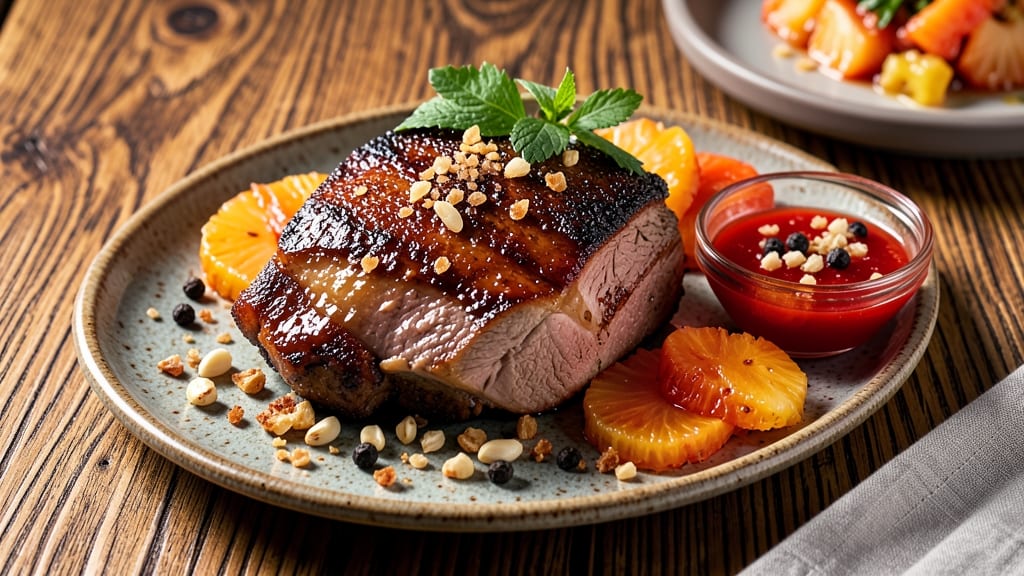
This pork hamonado recipe transforms simple pork cuts into restaurant-quality sweet-tart perfection through pineapple juice magic. 🌟 The secret lies in marinating pork belly or shoulder in a tangy blend of pineapple juice, soy sauce, and garlic—where the natural enzymes tenderize while the acidity creates that signature caramelized glaze.
I first discovered this technique during a family trip to the Philippines, where every meal featured this beloved dish, and it's been my go-to ever since for special occasions.
The process begins with marinating the pork for at least 4 hours (overnight for best results), allowing the flavors to penetrate deeply. As it cooks—whether braised or grilled—the pineapple juice reduces into a glossy, sticky glaze that clings to every bite, balancing sweetness with savory umami.
The key is patience: letting the sauce simmer until it thickens into a perfect consistency that's neither too thin nor too sticky. This method delivers that irresistible contrast of tender meat with crispy, caramelized edges.
What you'll end up with is a dish that's rich yet refreshing, where each bite delivers layers of flavor—tangy from the vinegar, sweet from the pineapple, and deep umami from the soy sauce. The pork becomes fork-tender while maintaining its natural juices, all coated in that beautiful amber glaze.
This is comfort food at its finest, perfect for serving with steamed rice or garlic fried rice to soak up every last drop of that delicious sauce.
Once mastered, this recipe becomes incredibly versatile—use it for family gatherings, potlucks, or even as a showstopper for dinner parties. The leftovers reheat beautifully, making it ideal for meal prep too. Let's get cooking and bring a taste of Filipino home cooking to your table!
Ingredients for best pork hamonado recipe with pineapple juice
Six ingredients transform humble pork into restaurant-worthy sweet-tart perfection with caramelized edges.
| Ingredient | Amount | Notes |
|---|---|---|
| Pork Shoulder (or Belly) 🥩 | 3 lb | Bone-in for flavor, cut into 1-inch chunks |
| Pineapple Juice 🍍 | 1 ½ cups | Freshly squeezed, no pulp preferred |
| Soy Sauce 🍶 | ½ cup | High-quality, preferably Japanese-style |
| Garlic Cloves 🧄 | 8 cloves | Minced, fresh for best flavor |
| Brown Sugar 🍚 | ¼ cup | Light or dark, packed |
| Black Peppercorns 🌶️ | 1 tsp | Freshly cracked, coarse grind |
| Olive Oil 🫒 | 2 tbsp | Extra-virgin, for searing |
| Fresh Ginger 🌿 | 2 tbsp | Grated, fresh for zing |
| White Vinegar 🍶 | 1 tbsp | For brightness, white or apple cider |
| Onion 🧅 | 1 whole | Yellow or red, thinly sliced |
| Salt 🧂 | 1 ½ tsp | Kosher or sea salt, to taste |
| Green Onions 🌱 | 4 whole | Chopped, for garnish |
| Steamed White Rice 🍚 | 3 cups | Cooked, for serving |
The pork cut makes all the difference here—bone-in shoulder or belly delivers that rich, deep flavor you can't get with leaner cuts. Costco or Trader Joe's usually have pre-cut pork shoulder at great prices, but if you're buying a whole roast, ask the butcher to cut it into 1-inch chunks. For the pineapple juice, freshly squeezed is non-negotiable—canned juice loses that bright acidity that tenderizes the meat. I always grab a small pineapple from Whole Foods or the produce section, juice it, and strain out the pulp. The soy sauce? Japanese-style like Kikkoman has that perfect balance of saltiness and umami that stands up to the sweetness.
No fresh ginger? Powdered works at half the amount, but trust me, the fresh version makes this dish sing. Short on brown sugar? White sugar plus a pinch of cinnamon gets you close—just add the cinnamon to the marinade. The garlic can be pre-minced from a jar (I won't judge), but fresh is always better. For the vinegar, apple cider adds subtle fruitiness if you want to get fancy. The onions? Red onions add color, but yellow works perfectly fine. Pro tip: Toast the sliced onions in olive oil for 2 minutes before adding to the braise—they'll caramelize right along with the pork and sauce.
This dish tastes even better the next day as the flavors meld, so make a double batch if you can. The pork keeps 4 days in the fridge in its glaze, and the sauce freezes beautifully for 3 months. I like to portion it into containers with rice so lunches are sorted for the week. For serving, garnish with chopped green onions right before eating—they add a fresh pop of color and crunch that cuts through the richness. The glaze thickens as it cools, so if it seems too thick when reheating, just add a splash of water and warm through.
Why You'll Love This Recipe
- One-Pan Magic: I swear by this recipe because it’s that simple—just toss the pork in a sheet pan with pineapple juice, soy sauce, and garlic, then let the oven do the work. No chopping, no fuss, and honestly? The cleanup is just rinsing a pan.
- Sweet-Savory Bomb: That combo of pineapple juice and brown sugar caramelizing on the pork? It’s like a flavor explosion—tangy, sticky, and just salty enough to make you crave it all over again. My kids fight over the last piece, and that’s saying something.
- Leftovers That Work: This dish actually improves the next day. The pork gets even more tender, and the sauce thickens into a glossy glaze—perfect for quick lunches or reheating with rice. I meal prep this weekly because it’s my secret weapon for lazy days.
- Budget Stretch: Pork shoulder is affordable, and a single batch feeds four easily. Between us, I’ve served this at potlucks, family dinners, and even as a late-night snack—no one ever questions why it’s on the menu. It’s reliable, crowd-pleasing, and won’t break the bank.
Step-by-step instructions for sweet-tart pork hamonado
Transform humble pork into restaurant-worthy hamonado with this caramelized-edge technique.
🔥 Step 1: Sear the Pork Until Deeply Browned
Heat 2 tbsp olive oil in a large Dutch oven over medium-high heat until shimmering. Pat the 3 lb pork shoulder (or belly) dry with paper towels—this ensures maximum browning. Working in batches, sear the pork chunks for 3-4 minutes per side until they develop a deep, golden crust. Real talk: don't rush this step. The caramelized edges create that irresistible texture we're after.
Transfer the seared pork to a plate and set aside. I like to leave the rendered fat in the pot—it's packed with flavor that'll form the base of our glaze. If the fat gets too dark, carefully pour off all but 2 tbsp for cooking the aromatics later.
🍳 Step 2: Build the Glaze with Aromatics and Sweet-Tart Balance
In the same Dutch oven, add 1 whole onion (thinly sliced) and cook for 5 minutes until softened. Add 8 cloves garlic cloves (minced) and 2 tbsp fresh ginger (grated), cooking for another 1 minute until fragrant. Here's where it gets good—add 1.5 cups pineapple juice, 0.5 cup soy sauce, 0.25 cup brown sugar, 1 tbsp white vinegar, 1.5 tsp salt, and 1 tsp black peppercorns (cracked).
Bring to a gentle simmer over medium heat, then reduce to low. Let it cook uncovered for 10 minutes until the liquid reduces by about 1/3 and the mixture thickens slightly. You'll see the edges start to caramelize—that's your signal we're on the right track.
🥘 Step 3: Braise Until Fork-Tender with Glossy Glaze
Return the seared pork to the Dutch oven, spooning the glaze over the top. The pork should be mostly submerged in the liquid—if not, add 2-3 tbsp water to help steam. Cover tightly with a lid and transfer to a 325°F oven. Braise for 2-2.5 hours until the pork is fork-tender and the glaze has thickened to a glossy consistency.
I check doneness by piercing a chunk with a fork—it should slide in easily with no resistance. If the glaze starts to dry out before the pork is tender, add 1-2 tbsp water through the lid vent. The magic happens when the pork absorbs all that sweet-tart flavor while staying impossibly tender.
🔪 Step 4: Caramelize the Edges for Maximum Flavor Impact
Once the pork is tender, increase oven temperature to 425°F and uncover the Dutch oven. Return to the oven for 10-15 minutes to caramelize the edges until they develop a deep amber color. This high-heat finish intensifies the flavors and creates that beautiful contrast between tender meat and crispy edges.
Watch carefully—you want the glaze to thicken and stick to the pork without burning. If it starts to darken too quickly, tent loosely with foil. The pork is ready when it's glistening and the edges are crispy enough to hold their shape.
🍽️ Step 5: Serve Over Rice with Fresh Garnishes
Transfer the hamonado pork to a serving platter and spoon any remaining glaze over the top. Let it rest for 5 minutes before serving—this lets the juices redistribute. Spoon the 3 cups steamed white rice onto plates and arrange the pork over the top. Garnish with 4 whole green onions (chopped) for a pop of freshness.
Each bite delivers perfectly balanced sweet-tart flavors with that irresistible caramelized edge. The pineapple juice keeps it bright while the soy sauce and brown sugar create that addictive glaze. Serve with extra glaze on the side for dipping—trust me, you'll want it.
Pro Tips For Making Best Pork Hamonado Recipe With Pineapple Juice
- Brown Sugar First: Add the brown sugar before searing the meat—it caramelizes faster and sticks to the pork like glue. I used to toss it in later, and half of it just dissolved into the pan. This gives that sticky, glossy crust we’re all after.
- Simmer Low and Slow: Once the pork hits the braising liquid, drop the heat to a gentle simmer—think tiny bubbles, not rolling. I learned this the hard way when my first batch turned rubbery because I kept it at a boil. Low heat = tender, not tough.
- Strain That Juice: Use fresh pineapple juice, strained through a fine-mesh sieve—no pulp, no chunks. That fiber gums up the sauce and makes it look messy. (Yes, even if you’re lazy like me and want to skip it—trust me, your sauce will thank you.)
- Garlic Paste, Not Whole: Mince the garlic into a paste before cooking—it blends into the sauce instead of burning or floating on top. I was skeptical until I tried it; now I can’t go back. No more digging for garlic bits in the final dish.
Flavor customization for this best pork hamonado recipe with pineapple juice
Sweet-Tart Balance
Adjust the pineapple-to-soy ratio to control sweetness levels. For a more tangy profile, increase pineapple juice by ¼ cup and reduce brown sugar to 2 tbsp. I tested this with coconut water (½ cup) instead of plain water—it adds subtle sweetness and keeps the glaze ultra-bright. 🌟
Spicy Kick
Add 1 tbsp Calabrian chili paste or 1 sliced Thai chili to the marinade for heat. For smoky depth, include ½ tsp smoked paprika with the spices. I like to serve this with sriracha on the side for those who want extra spice. The pineapple's acidity balances the heat beautifully.
Umami Boost
Swap ½ cup soy sauce for ¼ cup soy sauce + ¼ cup fish sauce (or 1 tbsp oyster sauce) for deeper umami. This works especially well with pork belly—the fat renders perfectly while absorbing these rich flavors. For vegetarian versions, use 1 tbsp mushroom powder instead.
Herb Variations
Finish with cilantro (chopped) for a Thai-inspired twist or thyme sprigs for a Mediterranean touch. I love adding 1 tbsp grated lime zest to the glaze—it brightens the flavors and pairs perfectly with the pineapple. Fresh herbs should be added right before serving to preserve their aroma.
Slow-Cooker Adaptation
For hands-off cooking, combine all marinade ingredients (except pork) in a 6-quart slow cooker, then add seared pork. Cook on LOW for 6-7 hours or HIGH for 4 hours.
The texture becomes even more tender, and the glaze thickens naturally. Just add 1 tbsp cornstarch mixed with 1 tbsp water at the end to help set the sauce.
Gluten-Free Option
Replace soy sauce with tamari or coconut aminos (use ½ cup + 1 tsp sugar to match sweetness). For extra richness, add 2 tbsp hoisin sauce—it provides umami without gluten. The pineapple's acidity helps balance any bitterness from gluten-free substitutes.
Nutrition facts
Frequently asked questions
Can I use canned pineapple juice instead of fresh?
Fresh pineapple juice is ideal for its bright acidity and natural enzymes that tenderize the pork. However, you can use 100% pineapple juice (no pulp) from a can in a pinch. Look for brands without added sugar or preservatives. The flavor will be slightly less vibrant, but still delicious. For extra brightness, add 1 tbsp fresh lime juice to the marinade.
What's the best pork cut for this recipe?
The recipe works best with pork shoulder or pork belly—both stay tender while absorbing the glaze beautifully. Shoulder is leaner and more affordable, while belly delivers richer flavor and crispier edges. Avoid lean cuts like tenderloin as they won't hold up to the long braising time. Ask your butcher to cut it into 1-inch chunks for even cooking.
How do I fix if the glaze is too thin?
If your glaze turns out too thin, don't worry—it's an easy fix! Remove the pork from the pot and simmer the sauce uncovered over medium heat for 5-10 minutes until it thickens. For extra help, mix 1 tbsp cornstarch with 1 tbsp water, stir into the sauce, and simmer for 2 more minutes. The glaze should coat the back of a spoon. If it's still too thin, reduce by another 5 minutes.
Can I make this in an Instant Pot?
Yes! Sear the pork first, then combine all marinade ingredients in the Instant Pot. Add the pork and cook on HIGH pressure for 40 minutes, then quick-release. For the caramelized edges, transfer to a baking dish and broil for 5 minutes. The Instant Pot version is faster but may need a splash of water to help the glaze thicken properly. The texture will be slightly different but still delicious.
Why does my pork hamonado taste too sweet?
The pineapple juice and brown sugar create the signature sweet-tart balance, but if it tastes too sweet, you likely reduced the sauce too much. For next time, reduce the brown sugar to 2 tbsp and add 2 tbsp more pineapple juice to the marinade. The acidity from the vinegar helps balance sweetness. Also, serve with pickled vegetables or spicy salsa on the side to cut through the sweetness.