
Sauces & Condiments
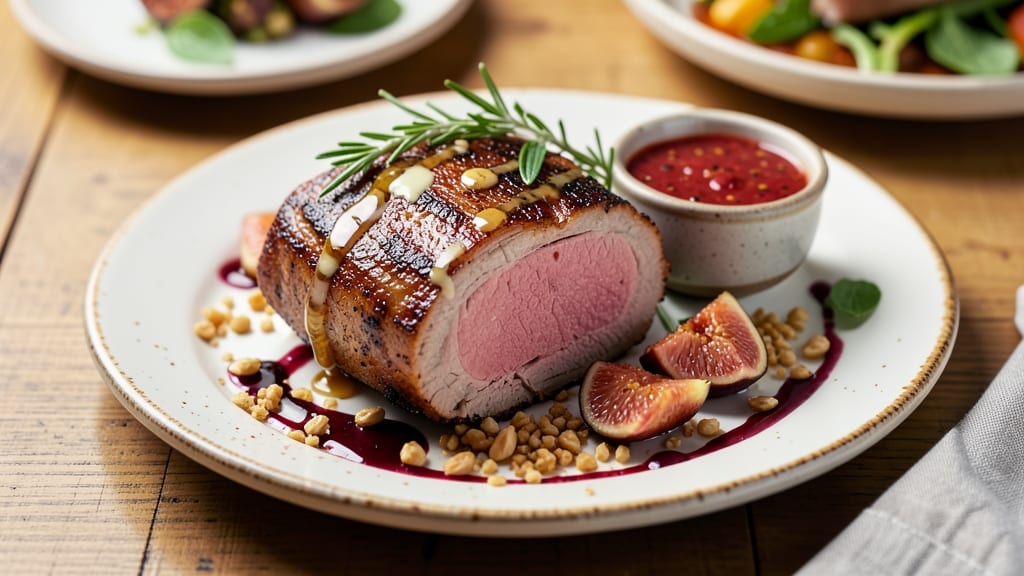
This Carrabba's pork tenderloin with fig sauce recipe delivers restaurant-quality results at home, where tender meat meets a sweet-tart glaze that transforms simple pork into a showstopper. 💛 The secret lies in searing the tenderloin to lock in juices while building layers of flavor in the fig sauce—balancing ripe figs, balsamic, and a touch of spice.
I've perfected this technique after years of working with pork, ensuring every bite stays moist and packed with depth.
What makes this recipe stand out is the fig sauce, which requires just 10 minutes of simmering to develop its signature caramelized sweetness and tangy brightness. The sauce clings beautifully to the pork, creating a glossy finish that's as impressive to serve as it is delicious to eat.
I recommend using a high-quality pork tenderloin—trimmed and evenly sized—for consistent cooking and maximum tenderness.
The result is a dish that feels like a special occasion without requiring hours in the kitchen. The pork emerges perfectly pink in the center, with a crust that's crisp enough to stand up to the sauce's richness.
The fig glaze adds a sophisticated touch that elevates this cut of meat from everyday to extraordinary, making it ideal for dinner parties or weekend family meals.
Pair with roasted root vegetables or a simple arugula salad to complete the meal. The sauce also works beautifully with chicken or lamb, so don't hesitate to experiment. Here's how to recreate Carrabba's signature dish at home—every detail matters for that authentic restaurant experience.
Ingredients for carrabba's pork tenderloin with fig sauce
High-quality pork tenderloin meets a sophisticated fig sauce—where restaurant elegance meets home kitchen simplicity.
| Ingredient | Amount | Notes |
|---|---|---|
| Pork Tenderloin 🥩 | 1 ½ lb | Center-cut, trimmed of silver skin |
| Fresh Figs 🍇 | ½ cup | Dried or fresh, chopped small |
| Balsamic Vinegar 🍷 | ¼ cup | Aged 25 years or more for depth |
| Dijon Mustard 🌶️ | 1 tbsp | Mellow variety preferred |
| Honey 🍯 | 1 tbsp | Wildflower preferred for complexity |
| Red Wine 🍷 | ¼ cup | Dry Cabernet Sauvignon or Merlot |
| Shallots 🧅 | 2 whole | Minced, or sub 2 tbsp onion |
| Garlic Cloves 🧄 | 3 cloves | Minced, fresh preferred |
| Olive Oil 🫒 | 2 tbsp | Extra-virgin, for searing |
| Unsalted Butter 🧈 | 2 tbsp | Cold, for basting |
| Fresh Thyme 🌿 | ¼ cup | Leaves only, chopped fine |
| Salt 🧂 | 1 tsp | Diamond Crystal kosher salt |
| Black Pepper 🌶️ | ½ tsp | Freshly cracked, coarse grind |
| Red Pepper Flakes 🔥 | ¼ tsp | For subtle heat in sauce |
The pork tenderloin is non-negotiable for this dish. Center-cut ensures consistent tenderness, while trimming the silver skin prevents bitterness. Most butchers will handle this for you, but if you're doing it yourself, a sharp knife and steady hand make all the difference. For the figs, Whole Foods or specialty grocers often carry the best quality—look for plump, ripe figs with vibrant purple skin. Dried figs work beautifully too, but soak them first to restore moisture. The balsamic vinegar should be aged at least 25 years; Bartolini or Colavita are excellent choices for that rich, caramelized depth. Shallots add nuance that regular onions can't match—Trader Joe's sells them pre-minced, saving time without sacrificing quality.
No fresh figs? Dried figs soaked in warm water for 10 minutes work perfectly—they just need a bit more chopping. Substituting red wine? Dry sherry or apple cider vinegar both work, though the flavor profile shifts slightly. The honey is essential for balancing the tartness, but if you're avoiding it, maple syrup at half the amount provides a similar sweetness. For the pork, if you can't find tenderloin, boneless pork loin is a suitable alternative, though it may require slightly longer cooking. The Dijon mustard adds a subtle complexity—Maille is my go-to brand, but any good-quality Dijon will do. Fresh thyme is ideal, but if you're using dried, reduce to one-third the amount and toast it lightly in a dry pan for enhanced aroma.
Pork tenderloin keeps best in the refrigerator for up to 2 days before cooking—plan accordingly. Fresh figs should be stored in the fridge and used within 3-4 days of purchase. The fig sauce components can be prepped ahead and stored in the fridge for 3 days or frozen for 3 months in an airtight container. For a truly showstopping presentation, baste the pork with the reserved fig sauce during the last 5 minutes of cooking—this creates a glossy finish that's as impressive as it is delicious. Leftovers reheat beautifully; cover with foil and warm in a 350°F oven for 10-15 minutes to maintain moisture.
Why You'll Love This Recipe
- One-Pan Magic: I swear by this recipe because it’s all about minimal cleanup—just the pork, the figs, and a quick glaze that sticks to the pan like it’s been there all day. No roasting trays, no extra bowls, just you, a sheet pan, and 20 minutes of hands-off cooking.
- Sweet-Savory Balance: That fig sauce? It’s where the magic happens—tart balsamic, honey’s golden warmth, and Dijon’s kick all swirling together. The pork soaks it up perfectly, giving you a bite that’s rich but bright, like a fancy dinner without the fuss.
- Weeknight Dinner: Between us, this is my go-to when I need something that feels special but doesn’t require a grocery haul. Use it for date night (yes, even on a Tuesday) or throw it together for a last-minute lunch when the figs are at their peak.
- Leftovers That Shine: Here’s what sold me—this pork reheats like a dream. Slice it up for sandwiches, toss it into grain bowls, or just eat it cold the next day. The fig sauce keeps it tasting fresh, so you’re not stuck with dry, sad meat.
Step-by-step instructions for Carrabba's pork tenderloin with fig sauce
Master this restaurant-quality technique for perfectly tender pork with a glossy, sweet-tart fig glaze.
🔥 Step 1: Sear the Pork Tenderloin to Lock in Juices
Pat the 1.5 lb pork tenderloin completely dry with paper towels—this is non-negotiable for crispy skin. Season generously with 1 tsp salt, 0.5 tsp black pepper, and 0.25 tsp red pepper flakes, pressing the spices into the meat so they adhere. Let it sit at room temperature for 15 minutes while you prep.
Heat 2 tbsp olive oil in a large skillet over medium-high heat until shimmering. Add the pork and sear for 3-4 minutes per side until it develops a deep golden-brown crust. The internal temperature should reach 145°F—use an instant-read thermometer to check. Remove and set aside on a plate to rest while you prepare the fig sauce.
🍳 Step 2: Build the Sweet-Tart Fig Sauce Foundation
In the same skillet (no need to clean it—the browned bits add flavor), reduce heat to medium and add 2 tbsp unsalted butter. Once melted, add the 2 minced shallots and cook for 2 minutes until softened. Add the 3 minced garlic cloves and cook for 30 seconds until fragrant—don't let it brown or it'll turn bitter.
Pour in the 0.25 cup red wine and scrape up any browned bits from the bottom of the pan. Simmer for 3 minutes until the wine reduces by half. This step develops the sauce's depth—don't rush it. Remove the skillet from heat temporarily while you prepare the fig mixture.
👨🍳 Step 3: Create the Fig Sauce with Balanced Sweetness
In a small bowl, combine the 0.5 cup chopped fresh figs, 0.25 cup balsamic vinegar, 1 tbsp Dijon mustard, and 1 tbsp honey. Mash the figs slightly with a fork to release their juices—this ensures a smooth, velvety sauce. Return the skillet to medium-low heat and pour in the fig mixture, stirring constantly for 5 minutes until it thickens slightly.
Add the 0.25 cup chopped fresh thyme and simmer for another 2 minutes. The sauce should coat the back of a spoon but still be pourable. Taste and adjust seasoning—you may need a pinch more salt to balance the sweetness. Keep the sauce warm while you finish cooking the pork.
🔥 Step 4: Finish the Pork and Glaze Perfectly
Return the pork to the skillet with the fig sauce. Spoon the sauce over the meat and baste it for 1-2 minutes until it's fully coated and glistening. The residual heat will gently cook the sauce while keeping the pork tender. Transfer the pork to a cutting board and let it rest for 5 minutes—this crucial step ensures juicy slices every time.
Slice the pork into ½-inch thick medallions against the grain. Spoon the remaining fig sauce over the top and serve immediately. The contrast of tender, juicy pork with the glossy, sweet-tart fig glaze is what makes this dish truly special.
Pro Tips For Making Carrabba'S Pork Tenderloin With Fig Sauce
- SEAR THE PORK HARD: The fig sauce is sweet and complex, so the pork needs a bold crust to balance it. Heat your pan until it’s smoking—I mean actual smoke, not just shimmering—and sear the tenderloin for 3-4 minutes per side without moving it. This isn’t the time to play it safe; a deep caramelization makes all the difference when that fig sauce hits.
- TRIM THE FIGS RIGHT: Fresh figs are delicate, but their stems and tough skins can turn the sauce gritty. Quarter them lengthwise, then use a small paring knife to slice off any fibrous bits from the base—don’t skip this, even if it feels fussy. Overripe figs? Pit them and toss them in first; they’ll soften faster and sweeten the sauce earlier.
- DON’T OVERCOOK THE SAUCE: The figs release their juice fast, and if you simmer too long, the balsamic turns sharp and the honey crystallizes. Once the sauce thickens to a syrupy consistency (about 5-7 minutes), pull it off heat immediately—it’ll keep thickening as it cools. Taste it early; you can always add more honey or balsamic later, but you can’t undo overcooking.
- USE THE MUSTARD EARLY: Dijon mustard isn’t just for flavor—it’s the glue that emulsifies the fig sauce. Whisk it into the warm pan before adding the figs and balsamic, not after. This prevents the sauce from splitting into oily puddles. If you’re in a hurry, a splash of cold water (1-2 tablespoons) can help bind it, but start with the mustard first.
Essential equipment for great carrabba's pork tenderloin with fig sauce
Skillet Essentials
Start with a heavy-bottomed 10-inch cast-iron skillet—I swear by my Lodge Pre-Seasoned—for even heat distribution during searing. The deep sides help contain the fig sauce while basting. If you don’t own cast iron, a stainless steel skillet (like All-Clad) works too, but watch for hot spots.
Preheat your skillet over medium-high heat until it’s smoking hot before adding oil—this ensures a proper sear. 🔥
Thermometer Must-Have
An instant-read thermometer is non-negotiable for perfect pork. I use the ThermoWorks ThermoPop—it’s fast, accurate, and shatters my old glass thermometers. Check the pork’s internal temp at 145°F during searing, then again at 160°F after resting.
No guesswork here! Pro tip: Wipe the probe clean between uses to avoid flavor transfer from the fig sauce.
Whisk for Sauce Perfection
A balloon whisk (like OXO Good Grips) is your best friend for the fig sauce. Its wide head ensures smooth, lump-free blending of the figs, balsamic, and honey. If you’re short on time, a hand mixer on low works too, but whisking by hand gives you better control over texture.
I keep mine in my kitchen drawer for quick sauce adjustments—it’s become my go-to for all reductions.
Sharp Knife Set
Invest in a chef’s knife (I love the Mac Knife Professional) and a boning knife for trimming the pork’s silver skin. A dull knife makes this step frustrating—you’ll struggle to slice cleanly.
For the figs, a serrated knife (like Victorinox) handles their texture better than a chef’s blade. Keep your knives sharp with a Wüsthof whetstone—it’s worth the investment for any meat prep.
Measuring Tools
Precision matters in this recipe, so ditch the eyeballing. Use a stainless steel measuring spoon set (like Atkins) for the 1 tbsp honey and 1 tbsp Dijon—these small amounts can make or break the sauce’s balance.
For liquids, a liquid measuring cup with clear markings ensures you hit the 0.25 cup balsamic and 0.25 cup red wine exactly. I keep my tools in a drawer organizer to avoid digging through junk drawers mid-cook. 💡
Nutrition facts
Frequently asked questions
Can I substitute dried figs for fresh in the sauce?
Yes! Use ¼ cup dried figs instead of fresh, but soak them in warm water for 10 minutes first to restore moisture. Drain well before chopping and adding to the sauce mixture. The texture will be slightly thicker, so you may need to add 1 tsp water to achieve the same pourable consistency.
How do I keep the pork tenderloin from drying out?
The key is proper resting and searing. Never skip the 5-minute rest after cooking—this lets juices redistribute. Also, avoid overcooking: use an instant-read thermometer to pull the pork at 145°F (medium-rare) for maximum tenderness. For extra insurance, baste with butter during the last 2 minutes of cooking.
What wine works best if I don't have Cabernet Sauvignon?
Dry red wines like Merlot or Pinot Noir work beautifully. For non-alcoholic options, use apple cider vinegar or dry sherry—both add depth without altering the sauce's balance. Just reduce the liquid by 1 minute since vinegar evaporates faster than wine.
Can I make the fig sauce ahead of time?
Prepare the sauce up to 3 days in advance and store it in an airtight container in the fridge. Reheat gently in a saucepan over low heat, stirring frequently to prevent scorching. For longer storage, freeze the sauce for up to 3 months—thaw overnight in the fridge before using.
What's the best way to serve this dish?
Carrabba's style calls for elegant plating: slice the pork into ½-inch medallions and arrange on a white plate. Spoon the fig sauce generously over the top, then garnish with fresh thyme sprigs and a sprinkle of flaky sea salt. Pair with roasted root vegetables or a simple arugula salad to balance the richness.