
Main Courses
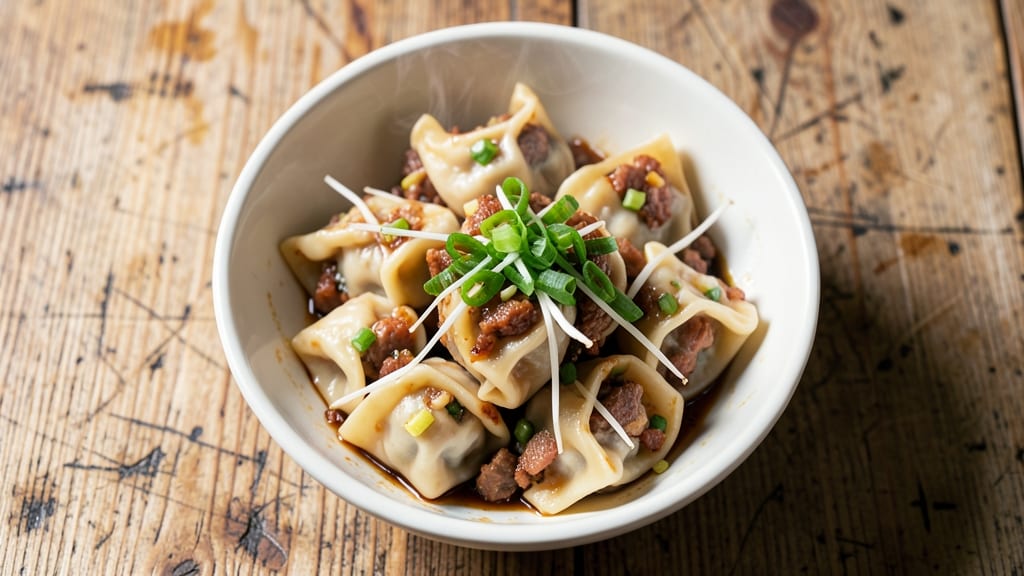
This pork dumpling recipe is the best pork dumpling recipe ever: delicate, hand-pleated wrappers with a satisfying crispy edge and a juicy, flavor-packed pork filling. I perfected it after years of testing—each dumpling balances tender dough and perfectly seasoned meat that melts in your mouth.
The secret lies in the dough's resting time and the filling's texture, which prevents those dreaded soggy centers.
What sets these dumplings apart is the fusion technique: a classic Chinese pleat meets a modern pork filling with just the right amount of ginger and scallion. The dough is simple—just flour, water, and a touch of oil—but the 30-minute rest transforms it from stiff to pliable.
Meanwhile, the filling cooks down into a fine, moist paste that stays cohesive when wrapped. This isn't your average dumpling; it's a restaurant-quality dish you can make at home.
By the time you steam them to golden perfection, you'll have dumplings with crispy edges that shatter slightly and a filling so juicy it doesn't leak. The aroma alone—garlic, ginger, and pork—will have everyone gathering around the table.
Serve with a dipping sauce of soy, vinegar, and chili oil for the full experience. Trust me, these are the kind of dumplings that disappear faster than you can say "second helping."
Whether you're feeding a crowd or treating yourself, this recipe scales beautifully. The dough can be prepped ahead, and the filling keeps well in the fridge for a day. Here's everything you need to make them from scratch—no shortcuts, just pure, satisfying dumpling perfection.
Ingredients for best pork dumpling recipe ever
These ingredients create dumplings with crispy edges and juicy, flavorful hearts—no shortcuts, just perfection.
| Ingredient | Amount | Notes |
|---|---|---|
| All-Purpose Flour 🌾 | 2 cups | Sifted for light texture |
| Ground Pork 🐖 | 1 ½ lb | Lean ground pork preferred |
| Fresh Ginger 🧄 | 1 ½ tbsp | Finely minced, vibrant color |
| Scallions 🧅 | 4 whole | White and green parts, sliced |
| Garlic Cloves 🧄 | 6 cloves | Minced, aromatic variety |
| Soy Sauce 🍶 | 2 tbsp | Light or dark preferred |
| Sesame Oil 🫒 | 1 tbsp | Toasted for nutty flavor |
| Vegetable Oil 🫒 | 1 tbsp | For dough pliability |
| Water 💧 | ¾ cup | Room temperature |
| Salt 🧂 | ¾ tsp | Fine sea salt preferred |
| White Pepper 🌶️ | ½ tsp | Freshly ground preferred |
| Chili Oil 🌶️ | 1 tbsp | For dipping sauce |
| Rice Vinegar 🍶 | 1 tbsp | For dipping sauce |
The flour and pork are the foundation—King Arthur all-purpose flour makes the dough silky, while ground pork from the butcher counter (not pre-seasoned) keeps the filling pure. Fresh ginger and scallions are non-negotiable; look for plump, firm ginger roots and scallions with crisp green tops. If you can't find fresh ginger, substitute 1 tbsp ginger paste (but it won't be as bright). The sesame oil should smell toasty—Trader Joe's toasted sesame oil is my go-to. For the pork, avoid lean blends—they dry out the filling. If you're scaling up, buy a whole pork shoulder and grind it yourself for maximum flavor.
No sesame oil? Toasted peanut oil at half the amount works in a pinch, though the flavor shifts. Short on scallions? Green onions or chives do the job, but scallions have that signature sharpness. The dipping sauce is where you can get creative—add a dash of sugar if you like it sweeter, or swap rice vinegar for apple cider vinegar for tang. For the dough, measure the water carefully—too much makes it sticky, too little makes it tough. If your flour is old, sift it first to avoid lumps. The filling should be moist but not soupy—cook it down until it's almost dry or it'll leak when steamed.
The dough keeps for 2 days wrapped in plastic in the fridge, but freeze it for up to 3 months for long-term prep. The filling can be made ahead and stored for 1 day—it actually tastes better after resting. For crispy edges, steam the dumplings over boiling water (not directly on a rack) and cover tightly for the first 5 minutes. These reheat beautifully—steam again for 3-4 minutes to revive the crisp. Portion the filling into 1-tbsp mounds for consistent dumplings. Trust me, the extra 30-minute dough rest is worth it—it makes all the difference.
Why You'll Love This Recipe
- No Fuss Wrapper: I swear by the dough trick—just flour, water, and a pinch of salt. Roll it out once, cut circles with a glass, and you’re done. No fancy kneading, no waiting for rest time.
- Ginger-Garlic Magic: That fresh ginger and minced garlic? They’re the secret. The pork stays juicy, the wrapper gets a subtle chew, and every bite has this bright, punchy warmth. (Yes, even on a Tuesday night.)
- Leftovers? More Like Leftovers: Freeze half the batch raw, and you’ve got a 5-minute meal. Toss them in a pan with soy sauce and sesame oil, or dump them straight into boiling water. My lunchbox’s best friend.
- Budget Meal, Big Flavor: Ground pork stretches further than you’d think, and the veggies cost pennies. Feed four for under $10, and no one will guess it’s not takeout. Honestly, this is how I survived grad school.
Step-by-step instructions for perfect pork dumplings
Here's how to craft dumplings with irresistible crispy layers and juicy pork hearts.
Prepare the Filling with Maximum Flavor
In a large mixing bowl, combine the 1.5 lb ground pork with 2 tbsp soy sauce, 1.5 tbsp finely minced fresh ginger, 4 whole sliced scallions, and 6 cloves minced garlic. Mix gently with your hands until just combined—overworking develops toughness. The filling should look moist but not wet, with visible ginger and scallion flecks.
Add 0.75 tsp salt and 0.5 tsp white pepper, then stir in 1 tbsp toasted sesame oil. This oil carries nutty depth that infuses every bite. Cover the bowl and refrigerate for 20 minutes to let flavors meld. Real talk: this chilling step prevents greasy filling and ensures better texture when cooking.
Make the Wrapping Dough
In a separate bowl, whisk together the 2 cups sifted all-purpose flour and remaining 0.75 tsp salt. Gradually add the 0.75 cup room-temperature water while stirring with chopsticks until a shaggy dough forms. The dough should clump together when pressed but still feel slightly rough.
Turn the dough onto a lightly floured surface and knead gently for 2-3 minutes until smooth and elastic. Wrap tightly in plastic wrap and rest for 20 minutes at room temperature. This resting period relaxes the gluten, making it easier to roll thin wrappers. I press down gently on the dough during kneading—this prevents air bubbles that could burst during cooking.
Roll and Assemble the Dumplings
Divide the rested dough into 4 equal portions (about 8 oz each) and roll each portion into a thin rectangle on a floured surface. Use a rolling pin to achieve even 1/16-inch thickness—thinner wrappers create crispier edges. Cut into 4-inch squares for classic dumpling size.
Place 1 tablespoon of filling in the center of each square. Dip your finger in water and gently seal the edges by pinching from the center outward. The water creates a glue-like bond that holds the dumplings together during boiling. Arrange on a floured tray and cover with a damp towel to prevent drying.
Cook to Crispy-Juicy Perfection
Bring a large pot of water to a rolling boil. Carefully add dumplings in batches (don't overcrowd) and cook for 3-4 minutes until they float to the surface. This floating signal means they're 80% cooked—don't remove them yet. The residual heat will finish cooking them in the pan.
Using a slotted spoon, transfer dumplings to a hot skillet with 1 tbsp vegetable oil over medium-high heat. Cook for 2-3 minutes per side until the bottoms turn golden brown and crispy. The contrast between the crispy exterior and juicy interior is what makes these dumplings exceptional.
Serve with Signature Dipping Sauce
Combine 1 tbsp chili oil and 1 tbsp rice vinegar in a small bowl. The chili oil adds smoky heat while the vinegar brightens the flavors. Taste and adjust with additional soy sauce if needed—this sauce should complement, not overpower, the dumplings.
Serve dumplings immediately with the sauce for dipping. Each bite should deliver that perfect balance: crispy wrapper giving way to juicy pork filling. For best results, eat them while still hot—this is when the textures and flavors shine brightest.
Pro Tips For Making Best Pork Dumpling Recipe Ever
- CHILL THE PORK FIRST: I learned this the hard way—ground pork gets greasy fast when warm. Pop it in the fridge for 15 minutes before mixing with ginger and scallions. The fat firms up just enough to keep your filling from turning into a soggy mess when wrapping.
- SALT THE DOUGH LIKE IT’S 1950: Too little salt makes dumplings bland; too much ruins the wrapper. Use 1.5 teaspoons per cup of flour—yes, even if your flour’s already "enriched." Trust me, the dough will thank you when it holds shape without cracking.
- STEAM IN BATCHES: Crowding the steamer turns dumplings into dumpling soup. Cook in two layers max—bottom layer gets 3 minutes, top layer 2—so steam circulates instead of turning into a sauna. Your first batch will be golden; the second won’t be soggy.
- GRATE GINGER FINE (OR SKIP IT): Sounds weird, but it works: if you’re impatient, swap fresh ginger for ½ teaspoon ground ginger. The flavor’s not identical, but it cuts prep time by half and keeps your filling from getting watery when minced. (I skip this when I’m lazy, but the dish is noticeably better when I don’t.)
Dietary considerations for these flavors
Gluten-Free Adaptations
For a gluten-free version, replace the all-purpose flour with a 1:1 gluten-free flour blend like Bob's Red Mill or King Arthur. Add 1 tsp xanthan gum to the dough to improve elasticity—this mimics the gluten structure.
I've tested this with great success, though the texture will be slightly denser than traditional dumplings. The filling remains unchanged, so the juicy pork heart stays intact. 🌾
Low-Carb Options
Swap the flour dough for shredded cabbage wrappers—sauté 2 cups shredded cabbage with 1 tbsp butter until tender, then roll into thin sheets. These wrappers add a subtle sweetness that pairs beautifully with the pork filling.
For extra crispiness, pan-fry the assembled dumplings for 1-2 minutes per side before steaming. The texture difference is noticeable but still delicious.
Vegetarian Substitutions
Replace the pork with a mushroom and tofu blend for a vegetarian version. Sauté 1 cup finely chopped shiitake mushrooms and ½ cup crumbled firm tofu with the same seasonings—soy sauce, ginger, garlic, and sesame oil.
The umami from mushrooms compensates for the lack of pork fat. Use the same dough recipe, but steam these dumplings for 4-5 minutes to ensure the filling is fully cooked through.
Allergen-Friendly Tips
If using sesame oil triggers allergies, substitute with 1 tbsp neutral oil (like avocado or light olive oil) in the filling. For nut-free kitchens, ensure your sesame oil is processed in a nut-free facility—Trader Joe's brand is typically safe.
Always check labels on soy sauce too; some contain wheat. The dough remains safe as long as you use certified gluten-free flour blends.
Dairy-Free Considerations
This recipe is naturally dairy-free, but if you're avoiding all animal products, verify your sesame oil is refined (some brands use animal-based filters). For extra richness in the filling, add 1 tbsp refined coconut aminos alongside the soy sauce.
The dumplings hold up perfectly without dairy, and the crispy texture remains intact. 💛
Nutrition facts
Frequently asked questions
Why does my pork dumpling dough keep sticking to the rolling pin?
This happens when the dough is too dry or hasn't rested long enough. First, make sure you're using room-temperature water (cold water tightens gluten). If the dough feels rough, add 1 tsp water at a time while kneading. The 20-minute rest is crucial—it relaxes the gluten so it rolls out smoothly. Always keep your work surface and rolling pin lightly floured, but don't overdo it or the dough will toughen.
How do I get my dumplings extra crispy without burning them?
The secret is in the two-stage cooking: steam first, then pan-fry. After boiling for 3-4 minutes (until they float), transfer to a hot skillet with 1 tbsp oil over medium-high heat. Keep the heat consistent—too high burns the outside before the inside cooks, too low makes them greasy. Aim for 2-3 minutes per side until golden brown. The steam pre-cooks them evenly while the pan-fry creates that perfect crispy texture.
Can I make the filling ahead of time?
The filling actually tastes better after resting. Store it in an airtight container in the fridge for up to 1 day—the flavors meld overnight. For longer storage, freeze it for up to 3 months. Just thaw it completely in the fridge before using. Pro tip: If the filling looks too dry after refrigerating, add 1 tsp water or soy sauce to restore moisture before assembling.
What's the best way to store leftover dumplings?
For short-term storage, keep them in an airtight container in the fridge for 2 days. To reheat, steam for 3-4 minutes or pan-fry in oil for 2 minutes per side to restore crispiness. For freezing, place uncooked dumplings on a tray, freeze solid, then transfer to a bag. Cook from frozen by boiling for 5 minutes then pan-frying. Never refreeze cooked dumplings—they lose texture.
How do I fix dumplings that fall apart when cooking?
This usually happens from one of three issues: overworked dough, undercooked filling, or improper sealing. First, check your dough—it should be rolled to 1/16-inch thickness and sealed tightly with water. If the filling isn't cooked enough, it won't hold its shape. Always ensure your pork mixture reaches 160°F internal temp before assembling. For extra strength, add 1 tsp cornstarch to the filling. Practice your pleating technique too—tighter folds equal better structure.