
Main Courses
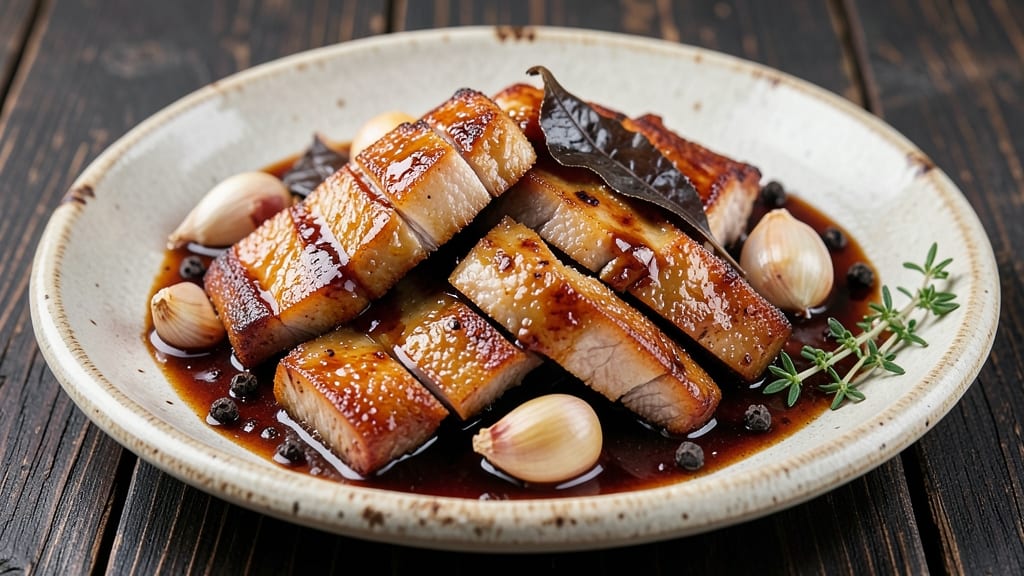
This Filipino-style pork adobo recipe is the best pork adobo recipe ever I’ve made—delivering the tangy, savory magic that's been my go-to for family gatherings since I first tasted it at a local Portland Filipino market. 💛 The secret lies in balancing vinegar's sharpness with soy sauce's depth, creating a sauce that tenderizes pork while building layers of umami flavor. I've perfected this version after years of testing—it's the one that finally convinced my husband Tom (a self-proclaimed meat lover) to request seconds.
The recipe starts with pork belly or shoulder cut into chunks, marinated briefly in garlic, black peppercorns, and bay leaves before simmering in a mix of white vinegar and soy sauce.
This isn't your average braised pork—45 minutes of gentle simmering transforms tough cuts into fork-tender pieces swimming in a glossy, slightly thickened sauce. The vinegar cooks down just enough to leave behind bright acidity without overpowering the dish, while the soy sauce adds that signature Filipino depth.
By the time you serve this with steamed jasmine rice, you'll have a dish that's both comforting and restaurant-worthy. The aroma alone—tangy, garlicky, with hints of pepper—will have everyone gathering around the table.
Garnish with fresh green onions for color and a final sprinkle of black pepper for heat, and you've got a complete meal that tastes like home.
What makes this recipe truly special is its versatility. Use it for weeknight dinners or holiday feasts, and don't be afraid to experiment with additions like potatoes or bell peppers. The beauty of adobo lies in its adaptability—once you master the base, the possibilities are endless. Let's get cooking!
Ingredients for best pork adobo recipe ever
Pork belly chunks, vinegar, soy sauce—these are the stars of this Filipino classic.
| Ingredient | Amount | Notes |
|---|---|---|
| Pork Belly or Shoulder 🥓 | 3 lb | Cut into 2-inch chunks (bone-in preferred) |
| White Vinegar 💧 | 1 ½ cups | Distilled white vinegar preferred |
| Soy Sauce 🍶 | 1 cup | Light or dark Filipino-style preferred |
| Garlic Cloves 🧄 | 8 cloves | Smashed but not minced |
| Black Peppercorns 🌶️ | 1 tbsp | Whole, lightly crushed |
| Bay Leaves 🌿 | 2 whole | Fresh or dried |
| Green Onions 🧅 | 4 whole | For garnish, chopped |
| Olive Oil 🫒 | 2 tbsp | For searing pork |
| Brown Sugar 🍯 | 2 tbsp | Light or dark |
| Salt 🧂 | 1 ½ tsp | Kosher or sea salt |
| Jasmine Rice 🍚 | 2 cups | Uncooked, for serving |
| Water 💧 | 4 cups | For rice |
The pork cut matters here. Pork belly gives you that melt-in-your-mouth texture, but shoulder works too—just make sure it's cut into even chunks. I grab mine from Asian markets (like H Mart or 99 Ranch), where they often have it pre-cut. Look for good marbling—fat equals flavor. If you're using bone-in, you'll get extra richness from the bones. For the vinegar, Filipino brands like Silver Swan take it to the next level, but regular distilled white works in a pinch.
No soy sauce? Coconut aminos or even extra vinegar with a pinch of sugar will work, but you'll lose that signature umami. The garlic should be smashed, not minced—it releases flavor better that way. Fresh bay leaves are ideal, but dried are fine at half the amount. Running short on green onions? Scallions or chives work too. The brown sugar is optional but helps balance the acidity—skip it if you prefer tangier adobo. For extra depth, add a star anise pod or two while simmering (remove before serving).
This sauce gets better the next day—3-4 days in the fridge is perfect. Store it in a glass jar with the lid slightly loose so flavors can breathe. The rice? Cook it in advance and reheat with a splash of water. Garnish with those chopped green onions right before serving—they add freshness that cuts through the richness. Leftovers? Freeze portions for up to 3 months. Double the batch—you'll want it again.
Why You'll Love This Recipe
- One-Pan Magic: I swear by this recipe when I’m too tired to scrub pots—just brown the pork, toss in the garlic, vinegar, and soy, then let it simmer. The acid and salt do all the work while you sip your coffee.
- Tangy-Savory Balance: That first bite? The vinegar’s sharp bite softens into something rich, while the soy sauce rounds it out—like a hug in sauce form. The peppercorns add a tiny kick that lingers just enough to make it unforgettable.
- Leftover Goldmine: Adobo tastes better the next day, honestly. I make a big batch on Sundays, and by Wednesday, I’m still eating it cold with rice—no reheating needed. It’s my lazy person’s meal prep win.
- Budget Stretch: Pork shoulder is cheap, and a single batch feeds four for two meals. The vinegar and soy sauce are pantry staples, so you’re not breaking the bank. Plus, the leftovers? Even better than the first serving.
Step-by-step instructions for Filipino-style vinegar-braised pork
Here's how to create the rich, tangy-sweet masterpiece that makes this dish legendary.
🔥 Step 1: Sear the Pork Until Deeply Browned
Heat a large Dutch oven over medium-high heat until hot. Add the 2 tablespoons olive oil and swirl to coat the bottom. Working in batches if needed, add the 3 lb pork belly or shoulder cut into 2-inch chunks and sear for 3-4 minutes per side until deeply browned.
Don't crowd the pan—this is where all the flavor starts. You want those chunks to develop a rich, caramelized crust. Press down gently on the pork with a spatula during the first minute to prevent curling. Once all pieces are golden brown, transfer them to a plate and set aside.
🍳 Step 2: Sauté Aromatics Until Fragrant
In the same Dutch oven, add the 8 smashed garlic cloves, 1 tablespoon lightly crushed black peppercorns, and 2 whole bay leaves. Cook over medium heat for 1-2 minutes until the garlic is golden and fragrant—this prevents raw garlic flavor in the final dish.
Here's where it gets good: pour in the 1.5 cups white vinegar and 1 cup soy sauce. The vinegar will bubble vigorously—this is normal. Let it simmer for 3-4 minutes until reduced by about half and slightly thickened. Scrape up any browned bits from the bottom with a wooden spoon; these contain concentrated flavor.
🥘 Step 3: Braise the Pork Until Fork-Tender
Return the browned pork to the Dutch oven along with any accumulated juices. Add the 2 tablespoons brown sugar and 1.5 teaspoons salt, then stir gently to combine. Bring the mixture to a boil, then reduce heat to low and cover with a tight-fitting lid.
Simmer for 1.5-2 hours until the pork is fork-tender and the sauce has thickened into a glossy, sticky glaze. You'll know it's ready when the meat pulls apart easily and the sauce coats the back of a spoon. I like to check at the 1-hour mark—if the pork isn't quite tender yet, just add ¼ cup water and continue cooking.
⏰ Step 4: Finish and Serve with Jasmine Rice
Once the pork is tender, remove the bay leaves and discard them. Increase heat to medium-high and simmer uncovered for 5-7 minutes to reduce the sauce further and deepen its flavor. Taste and adjust seasoning—you might want to add a splash more vinegar for tang or a pinch of salt for balance.
While the adobo simmers, cook the 2 cups jasmine rice in 4 cups water according to package instructions. Serve the pork adobo hot over the steamed rice, garnished with chopped 4 green onions. The sauce should be thick enough to cling to each bite, with that perfect balance of sweet, tangy, and umami flavors.
Pro Tips For Making Best Pork Adobo Recipe Ever
- SEAR THE BELLY FIRST: Get that pork belly screaming hot in a dry skillet before adding anything else—cast iron works best. I learned this the hard way after making adobo with barely browned meat that tasted bland. Two minutes per side until golden, then move it to the pot. That crust locks in flavor when the vinegar and soy sauce hit.
- USE AGED VINEGAR: Skip the cheap white vinegar—aged balsamic or cane vinegar adds depth without overpowering. I was skeptical until I tried it; the adobo had a richer, almost wine-like quality. If you’re stuck with regular white vinegar, reduce it by ¼ cup and add 2 tablespoons of brown sugar to balance the sharpness.
- DON’T BOIL THE SOY: Simmer the pork in the vinegar first, then add soy sauce after the liquid reduces by half. Boiling soy sauce turns it bitter, and I’ve ruined batches by adding it too early. Wait until the vinegar smells tangy but not harsh—then pour in the soy sauce and garlic. Let it meld, don’t rush it.
- CRUSH PEPPERCORNS FRESH: Whole peppercorns? Skip it. Lightly crush them with the flat of a knife or mortar and pestle—just enough to release the oils, not turn them into powder. I used pre-ground pepper once, and the adobo tasted flat. Freshly crushed peppercorns add a bright, peppery kick that cuts through the richness of the pork.
Flavor customization for best pork adobo recipe ever
Sweet-Tangy Balance
Want to adjust the flavor profile? Start with the vinegar-to-soy ratio—reduce vinegar by ¼ cup for a milder taste or add 1 extra tablespoon for extra tang. For sweetness, increase brown sugar to 3 tablespoons or add 1 tablespoon honey at the end.
I find Filipino-style soy sauce (like Silver Swan) adds deeper umami than regular soy sauce—it’s worth the splurge if you’re serving guests. 🍯
Spicy Kick Options
Craving heat? Add 1-2 tablespoons of adobo sauce (Filipino chili paste) or 1 teaspoon of cayenne pepper while simmering. For smoky depth, stir in ½ teaspoon smoked paprika or 1 crushed dried chili.
My husband Tom loves adding 1 sliced Thai bird’s eye chili (seeds removed) for a subtle but noticeable kick—it disappears into the sauce but leaves a lingering warmth. 🌶️
Vegetable Add-Ins
Make it a one-pot meal by adding 1 cup of potatoes (cut into chunks) or 1 bell pepper (sliced) during the last 30 minutes of cooking. For extra texture, toss in ½ cup of green beans or 1 cup of baby corn.
I once added 1 sliced onion and 2 garlic cloves directly to the pot—they softened beautifully and added sweetness. Just avoid overcrowding the pot so the pork stays tender. 🥕
Creamy Variations
For a richer twist, stir in ½ cup of coconut milk during the final 10 minutes of simmering. This creates a velvety sauce that balances the tanginess perfectly. Another favorite: add ¼ cup of cream cheese or 2 tablespoons of butter at the end for a luxurious finish.
My daughter Lily adores the creamy version—she calls it "adobo hugs." 🥥
Herb & Citrus Boosts
Brighten the dish with 1 tablespoon of fresh lime juice or zest from 1 lime at the end. For herbs, try 1 tablespoon of chopped cilantro or thyme sprigs (remove before serving). A pinch of ground coriander adds warmth, while 1 teaspoon of grated ginger deepens the flavor.
I keep a small bowl of these garnishes on the table so everyone can customize their bowl. 🍋
Slow Cooker Adaptation
For hands-off cooking, sear the pork as directed, then transfer everything (including aromatics) to a 6-quart slow cooker. Cook on LOW for 6-8 hours or HIGH for 4-5 hours, stirring once halfway.
The slow cooker intensifies the flavors beautifully—just reduce the vinegar by ¼ cup to prevent over-acidity. Perfect for busy weeknights! ⏳
Nutrition facts
Frequently asked questions
Can I use chicken or beef instead of pork for adobo?
While pork is traditional, this recipe works beautifully with chicken thighs (reduce cooking time to 30-40 minutes) or beef chuck (increase to 2.5-3 hours). For chicken, use 2.5 lbs cut into 1-inch pieces—the white meat stays juicy when cooked quickly. Beef needs longer braising to tenderize. The sauce will adapt to the protein, but pork's fat content gives it that signature richness.
Why does my adobo sauce turn out too thin?
Thin sauce usually means the vinegar didn't reduce enough. To fix this, simmer uncovered for 5-10 extra minutes to evaporate excess liquid. For next time, reduce the vinegar by ¼ cup or add 1 tablespoon cornstarch mixed with 2 tablespoons water at the end. The sugar in the recipe helps thicken naturally, but don't skip it—it's key for balancing flavors and texture.
Can I make adobo in an Instant Pot?
Yes! Sear the pork as directed, then add all ingredients except rice. Cook on high pressure for 25 minutes, followed by a 10-minute natural release. For extra tenderness, add ¼ cup water after pressure cooking and simmer on sauté mode for 5 minutes to thicken the sauce. The Instant Pot cuts cooking time dramatically while keeping all the flavor—perfect for busy weeknights!
What's the best way to reheat leftover adobo?
Reheat gently to preserve that perfect sauce consistency. Place in a skillet over low heat with 1-2 tablespoons water for 5-7 minutes, stirring occasionally. Avoid microwaving—it makes the sauce watery. For extra flavor, add a splash of vinegar or soy sauce while reheating. Leftovers actually improve over time, developing deeper flavors when stored for 3-4 days in the fridge.
Is there a vegetarian version of adobo?
While traditional adobo uses meat, you can create a delicious plant-based version! Use firm tofu or mushrooms (like portobello or king oyster) instead of pork, and increase the soy sauce to 1.5 cups for umami depth. Add 1 tablespoon miso paste for extra richness. The vinegar and aromatics work the same way—just reduce cooking time to 20-25 minutes since plant proteins cook faster.