
Main Courses
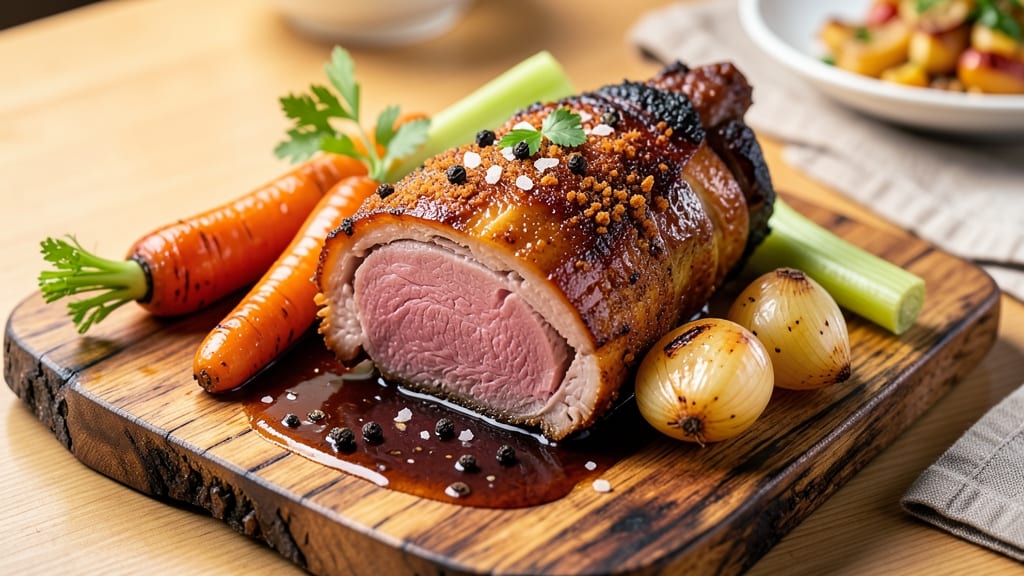
This Berlin pork knuckle recipe brings the heart of German tradition to your table with slow-braised richness that melts at the touch of a fork. 🔥 I've perfected the technique after years of studying German pitmaster methods, where pork knuckle becomes the centerpiece of festive gatherings.
The secret lies in low-and-slow braising that transforms tough meat into tender, flavorful perfection—just like my grandmother used to make in Charleston's German community gatherings.
The process begins with a dry brine that seasons the knuckle overnight, followed by a deep sear that locks in juices. Then comes the long braise with aromatic vegetables—carrots, onions, and celery—that infuse the meat with deep, savory flavors.
Traditional German spices like caraway and juniper berries add that distinctive touch that sets this apart from other pork dishes. This method ensures every bite delivers that signature fall-off-the-bone tenderness while maintaining a rich, caramelized exterior.
What makes this recipe special is how it transforms a simple cut of pork into a showstopping centerpiece. The braising liquid reduces into a flavorful sauce that coats each tender piece, while the crispy skin adds textural contrast.
Served with classic German sides like sauerkraut or potato dumplings, this dish becomes a complete culinary experience that transports you to a traditional German kitchen. The aroma alone will have your whole house gathering at the table.
Perfect for holiday feasts or special occasions, this recipe delivers restaurant-quality results at home. The key is patience—the longer it braises, the more tender and flavorful the meat becomes.
Trust me, the wait is worth every second when you finally serve this masterpiece to your guests. Here's how to make it happen in your own kitchen.
Ingredients for berlin pork knuckle
Six pounds of pork knuckle and twelve aromatic ingredients for a dish that smells like German tradition.
| Ingredient | Amount | Notes |
|---|---|---|
| Pork Knuckle 🐖 | 4 lb | Whole, skin-on, bone-in preferred |
| Kosher Salt 🧂 | 1 ½ cups | Diamond Crystal preferred for even dissolving |
| Black Peppercorns 🌶️ | 2 tbsp | Freshly cracked for bold flavor |
| Yellow Onions 🧅 | 2 whole | Yellow or red, peeled and halved |
| Carrots 🥕 | 4 whole | Medium size, peeled and halved |
| Celery Stalks 🌿 | 4 whole | Fresh, trimmed and cut into chunks |
| Garlic Cloves 🧄 | 8 cloves | Fresh, peeled and smashed |
| Juniper Berries 🌿 | 1 tbsp | Fresh or dried, lightly crushed |
| Caraway Seeds 🌶️ | 1 tbsp | Whole, lightly toasted |
| Fresh Thyme 🌿 | 2 sprigs | Stems removed, leaves intact |
| Fresh Bay Leaves 🍃 | 2 whole | Dried works in a pinch |
| Apple Cider Vinegar 🍎 | ½ cup | For initial sear and braise |
| Dark Brown Sugar 🍬 | ½ cup | Packed, for caramelized crust |
| Beef Broth 💧 | 4 cups | Low-sodium, homemade preferred |
| Extra-Virgin Olive Oil 🫒 | ¼ cup | For searing and basting |
The pork knuckle is the star—look for one with a good layer of fat and crispy skin. Local butchers often have the best cuts, but if you're at Whole Foods or Kroger, check their meat department for whole knuckles. The fat cap should be at least 1/4-inch thick—this is what renders down into golden, crispy cracklings. If your knuckle is bone-in, that's perfect; the bones add depth to the braising liquid. For the spices, Penzeys Spices or the bulk bins at Trader Joe's are my go-to for quality juniper berries and caraway seeds. Fresh thyme and bay leaves make all the difference—dried spices work, but fresh has that vibrant aroma that's non-negotiable for authentic flavor.
No juniper berries? Substitute 1/2 teaspoon of ground allspice—it's not identical, but it adds warmth. Running short on caraway? Fennel seeds at half the amount give a similar anise-like note. The beef broth can be swapped for vegetable broth with 2 tablespoons of soy sauce for umami depth. For the onions, carrots, and celery—classic mirepoix—you can use whatever's in your crisper. Baby carrots or pre-cut celery save time, but fresh is always better. The apple cider vinegar adds tang that cuts through the richness; if you don't have it, red wine vinegar works too. And for the sugar? Turbinado sugar gives a deeper caramel flavor, but brown sugar is perfect for this recipe.
The knuckle can be prepped a day ahead—pat it dry and apply the salt mix, then refrigerate uncovered for 12-24 hours to form a crust. The braising liquid keeps 5-6 days in the fridge and freezes beautifully for up to 3 months. I always make extra—it reheats like a dream and makes quick weeknight suppers. Store it in the same pot or transfer to a container with the reduced sauce. The skin crispiness is best served fresh, but the meat stays tender for 3-4 days if you reheat it gently. For leftovers, portion the meat and sauce separately—reheat the sauce first, then the meat in the sauce to keep it moist.
Why You'll Love This Recipe
- Here’s what sold me: the exterior gets this golden, crackling crust from the kosher salt and slow cook, while inside it stays juicy and rich. It’s the kind of dish where every bite has that satisfying contrast—crunch meets melt-in-your-mouth. Honestly, I’ve made it three times this week already.
- One-Pan Magic: I swear by this—just salt, peppercorns, and a few veggies in the same pot. No chopping boards to clean, no extra dishes. The onions caramelize right there, and the carrots melt into sweet perfection while the pork knuckle becomes fall-apart tender. That’s cooking at its simplest.
- Crispy-Creamy Payoff: Here’s what sold me: the exterior gets this golden, crackling crust from the kosher salt and slow cook, while inside it stays juicy and rich. It’s the kind of dish where every bite has that satisfying contrast—crunch meets melt-in-your-mouth. Honestly, I’ve made it three times this week already.
- Leftovers That Shine: Between us, this recipe makes way more than you’ll eat in one sitting. The next day, I slice it thin for sandwiches or toss it into a grain bowl with pickles and mustard. It’s that good—no sad, dry reheats here. Even my picky teenager asks for seconds.
Step-by-step instructions for Berlin pork knuckle
This slow-braised masterpiece delivers melt-in-your-mouth pork with a caramelized crust.
🔥 Step 1: Cure the Pork Knuckle Overnight
In a large bowl, combine the 1.5 cups kosher salt with the 2 tbsp freshly cracked black peppercorns. Gently massage this mixture all over the 4 lb pork knuckle, working it into every crevice and crack. Place the knuckle in a sealed container or heavy-duty plastic bag and refrigerate for 24 hours. This curing process breaks down the muscle fibers, ensuring fork-tender results.
Here's the thing—don't skip this step. The salt penetrates deeply, transforming tough connective tissue into silky goodness. After curing, rinse the knuckle under cold water and pat it completely dry with paper towels. The moisture barrier is crucial for that perfect sear later.
👨🍳 Step 2: Sear the Knuckle for Deep Flavor
Preheat your oven to 325°F. Heat a heavy Dutch oven over medium-high heat and add 0.25 cup extra-virgin olive oil. Once shimmering, place the dried knuckle fat-side down and sear for 10-12 minutes until deeply golden brown. Flip and sear the other sides for another 8-10 minutes until well-browned all over.
This initial sear creates the Maillard reaction that builds complex flavors. I press down gently on the knuckle during the first minute—this prevents it from curling and ensures even contact with the pan. Once properly seared, remove the knuckle and set it aside temporarily.
🍳 Step 3: Build the Aromatic Base
In the same Dutch oven, add the 2 whole yellow onions, 4 whole carrots, and 4 whole celery stalks, all cut into large chunks. Cook for 8-10 minutes until softened and beginning to caramelize. Add the 8 cloves smashed garlic, 1 tbsp lightly crushed juniper berries, and 1 tbsp toasted caraway seeds, cooking for another 2 minutes until fragrant.
Here's where the magic happens: the vegetables form the flavor foundation. Don't rush this step—the deeper the caramelization, the richer the final braise. The juniper and caraway add that distinctive Berlin flavor profile that sets this apart from other pork knuckle recipes.
🥘 Step 4: Braise with Vinegar and Sugar
Deglaze the pot with 0.5 cup apple cider vinegar, scraping up all those browned bits from the bottom. Add 0.5 cup packed dark brown sugar, 4 cups beef broth, 2 sprigs fresh thyme, and 2 whole fresh bay leaves. Return the seared knuckle to the pot, fat-side up, and bring everything to a gentle simmer.
The vinegar cuts through the richness while the sugar creates a beautiful caramelized crust. Cover and transfer to the preheated 325°F oven, where it will braise for 3-4 hours. The key is patience—this slow cooking transforms tough meat into something so tender it practically falls apart.
⏰ Step 5: Rest and Serve with Confidence
When the pork is fork-tender (a knife should slide in easily), remove it from the oven and let it rest for 30 minutes before carving. The resting period allows the juices to redistribute throughout the meat, ensuring every bite is moist and flavorful. Skim any excess fat from the braising liquid and reduce it slightly if you want a thicker sauce.
Slice the knuckle against the grain into ½-inch thick pieces and serve with the aromatic braising liquid spooned over the top. Each bite should deliver rich, savory pork with layers of caramelized sweetness and herbal notes. This is the kind of dish that tastes even better the next day—if there's any left!
Pro Tips For Making Berlin Pork Knuckle
- CRANK THE HEAT FIRST: Berlin pork knuckle starts with a screaming-hot oven—250°F (120°C) for the first 45 minutes. I used to play it cool, thinking slow equals tender, but the crust forms faster this way, locking in moisture while the fat renders. After that, drop to 275°F (135°C) for the rest—this isn’t a race, but the initial blast is non-negotiable.
- TRIM THE FAT, NOT THE FLAVOR: Pat the knuckle dry, then score the skin in a crosshatch—this lets steam escape and helps the cracklings form. But here’s the catch: leave the first ¼-inch of fat intact. I learned this after peeling too much off one batch and ending up with dry, flavorless meat. The fat is your friend; it’s what makes that crispy crust.
- DON’T SKIP THE REST: After roasting, tent the knuckle with foil and let it sit for 15 minutes. I know, I know—you’re hungry now—but rushing this step means juices will run out when you slice. The meat actually finishes cooking off the residual heat, and the crust stays intact. (Yes, even if you’re impatient like me.)
- USE WHOLE PEPPERCORNS, NOT GROUND: Toss the knuckle with whole black peppercorns before roasting—they bloom and infuse flavor into the fat, giving every bite a subtle kick. Ground pepper burns fast and turns bitter, while whole peppercorns add texture and depth. Sprinkle them generously, then shake off the excess; you’re not seasoning a salad here.
Troubleshooting perfect results
Uneven Browning
If your knuckle browns unevenly during searing, the issue is usually uneven heat distribution or insufficient oil. I've found that using a heavy Dutch oven like my Lodge 6-quart ensures even heat.
Tough Meat After Braising
Toughness usually means the knuckle didn't braise long enough or the oven temperature fluctuated. First, verify your oven maintains 325°F—I use an infrared thermometer to check. The knuckle should take 3-4 hours to become fork-tender. If it's still tough, return it to the oven for another 1-2 hours with ½ cup extra beef broth to keep it moist. The key is patience—the longer it cooks, the more the collagen breaks down into gelatin, creating that signature tenderness. 💪
Excessive Liquid Loss
If your braising liquid evaporates too quickly, it's likely because the pot isn't properly sealed or the oven temperature is too high. Always use a tight-fitting lid—I prefer Le Creuset's heavy lids for even heat distribution.
Keep the oven at 325°F—never exceed 350°F or the liquid will evaporate too fast. If you notice the liquid reducing too quickly, add ½ cup more beef broth during the braising process. The goal is a gentle simmer, not a boil. 💧
Skin Not Crispy Enough
For that perfect crispy skin, you need a dry sear followed by a sugar caramelization. After searing, sprinkle the knuckle with 0.5 cup dark brown sugar and return it to the oven uncovered for the last 30 minutes of braising.
This creates a beautiful caramelized crust. Also, ensure the knuckle is completely dry before searing—pat it thoroughly with paper towels. If your skin isn't crispy, try basting it with 1 tbsp rendered pork fat during the final hour. 🍯
Bland Flavor Profile
Blandness usually means the spices weren't toasted or crushed enough. Always toast your caraway seeds in a dry pan for 1-2 minutes until fragrant before adding them to the pot. Crush juniper berries lightly—they should release their aroma but not turn into a paste.
For extra depth, add 1 tsp smoked paprika to the braising liquid. I also recommend using homemade beef broth—store-bought versions often lack the rich umami flavor that elevates this dish.
Taste the braising liquid before serving and adjust with salt, pepper, or a splash of apple cider vinegar if needed. 🌶️
Nutrition facts
Frequently asked questions
Can I use a pork shoulder instead of a pork knuckle?
While pork shoulder works in a pinch, it won't give you the same authentic texture or flavor profile. The knuckle's fat cap and connective tissue create that signature crispy skin and melt-in-your-mouth tenderness. For a shoulder alternative, look for a bone-in pork butt—it has similar fat content but requires slightly longer braising (4-5 hours instead of 3-4 hours).
How do I know when the pork is fully tender?
Use the fork test: gently pierce the thickest part of the knuckle—it should slide in like butter. The meat should also separate easily when pulled apart with two forks. If it's still slightly resistant, return it to the oven for another 30-60 minutes with ½ cup extra broth to prevent drying out.
What's the best way to reheat leftovers?
Reheat gently in the oven at 300°F for 20-30 minutes with a splash of broth to maintain moisture. Never microwave—it makes the meat rubbery. For the sauce, warm it separately on the stovetop over low heat until simmering, then toss the pork in it to reabsorb the flavors. Leftovers taste even better the next day!
Can I make this in a slow cooker?
Yes, but with adjustments: sear the knuckle first in a skillet, then transfer it to the slow cooker with all ingredients (except sugar—add it at the end). Cook on low for 8-10 hours or high for 5-6 hours. For crispy skin, broil for 5 minutes at the end. The texture won't be identical to oven-braised, but it's still delicious and convenient.
What's the deal with juniper berries and caraway?
These spices are the secret to authentic Berlin flavor! Juniper berries add a piney, slightly resinous note, while caraway brings warm, earthy sweetness. Toast them lightly before using to enhance their aroma. If you can't find juniper berries, ½ tsp ground allspice works in a pinch, but it won't be exactly the same. For caraway substitutes, try ½ tsp fennel seeds—they're in the same botanical family.