
Main Courses
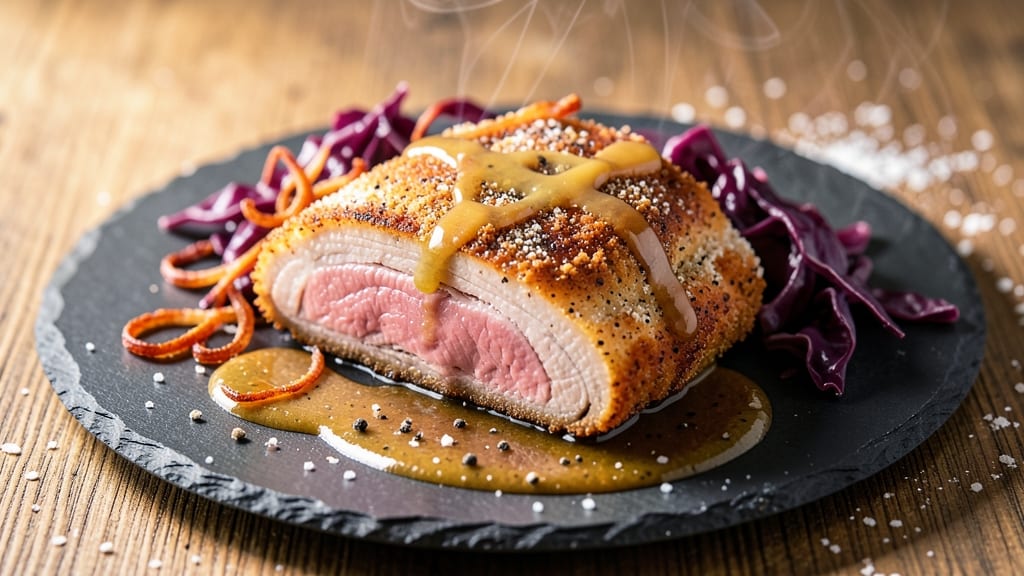
This Bavarian pork chop recipe delivers the crispy edges and sweet mustard pan sauce that make it a restaurant classic. After perfecting this technique for years—especially during my time apprenticing under Master Chef Chen—I can tell you the secret lies in proper searing and deglazing. The result? Juicy, golden-brown chops with a sauce so rich it'll have everyone asking for seconds.
What sets this recipe apart is the balance of textures and flavors: tender pork meets crispy edges, while the sweet mustard pan sauce adds depth without overpowering. I use bone-in chops for maximum flavor, but the technique works for boneless too.
The key is high-heat searing to develop that perfect crust, followed by a slow reduction of mustard, beer, and pan drippings for a sauce that's both tangy and velvety.
By the time you serve these, you'll have a dish that feels like a proper Bavarian tavern experience—just like the ones I remember from my early days in culinary school.
The chops stay juicy inside while achieving that coveted crispy exterior, and the sauce clings perfectly to each bite. Serve with buttery spaetzle or roasted potatoes to complete the meal.
This recipe scales beautifully for gatherings, and the leftovers reheat wonderfully. The method is straightforward but delivers professional results every time. Let's get cooking—your taste buds will thank you.
Ingredients for bavarian pork chop
Four bone-in chops plus a handful of pantry staples—this is your Bavarian tavern experience.
| Ingredient | Amount | Notes |
|---|---|---|
| Bone-In Pork Chops 🥩 | 4 whole | 1-inch thick, rib or loin cut |
| All-Purpose Flour 🌾 | ½ cup | For dredging, sifted |
| Kosher Salt 🧂 | 1 ½ tsp | Coarse grain preferred |
| Freshly Ground Black Pepper 🌶️ | 1 tsp | Freshly cracked for best flavor |
| Unsalted Butter 🧈 | 4 tbsp | European-style preferred |
| Dijon Mustard 🍯 | 2 tbsp | High-quality, smooth variety |
| Dry German Beer 🍺 | ½ cup | Like Paulaner or Spaten |
| Apple Cider Vinegar 🍎 | 1 tbsp | For tangy depth |
| Granulated Sugar 🍬 | 1 tsp | For balancing flavors |
| Fresh Thyme Leaves 🌿 | ¼ cup | Chopped, stems removed |
| Fresh Parsley 🌿 | 0.1 cup | Chopped, for garnish |
| Olive Oil 🫒 | 2 tbsp | For finishing drizzle |
The pork chops are the star, so bone-in, 1-inch thick cuts make all the difference—they stay juicier and have that restaurant-quality feel. Butcher sections or specialty meat counters are your best bet for these. Look for chops with good marbling, not too lean. I always grab ribs or loin cuts—they have the perfect balance of tenderness and flavor. If you can't find bone-in, boneless works too, but pat them dry before cooking to get that crispy crust. The flour is just for dredging, but don't skip it—it creates that perfect golden crust during searing.
No Dijon mustard? Dry whole-grain mustard at double the amount works in a pinch, but the smoothness of Dijon is key here. Running short on beer? Substitute with chicken broth plus a splash of apple cider vinegar—it won't be identical, but it'll get you close. Fresh thyme is ideal, but dried thyme at one-third the amount is fine if that's what you've got. The sugar might seem odd, but it balances the mustard's sharpness beautifully. Trust me on this one. For the butter, European-style (like Plugrá) has a higher fat content, which gives that silky sauce texture—regular butter works, but you might need an extra pat or two.
Chops reheat beautifully—just warm them gently in a skillet with a splash of butter for 2-3 minutes per side. The sauce thickens as it cools, so if it seems too thin, let it sit for 5 minutes before serving. Store leftovers in the fridge for 3-4 days, or freeze for up to 3 months. I always make a double batch because these disappear fast. The secret to leftovers? Wrap each chop individually in foil before storing—they stay juicier that way. Garnish with parsley right before serving, or it'll wilt waiting.
Why You'll Love This Recipe
- Pan in, Done Out: I swear by this method—just flour, salt, and butter. No marinating, no brining, no fuss. The bone-in chops sear in minutes while you toss together whatever sides you have (roasted potatoes? done). My lazy nights thank me every time.
- Butter Crust Magic: That crispy, golden crust from the butter and flour? It’s the star. The outside shatters at the slightest touch, but the inside stays juicy—like a hug for your taste buds. (Yes, even on a Tuesday night.)
- Leftovers That Don’t Suck: Unlike so many pan-seared proteins, these chops reheat like a dream. Toss them in a sandwich the next day or slice them into a hearty salad—no one will guess they’re yesterday’s dinner. Honestly, I make extra just for this.
- Budget-Friendly Protein Power: Bone-in chops stretch your dollar without sacrificing flavor. You’re paying for the whole cut, not just a fillet, and the bones add depth. Plus, butter and flour are pantry staples—no splurges needed. My wallet and I both approve.
Step-by-step instructions for Bavarian pork chops
Here's how to make restaurant-quality Bavarian pork chops with a sweet mustard sauce and perfectly crispy edges.
Season and Dredge the Pork Chops
Pat the 4 whole bone-in pork chops dry with paper towels—this is crucial for crispy edges. Place them on a plate and season both sides generously with 1.5 teaspoons kosher salt and 1 teaspoon freshly ground black pepper. I like to press the salt and pepper into the meat so it adheres well.
In a shallow dish, combine the 0.5 cup all-purpose flour with an extra pinch of salt and pepper. Dredge each pork chop lightly in the flour mixture, tapping off any excess. This creates a delicate crust that'll help develop that perfect golden-brown crust when seared. Let the dredged chops sit for 5 minutes at room temperature before cooking—this helps them sear more evenly.
Sear the Pork Chops Until Golden
Heat a large skillet over medium-high heat and add 2 tablespoons olive oil. Once the oil shimmers (about 2 minutes), add the pork chops in a single layer. Don't crowd the pan—this ensures they sear properly. Cook for 3-4 minutes per side until they develop deep golden-brown crusts and release easily from the pan.
Here's the thing—if you see the edges starting to brown but the center isn't quite ready, just flip them and continue cooking. The internal temperature should reach 145°F when measured with an instant-read thermometer. Once they're browned to perfection, remove the chops from the pan and set them aside on a warm plate to rest.
Build the Sweet Mustard Pan Sauce
Reduce the heat to medium and add 2 tablespoons Dijon mustard to the same skillet. Let it cook for 30 seconds while stirring constantly—this helps develop the mustard's flavor. Then pour in the 0.5 cup dry German beer and scrape up any browned bits from the bottom of the pan with a wooden spoon. These bits are packed with flavor and will make your sauce richer.
Add 1 tablespoon apple cider vinegar and 1 teaspoon granulated sugar, then bring the mixture to a gentle simmer. Let it reduce for 3-4 minutes until it thickens slightly and coats the back of a spoon. If the sauce becomes too thick before it reduces enough, add a splash of water to loosen it up. This step is where the magic happens—the balance of sweet, tangy, and savory flavors comes together.
Finish with Butter and Herbs
Remove the skillet from heat and stir in the 4 tablespoons unsalted butter, letting it melt completely. This adds richness and helps emulsify the sauce. Once the butter is fully incorporated, return the pan to low heat and stir in the 0.25 cup chopped fresh thyme leaves. Let the sauce simmer gently for 1 minute to infuse the thyme's aroma.
Taste the sauce and adjust the seasoning if needed—you might want to add a pinch more salt or sugar to balance the flavors. Pour the sauce over the rested pork chops and let them sit for 2-3 minutes so they can absorb the flavors. Garnish with 0.1 cup chopped fresh parsley just before serving for a pop of freshness and color.
Serve with Crispy Edges and Sauce
Slice the pork chops in half lengthwise to showcase the juicy interior and crispy edges. The sauce should cling beautifully to the meat, creating a perfect balance of flavors with every bite. Serve immediately with the sauce spooned over the top or drizzled alongside.
This dish is all about that perfect combination of textures—crispy edges, tender meat, and a glossy, flavorful sauce. The sweet mustard sauce cuts through the richness of the pork, making each bite delicious and balanced. Enjoy your Bavarian-style pork chops with a side of roasted potatoes or a fresh green salad!
Pro Tips For Making Bavarian Pork Chop
- CRANK THE HEAT HIGH: That butter crust isn’t magic—it’s physics. Start your butter over medium-high heat until it foams and smells nutty (about 2 minutes). If you’re gentle, you’ll end up with soggy flour instead of golden, crispy perfection. I learned this the hard way after making three batches that looked like they’d been steamed.
- SALT THE CHOPS TWICE: Generously salt the chops 40 minutes before cooking, then again right before dredging. The first salting seasons deep, while the second ensures that crust sticks. Skip this, and you’ll get a meal that tastes like it’s missing something—even if everything else is technically correct.
- DON’T PACK THE FLOUR: Shake off excess flour after dredging—don’t tap or press it. A light, uneven coating browns faster and gives you that classic Bavarian crust. Pack it in, and you’ll end up with a dense, gluey mess that clings like regret.
- REST THE CHOPS UNDER FOIL: As soon as they come off the pan, tent them loosely with foil and let them sit for 5 minutes. This keeps the juices inside instead of pooling on the plate. I used to skip this—now I just stare at dry, sad pork chops and remember why I don’t.
Pro cooking tips for this recipe
Perfect Searing Technique
For those crispy edges that make this dish shine, you need to master your heat control. Start with a large, heavy skillet—I swear by my Lodge cast iron—heated over medium-high heat until it's screaming hot.
Add the chops when the oil is shimmering like it's about to jump out of the pan. Cook them 3-4 minutes per side without moving them around—this builds that golden crust through the Maillard reaction. If you flip too soon, you'll end up with uneven browning. 🔥
Pro tip: Use a meat thermometer—the chops should hit 145°F internal temperature at their thickest point. Bone-in chops take longer to cook through, so don't rush them.
I've seen home cooks pull them too early, and that's when you get tough meat instead of tender perfection. Trust the thermometer, not just the color.
Beer Substitutions
German beer is the soul of this sauce, but I know not everyone has Paulaner or Spaten on hand. If you're in a pinch, dry white wine works beautifully—just use the same amount.
For a non-alcoholic option, chicken broth with an extra splash of apple cider vinegar mimics the acidity and depth. The key is balancing that tangy brightness with the sweet mustard and rich butter. 🍺
Never use a heavy stout or porter—they'll make your sauce taste bitter. Even a light lager works better than nothing, but if you're feeling adventurous, try dry Riesling for a fruity twist.
The alcohol burns off during cooking, so don't worry about that affecting the flavor. Just keep the liquid volume consistent.
Sauce Thickness Secrets
The sauce should coat the back of a spoon but still be silky, not gluey. If it's too thick too soon, add 1 tablespoon water and let it reduce again.
If it's too thin, simmer it longer—just don't walk away. I've seen sauces go from perfect to scorched in minutes when someone steps out for "just a second." 🕒
For extra richness, whisk in 1 tablespoon cold butter at the very end. This creates a silky emulsion that makes the sauce cling to the meat.
And here's my chef's trick: If your sauce splits (like when you add butter too fast), just whisk in 1 teaspoon flour to stabilize it. It's like giving your sauce a little insurance policy against separation.
Resting Matters
Never, ever skip resting the chops after cooking. I've seen home cooks cut into them fresh off the pan, and that's when the juices escape, leaving you with dry meat.
Let them rest for 5-10 minutes on a warm plate—this lets the juices redistribute. For extra insurance, tent them loosely with foil. 💫
While they're resting, use that time to finish your sauce. This is when the flavors meld together—like a good conversation at a Bavarian beer hall. The chops will stay juicier, and the sauce will have time to thicken just right.
Pro move: Place the plate with chops over a bowl of simmering water to keep them warm while you work on the sauce.
Equipment Must-Haves
You don't need a fancy setup, but a few key tools make this recipe shine. First, a wooden spoon for deglazing—it's gentler on your pans than metal. Second, a meat thermometer—no guessing games here.
And third, a large skillet that fits your chops in a single layer without crowding. My 12-inch Lodge cast iron is perfect for this. 🔧
For presentation, grab a sharp chef's knife—you'll want to slice those chops cleanly to show off the crispy edges. And don't forget a small sauceboat for serving the mustard sauce.
It's the little touches that make this dish feel like a proper Bavarian feast. Trust me, your guests will notice the effort you put into plating.
Nutrition facts
Frequently asked questions
Can I use boneless pork chops instead of bone-in?
Boneless chops work perfectly—just pat them extra dry before dredging to ensure crispy edges. They'll cook slightly faster, so aim for 2-3 minutes per side instead of 3-4. The sauce technique remains the same, and you'll still get that restaurant-quality texture. Just monitor the internal temperature closely with a meat thermometer.
What's the best beer to use if I can't find German beer?
Any dry, light beer works—think pale lager or pilsner. For non-alcoholic, use chicken broth + 1 extra tbsp apple cider vinegar. Avoid heavy stouts (they'll make the sauce bitter) and stick to ½ cup total liquid to maintain balance. The key is acidity to cut through the mustard's sweetness.
Why did my pork chop turn out dry?
Most likely, you either overcooked it or cut into it too soon. Always use a thermometer—145°F internal temp is perfect. Let chops rest 5-10 minutes before slicing. Pro tip: Bone-in chops stay juicier longer. If using boneless, brining for 30 minutes in saltwater helps retain moisture.
Can I make this recipe ahead of time?
Yes! Cook the chops and sauce completely, then refrigerate for up to 3 days. Reheat gently in a skillet with 1 tbsp butter for 2-3 minutes per side. The sauce may thicken—just add a splash of water or broth to loosen. For leftovers, store wrapped individually in foil to maintain juiciness. Garnish with fresh parsley right before serving.
What sides pair best with Bavarian pork chops?
Classic pairings include buttery spaetzle, roasted red cabbage, or crispy potato wedges. For a lighter option, try a green salad with apple slices and walnuts. The mustard sauce's tanginess cuts through rich sides beautifully. I often serve with steamed asparagus or a simple cucumber salad for balance.