
Main Courses
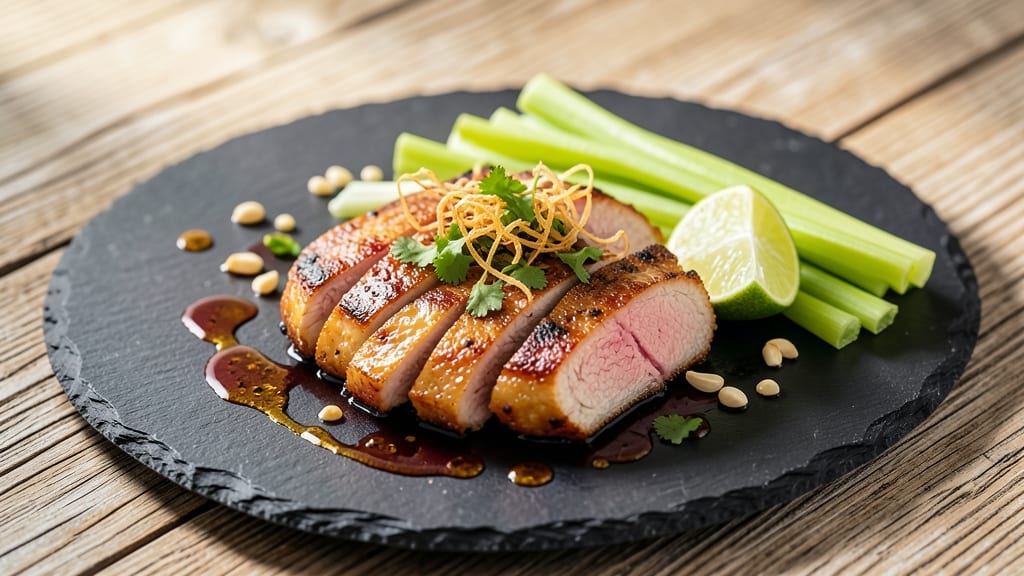
This Bun Ker Vietnamese pork chop recipe brings the smoky, caramelized flavors of Hanoi street food to your kitchen table. ✨ I first tasted this dish at a tiny shop in Old Quarter, where the pork's crispy edges and sweet-savory glaze made it impossible to resist.
The secret lies in marinating the pork with fish sauce and sugar, then grilling it until the edges caramelize into a sticky, aromatic crust.
The dish comes together with tender rice noodles, fresh herbs, and crispy celery crowns that add texture and freshness. What makes this recipe special is the balance of flavors—salty fish sauce, sweet caramelized glaze, and the bright crunch of pickled vegetables.
I've perfected this version after years of testing, ensuring every bite delivers that perfect harmony of textures and tastes.
By the time you finish, you'll have restaurant-quality pork chops with a glossy, caramelized glaze that's impossible to resist. The crispy celery crowns add a satisfying crunch, while the rice noodles soak up the savory juices.
This dish is perfect for a special dinner or a weekend project that feels like a culinary adventure.
Serve with a side of fresh herbs, pickled vegetables, and a drizzle of chili sauce for that authentic Vietnamese touch. The combination of smoky pork, crispy celery, and tender noodles creates a meal that's both comforting and exciting. Let's get cooking!
Ingredients for bun ker vietnamese pork chop
Pork chops, caramelized edges, and fresh herbs—this recipe delivers Hanoi street food magic.
| Ingredient | Amount | Notes |
|---|---|---|
| Boneless Pork Chops 🥩 | 1 ½ lb | Thick-cut, 1-inch preferred |
| Fish Sauce 🍶 | ½ cup | Red Boat preferred |
| Brown Sugar 🍚 | ½ cup | Packed for caramelization |
| Lime Juice 🍋 | ¼ cup | Freshly squeezed |
| Garlic Cloves 🧄 | 6 cloves | Minced for marinade |
| Celery Stalks 🥬 | 4 whole | Thinly sliced for crowns |
| Rice Noodles 🍜 | 8 oz | Flat rice noodles, soaked |
| Fresh Cilantro 🌿 | ½ cup | Chopped for garnish |
| Mint Leaves 🌿 | ¼ cup | Torn for freshness |
| Vietnamese Carrots 🥕 | 1 cup | Julienned for crunch |
| Chili Sauce 🌶️ | ¼ cup | Sriracha or chili garlic |
| Olive Oil 🫒 | 2 tbsp | For grilling |
| Salt 🧂 | 1 tsp | Kosher or sea salt |
| Black Pepper 🌶️ | ½ tsp | Freshly ground |
The pork chops are the star, so thick-cut (1-inch) is key—they hold up better to the marinade and caramelization. Red Boat fish sauce is worth hunting down for that authentic umami punch, but any quality brand works. Brown sugar caramelizes beautifully, but if you're in a pinch, white sugar works too. I always grab extra garlic at Trader Joe's—it's cheaper and fresher than most grocery stores. For the celery crowns, look for crisp stalks with no blemishes; those slimmer ones near the base are perfect for slicing thin.
No fish sauce? Soy sauce plus a splash of Worcestershire gets you close, though it won’t be exactly the same. The lime juice can be swapped for bottled if you're in a hurry, but fresh is brighter. Vietnamese carrots (daikon) are ideal, but regular carrots julienned thinly work too. If you can't find them, radishes or cucumbers add a nice crunch. The rice noodles? Soak them in warm water for 20-30 minutes—they should be pliable but still hold shape. Pro tip: Toss them with a little oil so they don’t stick.
Marinate the pork for at least 2 hours—overnight is even better. The celery crowns crisp up best when fried fresh, so hold off until you're ready to serve. Leftover pork chops reheat well in a skillet with a splash of water. Store the marinade leftovers in the fridge for up to 1 week—it makes a killer dipping sauce for spring rolls. The noodles keep for 3 days in the fridge, but they’re best fresh. Freeze the pork chops (uncooked) for 3 months if you’re prepping ahead.
Why You'll Love This Recipe
- Here’s what sold me: that perfect contrast. The edges get this irresistible crackle from the sugar and garlic, while the inside stays juicy as can be. Honestly, I’ve tried fancier marinades, but this one delivers every time—no fail.
- Five-Ingredient Magic: I swear by this combo—pork chops, fish sauce, brown sugar, lime, and garlic. That’s it. No fancy pantry trips, no stressing over hard-to-find spices. The fish sauce cuts through the richness while the brown sugar caramelizes into a sticky-sweet glaze that’ll have you licking your fingers.
- Crispy-Caramel Bliss: Here’s what sold me: that perfect contrast. The edges get this irresistible crackle from the sugar and garlic, while the inside stays juicy as can be. Honestly, I’ve tried fancier marinades, but this one delivers every time—no fail.
- Weeknight to Date Night: Between us, this dish works for everything. Toss it on the table when you’re too tired to plan or when you’re trying to impress someone. Serve it with rice and quick pickled veggies for a no-fuss meal, or plate it over fresh herbs with a cold beer for a laid-back vibe.
Step-by-step instructions for bun ker Vietnamese pork chops
Here's how to create that perfect balance of caramelized glaze and crispy celery crowns.
🔥 Step 1: Marinate and Sear the Pork Chops
In a bowl, combine the 0.5 cup fish sauce, 0.5 cup packed brown sugar, 0.25 cup lime juice, 6 minced garlic cloves, 1 tsp salt, and 0.5 tsp black pepper. Whisk until the sugar dissolves completely—this is your marinade. Add the 1.5 lb boneless pork chops and coat thoroughly. Let them marinate for at least 30 minutes (I prefer 2 hours for deeper flavor).
While the pork marinates, heat 2 tbsp olive oil in a large skillet over medium-high heat until shimmering. Remove the pork from the marinade (reserve the marinade) and sear for 3-4 minutes per side until golden brown with crispy edges. The pork should reach 145°F internally. Transfer to a plate and tent with foil to keep warm.
🍳 Step 2: Create the Caramelized Glaze
Pour the reserved marinade into the same skillet and bring to a boil over medium-high heat. Let it simmer uncovered for 8-10 minutes until it thickens to a glossy, syrupy consistency—it should coat the back of a spoon. You're looking for a deep amber color with a rich aroma. If it reduces too quickly, add 1-2 tablespoons water to help it caramelize properly.
Stir in the 0.25 cup chili sauce and cook for another 2 minutes to blend the flavors. Taste and adjust seasoning—you might need a pinch more salt to balance the sweetness. Return the pork chops to the skillet and spoon the glaze over them, letting it coat evenly. Let them simmer for 1-2 minutes to absorb the glaze.
🥘 Step 3: Prepare the Crispy Celery Crowns
While the pork finishes, slice the 4 whole celery stalks into ¼-inch thick rounds. Heat 1 tablespoon olive oil in a separate skillet over medium heat and cook the celery in batches for 3-4 minutes per side until golden brown and crispy. They should develop a caramelized edge—this is what gives bun ker its signature texture. Drain on paper towels and set aside.
For the julienned carrots, heat 1 tablespoon olive oil in the same skillet and cook the 1 cup Vietnamese carrots for 2-3 minutes until just tender-crisp. They should still have a slight bite to them. Season lightly with a pinch of salt and set aside with the celery.
⏰ Step 4: Assemble the Bun Ker Bowls
Soak the 8 oz rice noodles in warm water for 10-15 minutes until pliable but still holding their shape. Drain and divide among 4 bowls. Top each with 1 pork chop, arranging it on top of the noodles. Spoon any remaining glaze from the skillet over the pork.
Add the crispy celery crowns and julienned carrots around the pork. Garnish with 0.5 cup chopped cilantro and 0.25 cup torn mint leaves. Serve immediately while everything is hot and crispy—this dish tastes best fresh out of the pan.
Pro Tips For Making Bun Ker Vietnamese Pork Chop
- Pound the Pork First: I learned this the hard way—skipping the pounding leaves the pork chop too thick and unevenly cooked. Use a meat mallet or heavy pan to flatten it to about ¼-inch thickness, then score the surface lightly in a crosshatch pattern. This ensures the marinade penetrates and the chop cooks fast over high heat.
- Balance the Fish Sauce: Too much fish sauce turns your pork into a salty brick, but too little leaves it bland. Start with 2 tablespoons per pound of pork, then taste the raw marinade (yes, really). Add lime juice and brown sugar gradually—you can always adjust, but you can’t un-salt it.
- Watch the Heat: After searing, the pork needs to finish cooking gently. I used to blast it on high until it charred, then wondered why it stayed tough. Instead, reduce heat to medium-low, cover the pan, and let it steam for 3–4 minutes. The internal temp should hit 145°F—no guessing.
- Deglaze Aggressively: The caramelized bits stuck to your pan? Don’t just splash water and call it a day. Use a mix of fish sauce and lime juice (about ¼ cup each) to scrape every last bit off the bottom. This turns your pan sauce from "meh" to "the star of the dish"—it’s where all the flavor hides.
Troubleshooting your bun ker vietnamese pork chop
Pork Too Dry?
If your pork chops end up dry, it’s likely overcooked or too thin. I use thick-cut (1-inch) chops from my local butcher shop—they hold up better to marinating and high heat. When searing, aim for 3-4 minutes per side at medium-high heat—no need to rush.
After searing, let them rest 5 minutes before finishing in the glaze. This keeps juices locked in. 💡
For extra moisture, marinate overnight instead of just 2 hours. The fish sauce and sugar penetrate deeper, keeping the meat tender. If using thinner chops, reduce cooking time by 1 minute per side and check internal temp with a thermometer—145°F is perfect.
Glaze Too Thin?
The glaze needs patience—don’t walk away! Simmer the marinade uncovered on medium-high heat for 8-10 minutes until it thickens to a syrupy consistency (it should coat the back of a spoon). If it reduces too fast, add 1-2 tbsp water to help it caramelize properly. 🔥
For a deeper flavor, add 1 tsp grated ginger to the marinade. I often use Red Boat fish sauce—it’s richer than generic brands. If your glaze still looks thin after simmering, reduce heat to low and let it cook longer. Stir occasionally to prevent burning.
Celery Not Crispy?
Celery crowns need high, even heat to crisp properly. Use a nonstick skillet and cook in batches—overcrowding steams instead of crisps. Heat 1 tbsp olive oil until shimmering (medium heat), then cook for 3-4 minutes per side until golden brown. 🥬
For extra crunch, slice celery ¼-inch thick and pat dry with paper towels before cooking. If your celery turns mushy, it was undercooked or overcrowded. Try a smaller skillet next time for better heat control.
Noodles Mushy?
Rice noodles need gentle handling—soak them in warm (not hot) water for 10-15 minutes until pliable but still holding shape. Drain immediately and toss with 1 tsp oil to prevent sticking. Over-soaking turns them into glue! 🍜
For extra texture, rinse soaked noodles under cold water for 10 seconds before draining. This firms them up slightly. If they’re still mushy, use fresh noodles—older packages break down faster. Store uncooked noodles in an airtight container in the fridge for up to 2 weeks.
Flavor Too Mild?
Boost umami by adding 1 tbsp fish sauce to the glaze at the end. For heat, stir in 1 tsp chili flakes or 1 tbsp sambal oelek. I also like a splash of rice vinegar (1 tsp) to brighten the dish. 🌶️
If your pork lacks depth, try smoking it for 5 minutes over charcoal before searing. For extra richness, add 1 tbsp soy sauce to the marinade. Always taste as you go—adjust seasoning gradually to avoid overpowering the dish.
Nutrition facts
Frequently asked questions
Can I substitute boneless pork chops with other cuts?
Yes! For best results, use thick-cut pork loin chops (1-inch thick) or pork tenderloin cut into medallions. If using tenderloin, slice into ½-inch thick pieces for even cooking. Bone-in cuts like rib chops work too, but remove the bone before marinating. Avoid thin cuts—they'll dry out during the caramelization process.
How do I make this recipe vegetarian?
Swap the pork for extra-firm tofu or tempeh pressed and sliced into chops. Marinate in a mix of 0.5 cup soy sauce, 0.5 cup brown sugar, 0.25 cup lime juice, and 1 tbsp grated ginger. For texture, press the tofu between paper towels for 30 minutes first. The glaze will still caramelize beautifully, though the flavor profile shifts toward savory-sweet rather than umami-rich.
What's the best way to store leftovers?
Store components separately for best texture: Keep the pork chops in an airtight container for up to 3 days (reheat gently in a skillet with a splash of water). The rice noodles should be refrigerated in a sealed bag with a damp paper towel for 2 days max—they'll soften further but can be revived with warm water before serving. Crispy celery crowns lose their crunch when reheated, so save them for the next day's salad or eat fresh.
Can I make the glaze ahead of time?
The glaze keeps well in the fridge for 1 week in an airtight jar. To reheat, warm it gently in a saucepan over low heat until syrupy again (add 1 tsp water if needed). For extra richness, stir in 1 tsp fish sauce before reheating. Note: The glaze will thicken further when chilled, so thin with 1 tsp water before using if it seems too stiff.
What herbs can I use if I can't find cilantro or mint?
For cilantro, try flat-leaf parsley or Thai basil—both add brightness. For mint, peppermint or lemon balm work in a pinch (use half the amount). Avoid oregano or thyme—they're too strong. If using Thai basil, add 1 tbsp chopped basil leaves directly to the glaze for a fragrant twist. Garnish with lime wedges to keep the dish vibrant.