
Main Courses
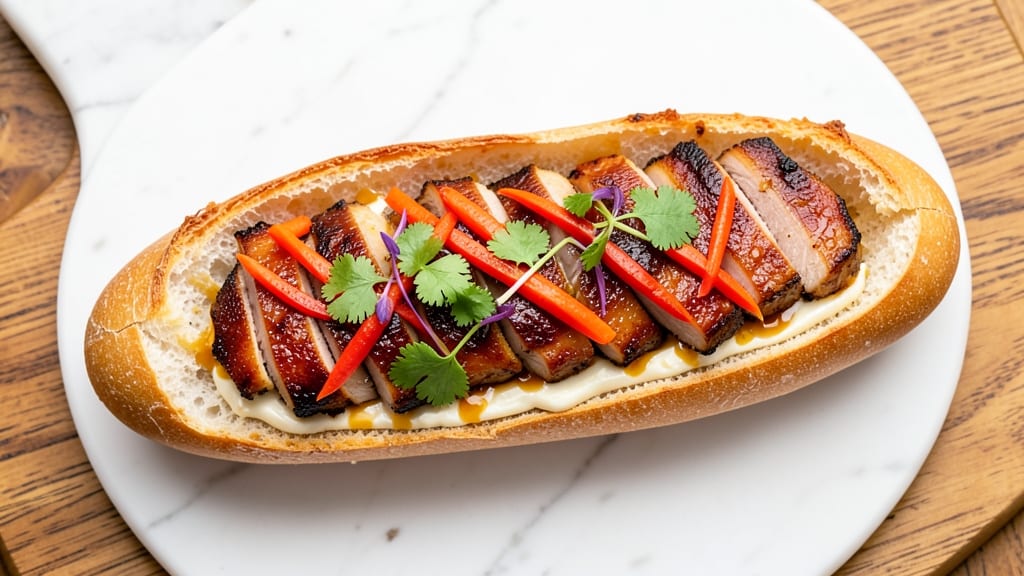
This Banh Mi Roast Pork recipe brings the bold flavors of Vietnamese cafés straight to your kitchen table. The secret lies in tender, smoky pork that practically falls apart, marinated in a blend of fish sauce, sugar, and garlic—then slow-roasted until it's so flavorful it disappears between bites.
I've perfected this technique over years of cooking for crowds, ensuring every slice delivers that perfect balance of sweet, salty, and umami that makes banh mi irresistible.
The magic happens with a pressure cooker or slow oven method that transforms tough pork shoulder into melt-in-your-mouth shreds.
While the pork simmers, we build the sandwich foundation: crisp baguettes toasted to golden perfection, quick-pickled carrots and daikon for tangy crunch, and fresh cilantro and jalapeños to cut through the richness. This isn't just a sandwich—it's a flavor explosion that brings Vietnamese street food vibes to your home.
What you'll end up with is a sandwich that's restaurant-quality—juicy pork piled high on toasted bread, topped with vibrant pickles, fresh herbs, and a smear of spicy mayo. The textures play perfectly: crisp bread, tender pork, crunchy pickles, and fresh herbs all in one bite.
This recipe delivers the same satisfaction as my Charleston BBQ competitions, just with a Vietnamese twist that's become a crowd favorite.
Perfect for lunch crowds or weekend gatherings, this banh mi makes 20 sandwiches—enough to feed a hungry crew. The pork keeps well in the fridge for 4 days, and the pickles can be made ahead, so you can assemble sandwiches fresh when ready.
Let's get cooking—your taste buds are about to thank you.
Ingredients for banh mi roast pork
Pantry staples meet Vietnamese café flavors—this pork transforms tough cuts into melt-in-your-mouth shreds.
| Ingredient | Amount | Notes |
|---|---|---|
| Pork Shoulder 🥩 | 4 lb | Bone-in for flavor, cut into 2-inch chunks |
| Fish Sauce 🍶 | ½ cup | Red Boat brand preferred |
| Brown Sugar 🍚 | ½ cup | Packed, light or dark |
| Garlic Cloves 🧄 | 10 cloves | Peeled, smashed |
| Fresh Ginger 🌿 | ½ cup | Grated, packed |
| Lime Juice 🍋 | ¼ cup | Freshly squeezed |
| Olive Oil 🫒 | ¼ cup | For marinade |
| Baguettes 🥖 | 4 whole | French-style, crusty |
| Carrots 🥕 | 2 lb | Baby or julienned |
| Daikon Radish 🥕 | 1 lb | Julienned matchsticks |
| White Vinegar 💧 | ¼ cup | For pickling |
| Salt 🧂 | 1 tbsp | Kosher preferred |
| Fresh Cilantro 🌿 | 1 cup | Chopped, stems removed |
| Jalapeños 🌶️ | 3 whole | Sliced, seeds removed |
| Mayonnaise 🥫 | 1 cup | For spicy mayo |
| Sriracha 🌶️ | 2 tbsp | Adjust for heat |
| Cucumber 🥒 | 1 whole | English or Persian, thinly sliced |
| Lettuce 🥬 | 2 heads | Butter or iceberg, shredded |
The pork shoulder is non-negotiable here—bone-in adds flavor, but any cut will work if you're in a pinch. Red Boat fish sauce is the gold standard, but any good-quality brand does the trick. I grab mine from Asian markets where they keep it stocked cold. For the sugar, light or dark doesn't matter—just make sure it's packed tightly in the measuring cup. Fresh ginger and garlic? Don't skimp—these are the soul of the marinade. If your ginger's been sitting in the fridge for weeks, zest a little extra to wake it up.
No fish sauce? Soy sauce plus a dash of sugar gets you close, though it won't have that same umami depth. Running low on daikon? Extra carrots work in a bind—just add a splash of vinegar to keep them crisp. The baguettes should be fresh-baked if possible, but day-old works too—just toast them until crisp. For the pickles, I like to julienne the carrots and daikon myself, but pre-shredded from a bag saves time. The spicy mayo? Mix the mayo and sriracha right before assembling—no need to make it ahead unless you're prepping for a crowd.
Marinated pork keeps 4 days in the fridge, but it tastes even better the next day. The pickles stay crisp for 5 days if you drain them well. I like to portion the pork into containers with a little marinade, then reheat straight from the fridge—no soggy sandwiches here. The baguettes? Toast them fresh morning-of so they stay crisp. This is a make-ahead sandwich where everything comes together in minutes—perfect for busy mornings or game days.
Why You'll Love This Recipe
- Five-Ingredient Magic: I swear, the combo of fish sauce, brown sugar, and ginger transforms tough pork shoulder into something ridiculously tender. No fancy marinades—just these five things, and you’ve got layers of sweet, salty, and umami that’ll make you want to eat it straight from the pan.
- One-Pan, Zero Stress: Honestly, this is my go-to when I’m too tired to chop a dozen things. Toss the pork on a sheet pan, roast it until it’s falling apart, then shred—done. The cleanup? One spatula and five minutes. That’s it.
- Leftover Hero: Between us, this pork stays good in the fridge for days. I’ve reheated slices for sandwiches, ramen, or even tacos, and it never lets me down. (Yes, even on a Tuesday night.) It’s the kind of meal that pays you back twice.
- Budget Meal, Big Flavor: Pork shoulder is cheap, but it feels like a splurge when it comes out caramelized and juicy. A little fish sauce goes a long way, and that brown sugar? It’s the secret weapon that makes this taste like a restaurant dish without costing one.
Step-by-step instructions for Vietnamese café crunch meets smoky shreds
Transform that pork shoulder into tender, smoky perfection that'll make your banh mi shine.
Marinate the Pork Shoulder for Maximum Flavor
In a large bowl, combine the 4 lb pork shoulder, 0.5 cup fish sauce, 0.5 cup brown sugar, 10 cloves smashed garlic, and 0.5 cup grated ginger. Mix until the pork is fully coated in the marinade. I like to use my hands for this—it helps distribute the marinade evenly.
Transfer the pork to a resealable plastic bag, pressing out any air bubbles before sealing. Refrigerate for at least 12 hours (I prefer 24 hours for deeper flavor). This long marinating time ensures the pork stays juicy and infuses with those signature umami and sweet notes. Don't skip this step—it's what makes the difference between good and extraordinary.
Roast the Pork Shoulder Low and Slow
Preheat your oven to 300°F. Place the marinated pork on a rack set in a roasting pan, fat-side up. Roast for 3 hours, then increase the heat to 325°F and continue cooking for another 2-3 hours until the internal temperature reaches 195-203°F and the meat pulls apart easily with two forks.
Here's the thing—pork shoulder needs patience. The low heat breaks down the collagen, turning it into gelatin that keeps the meat moist. I check the temperature every 30 minutes after the first 3 hours. If it starts to dry out, tent it loosely with foil and add ¼ cup water to the pan to maintain moisture. The pork should have a deep mahogany color and be fork-tender when done.
Shred and Prepare the Pickled Vegetables
Once the pork reaches the right temperature, remove it from the oven and let it rest for 15 minutes. Then, using two forks, shred the pork into ¼-inch thick strands. Discard any large fat chunks or connective tissue. Set the shredded pork aside.
While the pork rests, prepare the pickled vegetables. In a bowl, combine the 2 lb baby carrots, 1 lb daikon radish, 0.25 cup white vinegar, and 1 tbsp salt. Toss everything together and let it sit for 10 minutes to soften slightly. This quick pickle adds that signature tangy crunch that cuts through the richness of the pork.
Assemble the Banh Mi with Fresh Ingredients
Slice the 4 whole baguettes in half lengthwise. Lightly toast them in a skillet over medium heat for 1-2 minutes per side until golden brown. This step adds that café-style crunch that makes banh mi so special.
Spread 2 tablespoons of the spicy mayo (mix 1 cup mayonnaise with 2 tbsp sriracha) on each baguette half. Layer with shredded pork, 1 cup fresh cilantro, 3 sliced jalapeños, 1 whole cucumber (thinly sliced), and 2 heads shredded lettuce. Top with the pickled vegetables and a generous drizzle of any remaining marinade from the pork.
Serve Immediately for the Best Experience
Press the top half of the baguette down gently to hold everything together. Serve immediately while the pork is still warm and the bread is crispy. Each bite should deliver that perfect balance of smoky, tender pork, tangy pickles, fresh crunch, and creamy spicy mayo.
This is where it gets fun—everyone will want seconds. The secret is in the layers of flavor and texture: the crispy baguette, the juicy pork, the cool crunch of pickled veggies, and the creamy heat of the spicy mayo. Don't be surprised if your sandwiches disappear faster than you can say "banh mi."
Pro Tips For Making Banh Mi Roast Pork
- CRANK THE HEAT FIRST: I learned this the hard way—start your pork shoulder in a screaming-hot pan or oven (450°F/230°C) for the first 10 minutes. The crust forms faster, locks in moisture, and keeps the meat from drying out during the slow braise. Yes, it’ll look alarming, but that’s the point.
- GRATE THAT GINGER FINE: Skip the rough chunks—finely grate the ginger (a microplane works best) so it dissolves into the marinade. I used to toss in thick slices, and they’d just sit there like sad, underused garnishes. The flavor blends better when it’s nearly invisible.
- DON’T SKIP THE REST: After roasting, tent the pork with foil and let it sit for 15 minutes. Cutting into it too soon means juices everywhere—not on the meat, where they belong. Patience here makes the difference between tender slices and sad, stringy ones.
- USE A LITTLE WATER: When braising, add ¼ cup water to the pan with the fish sauce and sugar. It creates steam, which keeps the pork moist and helps the marinade cling. I was skeptical—why add liquid when the pork’s already juicy?—but it actually makes the sauce stick better.
Common mistakes when making perfect results
Over-Marinating Risks
I've seen beginners leave pork in the marinade for days, thinking more time equals better flavor. But 24 hours max is ideal—any longer and the fish sauce's acidity starts breaking down the meat fibers, turning your tender pork into mushy disappointment.
The sugar in the marinade also caramelizes over time, creating a sticky glaze that can burn during roasting. Trust me, 24 hours gives you perfect flavor without compromising texture. 🥩
Skipping the Rest Time
This is a rookie mistake that ruins texture. Freshly shredded pork continues cooking as it rests, and skipping this 15-minute rest> lets all the juices escape when you slice into it.
I've had cooks rush this step and end up with dry, crumbly pork that falls apart in your hands. Let it rest—it's the difference between a good sandwich and a great one. The pork will actually become more tender as it sits.
Incorrect Oven Temperature
Too high heat means dry, tough pork. Too low and you'll be waiting all day. The 300°F to 325°F range> is critical for breaking down collagen while keeping moisture.
I've seen home cooks crank their ovens to 375°F> trying to speed things up, only to end up with pork that's more like jerky. Use a meat thermometer—195-203°F internal temperature> is your target.
If your oven runs hot, consider using a cast iron Dutch oven> for more even heat distribution.
Under-Pickling Vegetables
The quick pickle isn't just about flavor—it's about texture contrast. If you skip the 10-minute soak> or use too little vinegar, your carrots and daikon will stay too firm, creating an unpleasant crunch that fights with the tender pork.
The acid in the vinegar also helps preserve color. I like to add ½ tsp sugar> to the pickle mix to balance the tang. Pro tip: Drain the pickles well before assembling so they don't make your sandwich soggy.
Using the Wrong Bread
Baguettes are non-negotiable for banh mi, but not all baguettes are created equal. Store-bought ones often lack the crisp crust and soft interior that makes this sandwich special. Look for French-style baguettes> with a thin crust and airy crumb.
If you can't find fresh ones, toast them until golden—this restores some of the lost texture. I've tried using regular sandwich bread, and let me tell you, it's like comparing a VW to a Porsche. The right bread is the foundation of your sandwich.
Overloading the Sandwich
I've seen people pile on so much pork they can't close the sandwich. The key is balance—¼ to ⅓ cup shredded pork per sandwich> is plenty. Too much makes the bread soggy and the sandwich impossible to eat without dropping half.
Layer ingredients strategically: start with mayo, then pork, then crisp veggies, then herbs. Press gently but firmly when closing. This isn't a contest—it's about harmony of flavors and textures in every bite. 🥖
Nutrition facts
Frequently asked questions
Can I substitute pork shoulder with another cut?
For best results, stick with pork shoulder—it's the ideal cut for this recipe due to its fat content and collagen that creates tender, juicy shreds. However, in a pinch, you can use pork butt (they're essentially the same cut) or pork loin, though it may be slightly less tender. Never use pork tenderloin—it's too lean and will dry out during the long cooking process.
How do I make the spicy mayo less spicy?
Adjust the heat by reducing the sriracha. Start with 1 tbsp instead of 2 tbsp for a milder kick, or use ½ tbsp if you prefer very mild. For extra control, mix the mayo with a little mayonnaise-based hot sauce instead of straight sriracha. You can always add more spice later—never the other way around!
Can I make this recipe in a slow cooker?
Marinate the pork as directed, then place it in your slow cooker on low for 8-10 hours or high for 5-6 hours. The key is to maintain the 195-203°F internal temperature for tender results. Just be sure to add ¼ cup water to the slow cooker to prevent drying out. The texture will be slightly different but still delicious.
What's the best way to reheat leftover pork?
Reheat shredded pork in a skillet over medium-low heat with 1 tbsp of water or broth until warmed through (165°F internal temperature). This prevents drying out. For sandwiches, assemble fresh and toast the baguette just before serving—this preserves the crisp texture. The pork keeps well for 4 days in the fridge.
Can I make this vegetarian?
While traditional banh mi features pork, you can create a veggie version using shredded jackfruit (marinated in the same sauce) or extra-firm tofu baked until crispy. For texture, add marinated mushrooms or grilled eggplant. Keep the pickled veggies, herbs, and spicy mayo for that classic banh mi experience. The sandwich will have a different profile but still deliver great flavor!