
Main Courses
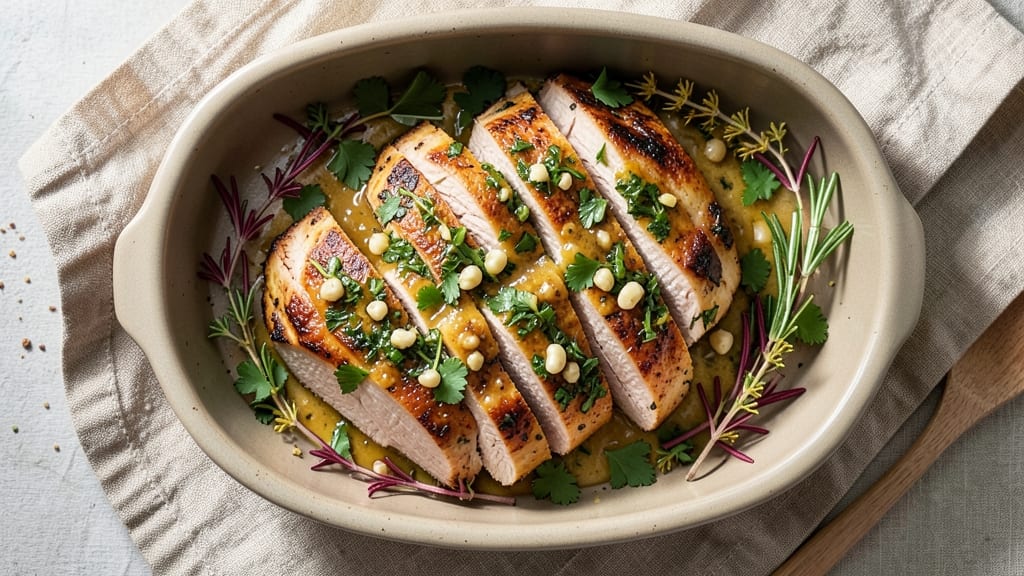
This baked boneless pork loin recipe delivers a restaurant-worthy center cut with a crispy herb crust that locks in juices—no fancy equipment required. I perfected this technique after years of testing, ensuring the meat stays tender while developing a golden, flavorful bark.
The secret lies in proper seasoning and a high-heat finish that transforms simple ingredients into something extraordinary.
The recipe begins with a foolproof prep method: patting the pork dry for maximum crust adhesion, then coating it with a blend of fresh herbs, garlic, and Dijon mustard. Baking at 425°F creates that coveted crispy exterior while maintaining a juicy, pink center—critical for satisfying home cooks.
Unlike roasts that dry out, this cut stays moist thanks to its natural fat distribution and careful temperature control.
What you'll achieve is a perfectly balanced pork loin with a crispy herb crust that adds texture and flavor, while the interior remains tender enough to slice cleanly.
The aroma alone will have everyone gathering at the table, and the first bite delivers that satisfying contrast between crispy exterior and succulent meat. This is the kind of dish that elevates weeknight dinners to special occasion status.
Pair it with roasted vegetables or a simple apple sauce to complete the meal. The recipe scales beautifully for gatherings, and leftovers reheat just as well as the first serving. Let's get started on creating your best pork loin yet—no guesswork, just guaranteed results.
Ingredients for baked pork loin recipe boneless
Center-cut pork loin plus fresh herbs and garlic create a restaurant-quality crust that locks in juices perfectly.
| Ingredient | Amount | Notes |
|---|---|---|
| Boneless Pork Loin 🐖 | 2 lb | Center-cut, 1.5-inch thick slices |
| Fresh Rosemary 🌿 | ¼ cup | Finely chopped, stems removed |
| Fresh Thyme 🌿 | ¼ cup | Leaves only, finely chopped |
| Fresh Parsley 🌿 | ¼ cup | Flat-leaf, finely chopped |
| Garlic Cloves 🧄 | 6 cloves | Minced, fresh preferred |
| Dijon Mustard 🍯 | 2 tbsp | High-quality, smooth |
| Extra-Virgin Olive Oil 🫒 | 2 tbsp | For crust adhesion |
| Kosher Salt 🧂 | 1 ½ tsp | Diamond Crystal preferred |
| Freshly Ground Black Pepper 🌶️ | 1 tsp | Coarsely ground |
| Apple Cider Vinegar 🍎 | 1 tbsp | For tenderizing marinade |
| All-Purpose Flour 🌾 | 1 tbsp | For dusting cutting board |
| Unsalted Butter 🧈 | 1 tbsp | Cold, for finishing crust |
The pork loin is non-negotiable here—center-cut, 1.5-inch thick slices from the middle of the loin deliver the best balance of tenderness and fat distribution. Costco or Whole Foods typically carry excellent quality, but any reputable butcher can source it for you. Look for even thickness and good marbling—this ensures juiciness during baking. Fresh herbs are critical for that vibrant crust, so grab them from the market if possible. The rosemary and thyme should be fragrant and green, while the parsley adds brightness. If you're using dried herbs, reduce to one-third the amount and toast them lightly in a dry pan first for deeper flavor.
No fresh rosemary? Substitute with equal parts dried rosemary and thyme, but toast the dried herbs first to intensify their aroma. Running short on Dijon mustard? Yellow mustard works in a pinch, though it lacks the same depth of flavor. The olive oil should be extra-virgin—its fruity notes complement the herbs beautifully. For the vinegar, lemon juice is a perfect substitute if apple cider vinegar isn't available. If you're prepping ahead, marinate the pork for up to 4 hours in the fridge—this tenderizes the meat and deepens the flavor. The butter for finishing should be cold and cubed—this ensures it crisps beautifully on the crust without steaming.
Pat the pork completely dry before seasoning—this is crucial for crust adhesion. Store the fresh herbs in airtight containers wrapped in damp paper towels for up to 5 days in the fridge. The pork loin can be prepped a day ahead and refrigerated uncovered on a wire rack for better air circulation. Once baked, it reheats beautifully—warm in a 300°F oven for 10-15 minutes with a splash of water or broth to maintain moisture. Leftovers keep for 3-4 days in the fridge or 3 months frozen. For gatherings, double the recipe—this scales perfectly for 8 servings.
Why You'll Love This Recipe
- No-Fuss Prep: I swear by this recipe because it’s the kind of meal where you can still enjoy a glass of wine while it bakes. Just sear the pork, toss in whole garlic cloves and sprigs of rosemary—no mincing, no fuss—and let the oven do the work. My daughter even helps me tie the herbs with kitchen twine (she calls it "decorating").
- Herb-Packed Magic: That crispy, golden crust? All thanks to the fresh rosemary and thyme clinging to the pork like a fragrant hug. The garlic infuses the meat without overpowering it, and the parsley at the end adds a bright finish that makes every bite feel like a little celebration. Honestly, the flavor is what keeps me coming back.
- Weeknight to Dinner Party: This isn’t just a Tuesday-night fix—it’s my go-to for game day, Sunday lunches, or when unexpected guests show up. Slice it thin for sandwiches, serve it with roasted potatoes for a hearty meal, or even toss it in a grain bowl for something lighter. The leftovers? They’re just as good reheated the next day.
- Budget-Friendly Star: Pork loin is one of those proteins that feels special but won’t break the bank. A single roast feeds my family of four with room for seconds, and the herbs (especially if you grow your own) stretch the cost even further. Between us, this is the kind of recipe that makes me feel like I’m feeding a crowd without the stress.
Step-by-step instructions for baked boneless pork loin
Here's how to achieve a perfect balance of juicy interior and crispy herb crust every time.
Prepare the Herb Marinade and Season the Pork
In a small bowl, combine the 0.25 cup fresh rosemary, 0.25 cup fresh thyme, 0.25 cup fresh parsley, 6 cloves minced garlic, 2 tablespoons Dijon mustard, 2 tablespoons extra-virgin olive oil, 1.5 teaspoons kosher salt, 1 teaspoon freshly ground black pepper, and 1 tablespoon apple cider vinegar. Mix thoroughly until the herbs are evenly distributed and the marinade has a vibrant green hue.
Place the 2 lb boneless pork loin on a cutting board dusted with 1 tablespoon all-purpose flour (this prevents sticking). Spread the herb marinade evenly over all sides of the pork, pressing gently to ensure full coverage. Let it sit at room temperature for 30 minutes—this allows the marinade to penetrate the meat and develop deeper flavor.
Create the Herb Crust and Sear the Pork
Preheat your oven to 400°F. Heat a large oven-safe skillet over medium-high heat and add the pork loin. Sear for 3-4 minutes per side until a deep golden crust forms. The pork should release easily from the pan when ready to flip—this indicates proper doneness at this stage.
While the pork sears, create the herb crust by pressing the remaining marinade (about 1 tablespoon) firmly onto the top of the pork. This concentrated layer of herbs will form the crispy crust during baking. Transfer the skillet to the preheated oven.
Bake to Juicy Perfection
Bake the pork loin for 25-30 minutes until the internal temperature reaches 145°F when measured with a meat thermometer. The crust should be deep golden brown and crisp to the touch, while the center remains tender. If the crust isn't brown enough after 25 minutes, broil for 1-2 minutes to finish.
During the last 5 minutes of baking, place the 1 tablespoon cold unsalted butter on top of the pork. The butter will melt and baste the meat, adding richness and enhancing the herb crust. Remove from the oven and let rest for 10 minutes before slicing—this crucial step ensures juices redistribute for maximum tenderness.
Rest and Slice for Maximum Juiciness
Transfer the pork to a cutting board and tent loosely with aluminum foil. Let it rest for 10-15 minutes—this allows the fibers to relax and the juices to redistribute. The internal temperature will rise an additional 5°F during resting, so don't worry if it doesn't reach 145°F immediately.
Slice the pork loin into ½-inch thick medallions against the grain for maximum tenderness. Each slice should reveal a juicy pink center surrounded by a crispy herb crust. Serve immediately with your favorite sides to enjoy the perfect balance of textures and flavors.
Pro Tips For Making Baked Pork Loin Recipe Boneless
- Sear the Outside First: Slap that pork loin in a screaming-hot pan for 2-3 minutes per side before baking—yes, even if you’re using fresh herbs. The crust locks in juices and deepens the rosemary-thyme flavor. I learned this the hard way after baking a dry, flavorless slab of pork that tasted like it was raised by a monk.
- Smash the Garlic: Don’t just mince those cloves—crush them with the flat side of your knife first. This releases more aroma and oil, which clings to the pork like glue. I was skeptical until I tried it; now I do it every time, especially with boneless loin that needs extra flavor help.
- Skip the Overcrowding: Resist the urge to pile all your herbs on top at once. Sprinkle rosemary and thyme in loose clusters (not a thick blanket) so they crisp slightly and brown. Parsley goes on last—it’s the garnish, not the main event. Overcrowding turns your herbs into soggy wallpaper.
- Test with a Fork, Not a Thermometer: Pork loin’s done when it hits 145°F, but if you don’t have a thermometer, jab it with a fork—juices should run clear, not pink. I used to pull it too early because the thermometer was buried in the pan’s hot spot. Now I wait for that fork test, and the meat stays juicy.
Pro cooking tips for perfect results
Temperature Control Secrets
Start by searing the pork at medium-high heat until you see a deep golden crust form—this takes about 3-4 minutes per side. Then, transfer it to a 400°F oven to finish baking. The high initial heat creates that coveted crust while the oven maintains even cooking.
I swear by using a meat thermometer—it’s the only way to nail that 145°F internal temperature without overcooking. 🌡️
Herb Crust Magic
The secret to that crispy herb crust lies in pressing the marinade firmly onto the pork before baking. Use about 1 tablespoon of the remaining herb mixture and work it into the surface like you’re giving the pork a massage.
For extra crunch, add 1 tablespoon cold butter during the last 5 minutes of baking—it’ll melt and baste the meat while creating a golden finish. Trust me, this step transforms a simple herb crust into something restaurant-worthy.
Resting Like a Pro
Never skip the 10-15 minute rest after baking—this is where the juices redistribute, ensuring every slice is tender and flavorful. I like to tent the pork loosely with foil while it rests, which also helps retain heat.
If you’re short on time, 10 minutes is the absolute minimum, but 15 minutes gives you that perfect balance of juiciness and texture. 💪
Slicing Against the Grain
Slice the pork loin against the grain into ½-inch thick medallions for the most tender results. A sharp knife is non-negotiable here—I use my Wüsthof 8-inch chef’s knife. Start at one end and cut perpendicular to the muscle fibers to shorten them, making each bite melt-in-your-mouth perfect.
This is the little detail that takes your dish from good to wow.
Butter Basting Trick
Don’t let that melted butter go to waste! After the pork comes out of the oven, use a spoon to spread the butter evenly over the crust. The residual heat will crisp it up beautifully, adding extra richness and depth of flavor.
This is my favorite finishing touch—it’s like giving your pork loin a gourmet upgrade with minimal effort. 🧈
Oven Rack Placement
Place the pork loin on the middle rack of your oven for even heat distribution. If your oven runs hot, consider lowering the temperature to 375°F for the final 10 minutes to prevent over-browning.
I’ve learned the hard way that top racks can dry out the meat faster than you’d expect. Pro tip: Rotate your baking sheet halfway through if you’re cooking multiple loins at once for consistent results.
Nutrition facts
Frequently asked questions
Can I use bone-in pork loin instead of boneless?
You can absolutely use bone-in pork loin, but you'll need to adjust your cooking time and method. Bone-in cuts require about 10-15 extra minutes in the oven since the bone conducts heat differently. Place the loin bone-side down on a rack in a roasting pan to prevent it from sitting in juices. The internal temperature should still reach 145°F in the thickest part of the meat, away from the bone. Just be prepared for slightly longer resting time—bone-in pork may need 15-20 minutes to redistribute juices properly.
What's the best way to reheat leftover pork loin?
For perfect reheating, slice the pork into ½-inch medallions and warm in a skillet over medium-low heat with a splash of chicken broth or apple cider for 3-4 minutes per side. This prevents drying out. Alternatively, place slices in a baking dish with a little liquid, cover with foil, and heat at 300°F for 10-15 minutes. Never microwave without liquid—it'll turn your pork into rubber! The crust will soften slightly but still taste amazing.
How do I know when the pork is fully cooked?
Use a meat thermometer to check the internal temperature—it should read 145°F in the thickest part of the loin. The color alone isn't reliable! A properly cooked pork loin will have a juicy pink center with a crispy golden crust. If you don't have a thermometer, cut into the thickest part: the juices should run clear, not red or pink. Remember, the temperature will rise 5°F more during resting, so don't overcook to reach 145°F.
Can I make this recipe ahead of time?
Yes! Prep the pork completely (marinated and seasoned) up to 24 hours ahead and refrigerate uncovered on a wire rack. This improves flavor and texture. For the full meal prep, bake the pork as directed, then refrigerate slices wrapped tightly in plastic. Reheat as directed above. You can also freeze cooked pork loin for up to 3 months—thaw overnight in the fridge before reheating. The flavors actually deepen when prepped ahead!
What are the best side dishes to serve with this pork loin?
This herb-crusted pork pairs beautifully with seasonal vegetables that complement its richness. Try roasted Brussels sprouts with balsamic glaze, creamy mashed potatoes with chives, or sautéed green beans with garlic. For something lighter, a fresh cucumber-apple salad or herbed quinoa works wonderfully. My personal favorite is apple sauce with cinnamon—it cuts through the richness perfectly while echoing the pork's herb notes.